You’re standing in the shower, finally enjoying a moment of peace, when you hear it: a rhythmic, deep glug-glug-glug coming from the toilet three feet away. It sounds like your plumbing is trying to summon a sea monster. I’ve been there. In my first fixer-upper, I ignored that sound for a week until a “volcano” of soapy shower water decided to erupt from the guest toilet right as my in-laws arrived for dinner. It was a nightmare, and it was entirely preventable.
When your toilet bubbles while the shower runs, your house is literally screaming at you. It’s telling you that air can’t move through your pipes, or worse, that water is backing up because it has nowhere else to go. Most people assume they just need to dump a gallon of blue liquid down the drain and hope for the best. I’m telling you right now: put the chemical cleaner away. It won’t fix a gurgling toilet, and it might just eat your old pipes from the inside out.
Why is my toilet gurgling when I shower?
The science of plumbing is actually pretty simple: for water to go down, air has to move out of the way. Think of it like holding a straw full of soda and putting your thumb over the top. The liquid stays put. Your home has a “thumb” in the form of a vent stack—that pipe you see sticking out of your roof. When that vent gets clogged or when there’s a blockage in the main line, the air gets trapped.
When you run the shower, you’re sending a high volume of water down the drain. That water pushes air ahead of it. If the air can’t escape through the roof vent, it looks for the easiest exit. That exit is usually the “P-trap” in your toilet. The “glug” you hear is literally air forcing its way through the toilet water. It’s a pressure problem, and we’re going to fix it before you end up with a bathroom floor full of “surprise” water.
How to fix a toilet bubbling when shower runs
If you want to stop the bubbling, you have to find the bottleneck. I’ve spent years crawling under crawlspaces and balancing on ladders to figure this out, and it usually comes down to three things: a localized clog, a blocked vent, or a main line issue.
1. Seal the other drains and plunge like a pro
Before you call a plumber and hand over your hard-earned cash, try the “Buddy System” plunge. This isn’t your standard three-second pump. Most people plunge incorrectly because they don’t realize that in a connected system, the air just escapes out of the sink or the shower drain instead of pushing against the clog.
I once spent forty minutes plunging a toilet only to realize I was just blowing air out of the bathtub drain ten inches away. To do this right, you need to plug the shower drain and the sink overflow with wet rags. This forces all the pressure from the plunger directly toward the blockage. I prefer a flange plunger—the one with the extra rubber sleeve on the bottom—because it actually fits the hole of the toilet. Give it ten to fifteen vigorous reps. If the water level drops and the gurgling stops, you’ve just saved yourself a $200 service call.
2. Snake the drain (The right way)
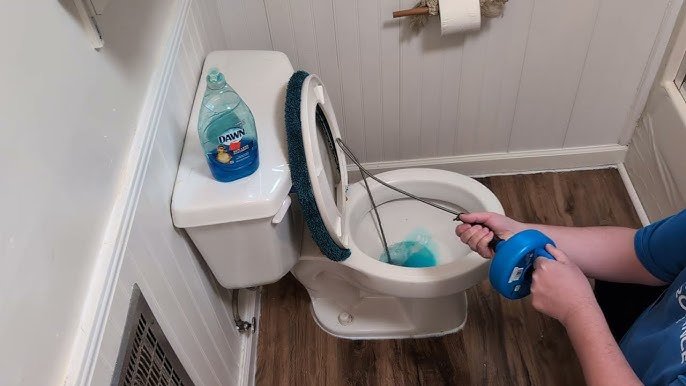
If the plunger didn’t do the trick, it’s time to get a bit more aggressive. I’m a huge fan of the manual toilet auger. Don’t use a standard sink snake here; the metal coil will scratch the porcelain of your toilet bowl, leaving ugly grey streaks that are a total pain to clean off. A toilet auger has a protective rubber sleeve to keep your throne looking pretty.
I remember my first time using a snake—I was so timid I didn’t even reach the clog. You have to be firm. Feed the cable into the drain while cranking the handle clockwise. When you hit resistance, don’t just jam it; back it off a bit, then crank again to “chew” through whatever is stuck. Usually, it’s a “flushable” wipe. Side note: there is no such thing as a flushable wipe. They are the enemy of all things holy in plumbing. If you pull one out, throw it in the trash and never buy them again.
3. Clear the plumbing vent stack on your roof
This is the part where most DIYers get nervous, but it’s often the hidden culprit. If your toilet gurgles but isn’t actually overflowing, the problem is likely on your roof. Bird nests, dead leaves, or even a wayward tennis ball can clog that vent pipe. When that happens, your plumbing loses its “breath,” and the vacuum created pulls air through your toilet.
I suggest grabbing a garden hose and a sturdy ladder. Carefully climb up and find the pipe sticking out above the bathroom. Shine a flashlight down there. If you see a nest, pull it out with a coat hanger. If it looks clear, have a friend turn on the hose and spray a direct stream of water down the pipe. If the water backs up out of the pipe, you’ve found your clog. The weight of the water can often push the blockage through. Just don’t do this if it’s icy out; I’ve had a “Close Encounter of the Roof Kind” involving a slippery shingle and a gutter, and it wasn’t fun.
4. Check the main sewer line cleanout
If you’ve plunged, snaked, and climbed the roof and you still hear that glug, the problem is further downstream. Find your main cleanout—it’s usually a white PVC pipe with a square notch on the cap, located in your yard or basement. If you open that cap (carefully!) and water comes pouring out, you have a main line clog. This is usually caused by tree roots or years of grease buildup.
At this point, you might need a heavy-duty power auger. You can rent these from the big box stores, but be warned: they are heavy, messy, and can be dangerous if the cable snaps. I used a rented power snake once and nearly broke my wrist when it hit a thick root and kicked back. If you aren’t comfortable handling a machine that feels like it’s trying to wrestle you, this is the one time I’ll tell you to call in a pro with a sewer camera.
Real Talk: What’s not worth your time
I’m going to be brutally honest: some “hacks” you see online are total garbage. I’ve seen people suggest pouring boiling water down the toilet. Do not do this. Porcelain is sensitive to temperature shocks. I’ve seen a perfectly good toilet crack right down the middle because someone thought boiling water would melt a grease clog. Now you have a clog and a shattered toilet.
Also, those chemical “main line cleaners” that claim to dissolve tree roots overnight? I’ve found them to be a total waste of money. They might kill a tiny bit of the root, but they won’t clear a massive blockage, and they stay in your pipes, making it dangerous for the plumber who eventually has to come snaking. If your main line is blocked by a silver maple root the size of your arm, a bottle of liquid isn’t going to do anything but lighten your wallet.
The “I’ll do it tomorrow” side note
If you only hear the bubbling once in a blue moon—maybe only when you’re doing laundry and showering at the same time—you might just have an undersized venting system. It was common in older homes built before modern codes. It’s annoying, but it’s not always an emergency. However, if the bubbling is accompanied by a sewage smell, that means the air coming up is bringing sewer gases with it. That’s a health hazard. Fix it now.
Parting Wisdom
Plumbing is 10% tools and 90% patience. Most of the mistakes I’ve made happened because I was rushing to get the job done so I could go back to watching the game. If your toilet is bubbling, it’s a warning shot. Take the time to clear the vent or plunge properly now, or you’ll be spending your Saturday mopping up “stuff” you never wanted to see.
Does your toilet have a specific “personality” when it gurgles, or have you discovered a weird object that was causing your clog? I once found a plastic dinosaur! Drop your stories or questions in the comment box below—I’d love to help you troubleshoot.