Excess humidity can damage instruments, electronics, artwork, finishes, and recording equipment while making a studio feel uncomfortable. The best dehumidifier for a creative space should control moisture reliably without demanding constant emptying or complicated upkeep.
This roundup compares 10 low-maintenance studio dehumidifiers across room coverage, tank capacity, drainage options, noise, controls, and energy-conscious operation, so you can choose a practical fit for your space.
Best 10 Low-Maintenance Studio Dehumidifiers Picks for 2026
Best All-Around Compact Pick

- Washable filter and included drain hose
- Humidity display with timer and three speeds
- Quiet sleep mode rated at 28 dB
Best For: Compact rooms needing simple, flexible moisture control
Best for Cold Studios
AEOCKY X1-Pro Rotary Desiccant Dehumidifier

- Works without refrigerant-coil icing
- Up to 5 pints daily in stated home conditions
- Sleep Mode rated at 25 dB
Best For: Cold studios, cabins, basements, and RVs
Best Quiet Night-Light Option

- Washable filter and automatic tank shutoff
- Sleep mode operates below 30 dBA
- Real-time humidity and temperature display
Best For: Bedrooms and compact studios needing quiet, simple operation
Best for Heavy Dampness
21-Pint Dehumidifier with Drain Hose

- 21-pint extraction rating for damp spaces
- Continuous drainage, washable filter, and auto-restart
- Three modes, 24-hour timer, and automatic defrost
Best For: Larger studios and rooms with persistent moisture
Compact Quiet Pick

- Automatic shutoff for a full or misinstalled tank
- Compact design with carry handle
- Quiet operation with seven-color ambient lighting
Best For: Small studios needing portable, low-noise humidity control
High-Capacity Efficiency Pick
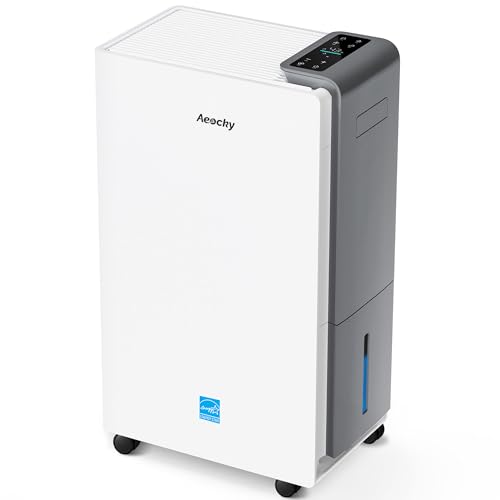
- Covers spaces up to 5,500 square feet
- ENERGY STAR Most Efficient 2025 certified
- Smart humidity control and power-off memory
Best For: Large or persistently damp studios needing efficient continuous operation
Sleep-Friendly Value Pick
ToLife 1000 Sq. Ft. Dehumidifier

- Sleep mode operates below 30 dB
- Automatic shutdown prevents overflow
- Two modes and a portable 95-ounce tank
Best For: Bedroom studios and compact spaces needing quiet, simple humidity control
Quiet Compact Pick
BOOHENKA 40-Ounce Mini Dehumidifier
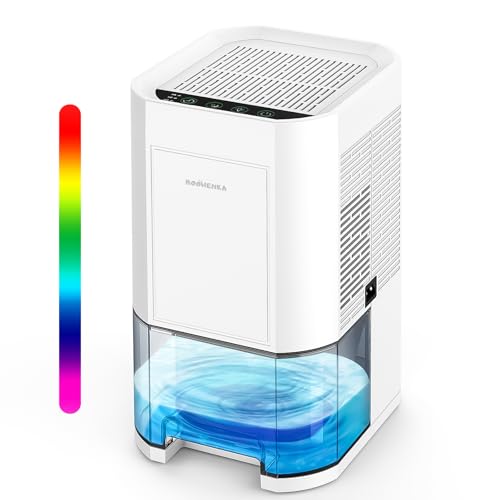
- 1,200 ml transparent tank with auto shutoff
- Sub-28 dB sleep-friendly operation
- Compact design for small rooms and studios
Best For: Small studios and bedrooms needing quiet, easy-to-monitor moisture control
Longer-Run Pick
Dual-Semiconductor 60-Ounce Dehumidifier

- Large 1.8-liter tank for fewer refills
- Timer settings from 12 to 48 hours
- Automatic defrost and shutoff protection
Best For: Small studios needing longer runtime and scheduled moisture control
Largest-Tank Pick
Frizzlife DH80 135-Ounce Dehumidifier

- Extra-large 135-ounce removable tank
- 28 dB sleep mode and 1–24-hour timer
- Auto shutoff for full or misplaced tank
Best For: Studios and apartments where minimizing refill frequency matters
Best All-Around Compact Pick – Niuteri 98-Ounce Dehumidifier
For shoppers seeking low-maintenance studio dehumidifiers, the Niuteri combines a washable filter, humidity display, timer, and optional continuous drainage in a compact design. Its 98-ounce tank and 90-watt operation make it suited to smaller living spaces where simple controls and easy upkeep matter.
Best For: Bedrooms, bathrooms, studios, RVs, and other spaces up to 1,000 square feet where quiet operation and flexible drainage are useful.
Pros:
- Washable filter helps reduce ongoing replacement costs.
- Humidity display, timer settings, and three fan speeds support convenient operation.
- Included drain hose enables hands-free continuous drainage.
- Sleep mode is rated at 28 dB, with lights that can turn off.
Cons:
- The 98-ounce tank may require frequent emptying during periods of high humidity if the hose is not used.
- Its listed extraction capacity is 2.5 pints per day, so it is better for moderate moisture than severe dampness.
This is a practical low-maintenance choice for a studio or bedroom, especially if you want washable filtration and the option to avoid manual tank emptying. The timer and quiet mode add convenience for overnight use.
Best for Cold Studios – AEOCKY X1-Pro Rotary Desiccant Dehumidifier
The AEOCKY X1-Pro stands out among low-maintenance studio dehumidifiers for cold-weather use. Its rotary desiccant system does not rely on cold refrigerant coils, helping it continue drying in rooms where conventional units may frost. The design is aimed at compact spaces and small basements rather than large areas.
Best For: Cold studios, basements, cabins, RVs, closets, and laundry areas operating from 34°F to 95°F.
Pros:
- Desiccant technology avoids coil icing and defrost downtime in cold rooms.
- Claims up to 5 pints per day in stated real-world home conditions.
- Sleep Mode is rated at 25 dB, with maximum-output testing listed at 39 dB.
- Compact design is intended for small spaces.
Cons:
- The 340-watt heat-based system can add warmth to the surrounding room.
- A slight scent or noticeable warmth may occur during first use or after long storage.
- Collected water may freeze below 34°F.
Choose this model when winter performance and quiet operation are more important than minimizing power draw. Its desiccant design offers a meaningful advantage in chilly studios, though the heat output and higher wattage should be considered.
Best Quiet Night-Light Option – PSOS 98-Ounce Dehumidifier
The PSOS is a compact option for low-maintenance studio dehumidifiers, pairing a removable 98-ounce tank with a washable filtration system and automatic shutoff. Its real-time humidity and temperature display, sleep mode, and selectable ambient lighting make it particularly convenient for bedrooms and small studios.
Best For: Bedrooms, bathrooms, closets, RVs, and studios up to 1,000 square feet where quiet operation and compact placement are priorities.
Pros:
- Washable filter supports straightforward routine maintenance.
- Sleep mode operates below 30 dBA and turns off the light.
- Humidity and temperature readings are shown in real time.
- Automatic shutoff helps prevent overflow when the tank is full.
Cons:
- It has only two operating modes and no continuous-drain hose is listed among the included components.
- The 98-ounce tank may need regular emptying during damp conditions.
- The seven-color light may be unnecessary if you prefer a completely dark room.
The PSOS is a sensible pick for a sleeping area or compact studio where low noise, simple maintenance, and ambient lighting are welcome. Its automatic shutoff keeps ownership uncomplicated, but users wanting hands-free drainage should look for a model that includes a hose.
Best for Heavy Dampness – 21-Pint Dehumidifier with Drain Hose
For larger or noticeably damp studios, this 21-pint unit offers more substantial moisture removal than compact semiconductor models. It is a strong candidate among low-maintenance studio dehumidifiers because it combines a washable filter, included drain hose, auto-restart, automatic defrost, and rolling mobility.
Best For: Damp studios, basements, laundry areas, garages, and residential spaces up to roughly 1,500–1,600 square feet.
Pros:
- 21-pint daily extraction rating is suited to heavier indoor dampness.
- Included 39.4-inch hose supports continuous hands-free drainage.
- Washable filter, automatic defrost, and auto-restart simplify ongoing use.
- DEHU, CONT, and DRY modes plus a 24-hour timer provide flexible control.
Cons:
- Its 1.5-liter tank is relatively small if continuous drainage is unavailable.
- At 16.7 pounds, it is less lightweight than the compact tabletop-style options.
- The listed operating noise of 36–40 dB may be more noticeable than quieter semiconductor units.
This model is the better fit when a studio has persistent condensation or laundry-related moisture. The drain hose and washable filter reduce routine work, while wheels and a handle make it easier to reposition as needed.
Compact Quiet Pick – CT2 1000 Sq. Ft. Dehumidifier
For shoppers seeking low-maintenance studio dehumidifiers, the CT2 offers a compact setup with a 95-ounce tank, automatic shutoff, and a built-in handle. Its semiconductor cooling system runs at up to 40 dB, making it practical for bedrooms, closets, bathrooms, and other smaller spaces.
Best For: Small studios and rooms where portability, quiet operation, and simple full-tank protection matter.
Pros:
- Automatic shutoff activates when the tank is full or incorrectly installed.
- Compact 8.3 × 5.7 × 14-inch design with a carry handle.
- Quiet operation rated at 40 dB or less, plus seven adjustable glow-light colors.
- Removes up to 34 ounces of moisture per day under the stated test conditions.
Cons:
- Its stated moisture-removal capacity is better suited to smaller spaces than demanding whole-home use.
- The seven-color light may be unnecessary if you prefer a purely functional appliance.
The CT2 is a straightforward option for a studio that needs localized humidity control without complicated operation. The auto-shutoff feature and portable form help reduce routine monitoring, while the compact tank still requires regular emptying during humid periods.
High-Capacity Efficiency Pick – AEOCKY RHEA-001
The AEOCKY RHEA-001 is a high-capacity choice among low-maintenance studio dehumidifiers, especially for large or persistently damp spaces. Its compressor design, ENERGY STAR Most Efficient 2025 certification, smart humidity control, and power-off memory are aimed at reducing oversight during extended operation.
Best For: Large studios, basements, or open spaces that need sustained moisture removal and energy-conscious operation.
Pros:
- Rated for up to 5,500 square feet and up to 80 pints per day under stated test conditions.
- ENERGY STAR Most Efficient 2025 certification supports an efficiency-focused setup.
- Smart humidity detection and compensation help maintain a chosen humidity range.
- Power-off memory can resume operation after power restoration when used with a smart socket.
Cons:
- The large-capacity compressor design is likely more appliance than a small studio needs.
- The supplied notes emphasize dehumidification capacity but do not specify the water-tank volume.
- Its advanced feature set may be excessive for shoppers seeking the simplest compact unit.
For a spacious studio or a consistently humid environment, the RHEA-001 prioritizes capacity, efficiency, and automated humidity management. It is the strongest fit here for minimizing frequent intervention, provided the room benefits from a full-size compressor dehumidifier.
Sleep-Friendly Value Pick – ToLife 1000 Sq. Ft. Dehumidifier
The ToLife TZ-C2 keeps the routine simple with a 95-ounce tank, automatic shutdown, two operating modes, and a portable footprint. As one of the low-maintenance studio dehumidifiers in this roundup, it is particularly suitable for a bedroom studio or compact living area where quiet nighttime operation is important.
Best For: Small studios or bedroom workspaces that need quiet sleep mode and easy tank-overflow protection.
Pros:
- Automatic shutdown stops the unit when the tank is full or improperly placed.
- Sleep mode operates below 30 dB for quieter nighttime use.
- Two modes provide a choice between stronger moisture removal and low-speed operation.
- Compact design with handles makes it easy to move between rooms.
Cons:
- Semiconductor technology and the 95-watt rating are positioned for smaller spaces rather than heavy-duty moisture loads.
- The constantly changing seven-color lighting may not suit users who prefer no ambient light.
The TZ-C2 is a practical fit when quiet operation and straightforward safeguards matter more than maximum extraction. Its 95-ounce tank and portable body reduce setup demands, though frequent emptying may still be needed in especially damp conditions.
Quiet Compact Pick – BOOHENKA 40-Ounce Mini Dehumidifier
For shoppers comparing low-maintenance studio dehumidifiers, the BOOHENKA offers a compact setup with a transparent 1,200 ml tank, automatic shutoff, and low-power Peltier operation. Its two modes and sub-28 dB operation suit bedrooms, closets, bathrooms, RVs, and other small spaces.
Best For: Small studios, bedrooms, closets, and other spaces where quiet operation and easy tank monitoring matter.
Pros:
- Transparent 40-ounce tank makes the water level easy to check.
- Automatically shuts off when the tank reaches 80% full and provides a warning light.
- Compact, lightweight design and sleep mode support convenient placement.
- Uses 22.5 watts and offers a stated removal rate of up to 330 ml per day under test conditions.
Cons:
- Its small-space Peltier design is intended for areas up to about 300 square feet.
- The tank may require more frequent emptying than larger-capacity models.
This is a straightforward choice when portability, quiet use, and visible water-level tracking are more important than high-capacity moisture removal. The built-in atmosphere lighting is optional and turns off in sleep mode.
Longer-Run Pick – Dual-Semiconductor 60-Ounce Dehumidifier
This dual-semiconductor model is a practical option among low-maintenance studio dehumidifiers, pairing a 60-ounce tank with automatic shutoff and a selectable timer. It is designed for small spaces such as bathrooms, kitchens, cloakrooms, and RVs, with a built-in handle for moving it as needed.
Best For: Small studios or multipurpose spaces where a larger tank, portability, and scheduled operation are useful.
Pros:
- 1.8-liter tank reduces the need for frequent emptying.
- Dual semiconductor condensers are rated to absorb up to 700 ml per day under stated test conditions.
- 12-, 24-, 36-, and 48-hour timer settings help limit unnecessary runtime.
- Automatic defrost, auto shutoff, and a 35 dB sleep mode add convenience.
Cons:
- Its performance is intended for smaller spaces rather than large open-plan areas.
- The 35 dB sleep mode is quiet but not the lowest noise rating in this group.
Choose this model if reducing refill frequency is a priority. The timer and auto-off features make it especially suitable for users who want a more set-and-forget routine, while the handle helps with room-to-room placement.
Largest-Tank Pick – Frizzlife DH80 135-Ounce Dehumidifier
The Frizzlife DH80 stands out for its extra-large tank and automatic operation, making it a convenient candidate among low-maintenance studio dehumidifiers. Its dual-semiconductor system is designed for small spaces, while the removable tank, timer, sleep mode, and full-tank protection simplify everyday use.
Best For: Studios, apartments, dorm rooms, and RVs where fewer tank emptying trips are the main priority.
Pros:
- 135-ounce tank is the largest listed capacity in this selection.
- Automatically shuts off when the tank is full or incorrectly installed.
- Adjustable 1–24-hour timer and 28 dB sleep mode support flexible, quiet operation.
- Compact portable form includes a removable tank, digital display, and optional ion mode.
Cons:
- Humidity cannot be manually set; the unit automatically balances operation based on conditions.
- The semiconductor design is intended for small spaces, not whole-home dehumidification.
- Its taller 14-inch profile may require more vertical clearance than smaller units.
The DH80 is the strongest fit when low-maintenance ownership means maximizing time between emptying the tank. Its controls are convenient, but buyers who want precise manual humidity settings should look elsewhere.
How We Picked the Best Low-Maintenance Studio Dehumidifiers
We focused on features that reduce routine maintenance and make humidity control easier in studios, rehearsal rooms, workshops, and home production spaces. Key considerations included stated coverage, water-tank capacity, auto shutoff, continuous-drain compatibility, washable or reusable components, humidity displays, sleep modes, operating noise, and portability.
The selection includes compact semiconductor models for small studios, larger compressor units for basements and expansive rooms, and a desiccant option designed for colder conditions. Product claims such as coverage and energy efficiency should be treated as guidelines; actual performance depends on temperature, ventilation, insulation, and the amount of moisture entering the room.
Quick Comparison
| Best For | What to Prioritize | Models to Consider |
|---|---|---|
| Small vocal, editing, or instrument rooms | Quiet operation, compact size, auto shutoff | 40-ounce, 60-ounce, and 95-ounce models |
| Medium studios and bedrooms | Higher coverage, humidity display, larger tank | 98-ounce and 135-ounce models |
| Basements or larger workspaces | Higher extraction capacity and drain-hose support | 21-pint and 5,500-square-foot models |
| Cold rooms or winter use | Frost resistance and low-temperature performance | AEOCKY rotary desiccant model |
Key Buying Factors for Low-Maintenance Studio Dehumidifiers
Room Size and Moisture Load
Choose a unit with enough stated coverage for the studio, especially if the room is below ground level, poorly ventilated, or connected to other damp areas. A compact unit may suit a sealed booth but struggle in a large basement studio.
Tank Size and Drainage
Larger tanks reduce emptying frequency, but a continuous drain hose is more convenient for unattended operation. Confirm that the unit supports gravity drainage and that you have a suitable floor drain or collection container.
Noise and Placement
For recording or monitoring rooms, look for sleep mode, quiet operation, and a placement location away from microphones and listening positions. Compressor units can be more noticeable than small semiconductor models, while larger capacity often comes with greater airflow and fan noise.
Cleaning and Controls
Washable filters, accessible tanks, clear water-level indicators, auto shutoff, and a built-in humidity display simplify routine care. Keep air inlets unobstructed and clean the filter according to the manufacturer’s schedule to preserve performance.
Cold-Weather Operation and Energy Use
Compressor models may be less suitable in chilly spaces because frost can reduce efficiency. A desiccant design can be a better winter choice, though it may use more power or produce more heat. Compare operating conditions, not just advertised coverage.
Who Should Buy Which Low-Maintenance Studio Dehumidifiers?
Choose a compact 40- or 60-ounce unit for a small, occupied studio where portability and low noise matter most. A 95- or 98-ounce model is a practical middle ground for bedrooms, project studios, and moderately damp rooms. Select the Frizzlife model when a larger tank is more important than the smallest footprint.
For a basement, larger workspace, or studio with a persistent moisture problem, prioritize the 21-pint unit or the high-capacity AEOCKY model, particularly when continuous drainage is available. If your studio becomes cold in winter, the AEOCKY rotary desiccant model is the most targeted option. Whichever model you choose, use a separate hygrometer when precise humidity monitoring is important for instruments and sensitive equipment.