High humidity can damage instruments, electronics, acoustic treatments, artwork, and stored materials while making a studio uncomfortable to use. The right commercial-grade dehumidifier helps maintain a more stable environment across large rooms and workspaces.
We compared 10 heavy-duty studio dehumidifiers by rated coverage, moisture-removal capacity, drainage options, energy efficiency, and practical studio usability. The guide below explains what matters most before you choose.
Best 10 Heavy-Duty Studio Dehumidifiers Picks for 2026
Most Efficient Heavy-Duty Pick
AEOCKY 6000 Sq. Ft. Dehumidifier

- Up to 105 pints/day in high humidity
- ENERGY STAR Most Efficient 2024
- Smart humidity control with power-off memory
Best For: Large studios prioritizing capacity and energy efficiency
High-Capacity Value Pick

- Rated for up to 7,500 square feet
- 150-pint capacity under stated conditions
- Continuous drainage, casters, and memory restart
Best For: Large studios with accessible floor drainage
Quiet Efficiency Pick
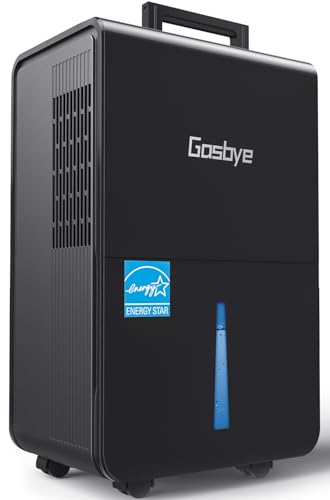
- Approximately 45 dB operation
- ENERGY STAR 2026 certified
- Three drainage options included
Best For: Studios needing quieter, efficient moisture control
Best Pumped Drainage Pick
Waykar 150-Pint Commercial Dehumidifier

- Covers up to 7,000 square feet
- Built-in pump lifts water up to 9.84 feet
- Includes gravity hose, auto defrost, and self-drying
Best For: Unattended studios needing upward water discharge
Best Energy-Efficient Pick
avylo 90-Pint Dehumidifier With Pump

- 90-pint capacity for spaces up to 5,000 square feet
- Built-in pump with 15-foot lift and included hose
- Quiet operation and ENERGY STAR Most Efficient 2025
Best For: Large residential spaces needing efficient, quiet moisture control
Best Commercial-Capacity Pick
Airzentti 155-Pint Dehumidifier

- Up to 155-pint daily capacity and 7,500-square-foot coverage
- 220 CFM airflow with a 6-inch duct collar
- Built-in pump, auto defrost, and continuous drainage
Best For: Commercial, industrial, crawl-space, and restoration applications
Best Quiet Large-Area Pick
80-Pint Dehumidifier With Adjustable Airflow

- 80-pint capacity for spaces up to 4,500 square feet
- Quiet 40 dB operation with sleep mode
- 90-degree outlet, wheels, and included drain hose
Best For: Occupied homes and studios needing quiet, targeted moisture removal
Best Compact Commercial Pick
Aeroid 70-Pint Dehumidifier with Pump

- 70-pint maximum moisture removal with 1,200-square-foot coverage
- Built-in pump supports drainage up to 16.4 feet
- Compact design with auto defrost and memory restart
Best For: Basements, crawlspaces, and commercial areas up to 1,200 square feet
Best High-Capacity Coverage
Waykar 150-Pint Large-Area Dehumidifier

- Removes up to 150 pints daily and covers up to 7,000 square feet
- 90-degree auto-swing airflow promotes even coverage
- Supports continuous drainage, with an 8-liter tank as an alternative
Best For: Large studios, warehouses, garages, basements, and commercial spaces
Best Energy-Saving Large-Space Pick
Waykar 150-Pint Energy Star Dehumidifier

- 150-pint capacity for spaces up to 7,000 square feet
- Energy Star certified with a 24-hour timer
- Self-drying, auto defrost, auto swing, and washable filter
Best For: Large studios and commercial spaces needing efficient continuous operation
Most Efficient Heavy-Duty Pick – AEOCKY 6000 Sq. Ft. Dehumidifier
For large studios, workshops, and other demanding spaces, the AEOCKY RHEA-002 stands out among heavy-duty studio dehumidifiers with a stated capacity of up to 105 pints per day in very humid conditions. Its ENERGY STAR Most Efficient 2024 designation and precision humidity-control features make it a strong choice for extended operation.
Best For: Large studios or commercial-style spaces where high moisture removal and energy efficiency are priorities.
Pros:
- Rated for spaces up to 6,000 square feet.
- ENERGY STAR Most Efficient 2024 certified.
- Uses a high-efficiency compressor and copper tubing construction.
- Includes smart humidity control and power-off memory.
Cons:
- Its large-space performance may be more than needed for a small studio.
- The supplied notes do not specify tank size, noise level, or included drainage accessories.
The AEOCKY is the efficiency-focused option in this group. Choose it when reliable high-capacity moisture control and verified top-tier energy performance matter more than compact size or a clearly documented pump system.
High-Capacity Value Pick – Kesnos 150-Pint Dehumidifier
The Kesnos JD026N-150-X2 is a practical choice among heavy-duty studio dehumidifiers, combining a stated 150-pint daily capacity with coverage up to 7,500 square feet. Its continuous-drain option, front humidity display, and mobile design suit studios that need straightforward, ongoing moisture management.
Best For: Large studios, basements, offices, and stockrooms needing high capacity and flexible drainage.
Pros:
- Removes up to 150 pints per day under the stated test conditions.
- Offers a 30%–80% adjustable humidity range.
- Includes a drain hose for continuous drainage and a 2.12-gallon tank with auto shutoff.
- Features casters, hidden handles, washable filter, auto defrost, and memory restart.
Cons:
- The included drain hose is only 3.3 feet long.
- A standard 3/4-inch garden hose for alternate drainage is not included.
- The notes do not identify a built-in pump.
Kesnos offers an appealing combination of capacity, portability, and everyday controls. It is especially practical when a floor drain is available and you want continuous operation without repeatedly emptying the tank.
Quiet Efficiency Pick – Gasbye DryPrime 115-Pint
For studios where compressor noise and operating costs both matter, the Gasbye DryPrime is a compelling heavy-duty studio dehumidifier. It removes up to 115 pints per day at 86°F and 80% relative humidity, operates at about 45 dB, and provides three drainage methods for flexible installation.
Best For: Medium-to-large studios where quieter operation, energy efficiency, and drainage flexibility are important.
Pros:
- ENERGY STAR 2026 certified and rated up to 30% more efficient than non-certified models.
- Advertised operating noise is approximately 45 dB.
- Offers tank, included hose, and standard 3/4-inch garden-hose drainage options.
- Includes automatic shutoff, restart, washable filter, and adjustable humidity control.
Cons:
- Listed coverage varies between 4,500 and 6,000 square feet in the supplied information.
- Its 1.72-gallon tank is smaller than the Kesnos tank listed here.
- The unit has one listed fan speed.
DryPrime is a sensible studio fit when reduced noise and efficient operation are key concerns. Its reinforced copper tubing and multiple drain options also support a more permanent setup, though buyers should verify the coverage figure for their application.
Best Pumped Drainage Pick – Waykar 150-Pint Commercial Dehumidifier
The Waykar 150-pint commercial model is one of the most installation-friendly heavy-duty studio dehumidifiers in this roundup. Its built-in pump can discharge water upward as much as 9.84 feet, while the included hose also supports gravity drainage for studios, cellars, garages, and other spaces that may be unattended.
Best For: Studios or workspaces that need unattended operation and pumped drainage to a raised outlet.
Pros:
- Rated to remove up to 150 pints per day and cover up to 7,000 square feet.
- Built-in pump supports upward discharge up to 9.84 feet.
- Includes gravity-drain hose and a removable 1.85-gallon tank.
- Features ENERGY STAR certification, auto defrost, self-drying, timer, and memory restart.
Cons:
- The pump function may need to be reset after unplugging following a normal shutdown.
- The included drain hose is 3.3 feet long.
- The supplied notes do not specify a noise rating.
Waykar is the strongest choice here for challenging drainage layouts. The built-in pump reduces the need to elevate the unit or rely on a nearby floor drain, making it particularly useful for unattended studio moisture control.
Best Energy-Efficient Pick – avylo 90-Pint Dehumidifier With Pump
For shoppers comparing heavy-duty studio dehumidifiers, the avylo combines a stated 90-pint-per-day capacity with ENERGY STAR Most Efficient 2025 certification. Its built-in pump, quiet operation, and automatic humidity control make it practical for large basements, garages, living areas, and other spaces up to 5,000 square feet.
Best For: Large residential spaces where energy efficiency, quiet operation, and flexible drainage are priorities.
Pros:
- Removes up to 90 pints per day under the stated test conditions and is designed for areas up to 5,000 square feet.
- Built-in pump provides a 15-foot lift and includes a 15-foot drain hose for continuous drainage.
- Operates as low as 41 dB and includes humidity sensing, a timer, child lock, and automatic shutoff.
- ENERGY STAR Most Efficient 2025, DOE, CEC, FCC, TSCA, and UL-related compliance claims are listed.
Cons:
- The floor drain pipe is not included.
- At 38.6 pounds, it is substantial to move despite its compact width.
Choose the avylo if you want a feature-rich large-area unit without stepping up to the higher power draw and weight of a commercial model. Its pump and quiet 41 dB operation are particularly useful for unattended basement use.
Best Commercial-Capacity Pick – Airzentti 155-Pint Dehumidifier
Among heavy-duty studio dehumidifiers, this Airzentti model is the capacity leader, with up to 155 pints per day under nearly saturated conditions and a stated 7,500-square-foot coverage area. Its 220 CFM airflow, built-in pump, duct collar, and restoration-oriented features suit demanding commercial and industrial environments.
Best For: Commercial spaces, crawl spaces, warehouses, attics, and water-damage restoration work requiring high moisture-removal capacity.
Pros:
- Offers up to 155 pints per day under the listed test conditions, with 70 PPD in AHAM conditions.
- 220 CFM airflow and a 6-inch air duct collar support larger or targeted drying applications.
- Built-in pump lifts drainage up to 16.4 feet, while a 6.56-foot gravity drain hose is included.
- Includes auto defrost, auto drain, automatic restart, screen lock, and continuous-drain modes.
Cons:
- At 59 pounds and 860 watts, it is less portable and more power-intensive than smaller residential units.
- The listed upper temperature rating is 95°F, which may limit use in hotter conditions.
This is the strongest choice when drying capacity and commercial functionality matter more than low weight or minimal energy use. Its pump and ducting provisions also make it better suited to professional-style installations than typical home units.
Best Quiet Large-Area Pick – 80-Pint Dehumidifier With Adjustable Airflow
This 80-pint model is a practical contender among heavy-duty studio dehumidifiers for users who want large-area coverage without excessive noise. It is rated for spaces up to 4,500 square feet, reaches a listed 40 dB, and adds a 90-degree adjustable outlet for directing dry air toward corners, laundry, or other damp areas.
Best For: Homes, studios, bedrooms, laundry rooms, and basements where quiet operation and easy repositioning are important.
Pros:
- Removes up to 80 pints per day and is designed for areas up to 4,500 square feet.
- 40 dB operation, sleep mode, and an adjustable 90-degree air outlet support quieter, targeted drying.
- Offers a 1.72-gallon tank with self-shutoff or continuous drainage through the included hose.
- Four 360-degree swivel wheels, a washable filter, humidity sensing, auto defrost, and overload protection simplify use.
Cons:
- The supplied notes do not specify a built-in pump, so hose placement may depend on gravity drainage.
- Its 80-pint capacity is lower than the 90-pint avylo and 155-pint Airzentti models.
Consider this unit when comfort and maneuverability are central to your buying decision. Its quieter 40 dB rating, directional airflow, and swivel wheels make it appealing for occupied spaces, while the included hose supports longer unattended operation where gravity drainage is available.
Best Compact Commercial Pick – Aeroid 70-Pint Dehumidifier with Pump
For smaller commercial areas and difficult-to-access spaces, the Aeroid is a practical choice among heavy-duty studio dehumidifiers. It removes up to 70 pints per day at saturation conditions, covers spaces up to 1,200 square feet, and combines pump-assisted drainage with automatic defrost and restart features.
Best For: Basements, crawlspaces, storage areas, warehouses, and commercial workspaces up to 1,200 square feet where compact sizing and automatic drainage matter.
Pros:
- Built-in pump supports vertical drainage up to 16.4 feet, with a gravity-drain option included.
- Adjustable humidity control from 10% to 98% RH allows precise moisture management.
- Compact 41.2-pound design fits tight areas, and automatic defrost supports cooler environments.
- Energy Star efficiency, memory restart, and TUV testing add useful long-term operating support.
Cons:
- Its 1,200-square-foot coverage is substantially smaller than the large-area Waykar models.
- The stated 70-pint capacity is measured at saturation conditions; AHAM output is listed as 34 pints per day.
The Aeroid stands out when a studio or work area needs commercial-grade moisture control without a bulky footprint. Its pump and memory restart are especially useful for semi-permanent installations, while the lower AHAM capacity makes it better suited to moderate-sized spaces than expansive facilities.
Best High-Capacity Coverage – Waykar 150-Pint Large-Area Dehumidifier
Studios, warehouses, and other expansive spaces may need the output of a high-capacity unit, and this Waykar is designed for that role. It removes up to 150 pints per day at saturation conditions and covers areas up to 7,000 square feet, with 90-degree oscillating airflow to distribute dried air more evenly.
Best For: Large basements, whole homes, garages, commercial spaces, and other areas up to 7,000 square feet that require extended high-volume dehumidification.
Pros:
- High 150-pint capacity is designed for large spaces and continuous operation.
- 90-degree auto-swing airflow helps reduce uneven humidity pockets.
- Offers 30%–80% humidity control, automatic defrost, and overload protection.
- Supports continuous drainage with the included hose and also has an 8-liter tank.
Cons:
- The supplied notes do not specify Energy Star certification for this model.
- The included drain hose is only 3.3 feet long, which may limit placement for some installations.
- Its large-area capacity may be more than necessary for a small studio or single room.
This Waykar is the stronger fit when moisture loads and floor area are the primary concerns. Its high output, oscillating airflow, and flexible drainage make it well suited to demanding environments, though smaller rooms may benefit from a more compact model.
Best Energy-Saving Large-Space Pick – Waykar 150-Pint Energy Star Dehumidifier
For buyers balancing high moisture removal with scheduled operation, this Waykar combines 150-pint capacity with Energy Star certification. It is rated for spaces up to 7,000 square feet and adds auto swing, self-drying, auto defrost, continuous mode, and a timer for practical long-term use in demanding environments.
Best For: Large studios, warehouses, commercial or industrial spaces, basements, garages, and storage areas where efficiency and maintenance features are priorities.
Pros:
- Removes up to 150 pints per day and is designed for areas up to 7,000 square feet.
- Energy Star certification and a 24-hour timer support more controlled energy use.
- Self-drying and auto defrost help maintain internal components and operation in cool spaces down to 41°F.
- Auto swing, continuous mode, washable filter, wheels, and a built-in handle simplify daily use.
Cons:
- The included 3.3-foot drain hose may require a nearby drain or an extension for some setups.
- Its 1.85-gallon tank is considerably smaller than the 150-pint daily extraction rating, so continuous drainage is preferable for extended use.
- The unit is designed for large spaces and may be excessive for compact studios.
This model is a well-rounded option for large facilities that expect frequent or continuous operation. Its Energy Star certification, self-drying cycle, and timer give it an advantage for ongoing use, while the drainage setup should be planned before installation.
How We Picked These Heavy-Duty Studio Dehumidifiers
We focused on large-capacity models marketed for basements, warehouses, commercial spaces, and other demanding environments. Selection criteria included stated coverage area, pint-per-day capacity, Energy Star claims, continuous-drain capability, included pumps or hoses, tank design, and controls that support unattended operation. Because real-world performance varies with temperature, humidity, insulation, and airflow, treat advertised coverage as a starting point rather than a guarantee.
Quick Comparison
| What to Compare | Why It Matters in a Studio |
|---|---|
| Capacity | Higher pint ratings suit wetter spaces and faster moisture reduction. |
| Coverage rating | Helps match the unit to the room or connected area. |
| Drainage | Hose connections or pumps reduce emptying and interruption. |
| Energy efficiency | Important when the unit runs for many hours each day. |
| Controls and restart | Humidity settings, timers, and auto-restart simplify routine use. |
Key Buying Factors for Heavy-Duty Studio Dehumidifiers
Capacity and Operating Conditions
Choose capacity according to both room size and moisture load. A poorly sealed basement studio, drying room, or space with frequent door opening may need more capacity than a similarly sized, climate-controlled room. Check whether the advertised pint rating is based on standard or unusually warm, humid conditions.
Continuous Drainage and Pump Placement
For unattended operation, prioritize a unit with a built-in pump or a convenient gravity-drain connection. Confirm the required hose diameter, maximum lift height, and drainage route before installation. A pump is especially useful when the drain sits above the dehumidifier or far from the studio.
Noise, Airflow, and Maintenance
Commercial units can be louder and larger than residential models. Consider whether the dehumidifier will operate during recording, mixing, or client sessions, and leave adequate clearance around air intakes and outlets. Clean filters regularly, keep coils unobstructed, and inspect hoses for kinks or leaks.
Energy Use and Controls
Energy Star certification or an efficiency designation can help reduce operating costs, but actual consumption depends on runtime and conditions. Humidistats, automatic defrost, auto-restart, and a full-tank shutoff are valuable features for studios that need consistent humidity without constant supervision.
Who Should Buy Which Heavy-Duty Studio Dehumidifiers?
Choose a higher-capacity 150- or 155-pint model for very damp basements, warehouses, large rehearsal spaces, or studios with heavy moisture loads. A 115- or 120-pint-class unit may be a better balance for a large but moderately humid studio. For smaller rooms or targeted moisture control, a 70- or 90-pint model can reduce size, cost, and energy use.
If continuous operation is your priority, favor models with an included pump and drain hose. If operating cost matters most, compare Energy Star models and use the built-in humidistat rather than running continuously. For recording environments, place the unit outside the main microphone area when possible, route drainage securely, and use a separate hygrometer to verify that humidity remains within your preferred range.