Standing in an inch of soapy, grey water while you brush your teeth is a gross way to start the morning. I’ve been there more times than I care to admit. For years, I did what most people do: I ignored it until the water stayed in the basin for twenty minutes, or I dumped a bottle of liquid “clog remover” down there and hoped for a miracle. Take it from my ruined pipes and many late-night plumbing bills—that stuff is a band-aid on a broken leg.
The real culprit is almost always that pop-up stopper. It’s a magnet for hair, toothpaste scum, and bits of soap that eventually turn into a thick, sludge-like monster. I remember the first time I pulled a stopper out of my guest bathroom; it looked like a swamp creature was trying to crawl out of the drain. It’s disgusting, but fixing it yourself is incredibly satisfying and shouldn’t take more than twenty minutes if you know which lever to pull.
Most people assume they need a plumber the second the water slows down, but you already have everything you need under your sink. This isn’t just about saving fifty bucks on a service call; it’s about making sure you don’t end up with a flooded bathroom floor because a clog finally decided to go “full stop” at 11:00 PM on a Sunday.
Why Your Pop-Up Stopper Is Trapping Hair and Gunk
If you look at the design of a standard bathroom sink, the pop-up stopper is basically a giant hook hanging in the middle of the pipe. It’s designed to be convenient, but in my experience, it’s the primary reason bathroom sinks fail long before kitchen sinks do. Hair from shaving or brushing gets caught on the horizontal rod that moves the stopper up and down. Once one hair catches, it acts like a net, grabbing every bit of toothpaste and hand soap that passes by.
I used to think my sink was slow because the pipes were too small. I actually spent a whole Saturday morning under my master vanity trying to replace the P-trap, only to realize the trap was crystal clear. The entire blockage was centered right on the stopper mechanism. I felt like a total amateur, but it taught me a valuable lesson: always start at the source of the mechanical movement.
The “gunk” that builds up is officially called biofilm, but I just call it “the grey slime.” It’s a combination of bacteria and personal care products. This slime is sticky, and once it coats your stopper, it reduces the diameter of your drain significantly. You might think your drain is 1.5 inches wide, but with that buildup, it’s effectively the size of a straw. That’s why the water backs up so fast.
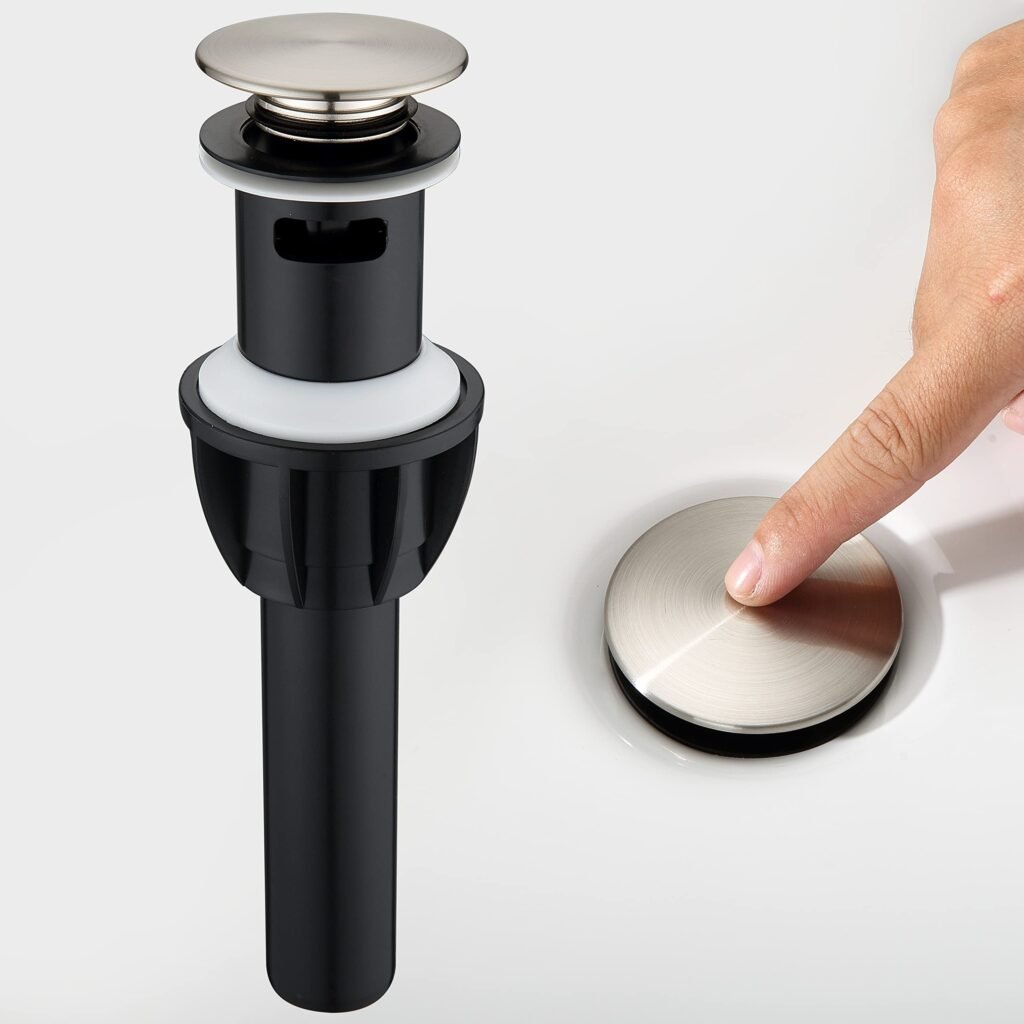
Most modern stoppers aren’t just sitting there; they are physically locked into a metal rod. You can’t just yank them out from the top. Trying to force a stopper out without loosening the nut underneath is a great way to snap the plastic and turn a $0 fix into a trip to the hardware store for a whole new assembly. I’ve snapped my fair share of those cheap plastic rods by being impatient.
How to Remove a Bathroom Sink Stopper Without Breaking Anything
First, clear everything out from under your sink. I know, it’s a pain to move the sixteen bottles of half-used lotion and the spare toilet paper, but you need room to breathe. I once tried to do this while squeezing around a giant tub of cleaning supplies and ended up knocking over a bottle of bleach. Just clear the deck. Grab a bucket or a small Tupperware container and place it directly under the pipes to catch the “gross water” that is inevitably going to leak out.
Look at the back of your drain pipe under the sink. You’ll see a horizontal rod that goes into the pipe. This rod is held in place by a nut—sometimes it’s metal, sometimes it’s plastic. This is the “pivot nut.” You’ll want to unscrew this. If it’s plastic, try to do it by hand first. If it’s metal and stuck, use a pair of pliers, but be gentle. I’ve seen people go full “Hulk” on these nuts and crack the thin metal of the drain pipe itself.
Once that nut is loose, pull the horizontal rod back just an inch or two. You don’t have to remove it entirely from the assembly, just enough so it’s no longer poking through the hole in the bottom of the stopper. Now, go back up top. You should be able to lift the stopper straight out of the sink. Warning: This is the part where it gets smelly. Have a paper towel ready to catch the stopper immediately so you don’t drip black sludge all over your nice white porcelain.
I’ve found that using an old toothbrush and some dish soap is the best way to clean the actual stopper. Don’t bother with fancy chemicals. Just scrub it until it looks like new. While the stopper is out, I usually take a bent coat hanger or a “zip tie” style drain cleaner and poke it down the hole to grab any hair that stayed behind. It’s a “one and done” job if you do it right the first time.
Clearing the P-Trap: The Real Way to Fix a Clogged Drain
If you pulled the stopper out and it was clean, but the sink is still slow, the problem is deeper. This is where most people panic, but it’s actually easier than the stopper. The P-trap is that U-shaped pipe under the sink. Its job is to hold a little bit of water to block sewer gases from coming into your house. Unfortunately, it also holds onto wedding rings, small toy cars, and—you guessed it—massive clogs.
With your bucket still in place, unscrew the two slip nuts on either end of the “U” section. These are almost always designed to be hand-tightened. If they are stuck, give them a tiny nudge with a pipe wrench. Once they are loose, the U-section will drop. Be ready, because the water inside that pipe is going to be stagnant and potentially very smelly. It’s the kind of smell that lingers, so keep a window open.
Take that piece of pipe to a different sink (or outside with a hose) and push a rag through it. I’ve found that just rinsing it doesn’t get the “walls” of the pipe clean. You want to clear out that biofilm so the water has a smooth path. I once found a solid “plug” of hair and beard trimmings in my P-trap that was so dense I could have used it as a doorstop. No amount of liquid cleaner was ever going to dissolve that.
When you put it back together, make sure the rubber washers (the O-rings) are seated flat. If they get twisted, you’ll have a slow drip that will rot out your vanity floor over the next six months. I always dry the pipes completely with a towel after I’m done, then run the water for a full minute while feeling the joints with my dry hand. If my hand stays dry, we’re in business. If it’s even slightly damp, unscrew it and try again.
Real Talk: Why Liquid Drain Cleaners are a Total Waste of Money
I’m going to be blunt: stop buying those big plastic jugs of liquid “pro-strength” drain openers. I used to swear by them until I started doing my own plumbing. Those chemicals are incredibly caustic. They are designed to sit in the clog and “eat” it, but what they actually do is sit in your pipes and eat the metal or the glue holding your PVC together. I’ve seen pipes that were thinned out to the point of paper because the homeowner used those cleaners every month for a year.
Furthermore, they rarely work on total clogs. If the water isn’t moving at all, the chemical just sits on top of the water and never even reaches the hairball. Then, when you eventually give up and call a plumber (or decide to take the pipes apart yourself), you’re dealing with a sink full of acid. I’ve had “chemical burns” on my forearms from splashing that stuff while trying to fix a sink the “right” way after the “easy” way failed. It’s a safety hazard.
Also, they are terrible for the environment and your septic system if you have one. They kill off the “good” bacteria that help break down waste. If you absolutely feel the need to pour something down there, stick to boiling water or a mix of baking soda and vinegar. They won’t solve a massive hair clog, but they are great for maintenance and won’t cost you a fortune or melt your plumbing.
Pinterest will tell you that a “magic” mixture of lemon and salt will fix a slow drain. It won’t. It will just make your clog smell like a margarita. Mechanical removal—actually taking the pieces apart and pulling the junk out—is the only 100% effective method. Don’t fall for the marketing gimmicks. If you can turn a wrench, you can fix a sink better than any chemical ever could.
Parting Wisdom from the Workbench
At the end of the day, a slow-draining sink is a minor annoyance that turns into a major disaster only if you ignore it. My best advice? Check your stoppers every six months as part of your deep cleaning routine. If you catch the hair buildup early, it never has the chance to turn into that impenetrable “Gordian knot” of sludge. It’s a lot easier to clean a slightly dirty stopper than it is to snake a line through the wall because a clog moved further down the system.
Quick Side Note: If your sink has an “overflow” hole (that little hole near the top of the basin), take a second to flush that out with some hot water too. It’s a hidden mold factory that can make your whole bathroom smell “off” even if the sink is draining perfectly.
I’ve made plenty of messes in my time, but learning to handle my own plumbing was one of the most empowering things I did for my home. You don’t need a tool belt and a van to keep your house running smoothly—just a little bit of patience and a bucket.
How long has your sink been acting up, or have you ever found something truly weird inside your P-trap? Drop a comment below and let’s talk shop—I’ve heard some pretty wild “clog stories” and I’d love to hear yours!