
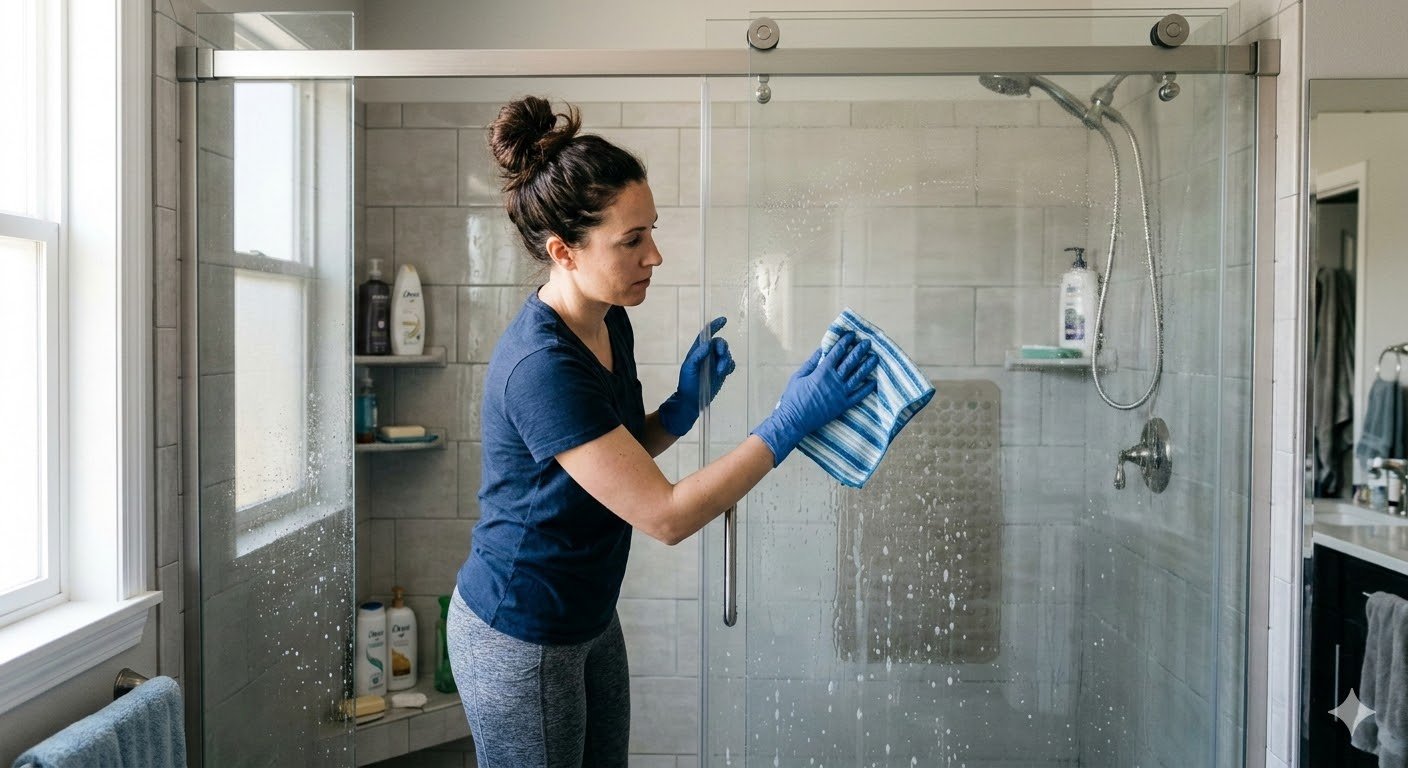
Standing in your bathroom, looking at those cloudy, crusty white spots on your glass shower doors can make you feel like you’ve completely lost control of your housework. I’ve been there. I remember one Saturday morning I spent three hours scrubbing my master bath with a “miracle” store-bought spray that smelled like a chemical plant explosion, only to have the spots reappear the second the glass dried. It felt like the shower was mocking me.
Hard water stains are basically just mineral deposits—calcium and magnesium—that have decided to make a permanent home on your glass. If you live in an area with “heavy” water, this is a weekly battle. Most people run to the store for heavy-duty acids, but I’ve found that those can actually ruin your metal fixtures and make your lungs burn. You don’t need a hazmat suit to get a clear view of your bathroom tile.
The good news is that you probably already have the best “industrial strength” cleaners sitting in your pantry. I’m a huge fan of using things that won’t kill my houseplants or my indoor cat, Barnaby, if I happen to spill a drop. We’re going to get those doors looking brand new using nothing but basic household staples and a little bit of strategic elbow grease.
Best natural hard water stain remover for shower doors
When I first started remodeling houses, I thought the most expensive cleaner was the best. I was wrong. After ruinining a perfectly good set of chrome handles with a caustic spray, I switched to plain old white distilled vinegar. It’s the undisputed heavyweight champion of mineral removal. The acetic acid in vinegar literally eats through the calcium buildup without eating through your finish.
To make this work, I don’t just spray and wipe. That’s where everyone fails. I take a spray bottle and fill it with a 50/50 mix of white vinegar and water. But here is the “guru” secret: I microwave the mixture for about 30 seconds until it’s hot. Heat accelerates the chemical reaction between the acid and the minerals. If you try to use cold vinegar on thick crusty buildup, you’ll be scrubbing until 2027.
I spray the hot mixture onto the glass and then—this is the hard part—I walk away. You have to let it sit for at least 15 to 20 minutes. If your stains are particularly nasty, I’ve even been known to soak paper towels in the vinegar and “plaster” them onto the glass so they don’t dry out. It looks ridiculous, like your shower is covered in wet bandages, but it works like a charm.
Once the time is up, I use a non-abrasive scrub sponge. Don’t use steel wool or you’ll scratch the glass, and then you’ll be calling a glass replacement company, which is a $600 mistake I’d like you to avoid. Rinse it down with warm water and squeegee it immediately. If you leave the water to air dry, you’re just inviting the minerals back for a second round.
Using lemon juice and salt for stubborn glass mineral deposits
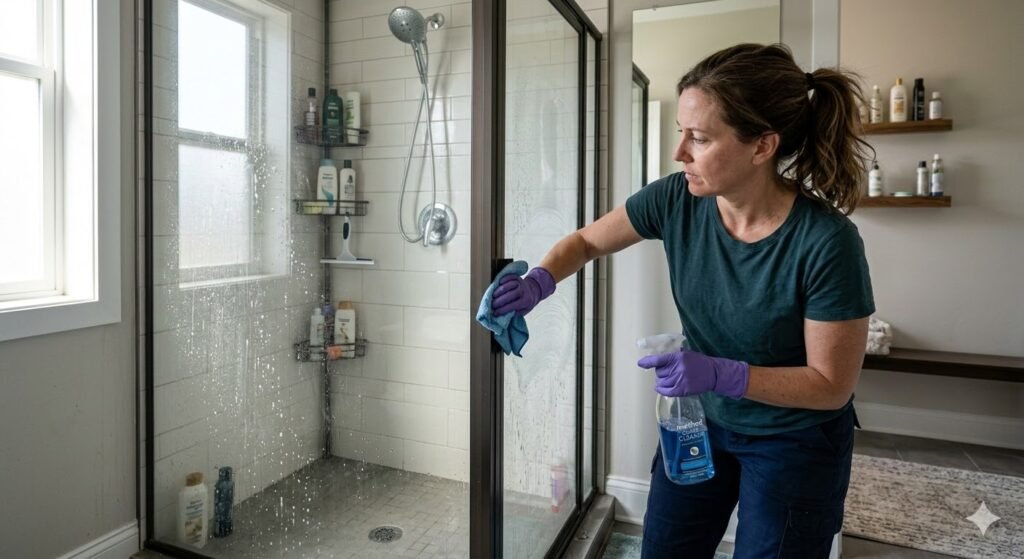
Sometimes vinegar isn’t enough, or maybe you just can’t stand the smell of a pickles in your bathroom. That’s when I reach for lemons. Lemons are slightly less acidic than vinegar, but they have a secret weapon: d-limonene, which helps break down the oils and soap scum that often trap the hard water minerals against the glass. It’s like a double-whammy for bathroom grime.
I like to cut a lemon in half and dip the flat side directly into a bowl of kosher salt. The salt acts as a very mild abrasive that helps “sand” down the mineral peaks without leaving permanent gouges in the tempered glass. I rub the lemon in small circles, squeezing a little juice out as I go. It smells like a spa, which is a nice change of pace from the usual bathroom odors.
The salt will eventually dissolve into a paste, which is exactly what you want. I’ve found that this method is particularly effective around the hinges and the bottom track of the door where the “crust” tends to get really thick. I once ignored my guest bathroom for six months, and the bottom of the door looked like a limestone cave. This lemon-salt combo was the only thing that saved me from having to buy a whole new door.
After you’ve scrubbed the whole surface, rinse it off with distilled water if you can. Using tap water to rinse off a hard water cleaner is a bit counterproductive, isn’t it? If you don’t have distilled water, just make sure you dry the glass instantly with a microfiber cloth. Those cloths are worth their weight in gold for getting a streak-free finish that looks professional.
Baking soda paste for cloudy shower glass restoration
If your glass has reached the point where it looks “etched” or permanently cloudy, you need something with more “oomph.” Baking soda is my go-to for what I call “the heavy lifting.” It’s an alkaline substance, so it works differently than the acids. It’s fantastic for breaking down the organic matter—skin cells and body oils—that act as the “glue” for hard water spots.
I mix about a half-cup of baking soda with just enough water to make a paste the consistency of toothpaste. I don’t measure it exactly; I just eyeball it until it looks right. I spread this paste all over the damp glass using a damp cloth. It’s messy, and it’s going to get all over your shower floor, but we’ll deal with that later.
To really kick things up a notch, I spray a little bit of my vinegar mixture on top of the baking soda paste. You’ll get that satisfying fizzing action. This mechanical bubbling helps lift the debris out of the microscopic pores of the glass. I let that sit for about 10 minutes, then I use a damp microfiber cloth to buff the surface in a circular motion.
Rinsing this off takes a bit of work because baking soda can leave a white film if you aren’t thorough. I usually take the detachable shower head and blast the glass for a good two minutes. This is the stage where I usually realize I’ve missed a spot, so I keep a small handheld mirror nearby to check the glass from different angles. If it’s not perfectly clear, I hit it one more time.
DIY daily shower spray to prevent water spots
Cleaning the shower once a month is a nightmare. Cleaning it for 30 seconds a day is a breeze. I learned this the hard way after a particularly humid summer when my bathroom started looking like a science experiment. I created a “preventative maintenance” spray that I keep right in the shower caddy, and it has changed my life.
My recipe is simple: one cup of water, a half-cup of rubbing alcohol (which helps the water evaporate quickly), and a teaspoon of liquid dish soap. The dish soap breaks the surface tension of the water so it sheets off the glass instead of forming droplets. Droplets are the enemy; they are just tiny little mineral bombs waiting to dry and leave a mark.
Every time I finish my shower, I give the glass a quick misting. I don’t even wipe it off. The alcohol ensures it dries without streaks, and the soap keeps the minerals from sticking. It’s the best “set it and forget it” trick I know. I’ve gone three months without a deep clean using this method, and the glass still looked better than my neighbor’s “professionally cleaned” bathroom.
A quick side note: If you have natural stone tile like marble or travertine in your shower, be very careful with vinegar or lemon juice. Acids will eat right through the finish on your expensive stone, leaving dull “etch” marks that are nearly impossible to fix. For stone showers, stick to the dish soap and alcohol mix, or buy a dedicated pH-neutral cleaner. I once ruined a marble threshold with a vinegar spill, and I still have nightmares about the repair bill.
The Real Talk: What’s not worth your time
I’m going to be brutally honest with you: those “as seen on TV” scrubbers with the long handles and the spinning heads are usually garbage. I’ve bought three of them, and every single one ended up in the trash within a month. They lack the torque to actually scrub away a mineral deposit, and the batteries die right when you’re halfway through the job. Your own arm is the best tool for this.
Also, don’t bother with expensive “glass sealants” that claim to keep your shower clean for a year. I’ve tried the high-end ceramic coatings meant for cars, and while they work for a few weeks, the hot soapy water of a shower environment eventually strips them off. You’re better off spending $5 on a high-quality squeegee and using it every single day.
Another “pro” tip that’s actually a scam? Dryer sheets. People on the internet swear that rubbing a used dryer sheet on the glass removes hard water. It does… sort of. But it also leaves a waxy, chemical residue on the glass that attracts even more dust and hair. It’s a temporary fix that creates a bigger mess in the long run. I’ve tried it, I hated it, and I’m telling you to skip it.
Lastly, if your glass is actually etched—meaning the minerals have chemically bonded with the glass and created tiny pits—no amount of cleaning will fix it. You can tell if it’s etched if the glass stays cloudy even when it’s wet. If that’s the case, you’ve reached the point of no return. At that point, your only options are professional polishing with a cerium oxide compound or, sadly, replacement.
Keeping your glass clear isn’t rocket science, but it does require a bit of consistency. The “magic” is all in the chemistry of the acids and the habit of the squeegee. I always tell my friends that a clean shower door is the easiest way to make a $5,000 bathroom remodel look like a $50,000 one. It’s all about the sparkle.
Parting Wisdom
My parting wisdom for you is this: invest in a brass-handled squeegee with a replaceable rubber blade. The cheap plastic ones skip and leave lines, but a heavy-duty one makes the job actually satisfying. It takes ten seconds to squeegee after a shower, and it will save you hours of scrubbing on the weekend. Trust me, your future self will thank you when you’re relaxing on a Sunday instead of fighting with a spray bottle.
What’s the worst “cleaning hack” you’ve ever tried that totally backfired? Drop your stories or any questions you have about bathroom grime in the comment box below—I’ve probably made the same mistake and can help you fix it!