A good door seal can make a home studio more comfortable by limiting drafts, blocking light, and reducing sound leakage around common gaps. The right option depends on whether you need frame coverage, a bottom sweep, or a flexible seal for irregular spaces.
We selected 10 practical weather-stripping and draft-stopping solutions in different materials, profiles, lengths, and installation styles so you can match the seal to your door and recording setup.
Best 10 Studio Door Seals for Home Use Picks for 2026
Best Flexible Foam Pick

- 33 feet of self-adhesive EVA foam
- Flexible for larger or irregular gaps
- Useful for doors, windows, and garages
Best For: Multi-purpose DIY sealing projects
Best Long-Length Silicone Flap
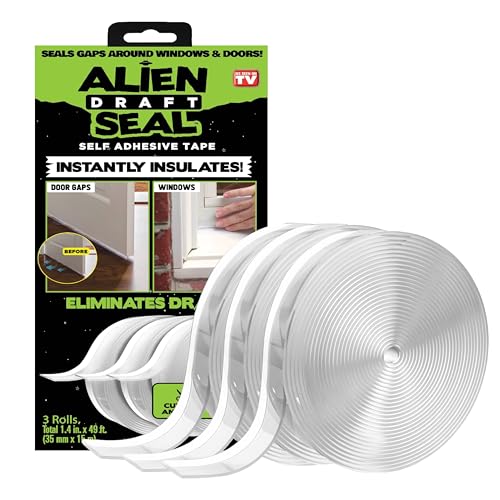
- 49 feet across three transparent rolls
- Flexible silicone resists creasing and hardening
- Works on several common surface types
Best For: Large multi-opening sealing projects
Best No-Adhesive Fit

- Push-in installation without adhesive
- Fits 0.35- to 0.59-inch door slots
- Blocks light, drafts, dust, and noise
Best For: Grooved doors needing a removable seal
Best Clear Acoustic Strip

- Two-pack with about 32.8 feet total
- Clear silicone for a discreet finish
- Wide strip helps cover broader gaps
Best For: Wide door or window gaps needing clear adhesive sealing
Best Brush Seal
Strong Self-Adhesive Brush Weather Stripping

- Dense nylon pile helps block drafts, dust, and noise
- 33-foot roll for multiple doors or windows
- Fits approximately 0.1- to 0.18-inch gaps
Best For: Narrow gaps around sliding doors, frames, and tracks
Best Under-Door Sweep
Adjustable Silicone Draft Stopper

- Handles door-bottom gaps up to 1.5 inches
- Flexible silicone glides over carpet and uneven floors
- Wider adhesive backing helps resist lifting
Best For: Large gaps beneath interior or exterior doors
Best D-Shaped Seal
Self-Adhesive Silicone Gap Filler

- Fits approximately 1/8- to 1/4-inch gaps
- Helps reduce drafts, dust, moisture, and noise
- 20-foot cut-to-fit roll for doors and windows
Best For: Small to medium gaps around smooth door frames
Flexible Under-Door Coverage
Grotheory Silicone Draft Stopper

- Flexible silicone strip for bottom gaps up to 2 inches
- Triple design helps reduce drafts, dust, light, and noise
- Two self-adhesive 39-inch strips included
Best For: Larger bottom gaps on studio, interior, exterior, or RV doors
Foam Sound-Absorbing Seal
33-Foot Neoprene Door Seal Tape

- 33 feet across two rolls of 1/2-inch-wide tape
- CR foam and neoprene help with sealing and warp resistance
- Grid adhesive backing supports secure installation
Best For: Narrow studio door or window seams needing foam insulation
Best Flexible Foam Pick – 33FT EVA Foam Door Seal
For shoppers comparing studio door seals for home use, this 33-foot self-adhesive EVA foam strip is a flexible option for sealing door and window gaps. It can be cut to size and is designed for draft control, insulation, sound reduction, and light blocking.
Best For: DIY sealing projects where flexible, adhesive-backed foam is useful across doors, windows, and other household surfaces.
Pros:
- 33 feet of black EVA foam weather stripping for multiple projects.
- Self-adhesive backing with mesh reinforcement intended to improve adhesion.
- Flexible material can accommodate larger or irregular gaps.
- Suitable for doors, windows, ventilation openings, garages, and more.
Cons:
- Adhesive installation requires a clean, suitable surface.
- Foam may be less discreet than the transparent alternatives in this roundup.
- It is sold as one roll rather than a pre-cut door-specific kit.
This is a versatile choice when you want one roll for several sealing tasks. Its foam construction and broad application range make it practical for home studio comfort, though appearance and surface preparation should factor into your decision.
Best Long-Length Silicone Flap – Alien Draft Seal
This 49-foot transparent silicone seal is a strong contender among studio door seals for home use, particularly when you need extensive coverage without a prominent black strip. Its flexible flap is designed to reduce drafts around doors and windows while remaining moisture resistant.
Best For: Covering multiple door or window gaps with a transparent, flexible silicone strip.
Pros:
- 49 feet total across three rolls, providing substantial coverage.
- Transparent silicone is less visually obtrusive.
- Adhesive is designed for painted wood, glass, metal, ceramic, fiberglass, and plastic.
- Flexible silicone resists creasing and hardening in cold conditions.
Cons:
- The 1.4-inch width may not suit every gap or door profile.
- Adhesive-backed installation depends on proper surface preparation.
- The flap-style design may require careful positioning around moving doors.
Choose this seal when coverage and a low-visibility finish matter most. Its long combined length is useful for several openings, while the silicone construction suits areas exposed to moisture and seasonal temperature changes.
Best No-Adhesive Fit – Ravinte Q-Shaped Door Seal
For a cleaner installation, this push-in Q-shaped strip stands out among studio door seals for home use because it requires no adhesive. It fits door slots from 0.35 to 0.59 inches and is intended to block light, drafts, dust, water, and some noise.
Best For: Doors with compatible grooves or recesses where a removable, adhesive-free seal is preferred.
Pros:
- No adhesive means no sticky residue or adhesive curing time.
- Designed to fit slots measuring 0.35 to 0.59 inches.
- 26 feet of high-density black foam provides broad door coverage.
- Helps block light, drafts, dust, water, and noise.
Cons:
- Compatibility depends on measuring the existing door slot accurately.
- It is intended for doors rather than general window and surface applications.
- Black foam may be more noticeable than a clear seal.
This is the most installation-specific option here, but it can be appealing for a studio door with a suitable kerf or groove. Measure first; when the fit is right, the push-in design avoids the maintenance concerns associated with adhesive strips.
Best Clear Acoustic Strip – 35mm Silicone Seal
This two-pack of clear silicone weather stripping offers a discreet way to address door and window gaps. For studio door seals for home use, its wide strip is aimed at draft control, debris reduction, moisture resistance, and sound dampening, with a straightforward measure, cut, clean, and apply installation process.
Best For: Interior or exterior doors and windows where a transparent, wide adhesive seal is desirable.
Pros:
- Two-pack provides about 32.8 feet of total material.
- Clear, flexible silicone is designed to resist cracking, freezing, and deformation.
- 35mm width can cover relatively broad gaps.
- Waterproof adhesive is intended for humid or cold environments.
Cons:
- Adhesive installation requires cleaning and up to 24 hours to cure fully.
- The 35mm-wide strip may be too large for narrow gaps.
- Clear adhesive application can require careful alignment for a neat finish.
This option suits buyers who want broad coverage with a less conspicuous appearance. Its clear silicone construction and stated acoustic and debris-barrier benefits make it worth considering for a home studio, provided the strip width matches the gap.
Best Brush Seal – Strong Self-Adhesive Brush Weather Stripping
For studio door seals for home use, this brush-style strip is a practical choice for narrow gaps around exterior doors, sliding glass doors, windows, and tracks. Its 33-foot roll can be cut to length, while the dense nylon pile helps limit drafts, dust, and everyday noise.
Best For: Narrow gaps measuring about 0.1 to 0.18 inches, especially on sliding doors, patio doors, wardrobes, cabinets, and window tracks.
Pros:
- Oil-based adhesive is designed to resist falling off across temperatures from -10°C to 50°C.
- Dense woven nylon pile is intended to resist shedding and flattening with repeated use.
- 33 feet of material can cover roughly two to three doors or four to six windows.
- Simple peel-and-stick installation requires only measuring, cleaning, cutting, and pressing.
Cons:
- Designed for relatively narrow gaps only; larger openings need another seal style.
- Adhesive installation depends on a clean, suitable surface.
- Gray may not match every door or frame.
This is a versatile option when you need a low-profile studio door seal for small gaps and want extra material for several projects. Choose it over a bottom sweep when the gap is along a frame, track, cabinet, or sliding-door edge rather than beneath a hinged door.
Best Under-Door Sweep – Adjustable Silicone Draft Stopper
When shopping for studio door seals for home use, this silicone under-door sweep suits larger gaps beneath interior or exterior doors. Its flexible design is adjustable up to a 1.5-inch gap and is intended to reduce airflow, outside noise, and unwanted space beneath the door.
Best For: Door-bottom gaps from 0 to 1.5 inches, including bedroom, office, exterior, RV, basement, and other doors with smooth surfaces.
Pros:
- Flexible silicone can bend and glide over carpet or uneven flooring.
- Wider adhesive backing is designed to stay attached during opening and closing.
- Triple-cavity design helps with draft and noise reduction.
- 39-inch length can be trimmed to fit a door.
Cons:
- Adhesive may not perform well on rough or textured walls or door surfaces.
- Cold-weather installation requires warming the adhesive with a hair dryer.
- The door should remain mostly undisturbed for 24 hours after installation.
This is the strongest match in the group for a noticeable gap under a studio door. Measure carefully before cutting, prepare the surface, and allow the adhesive to set so the sweep can move smoothly without lifting or dragging.
Best D-Shaped Seal – Self-Adhesive Silicone Gap Filler
This D-shaped silicone strip is a straightforward option for studio door seals for home use when the gap is around a door frame rather than directly under it. The flexible 20-foot roll compresses into small openings and can also be used on windows, cabinets, garage doors, and other frames.
Best For: Door and window frame gaps measuring approximately 1/8 to 1/4 inch, particularly on smooth surfaces.
Pros:
- Flexible silicone helps block drafts, dust, moisture, light, and everyday noise.
- 20-foot roll can be cut to fit multiple sealing projects.
- Peel-and-stick installation is simple after cleaning and drying the surface.
- Included adhesive promoter can help improve bonding on smooth surfaces.
Cons:
- Its recommended gap range is narrower than that of an under-door sweep.
- Adhesive performance depends on proper surface preparation.
- It may be less suitable for rough or heavily textured surfaces.
Choose this seal for a clean, flexible frame treatment where a D-profile can compress against the opposing surface. It is a useful middle ground between a brush strip for very narrow gaps and a wide sweep for large openings beneath a door.
Flexible Under-Door Coverage – Grotheory Silicone Draft Stopper
For studio door seals for home use, the Grotheory Door Draft Stopper is a flexible under-door option designed to help block drafts, noise, light, dust, and bugs. Its self-adhesive silicone strip can be trimmed to fit doors up to 39 inches wide and gaps up to 2 inches.
Best For: Interior or exterior doors with larger bottom gaps, including studios, garages, basements, and RVs.
Pros:
- Flexible silicone construction is designed to bend without damaging floors.
- Triple-design sweep helps reduce noise and limit dust entry.
- Two 39-inch strips are included and can be cut to size.
- Self-adhesive installation works on several door and window surfaces.
Cons:
- As an under-door seal, it may not address gaps around the door frame.
- Adhesive installation requires accurate surface preparation and sizing.
This is a practical choice when a studio door has a noticeable gap at the bottom and you want a flexible, easy-to-install seal with added noise and draft control.
Long-Run Frame Sealing – Fingwerk D-Shape Rubber Strip
For studio door seals for home use, the Fingwerk D-shape rubber weather stripping provides 50 feet of self-adhesive material for sealing door and window frames. It is intended for gaps measuring about 2.5 to 5.5 mm, so measuring before installation is important.
Best For: Studios needing extensive perimeter sealing around doors or windows with narrow, consistent gaps.
Pros:
- 50-foot roll covers multiple doors, windows, or other projects.
- Flexible rubber is designed to resist freezing and cracking in extreme temperatures.
- Self-adhesive backing is simple to install after removing the protective film.
- Tailor scissors are included for cutting the strip to size.
Cons:
- It is sized for relatively narrow gaps of 2.5 to 5.5 mm.
- Application requires waiting 24 hours for the adhesive to become firm.
Choose this strip when you need a long length for frame sealing rather than an under-door sweep. Its gap range makes careful measurement especially important for a secure fit.
Foam Sound-Absorbing Seal – 33-Foot Neoprene Door Seal Tape
For studio door seals for home use, this 33-foot neoprene and CR foam strip offers a narrow adhesive seal for doors and windows. Its 1/2-inch width and 1/4-inch thickness are suited to smaller seams, while the material is also described for sound absorption, insulation, and impact protection.
Best For: Studio doors and windows with narrow seams where a foam-based seal may help with drafts, sound, and general protection.
Pros:
- Two 16.5-foot rolls provide 33 feet of total material.
- CR foam and neoprene offer sealing and warp-resistance properties.
- Grid adhesive backing is designed for secure application with less concern about residue.
- Can be cut to the required length and used for insulation or sound absorption.
Cons:
- Its 1/4-inch thickness and 1/2-inch width may not suit larger gaps.
- Foam tape may be less appropriate than a bottom sweep for substantial door-bottom openings.
This option makes sense for smaller studio door or window seams where you want flexible foam coverage and a long supply of adhesive strip for multiple applications.
How We Picked the Best Studio Door Seals for Home Use
We focused on the factors that matter most in a home studio: gap coverage, adhesive or mounting reliability, flexibility, durability, and ease of trimming. The selection includes foam, silicone, rubber, brush, flap, kerf, and door-bottom designs because no single seal works equally well for every door.
We also considered useful roll lengths and multipacks, since a studio door may require coverage on three sides, the threshold, or more than one door. Products marketed for soundproofing can reduce air movement and some high-frequency leakage, but they should not be treated as a substitute for acoustic construction or a properly sealed door assembly.
Quick Comparison
- Best for simple frame gaps: EVA foam, silicone D-shaped, and rubber weather-stripping rolls.
- Best for door bottoms: Adjustable draft stoppers, door sweeps, and bottom-seal strips.
- Best for uneven gaps: Flexible flap seals and brush strips.
- Best for discreet installation: Clear silicone weather stripping.
- Best for kerf-equipped doors: Q-shaped kerf foam seals such as the Ravinte design.
Key Buying Factors for Studio Door Seals for Home Use
Measure the Gap First
Close the door and measure the space between the door and frame at several points. Choose a seal thick enough to compress gently, not one that prevents the latch from engaging. For a bottom seal, measure the gap from the door edge to the floor or threshold and account for carpet or uneven surfaces.
Choose the Right Profile and Material
Foam is inexpensive and easy to cut, while silicone and rubber generally offer better resilience for frequently used doors. Brush seals tolerate movement and small irregularities, but they may not block light or air as tightly as a compressed rubber or silicone profile. Flap-style seals can cover variable gaps with less resistance.
Check Installation Requirements
Self-adhesive products need a clean, dry, grease-free surface. Test the door movement before applying the full roll, and avoid placing thick material where it could interfere with hinges, the latch, or the door closer. Kerf seals require a compatible groove rather than adhesive mounting.
Set Realistic Sound Expectations
Sealing air gaps can help reduce leakage from voices, street noise, and room noise, especially around the perimeter. However, the result depends on the door’s mass, the frame, the threshold, and other openings in the room. For recording, combine door sealing with acoustic treatment and careful microphone placement.
Who Should Buy Which Studio Door Seals for Home Use?
Choose foam tape if you want an affordable, easy-to-trim solution for modest frame gaps. Choose silicone or D-shaped rubber for a more durable seal on a frequently used studio door. Choose a brush strip or flexible flap when the gap is uneven or the door needs to move freely. Choose a door sweep or adjustable draft stopper when noise, light, dust, or cold air is entering primarily beneath the door. Choose a clear seal when appearance matters, and choose a kerf strip only if your door frame is designed to accept it.