Fresh, well-balanced airflow can make a major difference in indoor comfort, humidity control, and air quality. The best whole-house systems exchange stale indoor air for outdoor air while helping limit energy loss.
We selected 10 premium whole-house ventilation systems spanning energy recovery ventilators, filtered through-wall units, and high-output whole-house fans. Use the guide below to match airflow capacity, controls, filtration, and installation requirements to your home.
Best 10 Premium Whole House Ventilation Systems Picks for 2026
Best Overall
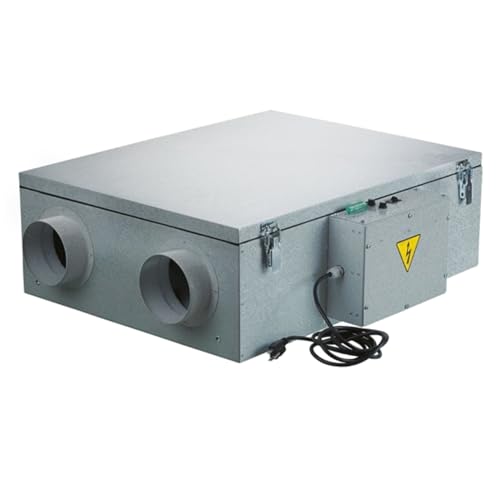
- 180 CFM balanced ventilation
- Heat and humidity recovery
- Automatic frost protection
Best For: Larger whole-house installations needing efficient balanced airflow
Best HVAC-Controlled Option
Panasonic SelectCycler Vent System

- Programmable wall controller
- Supply or balanced modes
- Coordinates HVAC and dampers
Best For: Integrated ventilation control with compatible HVAC and fan components
Best Value ERV

- Up to 162 CFM airflow
- Three-speed operation
- Heat and humidity recovery
Best For: Moderate-size homes needing flexible, continuous ERV ventilation
Best Room-Specific Pick
Through-Wall HEPA Ventilation Fan
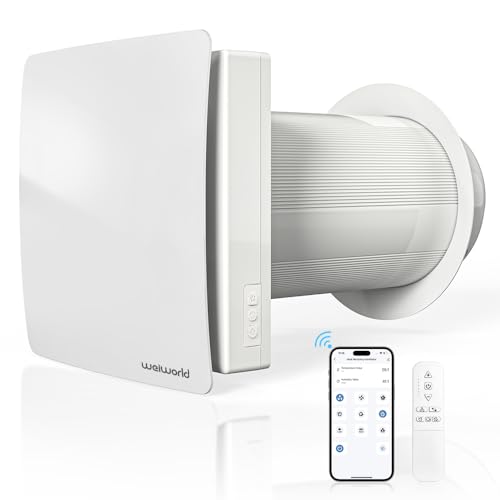
- HEPA and carbon filtration
- Wi-Fi and remote control
- Quiet 30 dB EC motor
Best For: Bedrooms, offices, and enclosed rooms needing filtered fresh air
Balanced Comfort Pick

- Balanced 186 CFM fresh-air exchange
- Recovers heat and humidity
- Automatic frost protection
Best For: Homes needing year-round balanced ventilation
High-Airflow Cooling Pick

- Up to 6,878 CFM airflow
- Wireless control with timer
- R5 insulated damper doors
Best For: Large homes prioritizing powerful cooling
Quiet Adjustable Pick
Solatube EPS Extreme Whole House Fan

- Up to 4,567 CFM airflow
- Seven speeds with remote control
- HushMount 2 quiet operation
Best For: DIY cooling in homes up to about 3,000 square feet
Large-Home Power Pick

- 6,924 CFM maximum airflow
- Designed for homes up to 3,470 sq. ft.
- Wireless control with 12-hour timer
Best For: Large homes needing maximum airflow
Balanced Coverage Choice
- 5,024 CFM maximum airflow
- Designed for homes up to 2,510 sq. ft.
- Wireless control and countdown timer included
Best For: Average-size homes needing versatile ventilation
Compact Average-Home Option

- 4,415 CFM maximum airflow
- Designed for homes up to 2,210 sq. ft.
- Lower 551-watt high setting
Best For: Average homes with moderate ventilation needs
Best Overall – VENTS-US Frigate ERV 150
The VENTS-US Frigate ERV 150 is a strong choice for premium whole house ventilation systems when you want balanced fresh-air exchange with heat and humidity recovery. Its 180 CFM capacity, corrosion-resistant steel casing, and ceiling-mount design suit permanent whole-home installations.
Best For: Homeowners seeking balanced ventilation and energy-conscious operation in a larger whole-house system.
Pros:
- Enthalpy core recovers heat and moisture without requiring a drain.
- Provides up to 180 CFM of balanced ventilation at 1.9 sones.
- Slim, corrosion-resistant casing and included mounting brackets support tight ceiling installations.
- Automatic electronic frost protection and washable MERV 6 filters simplify cold-weather operation and maintenance.
Cons:
- Permanent ceiling installation may require professional ductwork and electrical planning.
- Its single listed power level offers less adjustment than multi-speed models.
With its high airflow rating and energy-recovery core, the Frigate ERV 150 is a well-rounded premium option for whole-home air exchange. Confirm that its 31-inch depth and 120-volt electrical requirements fit your installation.
Best HVAC-Controlled Option – Panasonic SelectCycler Vent System
The Panasonic SelectCycler is a control-focused option among premium whole house ventilation systems. Rather than serving as a standalone ERV, it coordinates a central HVAC system, dampers, and compatible ventilation fans through a programmable wall controller.
Best For: Homeowners building a coordinated supply or balanced ventilation strategy around an existing HVAC system.
Pros:
- Coordinates HVAC operation, dampers, and compatible WhisperGreen Select or 110VAC ventilation fans.
- Includes a programmable wall-mounted controller that displays status and calculates run cycles.
- Offers dual operating modes for supply or balanced ventilation strategies.
- Includes a 24VAC motorized supply damper and Fanconnect wall switch.
Cons:
- It is a control system rather than a complete standalone ERV with an integrated heat-recovery core.
- Designed for 4-inch ducting and may require compatible fan and HVAC components.
The SelectCycler makes the most sense when ventilation needs to work with an existing central system. Before buying, verify compatibility with your fans, dampers, duct layout, and preferred control strategy.
Best Value ERV – VENTS-US Frigate ERV 120S
The VENTS-US Frigate ERV 120S delivers the core features expected from premium whole house ventilation systems in a somewhat smaller package. It combines balanced air exchange, enthalpy-based heat and moisture recovery, three-speed control, and cold-weather frost protection.
Best For: Homes that need continuous balanced ventilation with flexible speed settings and moderate airflow capacity.
Pros:
- Provides up to 162 CFM of HVI-certified whole-house air exchange.
- Three-key control offers low, medium, and standby settings for continuous operation.
- Enthalpy core transfers heat and moisture, with up to 65% apparent sensible effectiveness.
- Includes washable MERV 6 filters, mounting brackets, and electronic anti-frost protection.
Cons:
- Maximum airflow is lower than the Frigate ERV 150’s 180 CFM rating.
- Standard 5-inch duct connections may limit compatibility with existing ductwork.
The Frigate ERV 120S is a practical fit when you want ERV performance and simple manual control without choosing the largest model. Check duct sizing and available ceiling space before installation.
Best Room-Specific Pick – Through-Wall HEPA Ventilation Fan
This through-wall HEPA fan is a room-focused alternative to premium whole house ventilation systems. It combines fresh-air intake and exhaust with three-stage filtration, Wi-Fi control, and a quiet EC motor for spaces such as bedrooms, offices, attics, and basements.
Best For: Individual rooms or enclosed areas where through-wall installation and filtered fresh-air exchange are more practical than a ducted whole-house system.
Pros:
- Three-stage filtration includes a pre-filter, HEPA filter, and activated carbon layer.
- App, remote, and button controls support intake, exhaust, and circulation modes.
- Brushless EC motor operates at a listed 30 dB noise level and 8.5 watts.
- Magnetic front panel makes pre-filter access and maintenance easier.
Cons:
- Its listed 60 cubic meters per hour capacity is intended for room-level ventilation, not full-house airflow.
- Through-wall mounting does not replace a centrally ducted ventilation system.
- The listed 230-volt specification should be checked carefully against local electrical requirements.
Choose this model when targeted filtration and simple wall installation matter more than whole-home coverage. Its smart controls and low-noise operation make it especially useful for bedrooms and home offices, provided the electrical setup is compatible.
Balanced Comfort Pick – Frigate ERV 150 EC
For buyers comparing premium whole house ventilation systems, the VENTS-US Frigate ERV 150 EC is designed for balanced fresh-air exchange rather than cooling alone. Its enthalpic core recovers heat and humidity while supplying up to 186 CFM, and automatic frost protection helps maintain operation in colder conditions.
Best For: Homes seeking balanced ventilation with heat and humidity recovery.
Pros:
- Supplies fresh air while removing stale air at the same time.
- Enthalpic recovery helps capture heat and moisture, potentially reducing heating and cooling demands.
- Automatic electronic defrost helps prevent freezing in low temperatures.
- Steel casing with an anti-corrosion coating supports long-term durability.
Cons:
- Its 186 CFM capacity is lower than the airflow of whole-house cooling fans.
- Designed for ventilation and recovery, not rapid whole-home cooling.
The Frigate ERV 150 EC is a strong fit when indoor-air exchange and humidity management matter more than maximum airflow. Its balanced design, EC motor, and recovery core make it a practical premium ventilation option.
High-Airflow Cooling Pick – QuietCool QC ES-7000 RF
Among premium whole house ventilation systems, the QuietCool QC ES-7000 RF stands out for moving large volumes of air quickly. Its two-speed ECM motor delivers up to 6,878 CFM, while the included wireless control, timer, acoustical ducting, and insulated damper box support convenient seasonal cooling and ventilation.
Best For: Large homes that need powerful whole-house cooling and remote control.
Pros:
- Moves up to 6,878 CFM on high and 4,304 CFM on low.
- ECM motor provides high airflow with efficient operation.
- Wireless RF control includes a glass switch and up to a 12-hour countdown timer.
- R5 damper doors help insulate the home from the attic when the fan is off.
Cons:
- It is a ceiling-mounted exhaust fan, not a heat- and humidity-recovery ventilator.
- Its two-speed design offers fewer airflow settings than some seven-speed alternatives.
- The system is intended for large homes and may be more capacity than smaller spaces require.
With its substantial airflow and included wireless controls, the QC ES-7000 RF is geared toward rapid whole-home air movement. Choose it when cooling performance and coverage up to approximately 3,440 square feet are the priority.
Quiet Adjustable Pick – Solatube EPS Extreme Whole House Fan
The Solatube EPS Extreme is a practical choice among premium whole house ventilation systems for homeowners who want strong airflow with quieter operation and flexible controls. It delivers up to 4,567 CFM through a seven-speed EC brushless motor and includes insulated damper doors plus components for a DIY attic installation.
Best For: Homes up to approximately 3,000 square feet seeking quiet, adjustable whole-house cooling.
Pros:
- Seven adjustable speeds make it easier to fine-tune airflow.
- HushMount 2 technology is designed to minimize operating noise.
- R6 insulated damper doors help limit air infiltration when the fan is off.
- Complete kit includes the fan, mounting hardware, remote, grille, ducting, and fasteners.
Cons:
- Its 4,567 CFM capacity is lower than the QuietCool model’s maximum airflow.
- It is an exhaust-style cooling fan rather than an ERV with heat and humidity recovery.
- DIY installation may still require appropriate attic access and preparation.
The EPS Extreme balances substantial cooling airflow with speed control and noise-focused mounting. Its included installation components and long motor warranty make it especially appealing to homeowners planning a DIY-oriented whole-house fan setup.
Large-Home Power Pick – QuietCool QC CL-7000 RF
For shoppers comparing premium whole house ventilation systems for a larger home, the QuietCool QC CL-7000 RF stands out with 6,924 CFM on high and coverage designed for homes up to 3,470 square feet. Its wireless controls, timer, and insulated damper box add convenience for regular cooling and ventilation.
Best For: Large homes needing high-capacity whole-house cooling and ventilation.
Pros:
- Delivers up to 6,924 CFM on high and 5,518 CFM on low.
- Designed for homes up to 3,470 square feet.
- Includes wireless RF control, glass wireless switch, and a 12-hour countdown timer.
- R5 damper doors help insulate the home from the attic when the fan is off.
Cons:
- Its 1,147-watt high setting is more power-hungry than the smaller models.
- The 92-pound unit may require careful ceiling installation.
The QC CL-7000 RF is the strongest fit of these three models when airflow and coverage are the priority. Choose it when your home size justifies its larger motor and installation requirements.
Balanced Coverage Choice – QuietCool QC CL-5400 RF
The QuietCool QC CL-5400 RF is a practical middle option among premium whole house ventilation systems, combining 5,024 CFM of airflow with coverage for homes up to 2,510 square feet. It also includes wireless controls, a timer, and R5 damper doors for seasonal insulation.
Best For: Average-size homes seeking a balance of airflow, coverage, and control features.
Pros:
- Moves up to 5,024 CFM on high and 4,406 CFM on low.
- Designed for homes up to 2,510 square feet.
- Includes wireless RF control, glass wireless switch, and a 12-hour countdown timer.
- Includes acoustical ducting and an R5 damper box.
Cons:
- It provides less airflow and coverage than the CL-7000 RF.
- The ceiling-mounted installation still requires planning and suitable space.
With its combination of 5,024 CFM airflow and moderate power use, the QC CL-5400 RF is a sensible fit for many average homes. It offers more capacity than the smallest model without moving to the largest unit.
Compact Average-Home Option – QuietCool QC CL-4700 RF
For average homes where a smaller capacity is sufficient, the QuietCool QC CL-4700 RF provides up to 4,415 CFM and is designed for spaces up to 2,210 square feet. This premium whole house ventilation system includes wireless control, a timer, and an R5 damper box.
Best For: Average homes needing effective whole-house ventilation in a lower-capacity configuration.
Pros:
- Provides up to 4,415 CFM on high and 3,402 CFM on low.
- Designed for homes up to 2,210 square feet.
- Includes wireless RF control, glass wireless switch, and a 12-hour countdown timer.
- Its 551-watt high setting uses less power than the larger models listed here.
Cons:
- Has the lowest airflow and coverage of the three models.
- The listed noise level is 37.2 dB.
The QC CL-4700 RF makes sense when your home falls within its stated coverage range and you do not need the extra capacity of the larger fans. Its lower high-setting wattage and complete wireless-control package keep the feature set practical.
How We Picked the Best Premium Whole House Ventilation Systems
We evaluated these systems by looking at the factors that matter most in real homes: airflow capacity, ventilation design, energy efficiency, filtration, sound, controls, installation complexity, and the size or layout each system is suited to serve. The selection includes ERVs for continuous balanced ventilation, compact fresh-air exchange units for targeted rooms, and high-CFM whole-house fans designed for rapid cooling.
Because these technologies solve different problems, the highest CFM rating is not automatically the best choice. A whole-house fan can move far more air than an ERV, but it usually depends on favorable outdoor temperatures and open windows. An ERV is better suited to continuous ventilation when preserving heating or cooling energy is important.
Quick Comparison
| System type | Best for | Main strength | Important consideration |
|---|---|---|---|
| Energy recovery ventilator | Year-round fresh-air exchange | Balances ventilation with energy efficiency | Requires ducting and correct sizing |
| Through-wall ventilator | Single rooms or retrofit projects | Less invasive installation | Lower coverage than central systems |
| Whole-house fan | Fast summer cooling | Very high airflow and lower operating cost | Needs open windows and suitable outdoor air |
Key Buying Factors for Premium Whole-House Ventilation Systems
Airflow and Home Size
Compare rated CFM with your home’s square footage, ceiling height, occupancy, and local ventilation requirements. Oversizing can increase noise and energy use, while undersizing may leave bedrooms, bathrooms, or closed-off areas poorly ventilated. Have an HVAC professional calculate the required airflow when possible.
Ventilation Method and Climate
ERVs transfer heat and, depending on the design, some moisture between outgoing and incoming air. They are generally the better fit for continuous, balanced ventilation in conditioned homes. Whole-house fans are most effective when outdoor air is cooler and reasonably clean; they are not a direct replacement for filtration-focused mechanical ventilation.
Filtration, Controls, and Sound
Check filter type, replacement availability, and access. HEPA filtration can be useful where fine-particle control is a priority, but it may require more maintenance and fan power. Wireless controls, timers, humidity sensing, and multiple speed settings improve convenience. Review published sound ratings and installation location, since perceived noise depends on duct design and mounting.
Installation and Maintenance
Central systems may require supply and exhaust ductwork, exterior wall or roof penetrations, electrical work, and balancing. Confirm available space, duct diameter, climate protection, and condensate handling before buying. Plan to clean or replace filters regularly and keep outdoor intake and exhaust grilles clear.
Who Should Buy Which Premium Whole House Ventilation Systems?
Choose an ERV for Balanced, Year-Round Ventilation
VENTS-US Frigate models and the Panasonic SelectCycler are worth considering for homeowners who want continuous fresh-air exchange with a more controlled approach to energy loss. They are especially appropriate for tighter, newer homes or spaces where humidity and indoor pollutants need ongoing management.
Choose a Through-Wall Unit for a Targeted Retrofit
A WiFi-enabled HEPA through-wall ventilator makes more sense when you need fresh-air exchange in one room, an addition, or a home where installing full ductwork is impractical. Confirm wall thickness, exterior clearance, and expected coverage first.
Choose a Whole-House Fan for Rapid Summer Cooling
QuietCool and Solatube models are aimed at homeowners who want to flush hot indoor air quickly and cool the home with outdoor air. They are a strong fit for suitable climates, well-sealed homes with attic pathways, and users comfortable opening windows during operation. Avoid relying on this category alone when you need filtered, balanced ventilation in hot, humid, smoky, or heavily polluted conditions.