A well-chosen whole-house ventilation system can improve indoor air quality, remove stale air, and make hot or humid rooms more comfortable. The best option depends on your home’s size, climate, ductwork, and whether you need cooling airflow, balanced fresh-air exchange, or both.
We compare 10 standout whole-house fans, ERVs, and fresh-air ventilation systems to help you narrow the choices by airflow, controls, filtration, installation style, and energy efficiency.
Best 10 Whole House Ventilation Systems Picks for 2026
High-Capacity Whole-House Cooling

- 5,024 CFM high-speed airflow
- Wireless control with 12-hour timer
- R5 insulated damper box
Best For: Average-size homes needing powerful whole-house cooling
Balanced Fresh-Air Exchange
Panasonic WhisperComfort 60 ERV

- Tempered fresh-air supply and balanced exhaust
- Selectable 20–50 CFM airflow with 60 CFM boost
- Ceiling- or wall-mount installation
Best For: Homes needing controlled fresh-air exchange
Efficient Attic Exhaust

- 1,250 CFM attic exhaust airflow
- 10-speed wireless controller
- EC motor with damper shutters
Best For: Attics needing adjustable remote-controlled exhaust
Filtered Through-Wall Air Exchange
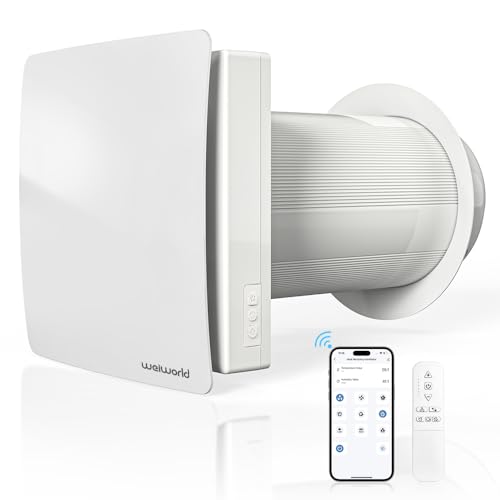
- Three-stage dust, pollen, and odor filtration
- Fresh-air, exhaust, and circulation modes
- Wi-Fi, remote, and button controls
Best For: Bedrooms and offices needing filtered room ventilation
Best for Easy Setup

- Up to 4,415 CFM
- Wireless control with 12-hour timer
- R5 insulated damper box
Best For: Powerful cooling in average homes up to 2,210 square feet
Smart Attic Exhaust

- WiFi climate automation
- 12-inch duct design
- 11 adjustable power levels
Best For: App-controlled attic and whole-home exhaust
Balanced Energy Recovery
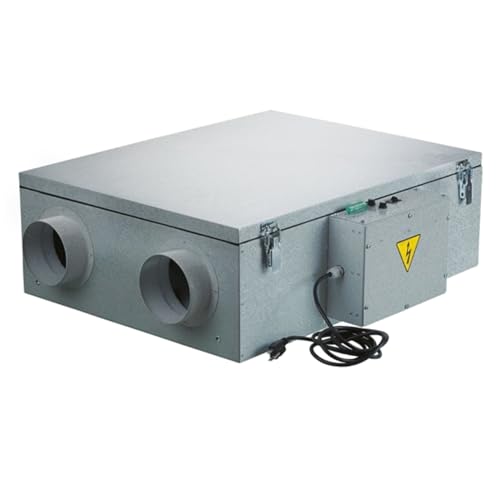
- Balanced ventilation up to 180 CFM
- Enthalpy heat and moisture recovery
- Slim 9.6-inch-deep casing
Best For: Compact, filtered fresh-air exchange with energy recovery
High-Capacity Choice

- 6,878 CFM maximum airflow
- Designed for homes up to 3,440 sq. ft.
- Wireless timer and R5 damper box
Best For: Large homes needing high-volume ventilation
Small-Home Pick
- 3,126 CFM maximum airflow
- Designed for homes up to 1,610 sq. ft.
- Includes wireless controls and installation components
Best For: Smaller homes needing two-speed ventilation
Maximum Airflow Option
- 6,924 CFM maximum airflow
- Designed for homes up to 3,470 sq. ft.
- Wireless control with timer and R5 damper box
Best For: Large homes prioritizing maximum airflow
High-Capacity Whole-House Cooling – QuietCool QC CL-5400 RF
For shoppers comparing whole house ventilation systems for broad home cooling, the QuietCool QC CL-5400 RF stands out with 5,024 CFM on high and coverage intended for homes up to 2,510 square feet. Its wireless control, timer, and insulated damper box add convenience for seasonal use.
Best For: Average-size homes needing high-capacity whole-house cooling and ventilation.
Pros:
- Moves up to 5,024 CFM on high and 4,406 CFM on low.
- Includes a wireless RF control kit with glass wireless switch and up to a 12-hour countdown timer.
- R5 damper doors help insulate the home from the attic when the fan is off.
- Backed by a 10-year manufacturer warranty.
Cons:
- At 74 pounds, installation may require substantial ceiling support.
- Its 634-watt high setting uses more power than smaller ventilation units.
The QC CL-5400 RF is a strong choice when airflow capacity is the priority. Its two speeds and wireless controls make operation straightforward, while the damper box helps limit unwanted attic exposure during colder months.
Balanced Fresh-Air Exchange – Panasonic WhisperComfort 60 ERV
Among whole house ventilation systems, the Panasonic FV-06VE1 WhisperComfort 60 ERV is designed for balanced air exchange rather than rapid whole-home cooling. It supplies tempered fresh air while exhausting stale air, helping maintain neutral pressure and moisture levels.
Best For: Homes needing balanced, energy-conscious fresh-air ventilation with adjustable airflow.
Pros:
- Energy recovery core helps recover heat and maintain moisture levels.
- Selectable airflow ranges from 20 to 50 CFM, with boost operation up to 60 CFM.
- Can be mounted on a ceiling or wall.
- Static-pressure ports help verify airflow for ASHRAE 62.2 compliance.
Cons:
- Its 60 CFM capacity is suited to fresh-air exchange, not high-volume whole-house cooling.
- Uses a hardwired controller and airflow selector rather than wireless controls.
The WhisperComfort 60 ERV is a practical fit for controlled ventilation in living spaces, bathrooms, laundry rooms, or garages. Its adjustable settings and energy recovery design make it more specialized than a conventional exhaust fan.
Efficient Attic Exhaust – AC Infinity CLOUDWAY S12
The AC Infinity CLOUDWAY S12 offers a compact option for whole house ventilation systems focused on attic exhaust. Its 1,250 CFM airflow, 10-speed wireless controller, and EC motor provide adjustable ventilation for moving hot air out of attic spaces.
Best For: Attics and similar spaces needing adjustable, remotely controlled exhaust airflow.
Pros:
- 10-speed wireless controller allows precise airflow adjustments.
- EC motor is designed for quieter, more energy-efficient operation than many conventional motors.
- Two-door shutters and a damper help block attic air when the fan is off.
- Compact 12-inch duct design supports a relatively focused installation.
Cons:
- Its 1,250 CFM capacity is substantially lower than high-capacity whole-house fans.
- Designed primarily for exhausting hot attic air rather than supplying balanced fresh air.
- The listed noise level is 62 dBA.
The CLOUDWAY S12 is best viewed as an attic exhaust solution rather than a complete home air-exchange system. Its wireless speed control and damper make it convenient for users who want flexible, targeted attic ventilation.
Filtered Through-Wall Air Exchange – VT501F HEPA Ventilation Fan
For targeted whole house ventilation systems in enclosed rooms, this through-wall HEPA ventilation fan combines fresh-air intake, exhaust, and circulation modes with three-stage filtration. Wi-Fi and remote controls make it easy to adjust operation in bedrooms, offices, basements, garages, and attics.
Best For: Smaller rooms where filtered fresh-air intake and flexible through-wall ventilation are priorities.
Pros:
- Three-stage filtration includes a pre-filter, HEPA filter, and activated carbon filter.
- Supports fresh-air intake, exhaust, and circulation modes.
- Tuya Smart App, remote, and button controls provide flexible operation.
- Brushless EC motor uses 8.5 watts and is rated at 30 dB.
Cons:
- Airflow is listed as 60 cubic meters per hour, making it better suited to individual rooms than whole-home high-volume cooling.
- Three speeds provide less adjustment than some multi-speed whole-house fans.
- Filter replacement and cleaning add ongoing maintenance.
The VT501F-WF is a room-focused ventilation choice for users who want air exchange plus filtration. Its compact wall-mounted format avoids complex ductwork, while the magnetic front panel simplifies access to the pre-filter.
Best for Easy Setup – QuietCool QC CL-4700 RF
The QuietCool QC CL-4700 RF is a high-capacity option for homeowners comparing whole house ventilation systems for rapid cooling and air exchange. Its two-speed motor delivers up to 4,415 CFM, while the included wireless controls and insulated damper box add convenience and seasonal efficiency.
Best For: Average homes up to 2,210 square feet that need powerful whole-house cooling and wireless control.
Pros:
- Moves up to 4,415 CFM on high and 3,402 CFM on low.
- Includes a wireless RF control kit, glass wireless switch, and countdown timer up to 12 hours.
- R5 damper doors help insulate the home from the attic when the fan is off.
- Backed by a 10-year manufacturer warranty.
Cons:
- Its 551-watt high setting uses more power than the low setting.
- Ceiling-mount installation may require planning and access to the installation area.
Choose this model when airflow capacity is the priority. It offers substantially more listed airflow than the other options here, but it is primarily a cooling and ventilation fan rather than an energy-recovery ventilator.
Smart Attic Exhaust – AC Infinity CLOUDWAY T12
The AC Infinity CLOUDWAY T12 is a smart-control choice among whole house ventilation systems, designed to exhaust hot air from indoor spaces through a 12-inch duct. Its WiFi connectivity supports scheduling, climate-based automation, and remote adjustments, while the brushless EC motor is designed for quieter, more efficient operation.
Best For: Homeowners who want app-based temperature, humidity, and ventilation programming for attic or whole-home exhaust.
Pros:
- Supports temperature, humidity, VPD, timers, cycles, schedules, and minimum-speed settings.
- WiFi app enables remote control, climate-data viewing, and automation.
- PWM-controlled EC motor is designed for quieter and more energy-efficient operation.
- Provides up to 11 power levels for more adjustable airflow control.
Cons:
- Its listed noise level is 62 dBA, so it may not suit noise-sensitive installations.
- The 12-inch duct size and fixed installation require compatible space and ductwork.
- The supplied notes list different airflow figures of 1,250 CFM and 1,600 CFM.
This is the most automation-focused option in the group. It makes sense if remote programming matters more than balanced fresh-air exchange, since its design centers on exhausting hot air rather than recovering heat and humidity.
Balanced Energy Recovery – VENTS-US Frigate ERV 150
The VENTS-US Frigate ERV 150 takes a balanced approach to whole house ventilation systems by supplying filtered outdoor air while removing stale indoor air. Its enthalpy core recovers heat and moisture, and the slim 9.6-inch-deep casing helps it fit tighter ceiling installation spaces.
Best For: Homes needing balanced fresh-air ventilation with heat and humidity recovery in a compact ceiling-mounted unit.
Pros:
- Provides balanced supply and exhaust airflow at up to 180 CFM.
- Enthalpy core helps recover heat and moisture, reducing seasonal energy loss.
- Runs at a listed 1.9 sones and includes a mounting bracket system.
- Includes washable MERV 6 filters and automatic electronic frost protection.
Cons:
- Its 180 CFM capacity is lower than the high-capacity whole-house fan option.
- Push-button control and one listed power level offer less control flexibility.
- Permanent ceiling installation requires suitable mounting and ventilation connections.
For continuous fresh-air exchange rather than rapid cooling, the Frigate ERV 150 is the most specialized choice here. Its energy-recovery core and balanced airflow make it better suited to ventilation-focused installations than simple exhaust fans.
High-Capacity Choice – QuietCool QC ES-7000 RF
For homeowners comparing whole house ventilation systems for a larger property, the QuietCool QC ES-7000 RF combines high airflow with wireless operation. It delivers up to 6,878 CFM on high and is designed for homes up to 3,440 square feet.
Best For: Large homes needing fast cooling and whole-house ventilation with remote control convenience.
Pros:
- Moves up to 6,878 CFM on high and 4,304 CFM on low.
- Includes a wireless RF control kit with a glass wireless switch and up to a 12-hour countdown timer.
- ECM motor uses 727 watts on high and 164 watts on low.
- R5 damper doors help insulate the home from the attic when the fan is off.
Cons:
- Its large-home capacity may be more than smaller spaces require.
- High-speed operation uses substantially more power than low-speed operation.
The QC ES-7000 RF is a strong fit when airflow capacity is the priority. Its wireless timer and insulated damper box add practical convenience for regular seasonal use.
Small-Home Pick – QuietCool QC CL-3100 RF
The QuietCool QC CL-3100 RF is a compact option for shoppers seeking whole house ventilation systems for smaller homes. Its two-speed fan provides up to 3,126 CFM and is designed to cool and ventilate spaces up to 1,610 square feet.
Best For: Small homes that need straightforward ceiling-mounted ventilation with wireless controls.
Pros:
- Provides 3,126 CFM on high and 2,847 CFM on low.
- Includes wireless RF control, a glass wireless switch, and a 12-hour countdown timer.
- Includes acoustical ducting, ceiling grille, window locks, and a 20-foot power cord.
- R5 damper doors help insulate the home from the attic when not in use.
Cons:
- Its recommended coverage is limited to homes up to 1,610 square feet.
- The PSC motor uses 299 watts on high and 256 watts on low.
With a 10-year manufacturer warranty and useful installation components included, the CL-3100 RF is a practical match for smaller properties that do not need the capacity of a large-home model.
Maximum Airflow Option – QuietCool QC CL-7000 RF
For larger properties comparing whole house ventilation systems, the QuietCool QC CL-7000 RF emphasizes maximum airflow. It moves up to 6,924 CFM on high and is designed for homes up to 3,470 square feet, with wireless speed and timer control.
Best For: Large homes where maximum listed airflow and remote operation are key priorities.
Pros:
- Delivers 6,924 CFM on high and 5,518 CFM on low.
- Designed for homes up to 3,470 square feet.
- Includes a wireless RF control kit, glass wireless switch, and up to a 12-hour countdown timer.
- Includes acoustical ducting, ceiling grille, window locks, and a 20-foot power cord.
Cons:
- The 1,147-watt high-speed motor rating indicates a substantial power requirement at maximum output.
- At 92 pounds, the unit may require more installation planning than lighter models.
The CL-7000 RF is suited to buyers who want powerful ventilation for a larger home and prefer remote control. Its R5 damper box and included components support a complete ceiling-mounted installation setup.
How We Picked These Whole House Ventilation Systems
We selected systems representing the main approaches to whole-home air movement: high-CFM whole-house fans, energy recovery ventilators (ERVs), and through-wall fresh-air exchange units. We considered published airflow, control options, motor design, installation format, filtration potential, noise-related features, and suitability for different home sizes. Because ventilation performance depends heavily on duct layout and installation, the listed CFM should be treated as a comparison point rather than a guarantee of delivered airflow.
Quick Comparison
| Best For | Products To Consider | What Stands Out |
|---|---|---|
| High-volume whole-house cooling | QuietCool QC ES-7000 RF, QC CL-7000 RF | Very high airflow and wireless control |
| Medium-to-large homes | QC CL-5400 RF, QC CL-4700 RF | Strong airflow with remote operation |
| Smaller homes or targeted circulation | QC CL-3100 RF, AC Infinity CLOUDWAY T12 | More moderate capacity and flexible controls |
| Balanced fresh-air exchange | Panasonic WhisperComfort 60, VENTS-US Frigate ERV 150 | ERV operation helps retain conditioned energy |
| Wall-mounted installation | Through Wall HEPA Ventilation Fan | Fresh-air intake, exhaust, filtration, and smart controls |
Key Buying Factors for Whole House Ventilation Systems
Airflow and Home Size
Higher CFM can move more air, but oversized systems may create unnecessary noise, drafts, or pressure problems. Match capacity to the home’s square footage, ceiling height, climate, and available attic or duct pathways. A qualified installer can calculate the required ventilation rate and confirm whether multiple units are appropriate.
Fan, ERV, or Fresh-Air Exchanger
Whole-house fans are designed primarily for rapid air circulation and can cool a home when outdoor conditions are favorable. ERVs exchange stale indoor air for outdoor air while transferring some heat and moisture between airstreams, making them better suited to year-round controlled ventilation. Wall-mounted exchange fans can be useful where ductwork is limited.
Controls, Sensors, and Installation
Wireless remotes, Wi-Fi, temperature controls, and timers make operation easier and can prevent excessive runtime. Check whether the system needs dedicated wiring, attic access, ductwork, exterior grilles, or professional balancing. Confirm the installation location before buying.
Filtration, Noise, and Climate
For allergy concerns, verify the filter type, replacement cost, and whether filtration applies to incoming air. Look for quiet motor operation and insulated ducting if bedrooms are nearby. In humid or cold climates, an ERV may provide better comfort and moisture management than a basic whole-house fan.
Who Should Buy Which Whole House Ventilation Systems?
Choose a high-CFM QuietCool model if your priority is quickly flushing hot air from a larger home and you have suitable attic access. The AC Infinity CLOUDWAY models are appealing when app-style or temperature-based control matters. Choose the Panasonic or VENTS-US ERV when you need continuous, balanced fresh-air ventilation with better energy retention. The through-wall HEPA ventilation fan is the practical choice for rooms or homes where installing extensive ductwork is difficult.
Before purchasing, confirm local ventilation requirements, electrical needs, exterior opening details, and whether the system must be professionally installed. The right match combines adequate airflow with manageable noise, sensible controls, and performance suited to your climate.