Well water can deliver dependable supply, but sediment, chlorine, metals, odors, and changing water quality make filtration a practical necessity. The best systems balance effective treatment with manageable maintenance, reliable flow, and reasonable replacement costs.
We compared 10 whole-house options ranging from long-life smart-valve systems to multi-stage filters with included replacement cartridges. Use the guide below to match filtration performance and upkeep requirements to your home’s water conditions.
Best 10 Low-Maintenance Well Water Filtration Systems Picks for 2026
Best Set-and-Forget System
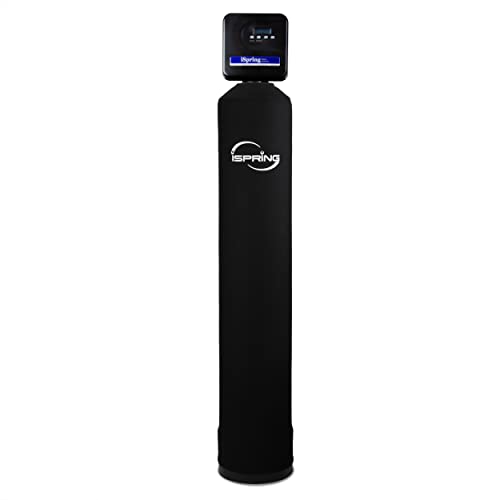
- Automated backwash and regeneration
- Up to 10-year filter life
- 15-gpm maximum flow rate
Best For: Homeowners who want programmable, low-maintenance whole-house filtration
Best for Larger Homes

- Treats up to 1 million gallons
- Salt-free, no-backwash scale control
- Reduces up to 97% of chlorine
Best For: Larger households with moderate-hardness water
Best Budget-Friendly Maintenance
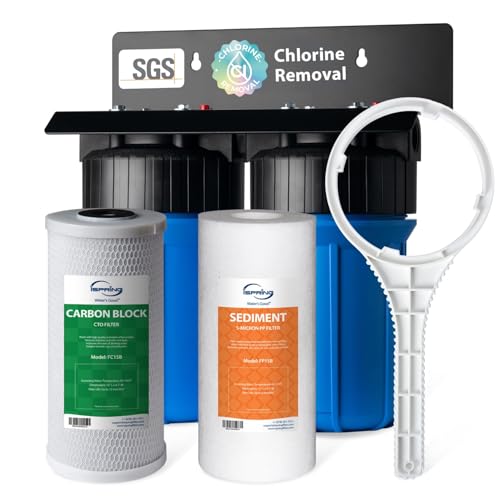
- Up to 50,000-gallon capacity
- No electricity required
- Replaceable filters last up to 12 months
Best For: DIY users wanting simple annual filter changes
Best Simple Carbon Filter
A. O. Smith Central Filtration
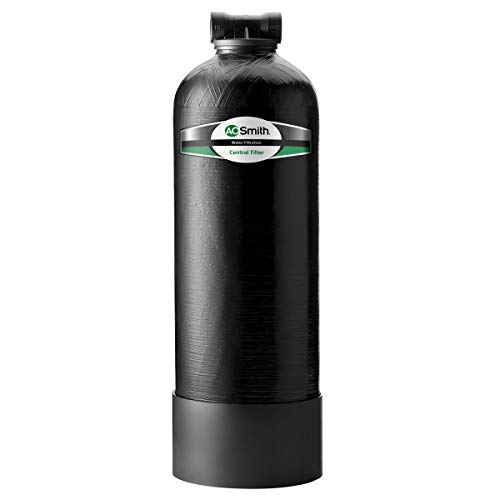
- Reduces 96.9% of chlorine taste and odor
- No drainage or backwashing
- Up to 600,000-gallon capacity
Best For: Households wanting straightforward whole-house chlorine reduction
Heavy-Duty Metal Defense
WF3-01 3-Stage Whole House Filter

- Reduces listed heavy metals, chlorine, sediment, odors, and VOCs
- Pressure gauges and 180-day timers simplify maintenance planning
- 15 GPM flow rate with 100,000-gallon listed capacity
Best For: Homes wanting broad contaminant coverage and service reminders
High-Flow Carbon Filtration
iSpring WGB32B Whole House System

- Three stages with 5-micron sediment and two CTO carbon filters
- Up to 15 GPM with 1-inch inlet and outlet connections
- Listed 100,000-gallon capacity and up to 99% chlorine reduction
Best For: Homes prioritizing strong flow and DIY cartridge replacement
Long-Supply Well Water Value
3-Stage System With 2-Year Supply

- Includes nine cartridges for a stated 1.5–2-year supply
- Built-in shut-off valves simplify filter changes
- Compact design targets sediment, chlorine, and odors
Best For: Families wanting compact filtration with replacements included
Best Iron & Manganese Reduction

- Reduces iron, manganese, chlorine, rust, and sediment
- 15 GPM flow with standard 1-inch ports
- Filters last up to 50,000 gallons or six months
Best For: Well-water homes prioritizing iron and manganese reduction
Best for Included Replacement Filters

- Includes nine filters across three complete sets
- 0.5-micron sediment and carbon filtration
- Clear housings and dual valves simplify maintenance
Best For: Small to medium homes wanting fewer filter purchases
Best Extended-Capacity Well-Water System

- SGS-tested iron and manganese reduction
- Seven-stage filtration with 15 GPM flow
- Cartridge intervals range from six to 12 months
Best For: Well-water homes with iron, manganese, and odor concerns
Best Set-and-Forget System – Long-Life Smart Filtration
For homeowners seeking low-maintenance well water filtration systems, the iSpring WF150K stands out for its automated backwashing and regeneration. Its digital valve lets you customize flushing intervals, while the high-capacity media is designed to last up to 10 years in homes with two to three bathrooms.
Best For: Homes needing automated whole-house filtration with minimal routine maintenance and a high 15-gpm flow rate.
Pros:
- Automatically backwashes and regenerates the filtration media.
- Designed to reduce chlorine, lead, heavy metals, pesticides, herbicides, VOCs, and other contaminants.
- Offers up to a 10-year service life in smaller homes.
- Includes a programmable digital control valve and lifetime technical support.
Cons:
- Requires electrical power for the smart control valve.
- Its 63.5-inch height may require considerable installation space.
- The stated service life is shorter in homes with four to five bathrooms.
The WF150K is a strong choice when convenience matters more than a compact installation. Its automated controls reduce hands-on upkeep, but buyers should confirm available height, power, and installation requirements before purchasing.
Best for Larger Homes – Aquasana Max Flow Filtration
The Aquasana Rhino Max Flow is one of the more convenient low-maintenance well water filtration systems for households that want carbon and KDF filtration without salt, backwashing, or chemical scale control. It is designed for water under 15 gpg hardness and can treat up to 1 million gallons or last 10 years.
Best For: Larger households with moderate-hardness water that need chlorine, sediment, bacteria-growth, and scale control without salt bags or routine backwashing.
Pros:
- Combines carbon, KDF, pre-filtration, post-filtration, and salt-free scale control.
- Reduces up to 97% of chlorine and supports flow for multiple household uses.
- Requires no salt bags, backwashing, or cleaning for scale control.
- Includes a low-maintenance pre-filter lasting up to six months and a 10-year limited warranty.
Cons:
- Best suited to water below 15 gpg hardness, 250 mg/L alkalinity, and pH below 8.3.
- The pre-filter still requires periodic replacement.
- It does not soften or demineralize water.
This system offers a practical balance of capacity and reduced upkeep, especially for homes with four or more occupants. Test your well water first, since the stated operating range is limited to moderate hardness and specific water conditions.
Best Budget-Friendly Maintenance – Two-Stage Sediment and Carbon
The iSpring WGB21B is a straightforward option for shoppers comparing low-maintenance well water filtration systems. Its two replaceable cartridges target sediment, rust, scale, chlorine, odors, and select organic contaminants, with a filter life of up to 12 months or 50,000 gallons for a family of four.
Best For: DIY-minded households that prefer a simple, no-power system with replaceable filters and strong 15-gpm flow.
Pros:
- Two-stage filtration captures sediment and reduces chlorine, tastes, odors, and some VOCs.
- Pre-assembled mounting bracket, filter wrench, and pressure-release valve simplify filter changes.
- Requires no electricity and retains minerals rather than reducing TDS.
- One-inch ports support high flow with less pressure loss.
Cons:
- Both filter cartridges require replacement about once a year.
- It does not reduce total dissolved solids.
- Routine filter changes are more hands-on than with automatic systems.
The WGB21B is a sensible choice when low maintenance means easy annual cartridge replacement rather than a nearly hands-off system. It is also a good fit for buyers who want sediment and chlorine reduction without electrical controls or mineral removal.
Best Simple Carbon Filter – A. O. Smith Central Filtration
The A. O. Smith AO-WH-FILTER provides uncomplicated whole-house carbon filtration for buyers considering low-maintenance well water filtration systems. It reduces 96.9% of chlorine taste and odor, requires no drainage or backwashing, and is rated for up to 600,000 gallons or six years.
Best For: Households of four or more seeking no-backwash chlorine reduction for drinking, bathing, cooking, and general water use.
Pros:
- Reduces 96.9% of chlorine taste and odor and is NSF/ANSI 42 certified.
- Requires no drainage, backwashing, or water waste.
- Provides up to 600,000 gallons or six years of service.
- Includes a shut-off valve, nipple, and hose adapter for installation.
Cons:
- Does not reduce TDS, sulfur, or iron.
- A pre-filter is recommended, adding another component to the setup.
- Additional tools may be needed for installation.
This is a low-complexity choice for chlorine reduction, particularly where avoiding wastewater and backwashing is important. Because it does not target sulfur or iron, well owners should verify that their primary water concern matches the filter’s capabilities.
Heavy-Duty Metal Defense – WF3-01 3-Stage Whole House Filter
For households seeking low-maintenance well water filtration systems with added contaminant coverage, the WF3-01 combines sediment, carbon block, and compound GAC+KDF filtration. Pressure gauges, 180-day filter timers, and pre-installed servicing valves make routine maintenance easier to monitor and manage.
Best For: Homes that want whole-house filtration with heavy-metal reduction and maintenance reminders.
Pros:
- Designed to reduce lead, mercury, arsenic, cadmium, chromium, chlorine, odors, sediment, and VOCs.
- Multiple pressure gauges help identify clogging and plan cartridge changes.
- Built-in 180-day timers, relief and drain valves, a housing brush, and flexible fittings support simpler servicing.
- Offers a listed maximum flow rate of up to 15 GPM and 100,000-gallon capacity.
Cons:
- The 44-pound, large-format system requires substantial installation space.
- Its many components and fittings may make setup more involved than a compact filter.
- Supplied notes do not specify independent performance certifications for every listed contaminant.
Choose this model when monitoring and contaminant coverage matter more than minimizing system size. The gauges, timers, and cleaning brush are particularly useful for owners who want a clearer maintenance routine.
High-Flow Carbon Filtration – iSpring WGB32B Whole House System
The iSpring WGB32B is a practical choice among low-maintenance well water filtration systems for homes that prioritize strong flow and straightforward cartridge changes. Its three-stage design uses a 5-micron sediment filter followed by two CTO carbon block filters, with a listed capacity of 100,000 gallons.
Best For: Households seeking high-flow sediment, chlorine, taste, and odor filtration with DIY installation.
Pros:
- Rated for up to 15 GPM with 1-inch NPT inlet and outlet connections.
- Three-stage filtration includes a 5-micron sediment filter and two coconut-shell carbon block filters.
- Listed to reduce up to 99% of chlorine along with sediment, rust, tastes, odors, and herbicides.
- Individually wrapped cartridges and included housing wrench support routine replacement.
Cons:
- The system does not remove TDS or preserve minerals through TDS reduction.
- Its listed maximum supported TDS level is 300 ppm.
- The supplied details list a one-year filter life cycle, so replacement planning is still required.
This is a sensible option for buyers who want a commercial-grade, tankless system without adding an RO stage. Its high flow rate and standard-size cartridges make it well suited to whole-house use where chlorine, sediment, and odors are the main concerns.
Long-Supply Well Water Value – 3-Stage System With 2-Year Supply
For shoppers comparing low-maintenance well water filtration systems, this compact three-stage model stands out by including three complete sets of cartridges. PP, GAC, and CTO filters target sediment, chlorine, and odors, while integrated shut-off and bypass features make filter changes more convenient.
Best For: Families wanting an affordable, compact system with replacement filters included for up to two years.
Pros:
- Includes nine cartridges—three PP, three GAC, and three CTO filters—for a stated 1.5–2-year supply.
- Two built-in shut-off valves allow filter changes without turning off the main water line.
- Compact 14-by-13-by-10-inch design can fit under a sink or in a utility room.
- Works with well or city water and has a listed maximum flow rate of 15 GPM.
Cons:
- It does not lower TDS and is intended for sediment, chlorine, and odor reduction.
- The stated filter life cycle is six months, so cartridges still need periodic replacement.
- The 10,000-gallon listed capacity is lower than the capacity stated for the other systems in this comparison.
The included cartridge supply is the main convenience advantage, reducing the need to shop for replacements soon after installation. Select it when compact sizing and lower ongoing purchasing effort are more important than TDS reduction or specialized heavy-metal filtration.
Best Iron & Manganese Reduction – Waterdrop WHF21-FG
For homeowners comparing low-maintenance well water filtration systems, the Waterdrop WHF21-FG is a practical two-stage option focused on iron, manganese, chlorine, rust, and sediment. Its pre-installed cartridges, mounting bracket, included wrench, and up to six-month filter life help simplify installation and routine upkeep.
Best For: Homes using well or municipal water that need iron and manganese reduction with steady whole-house flow.
Pros:
- Third-party tested to reduce up to 96.4% of iron, 98.2% of manganese, and 95.63% of chlorine.
- Supports flow rates up to 15 GPM through standard 1-inch NPT ports.
- Both cartridges provide up to 50,000 gallons or six months of filtration, depending on water quality and usage.
- Pre-installed filters, a mounting bracket, and included wrench help make setup and replacement easier.
Cons:
- Filter life can vary with source-water quality and household usage.
- The system is rated for particles larger than 5 microns, so it may not address every contaminant or filtration need.
- Installation still requires proper plumbing connections and Teflon tape.
The WHF21-FG is a strong fit when iron and manganese are the main well-water concerns and you want relatively infrequent cartridge changes. Its 15 GPM capacity is also useful for households running several fixtures at once.
Best for Included Replacement Filters – 9-Filter 3-Stage System
This 3-stage system stands out among low-maintenance well water filtration systems because it includes three complete filter sets—nine cartridges total. Its sediment, GAC, and CTO stages target chlorine, rust, sediment, odors, and unpleasant tastes while the clear housings let you check trapped debris without disassembly.
Best For: Small to medium households wanting spare cartridges, visible filter monitoring, and 15 GPM whole-house flow.
Pros:
- Includes three full sets of PP sediment, GAC carbon, and CTO carbon block filters for approximately 1.5 to 2 years of use.
- 0.5-micron filtration helps reduce chlorine, rust, sediment, and odors.
- Clear housings make it easier to monitor collected debris and judge replacement timing.
- Dual valves allow filter changes without shutting off the main water supply.
Cons:
- It does not reduce TDS or remove the healthy minerals reflected in TDS readings.
- The supplied details list 3/4-inch connections, which may require adapters for some plumbing setups.
- Filter replacement timing still depends on water quality and usage.
With replacement filters included, this system can reduce shopping and maintenance interruptions. It is a convenient choice for general well-water taste and particulate concerns, but it is not a TDS-reduction system.
Best Extended-Capacity Well-Water System – Waterdrop WHF3T-FG
The Waterdrop WHF3T-FG is engineered specifically for well water and combines double iron-and-manganese reduction cartridges with carbon filtration. For shoppers seeking low-maintenance well water filtration systems, its six- to 12-month iron and manganese cartridge interval and 12-month GAC interval can help limit service frequency.
Best For: Well-water homes with elevated iron, manganese, odors, chlorine, rust, or sediment concerns that need up to 15 GPM flow.
Pros:
- SGS-tested reduction of up to 95.9% of iron and 99.7% of manganese.
- Seven-stage filtration addresses iron, manganese, chlorine, odors, sediment, rust, sand, and other large particles.
- Iron and manganese cartridges are expected to last six to 12 months, while the GAC cartridge is due around every 12 months.
- Supports both well and municipal water with a steady 15 GPM flow and 1-inch inlet/outlet connections.
Cons:
- At about 49 pounds and over 26 inches high, the system may require more installation space and support than compact units.
- Filter life depends on source-water conditions, despite the stated replacement intervals.
- Its supported maximum TDS level is listed as 300 ppm.
The WHF3T-FG is the most specialized choice here for well-water iron and manganese issues. Its larger footprint is a tradeoff for layered filtration, longer stated cartridge intervals, and protection for household appliances.
How We Picked These Low-Maintenance Well Water Filtration Systems
We focused on whole-house systems designed for private wells and evaluated the features that most affect ownership: filter life, replacement frequency, filtration stages, flow capacity, installation requirements, and compatibility with common well-water concerns. We also considered systems with long-lasting media tanks, smart controls, bundled replacement filters, and clearly defined capacity ratings.
Because well water varies significantly by location, no single system is best for every home. Laboratory testing should guide treatment for potentially hazardous contaminants such as arsenic, lead, mercury, bacteria, and nitrates.
Quick Comparison
| System type | Best suited for | Maintenance profile |
|---|---|---|
| Long-life media tank | Homeowners seeking fewer routine changes | Lowest routine upkeep, but may require professional installation or periodic servicing |
| Two-stage cartridge filter | Sediment, chlorine, taste, and odor reduction | Simple replacement schedule with moderate ongoing cost |
| Three-stage cartridge filter | More targeted filtration and fine sediment reduction | More cartridges to replace, but greater treatment flexibility |
| Systems with bundled filters | Buyers wanting predictable initial maintenance costs | Convenient, though long-term replacement pricing still matters |
Key Buying Factors for Low-Maintenance Well Water Filtration Systems
Test the Water First
Identify sediment, hardness, iron, manganese, sulfur odor, tannins, bacteria, and regulated contaminants before choosing a filter. Standard carbon and sediment cartridges cannot solve every well-water problem. A softener, iron filter, UV unit, or specialized media may be necessary.
Compare Capacity and Replacement Intervals
Capacity ratings such as gallons or months are estimates based on water quality and household use. Heavy sediment can shorten cartridge life considerably. Choose a system with accessible replacement filters and check the ongoing cost, not just the purchase price.
Match Flow Rate to the Home
Check the system’s rated flow and pressure-drop information against simultaneous demand from showers, appliances, and outdoor fixtures. A restrictive filter can reduce performance throughout the house, especially in homes with multiple bathrooms.
Check Installation and Service Requirements
Confirm pipe size, available installation space, drain requirements, shutoff access, and whether a bypass valve is included. Media tanks may reduce frequent cartridge changes but can involve more complex installation or scheduled servicing.
Understand What “maintenance-Free” Means
Even the most Low-Maintenance Well Water Filtration Systems need monitoring. Replace cartridges when capacity is reached, inspect for leaks, sanitize components when required, and retest well water after changes in taste, odor, color, or household plumbing conditions.
Who Should Buy Which Low-Maintenance Well Water Filtration Systems?
- Choose a long-life or smart-valve system if minimizing routine filter changes is your top priority and you are comfortable with a larger initial installation.
- Choose a two-stage system for straightforward sediment, chlorine, taste, and odor reduction with simpler cartridge maintenance.
- Choose a three-stage system if your testing shows multiple treatment needs or you want finer sediment and contaminant filtration.
- Choose a system with included replacement filters if you want to reduce upfront maintenance costs and keep spares available.
- Add specialized treatment when testing identifies bacteria, hardness, iron, sulfur, arsenic, nitrates, or other contaminants that a standard whole-house filter is not designed to remove.