Energy-efficient window heat pumps can provide both cooling and supplemental heat without the installation demands of a central HVAC system. The best models combine inverter technology, practical room coverage, quiet operation, and convenient smart controls.
This roundup compares 10 options across compact bedrooms, apartments, living rooms, and larger spaces, with attention to capacity, electrical requirements, efficiency, and year-round versatility.
Best 10 Energy-Efficient Window Heat Pumps Picks for 2026
Best Quiet Energy Saver
Midea 8,000 BTU Smart Inverter Window Heat Pump

- Energy Star inverter design
- As low as 45 dBA
- Cooling, heat, and dehumidification
Best For: Quiet comfort in rooms up to 350 square feet
Best Mid-Size Smart Pick
TCL 12,000 BTU Q-Series Window Heat Pump

- 12,000 BTU room coverage
- Inverter compressor
- App, remote, and voice control
Best For: Smart comfort in spaces up to 550 square feet
Best Large-Room Smart Combo
18,000 BTU Window AC and Heater
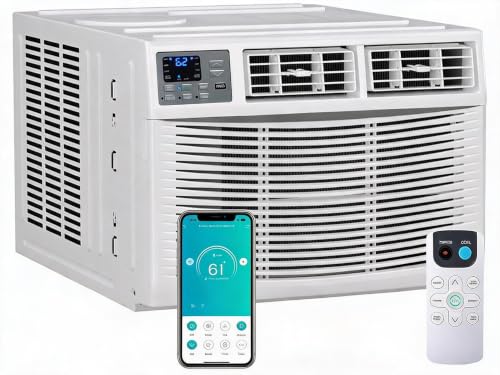
- 4-in-1 year-round operation
- Covers up to 1,000 square feet
- App, remote, and voice control
Best For: Large rooms needing cooling, heating, and dehumidification
Best Supplemental Heat Capacity
Keystone 18,800 BTU Window AC with Supplemental Heat

- 18,800 BTU cooling capacity
- 16,000 BTU supplemental heat
- Energy Saver and Sleep modes
Best For: Large spaces needing powerful cooling and shoulder-season heat
Smart Inverter Pick
WiFi 8,000 BTU Window Heat Pump

- Inverter technology with ECO and Sleep modes
- WiFi, Alexa, Google Assistant, and remote control
- Cools, heats, dehumidifies, and covers up to 350 sq. ft.
Best For: Connected home control and quieter room comfort
Simple Supplemental Heat

- 8,000 BTU cooling for rooms up to 350 sq. ft.
- 3,500 BTU supplemental heating function
- Includes mounting hardware and weather seals
Best For: Cooling with backup heat from an existing system
Large-Room Option
ROVSUN 12,000 BTU Window Heat Pump

- 12,000 BTU cooling for spaces up to 550 sq. ft.
- Four-in-one cooling, heating, dehumidifying, and fan operation
- Requires 208/230V power and includes a remote
Best For: Larger compatible rooms needing multi-season operation
Best Efficient Compact Pick
Keystone 8,000 BTU Inverter Heat Pump Window AC

- Inverter technology helps reduce wasted operation
- Cooling, dehumidifying, and supplemental heating
- Designed for rooms up to 350 square feet
Best For: Smaller rooms and apartments needing quieter, efficient climate control
Best Large-Room Smart Pick
LG 23,000 BTU Smart Window AC with Heat
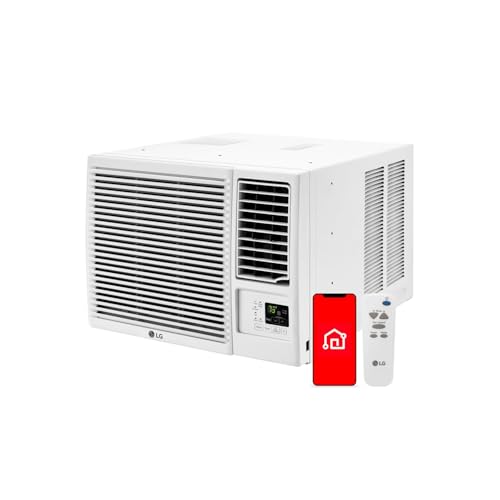
- Cools spaces up to 1,440 square feet
- App, remote, Alexa, and Google control
- Cooling, supplemental heat, and dehumidification
Best For: Large rooms with 230-volt power and smart-home preferences
Best Feature-Rich Value Pick
Garvee 18,000 BTU Smart Window AC with Heat

- Four-in-one cooling, heating, dehumidifying, and fan operation
- ECO, sleep, and 24-hour timer modes
- Smart app, remote, and Alexa-compatible controls
Best For: Up to 1,000-square-foot spaces needing flexible year-round operation
Best Quiet Energy Saver – Midea 8,000 BTU Smart Inverter Window Heat Pump
The Midea 8,000 BTU unit is a strong choice for shoppers comparing energy-efficient window heat pumps for rooms up to 350 square feet. Its inverter compressor, Energy Star rating, ECO mode, and app-based controls support efficient, convenient year-round comfort, while the heat-pump function operates when outdoor temperatures are above 41°F.
Best For: Bedrooms, apartments, and other spaces up to 350 square feet where quiet operation and smart controls matter.
Pros:
- Variable-speed inverter technology and Energy Star certification may help reduce electricity use.
- Offers cooling, supplemental heating, dehumidifying, fan, and auto modes.
- Quiet operation is rated as low as 45 dBA.
- Works with the included remote, app, Alexa, and Google Assistant.
Cons:
- Heat-pump operation is limited to outdoor temperatures above 41°F.
- Designed for smaller spaces than the larger units in this roundup.
- Requires a double-hung window with a 24- to 38.5-inch opening width.
With efficient inverter operation and broad control options, the Midea is one of the more balanced energy-efficient window heat pumps for modest-size rooms. Its supplemental heat is best viewed as shoulder-season comfort rather than a replacement for primary heating.
Best Mid-Size Smart Pick – TCL 12,000 BTU Q-Series Window Heat Pump
The TCL Q-Series is a practical option for shoppers seeking energy-efficient window heat pumps with more capacity than compact models. Its 12,000 BTU output is listed for spaces up to 550 square feet, and the inverter design pairs with app, remote, and voice controls for convenient operation.
Best For: Bedrooms and living rooms up to 550 square feet that need a higher-capacity smart window unit.
Pros:
- 12,000 BTU capacity is suited to larger rooms than the Midea.
- Inverter compressor supports more efficient operation.
- Offers app, remote, and voice control options.
- Uses R-32 refrigerant and operates at a listed 48 dB.
Cons:
- The supplied notes do not specify heating-performance limits or detailed heating capacity.
- At 92.6 pounds, installation may require extra assistance.
- Its window requirements start at 29.5 inches wide and 18.5 inches high.
The TCL stands out when room size and smart operation are priorities. Before buying, confirm that your window meets its larger installation dimensions and verify that its heating performance matches your climate and needs.
Best Large-Room Smart Combo – 18,000 BTU Window AC and Heater
This 18,000 BTU window unit is aimed at large rooms and combines cooling, heating, dehumidification, and fan modes. For shoppers comparing energy-efficient window heat pumps, its ECO and sleep modes, programmable timer, and smart controls offer useful ways to tailor operation and manage comfort in spaces up to 1,000 square feet.
Best For: Large rooms up to 1,000 square feet where four operating modes and app or voice control are useful.
Pros:
- 4-in-1 design provides cooling, heating, dehumidification, and fan modes.
- ECO, sleep, and timer settings help customize operation.
- Controls are available through the app, remote, control panel, and voice commands.
- Fits windows 19 inches tall and 28 to 41 inches wide.
Cons:
- The 230-volt electrical requirement may not suit every installation.
- At 52 dB and 122.8 pounds, it is heavier and louder than the Midea.
- The listed annual energy consumption is 1,838 kWh, so operating costs may be significant.
This model provides substantial capacity and flexible controls for a large space, but its electrical requirements and energy use deserve careful review. Confirm your window, circuit, and expected operating costs before choosing it.
Best Supplemental Heat Capacity – Keystone 18,800 BTU Window AC with Supplemental Heat
The Keystone KSTHW18B delivers high-capacity cooling and 16,000 BTU of supplemental heating for spaces up to 1,000 square feet. It includes energy-saving and sleep modes, but shoppers comparing energy-efficient window heat pumps should note that this model is not an inverter unit and its heating is supplemental rather than primary.
Best For: Large living rooms or apartments needing strong cooling and supplemental heat between 23°F and 76°F outdoors.
Pros:
- Provides 18,800 BTU cooling and 16,000 BTU supplemental heating.
- Includes cooling, heating, dehumidification, and fan circulation.
- Energy Saver and Sleep modes can help tailor power use.
- Includes a temperature-sensing I Sense remote and a washable filter.
Cons:
- It has no inverter compressor and is not Energy Star rated in the supplied specifications.
- Supplemental heat is not intended as a primary heat source.
- Requires 230 volts and is rated at 55 dB.
The Keystone is compelling when raw capacity and supplemental heating are more important than inverter efficiency. Its non-inverter design and 230-volt requirement make it less suitable for buyers focused strictly on maximum energy efficiency or simple installation.
Smart Inverter Pick – WiFi 8,000 BTU Window Heat Pump
For shoppers comparing energy-efficient window heat pumps, this 8,000 BTU window unit stands out with inverter technology, ECO mode, and smart scheduling. It provides cooling, heating, dehumidifying, and fan modes for rooms up to 350 square feet.
Best For: Bedrooms, apartments, dorms, and home offices where app control and quieter operation are priorities.
Pros:
- Inverter technology, ECO mode, Sleep mode, and a 24-hour timer help manage energy use.
- WiFi app control works with Alexa and Google Assistant, with a remote included.
- Four-way airflow, five operating modes, and a washable filter support flexible everyday use.
Cons:
- At 81.4 pounds, it may require extra help during installation.
- It fits specified single- and double-hung windows measuring 26–36 inches wide.
- Heating is provided by a window AC combination unit rather than a dedicated whole-home heat pump.
This is the most feature-rich option in the group for users who want connected controls, variable-speed operation, and year-round room comfort in a compact window format.
Simple Supplemental Heat – Durastar 8,000 BTU Window AC
This Durastar is a straightforward choice for shoppers seeking energy-efficient window heat pumps with basic remote control. It delivers 8,000 BTU cooling for spaces up to 350 square feet and adds 3,500 BTU of supplemental heat.
Best For: Rooms that already have a primary heating system and need additional heating support alongside window cooling.
Pros:
- 8,000 BTU cooling is designed for areas up to 350 square feet.
- Included installation hardware and weather seals simplify setup.
- Remote control and a listed SEER of 17 support convenient operation.
Cons:
- The 3,500 BTU heat function is supplemental and is not intended as a primary heat source.
- It does not have inverter technology.
- Its listed noise level is 60 dB.
Choose this model when cooling is the main requirement and supplemental heat is useful, but avoid relying on it as the sole heating system for a room or home.
Large-Room Option – ROVSUN 12,000 BTU Window Heat Pump
For larger spaces, this 12,000 BTU ROVSUN window AC and heater offers cooling, heating, dehumidifying, and fan modes for rooms up to 550 square feet. Its 208/230V design, ECO mode, timer, and included installation parts make it a practical option when the electrical setup and window dimensions match.
Best For: Larger rooms, offices, or apartments with compatible 208/230V power and a window opening measuring 23–34 inches wide.
Pros:
- 12,000 BTU cooling is rated for spaces up to 550 square feet.
- Four-in-one operation includes cooling, heating, dehumidifying, and fan modes.
- Includes ECO mode, a 24-hour timer, remote control, and mounting components.
Cons:
- It requires 208/230V power, so it is not a standard 115V plug-in choice.
- It does not have inverter technology.
- At 82.6 pounds, installation may be demanding.
This model offers the broadest stated room coverage of the three, but verify voltage, window measurements, and installation requirements before buying.
Best Efficient Compact Pick – Keystone 8,000 BTU Inverter Heat Pump Window AC
For smaller spaces, the Keystone combines inverter efficiency with cooling, dehumidifying, and supplemental heating. It is a practical choice among energy-efficient window heat pumps for rooms up to 350 square feet, particularly when quieter operation and lower wasted energy matter.
Best For: Apartments, bedrooms, and medium rooms up to 350 square feet where compact, efficient operation is a priority.
Pros:
- Inverter motor adjusts output to the room’s needs and is rated 17% more energy efficient than average window units.
- Provides cooling, dehumidification, and supplemental heat for mild outdoor temperatures from 41 to 75 degrees.
- Operates up to 24% quieter on low and 6% quieter on high than regular room air conditioners.
- Washable filter, clean-filter alert, and included window installation kit simplify maintenance.
Cons:
- Supplemental heat is not intended to be the primary heat source.
- Heating and cooling capacity is limited to rooms up to 350 square feet.
- Requires a window at least 14.5 inches tall and 24 inches wide.
Its inverter design, 780-watt rating, and relatively quiet 54 dB operation make this Keystone a strong fit for buyers prioritizing efficiency in a smaller room. Just treat the heat function as supplemental and confirm window dimensions before ordering.
Best Large-Room Smart Pick – LG 23,000 BTU Smart Window AC with Heat
The LG delivers high-capacity cooling with supplemental heat and app-based control for spaces up to 1,440 square feet. While it is not an inverter model, its smart features and large-room coverage make it a practical option for shoppers comparing energy-efficient window heat pumps for expansive living areas.
Best For: Large living rooms or open spaces up to 1,440 square feet with access to a 230-volt outlet.
Pros:
- 23,000 BTU capacity is designed for rooms up to 1,440 square feet.
- LG ThinQ app control works remotely, while Alexa and Google voice compatibility add convenience.
- Offers cooling, supplemental heating, dehumidification, multiple fan speeds, and auto restart.
- Includes a washable filter and remote control.
Cons:
- Uses a conventional compressor rather than inverter technology.
- Requires 230-volt power and weighs 141 pounds, making installation more demanding.
- Its listed 62 dB noise level is higher than the smaller Keystone model.
This LG is best viewed as a high-output smart window unit rather than a pure efficiency leader. Its 9.8 SEER rating and 2,400-watt power draw should be weighed against the benefit of cooling a substantially larger area from one window installation.
Best Feature-Rich Value Pick – Garvee 18,000 BTU Smart Window AC with Heat
The Garvee combines cooling, supplemental heating, dehumidification, and fan operation in one smart window unit. Its ECO and sleep modes, programmable timer, and app control give it useful energy-saving features for rooms up to 1,000 square feet, though buyers should verify both voltage and window fit.
Best For: Bedrooms, apartments, and living spaces up to 1,000 square feet that need four-season functionality and flexible controls.
Pros:
- Four-in-one operation includes air conditioning, supplemental heat, dehumidification, and fan modes.
- ECO mode, sleep mode, and a 24-hour timer can help limit unnecessary operation.
- App, remote, control-panel, and Alexa-compatible voice controls offer flexible access.
- 52 dB operation, four-way airflow adjustment, and a washable filter support comfortable use.
Cons:
- Requires 230/208-volt power and draws 1,680 watts.
- At 122.8 pounds, it may require extra care during installation.
- Manufacturer warranty is listed as 30 days.
With 18,000 BTU capacity and an annual energy consumption listing of 1,838 kWh, the Garvee offers broad coverage and useful efficiency-oriented controls. It is a compelling feature-rich choice, provided your electrical service and window dimensions match its requirements.
How We Picked the Best Energy-Efficient Window Heat Pumps
We evaluated these units around the factors that matter most in everyday use: cooling and heating capacity, inverter technology, Energy Star or high-efficiency positioning, room-size recommendations, noise, controls, installation requirements, and available operating modes. We also considered whether a unit provides true heat-pump operation or supplemental electric heat, since those technologies can differ in efficiency and cold-weather performance.
Because listed capacity and coverage vary by room layout, insulation, sunlight, ceiling height, and climate, treat manufacturer room-size claims as starting points rather than guarantees. Verify voltage and window dimensions before ordering.
Quick Comparison
| Best For | What to Prioritize | Models to Consider |
|---|---|---|
| Small bedrooms and offices | 7,000–8,000 BTU, 115V, quiet operation | Midea, Keystone, Durastar |
| Medium rooms and apartments | 8,000–12,000 BTU, inverter control, Wi-Fi | TCL, ROVSUN, 8,000 BTU smart models |
| Large living areas | 18,000 BTU or more, 230V compatibility | Keystone 18,800 BTU, LG 23,000 BTU |
| Flexible whole-room comfort | Cooling, heating, dehumidifying, and fan modes | 4-in-1 and smart window units |
Key Buying Factors for Energy-Efficient Window Heat Pumps
Capacity and Room Size
Choose BTU capacity based on the room’s usable area and heat load. An undersized unit may run continuously, while an oversized model can cycle too often and remove less humidity. Sunny rooms, open floor plans, poor insulation, and high ceilings may require additional capacity.
Inverter Efficiency
Inverter compressors adjust output instead of repeatedly switching fully on and off. This can reduce energy spikes, improve temperature stability, and lower operating noise. For frequent daily use, an inverter model is often worth prioritizing over a basic fixed-speed unit.
Heating Type and Climate
Confirm whether the unit uses a heat pump, supplemental electric heat, or both. Heat-pump heating is generally more efficient in moderate conditions, while resistance heat can be useful when outdoor temperatures fall or as backup warmth. These window units should not automatically be treated as replacements for dedicated cold-climate heating systems.
Electrical and Installation Requirements
Many compact models use standard 115V outlets, but high-capacity units may require 230V service. Check the plug, breaker, window width, included panels, support hardware, and manufacturer installation instructions. Never use an extension cord unless the manufacturer specifically permits it.
Controls, Noise, and Maintenance
Wi-Fi, app, voice, and remote controls add convenience, especially for scheduling. Compare advertised sound levels if the unit will be installed in a bedroom. Clean filters regularly, keep exterior airflow clear, and inspect condensate drainage to preserve efficiency.
Who Should Buy Which Energy-Efficient Window Heat Pumps?
Choose a compact 8,000 BTU inverter model for a bedroom, office, or modest apartment room where quiet operation and lower consumption matter. A 12,000 BTU smart unit is a better fit for a larger bedroom, studio, or medium living area. For expansive rooms or open layouts, consider an 18,000–23,000 BTU model only if your window, electrical circuit, and room heat load support it.
Buyers in mild climates who want efficient year-round comfort should prioritize inverter technology and genuine heat-pump operation. Those mainly seeking occasional winter warmth should verify the supplemental-heating output and operating-temperature limits. In every case, match the unit to the room rather than simply choosing the highest BTU rating.