The best energy-efficient infrared ceiling heaters deliver targeted warmth without taking up floor space. This roundup compares low-wattage panels, bathroom heater-fan units, and high-output garage and patio models.
Use the guide below to match wattage, mounting style, controls, safety features, and installation requirements to the space you want to heat.
Best 10 Energy-Efficient Infrared Ceiling Heaters Picks for 2026
Bathroom Comfort Pick
Broan-NuTone 164 Bulb Heater and Fan

- Radiant heat and 70 CFM ventilation
- Ceiling-mounted Type IC housing
- Two 250-watt bulbs sold separately
Best For: Bathrooms up to 65 square feet
Quiet Panel Pick

- 300W radiant panel for up to 43 sq. ft.
- Wall, ceiling, or optional-foot placement
- Silent operation with 5-year warranty
Best For: Small rooms and quiet indoor spaces
Small-Space Graphene Pick

- 350W heating for 3–8 sq. m. areas
- Wall or ceiling mounting
- Simple control with 10-year warranty
Best For: Small indoor spaces needing quiet supplemental heat
Best for Focused Outdoor Warmth
Tradesman Telescoping Infrared Heater

- 1,500W directional carbon-fiber heat
- IPX4 construction for covered outdoor use
- Telescoping ceiling mount included
Best For: Covered patios, garages, and workshops
Best for Two-Zone Garage Heating
Shinic 2-Pack Quartz Ceiling Heaters

- Two 1,500W/750W radiant heaters
- 90-degree adjustment and work lights
- Overheat protection and ETL listing
Best For: Garages, shops, and workshops needing flexible coverage
Best for Low-Profile Indoor Rooms
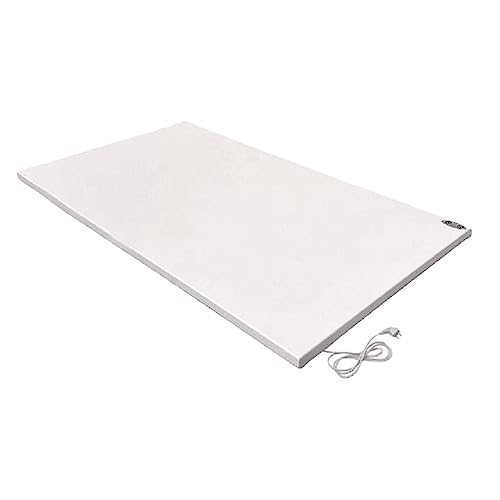
- Slim frameless panel under one inch thick
- Quiet, dustless 700W infrared heating
- Ceiling kit and standard 120V plug included
Best For: Bedrooms, offices, and living rooms
Flexible Infrared Comfort

- 1500W radiant heat for fast warmth
- Wall or ceiling mounting saves floor space
- Adjustable thermostat and indoor/outdoor use
Best For: Covered patios, garages, workshops, and rooms up to 160 square feet
Smart Patio Heating
1500W WiFi Ceiling Heater with Light

- Nine heat levels from 0W to 1500W
- WiFi and remote control included
- 24-hour timer for scheduled operation
Best For: Ceiling-mounted patios, gazebos, balconies, and garages
Weatherproof Smart Warmth
1500W Carbon Fiber Patio Heater

- 95% thermal-efficiency carbon-fiber heating
- WiFi, remote, and touch controls
- Weatherproof design with 24-hour timer
Best For: Outdoor patios, gazebos, and balconies needing adjustable radiant heat
Bathroom Comfort Pick – Broan-NuTone 164 Bulb Heater and Fan
The Broan-NuTone 164 combines radiant infrared heat with a ceiling-mounted ventilation fan, making it a practical option when comparing energy-efficient infrared ceiling heaters for a bathroom. It uses two 250-watt R40 or BR40 infrared bulbs, which are sold separately, and is rated to ventilate at 70 CFM.
Best For: Bathrooms up to 65 square feet where supplemental warmth and ventilation are both useful.
Pros:
- Combines infrared heating and a 70 CFM ventilation fan.
- Ceiling installation preserves wall and floor space.
- Type IC housing is designed for insulation-contact installation.
- Adjustable mounting brackets and a 4-inch duct connector simplify installation.
Cons:
- Infrared bulbs are not included.
- It requires a ceiling installation and duct connection.
- The fan is rated at 4.0 sones in the product title.
This is a strong fit if you want one ceiling fixture to handle targeted radiant warmth and bathroom ventilation. Confirm bulb compatibility, wiring, and ducting requirements before installation.
Quiet Panel Pick – WarmlyYours Ember Flex 300W
The WarmlyYours Ember Flex is a slim radiant panel for shoppers seeking energy-efficient infrared ceiling heaters with flexible placement. It can be wall-mounted, ceiling-mounted, or used freestanding with optional feet, and its 300-watt output is intended for spaces up to 43 square feet.
Best For: Small bedrooms, offices, bathrooms, or other indoor spaces where silent, space-saving warmth matters.
Pros:
- Radiant infrared heating warms people and objects directly.
- Can be wall-mounted, ceiling-mounted, or used freestanding with optional feet.
- No moving parts means quiet operation and limited dust circulation.
- Includes cTUVus certification and a 5-year warranty.
Cons:
- Heating coverage is limited to 43 square feet.
- Optional feet are needed for freestanding placement.
- Installation can be plug-in or hardwired, so a seamless setup may require additional electrical work.
Its flat 35-by-12-inch design suits compact rooms and areas where a conventional heater would consume floor space. Choose it for quiet supplemental heat rather than broad-room heating.
Garage Utility Pick – Comfort Zone Dual Quartz Heater
The Comfort Zone Dual Quartz Heater is a ceiling-mounted radiant heater designed for garages and workshops. Among energy-efficient infrared ceiling heaters, it stands out for its dual quartz elements, two heat settings, adjustable tilt, and integrated halogen light.
Best For: Garages and workshops up to 150 square feet where directional warmth and overhead lighting are helpful.
Pros:
- Dual quartz elements provide immediate, targeted radiant warmth.
- 90-degree adjustable tilt helps direct heat where needed.
- Integrated halogen light works with or without the heater.
- Includes overheat protection and a 6-foot grounded cord.
Cons:
- Uses up to 1500 watts and draws 12.5 amps.
- Its pull-string controls may be less convenient for high or difficult-to-reach ceilings.
- Designed for indoor workshop or garage use rather than general-purpose room heating.
This model is a practical choice when you need both heat and illumination in a utility space. Its adjustable head improves targeting, but the higher power draw makes it important to verify the circuit capacity.
Small-Space Graphene Pick – 350W Infrared Panel Heater
This 350-watt graphene panel is a compact option for shoppers comparing energy-efficient infrared ceiling heaters for very small indoor areas. It supports wall or ceiling installation, uses simple one-switch operation, and is designed for spaces measuring about 3–8 square meters.
Best For: Small home, office, desk, dog-house, or greenhouse areas needing quiet supplemental heat.
Pros:
- 350-watt panel reaches up to 248°F in about three minutes, according to the supplied notes.
- Can be wall-mounted or ceiling-mounted to save space.
- Simple one-switch control is easy to operate.
- Flame-retardant materials, overheat protection, TÜV certification, and a 10-year warranty are included.
Cons:
- Ceiling installation requires additional hardware not included.
- Coverage is limited to small 3–8 square meter areas.
- The product details list the heating method as convection despite the infrared-panel description.
This panel makes sense for targeted supplemental warmth where low power use, quiet operation, and a minimal footprint are priorities. Plan for the additional ceiling hardware if overhead mounting is your goal.
Best for Focused Outdoor Warmth – Tradesman Telescoping Infrared Heater
For buyers comparing energy-efficient infrared ceiling heaters, the Heat Storm Tradesman uses 1,500 watts of directional carbon-fiber infrared heat to warm people and objects directly. Its included telescoping ceiling mount, silent operation, and IPX4 weatherproof construction make it a practical option for covered patios, garages, workshops, and similar spaces.
Best For: Covered patios, garages, balconies, workshops, and sheds needing focused supplemental heat.
Pros:
- Produces instant, directional 5,200 BTU radiant heat without fan noise.
- Includes a ceiling mount adjustable from 17 to 23 inches below the ceiling.
- IPX4 weatherproof construction supports indoor and covered outdoor use.
- Plugs into a standard 110V outlet with an 8-foot power cord.
Cons:
- Its 1,500-watt draw may be more than needed for small indoor areas.
- Coverage is intended for supplemental heating rather than whole-home heating.
- The product notes list coverage figures of both 120 and up to 300 square feet.
The Tradesman is a strong choice when quiet, targeted warmth and flexible ceiling positioning matter more than thermostat-style controls. The plug-in design also avoids special wiring, though users should plan around its relatively high electrical draw.
Best for Two-Zone Garage Heating – Shinic 2-Pack Quartz Ceiling Heaters
The Shinic two-pack is a useful pick among energy-efficient infrared ceiling heaters when you want radiant heat in more than one area. Each 120V unit offers 750W or 1,500W settings, a 90-degree adjustable mount, and a built-in halogen work light for garages, shops, and workspaces.
Best For: Garages, workshops, shops, and larger work areas where two ceiling-mounted heaters can distribute heat and light.
Pros:
- Two quartz radiant heaters can warm separate areas or provide broader coverage.
- Five pull-string settings combine low or high heat with optional work-light modes.
- Each heater rotates up to 90 degrees for directional adjustment.
- Includes overheat auto-off protection, grounded plugs, and ETL listing.
Cons:
- At 1,500W per unit, running both heaters at high power requires substantial electrical capacity.
- The pull-string controls are less precise than a thermostat.
- The design is primarily suited to utility spaces rather than finished living rooms.
This package stands out for flexible garage or workshop layouts, especially where the integrated lights are useful. Its two-unit format adds placement options, but buyers should verify their circuits can support the selected settings.
Best for Low-Profile Indoor Rooms – Wexstar 700W Infrared Panel
Wexstar 700 W Electric Ceiling Infrared Panel Heater Frameless. Complies with UL/CSA certification.
Check Price On AmazonThe Wexstar is a slim, frameless option for shoppers seeking energy-efficient infrared ceiling heaters in finished indoor spaces. Its 700-watt panel heats objects rather than relying on moving air, operates silently without stirring dust, and includes hardware for ceiling installation.
Best For: Bedrooms, home offices, kitchens, and living rooms needing quiet supplemental heat with minimal visual bulk.
Pros:
- Less-than-one-inch profile and frameless design preserve ceiling space.
- 700-watt infrared output is designed for lower electricity consumption.
- Fanless operation is quiet and does not circulate dust.
- Plugs into a standard 120V outlet, with ceiling hardware and an installation template included.
Cons:
- Its 700-watt output is intended for supplemental heating rather than large or poorly insulated spaces.
- The panel weighs 26.7 pounds, so ceiling mounting requires a suitable installation point.
- It lacks the directional adjustment offered by tube-style heaters.
For a clean, unobtrusive installation, the Wexstar offers a quieter and lower-power alternative to larger garage heaters. Its stated 230-square-foot coverage makes it better suited to individual rooms than open utility areas.
Flexible Infrared Comfort – Econat 1500W Infrared Heater
The Econat 1500W is a practical option for shoppers comparing energy-efficient infrared ceiling heaters for rooms or covered outdoor areas. Its radiant infrared heat is designed to warm people and surfaces quickly, while the adjustable thermostat helps maintain a comfortable setting.
Best For: Covered patios, garages, workshops, home offices, and indoor rooms up to 160 square feet where wall- or ceiling-mounted heating is useful.
Pros:
- 1500W infrared heating delivers fast radiant warmth.
- Wall- or ceiling-mount flexibility keeps floor space clear.
- Adjustable thermostat supports straightforward temperature control.
- Indoor/outdoor design suits covered patios and pergolas as well as interior spaces.
Cons:
- Its 120V, 13A electrical requirements may not suit every installation.
- The listed temperature range begins at 85°F, which may be higher than some users need.
Choose the Econat when you want a simple, versatile infrared heater with a thermostat and a clean silver finish. Its 160-square-foot coverage makes it especially practical for targeted heating rather than whole-home use.
Smart Patio Heating – 1500W WiFi Ceiling Heater with Light
This 1500W carbon-fiber heater is aimed at shoppers seeking energy-efficient infrared ceiling heaters with convenient controls. It offers nine heat levels, WiFi and remote operation, and a 24-hour timer for adjusting warmth and limiting run time in patios, garages, and similar spaces.
Best For: Ceiling-mounted patio, gazebo, balcony, garage, workshop, restaurant, or café heating where app control and timed operation are priorities.
Pros:
- Nine power settings provide more control than a simple on/off heater.
- WiFi and remote control allow convenient adjustment from a distance.
- A 1- to 24-hour timer can help manage operating time.
- Carbon-fiber heating is described as fast, quiet, and suitable for indoor or outdoor use.
Cons:
- The supplied specifications call for ceiling mounting only, limiting placement flexibility.
- The product information lists a 39.37-inch depth, so installation space should be checked carefully.
- Its 1500W output requires a suitable AC power connection.
This model stands out for control convenience: nine heat levels, two remote controls, WiFi access, and a timer. It is a strong fit when overhead installation is acceptable and precise day-to-day adjustment matters.
Weatherproof Smart Warmth – 1500W Carbon Fiber Patio Heater
For outdoor spaces, this 1500W carbon-fiber model combines the useful features often sought in energy-efficient infrared ceiling heaters: adjustable output, automatic timing, and smart controls. Its weatherproof design and radiant heating make it suitable for year-round patio use according to the supplied product information.
Best For: Gazebos, balconies, patios, and other outdoor areas that need weather-resistant overhead radiant heat with app, remote, or touch control.
Pros:
- Carbon-fiber heating is rated at 95% thermal efficiency in the supplied notes.
- Nine heat levels allow warmth to be adjusted for changing conditions.
- WiFi, remote, and touch controls provide three operating methods.
- A 24-hour timer can support automatic shutoff and energy-conscious use.
Cons:
- It is primarily specified for outdoor use, so indoor applications may be less appropriate.
- The 1500W output draws 12.5A and requires a suitable AC power source.
- Installation still requires mounting the included bracket securely.
This is the better choice for shoppers prioritizing outdoor durability and flexible control. Its weatherproof construction, compact wall-mounted form, and timer make it well suited to regularly used patios and entertaining areas.
How We Picked the Best Energy-Efficient Infrared Ceiling Heaters
We focused on heating performance, energy use, installation flexibility, controls, safety certifications, and suitability for the intended environment. The selection includes compact 250W to 350W panels for spot heating, 700W ceiling panels for quieter room heating, and 1,500W units for garages, workshops, and outdoor areas. We also considered whether each heater is designed for bathrooms, damp locations, patios, or general indoor use.
Because infrared heaters warm people and nearby surfaces directly, real-world comfort depends on ceiling height, insulation, room size, airflow, and how long the heater runs. A higher wattage is not automatically more efficient if you only need localized warmth.
Quick Comparison
| Best For | Typical Output | Features to Prioritize |
|---|---|---|
| Bathroom comfort | 250W | Fan, light, appropriate electrical rating |
| Quiet room heating | 300W–700W | Slim design, thermostat, even coverage |
| Garage or workshop | 750W–1,500W | Adjustable mounting, durable construction, high output |
| Patio heating | 1,500W | Outdoor rating, weather-resistant materials, remote or Wi-Fi control |
Key Buying Factors for Energy-Efficient Infrared Ceiling Heaters
Wattage and Coverage
Choose wattage based on the area you need to warm and the level of insulation. Compact panels are better for personal or supplemental heating, while 1,500W models are more appropriate for open garages and outdoor seating zones. Check the manufacturer’s coverage guidance rather than relying on wattage alone.
Mounting and Installation
Confirm whether the heater mounts flush to the ceiling, hangs from a bracket, or can also be wall mounted. Consider ceiling height, available clearance, wiring, and circuit capacity. Permanent hardwired installation may require a qualified electrician, especially in bathrooms or outdoor areas.
Controls and Adjustability
Thermostats, multiple heat levels, timers, remote controls, and Wi-Fi scheduling can reduce unnecessary runtime. For occasional patio use, fast heat-up and simple controls may matter more than precise temperature regulation.
Safety and Location Rating
Look for recognized electrical certifications such as UL or CSA where applicable, overheat protection, stable mounting hardware, and clear clearance requirements. Never use an indoor-only heater outdoors, and verify damp- or wet-location suitability before bathroom or patio installation.
Who Should Buy Which Energy-Efficient Infrared Ceiling Heaters?
Choose the Broan-NuTone unit if you want bathroom heat combined with ventilation and lighting. A WarmlyYours or other low-wattage panel is a better fit for quiet, targeted warmth in a small room. Consider a 700W ceiling panel for discreet supplemental heating across a broader indoor area.
For garages and workshops, the Heat Storm or Shinic options provide substantially more output and flexible mounting. For patios, select a model specifically rated for outdoor use, such as the Econat or a Wi-Fi-enabled carbon-fiber heater. Before buying, measure the space, verify the electrical circuit, and compare the expected operating schedule so the heater delivers efficient comfort rather than excessive capacity.