A damp crawl space can contribute to musty odors, condensation, mold growth, and damage to wood or insulation. The best dehumidifier should match the area’s moisture load while offering dependable drainage and practical maintenance.
This roundup compares 10 budget crawl space dehumidifiers, including whole-house units, commercial LGR models, and quieter options for homes. Use the buying guide below to narrow your choices by capacity, coverage, installation needs, and value.
Best 10 Budget Crawl Space Dehumidifiers Picks for 2026
Best Crawl-Space Fit
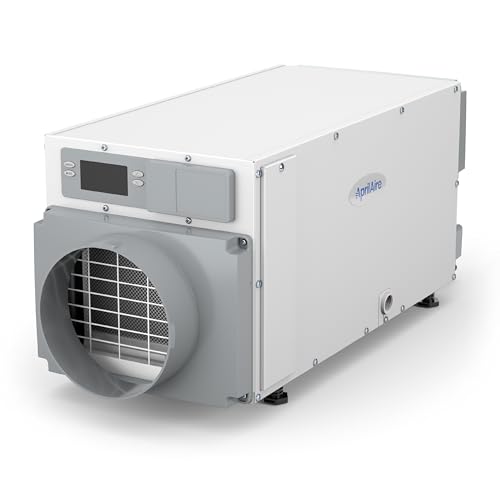
- 70-pint capacity for spaces up to 2,200 sq. ft.
- Compact design fits tight crawl-space access points
- Includes hose and continuous-drain setup
Best For: Sealed crawl spaces and basements needing compact, automatic moisture control
Best High-Capacity Value

- Coverage rated up to 6,000 sq. ft.
- Up to 105 pints per day in specified humid conditions
- ENERGY STAR Most Efficient 2024 certified
Best For: Large, demanding spaces where high capacity and efficiency matter
Best Smart Upgrade

- 100-pint capacity for spaces up to 5,500 sq. ft.
- Built-in Wi-Fi, Bluetooth, and app control
- ENERGY STAR Most Efficient 2024 certified
Best For: Large spaces where remote monitoring and alerts are important
Best Quiet Whole-Home Option

- Rated for spaces up to 3,500 sq. ft.
- Approximately 40 dB at maximum dehumidification
- Includes hose and flexible gravity-drain options
Best For: Whole-home, basement, or garage use where quieter operation matters
Commercial Power Pick

- 85-pint AHAM extraction capacity
- Digital controls with dual intake
- Wheels and handle for mobility
Best For: Large crawl spaces and commercial moisture control
Energy-Saving Value
120 Pint Crawl Space Dehumidifier

- 55-pint AHAM daily capacity
- Built-in pump lifts water 19.6 feet
- Energy Star certified with five-year warranty
Best For: Up to 1,300-square-foot crawl spaces and basements
Compact LGR Pick
PA-45-LGR Compact LGR Dehumidifier
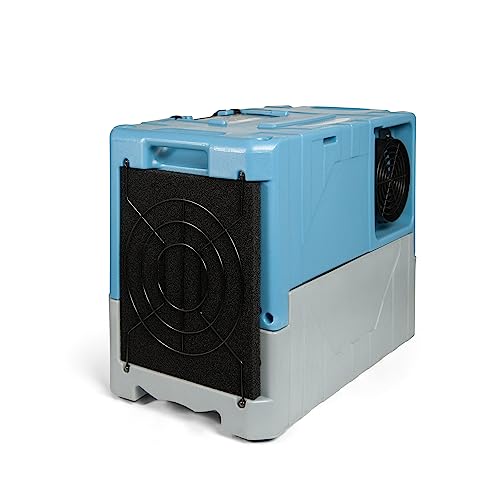
- 85-pint AHAM extraction capacity
- Compact design for tight crawl spaces
- 300 CFM airflow with rolling wheels
Best For: Tight crawl spaces and drying areas up to 1,500 square feet
Best Whole-Home Pick
AprilAire E130 Pro 130-Pint Dehumidifier

- Covers spaces up to 7,200 square feet
- Automatic humidity sensing and continuous draining
- Energy Star Most Efficient certified
Best For: Large crawl spaces, basements, and whole-home humidity control
Best Restoration Value
150 Pint LGR Commercial Dehumidifier

- LGR design with Panasonic compressor
- Built-in pump with 15-foot lift head
- Memory restart after power failure
Best For: Restoration, construction drying, and large basements
Best Compact Crawl-Space Option
CADPXS 125-Pint Crawl Space Dehumidifier

- Compact design rated for up to 1,300 square feet
- Continuous gravity drainage with included hose
- Automatic defrost and flexible six-inch outlet duct
Best For: Smaller crawl spaces and basements with nearby gravity drainage
Best Crawl-Space Fit – AprilAire E070 Pro 70-Pint
For shoppers comparing budget crawl space dehumidifiers, the AprilAire E070 Pro is a compact, purpose-built option for sealed crawl spaces, basements, and homes up to 2,200 square feet. It removes up to 70 pints of moisture per day and supports continuous draining with the included hose, so there is no tray to empty.
Best For: Crawl spaces and basements that need reliable, set-and-forget moisture control in a compact cabinet.
Pros:
- Compact 12.5-by-12.5-by-25-inch design fits through most crawl-space doors and between joists.
- 70-pint daily capacity is suitable for areas up to 2,200 square feet.
- Includes a 10-foot drain tube, washable MERV 8 filter, automatic restart, and automatic defrost.
- Five-year manufacturer warranty and corrosion-resistant aluminum coils.
Cons:
- Its 2,200-square-foot rating is lower than the larger whole-home models in this roundup.
- At 56 pounds, it may require assistance to position.
- It has one operating speed and no listed Wi-Fi control.
The E070 Pro is a strong practical choice when crawl-space access and drainage convenience matter more than smart features or maximum coverage. Its compact footprint and dedicated moisture-protection design make it especially easy to place in tight spaces.
Best High-Capacity Value – AEOCKY RHEA-002 105-Pint
Among budget crawl space dehumidifiers, the AEOCKY RHEA-002 stands out for shoppers who need broad coverage and high moisture-removal capacity. Its supplied specifications cite up to 105 pints per day in hot, very humid conditions and coverage for homes up to 6,000 square feet.
Best For: Large, heavily humid basements, crawl spaces, garages, or whole-home applications where capacity and energy efficiency are priorities.
Pros:
- High-capacity performance rated for spaces up to 6,000 square feet.
- ENERGY STAR Most Efficient 2024 certification is designed to support efficient continuous operation.
- Supplied notes cite 105 pints per day at 95°F and 95% relative humidity.
- Uses a copper-pipe heat-exchange system and includes smart humidity-control features.
Cons:
- The supplied notes are truncated, so complete dimensions, drainage details, and warranty information are not available here.
- Its large-capacity design may be more than needed for a small crawl space.
- Claims about annual savings depend on local electricity rates and operating conditions.
The RHEA-002 is the capacity-focused pick in this group. It makes the most sense when a smaller unit would struggle with a large or persistently damp space, though buyers should confirm installation and drainage requirements before purchasing.
Best Smart Upgrade – AprilAire E100W 100-Pint
The AprilAire E100W is a premium-leaning choice for shoppers seeking budget crawl space dehumidifiers with remote monitoring. It removes up to 100 pints per day, covers areas up to 5,500 square feet, and adds built-in Wi-Fi, Bluetooth pairing, app control, and alerts.
Best For: Large crawl spaces, basements, or whole homes where remote humidity control and system alerts are worth prioritizing.
Pros:
- 100-pint capacity and coverage rated up to 5,500 square feet.
- Built-in Wi-Fi and Bluetooth enable app control, alerts, diagnostics, and updates.
- ENERGY STAR Most Efficient 2024 designation supports efficient operation.
- Supports continuous draining, flexible air-discharge orientation, and automatic humidity-based operation.
Cons:
- Its 64-pound weight and larger cabinet may make installation more involved.
- Some ducted installation applications may require additional components sold separately.
- The higher capacity and smart controls may be unnecessary for smaller spaces.
The E100W is a well-rounded choice when convenience extends beyond moisture removal. Its app-based monitoring and six-year warranty are useful differentiators for homeowners who want ongoing visibility into a large-space humidity system.
Best Quiet Whole-Home Option – AEOCKY BOREAS-001 50-Pint
For buyers comparing budget crawl space dehumidifiers that can also serve living areas, the AEOCKY BOREAS-001 combines a 50-pint-per-day rating with a stated 40 dB operating level. It is rated for spaces up to 3,500 square feet and includes a drain hose for continuous gravity drainage.
Best For: Homes, basements, garages, and storage areas where lower operating noise and flexible drainage are important.
Pros:
- Rated for up to 3,500 square feet with 50-pint daily extraction in specified hot conditions.
- Approximately 40 dB at its highest dehumidification setting, according to the supplied notes.
- Includes a 2-meter drain hose and adapter options for gravity drainage.
- Uses copper tubing and hydrophilic fins designed for heat-exchange performance and durability.
Cons:
- The 0.8-gallon tank may fill quickly during heavy moisture conditions, making continuous drainage preferable.
- The tank must remain installed even when using the drain hose.
- Some energy-saving and durability claims are manufacturer-provided and depend on operating conditions.
The BOREAS-001 is a sensible middle ground for buyers who want more coverage than a small portable unit without accepting loud operation. Plan on using its gravity-drain setup if the space is consistently damp.
Commercial Power Pick – XPOWER XD-85LH
XPOWER XD-85LH Commercial LGR Dehumidifier for Basements and Crawlspaces - Blue
Check Price On AmazonIf you need a budget crawl space dehumidifier with commercial-grade moisture removal, the XPOWER XD-85LH is built for demanding indoor spaces. It removes up to 85 pints per day under AHAM conditions, offers programmable digital controls, and can reduce humidity to 25% or lower.
Best For: Large crawl spaces, basements, and commercial moisture-control jobs where portability and high extraction capacity matter.
Pros:
- Removes up to 85 pints per day at AHAM conditions
- Programmable digital control and dual-intake technology
- Built-in handle and wheels support easier transport
- Operates continuously with 180 CFM airflow
Cons:
- At 67.2 pounds, it is heavier than compact residential units
- Its commercial capacity may be more than smaller spaces require
The XD-85LH stands out when dependable, high-volume drying is more important than the smallest footprint. Its one-year limited warranty and rugged roto-molded construction add practical value for repeated use.
Energy-Saving Value – 120 Pint Crawl Space Dehumidifier
This budget crawl space dehumidifier combines strong moisture removal with features designed for automatic operation. It delivers 55 pints per day under AHAM conditions, covers up to 1,300 square feet, and is Energy Star certified for potentially lower energy use.
Best For: Crawl spaces and basements needing continuous drainage, low-temperature protection, and a long warranty.
Pros:
- Energy Star certification may reduce energy use by up to 25%
- Built-in pump lifts condensate up to 19.6 feet
- Automatic defrost and restart support unattended operation
- Includes a washable MERV-1 filter and five-year limited warranty
Cons:
- Its AHAM output is 55 pints per day rather than the advertised saturation capacity
- Listed airflow is 130 CFM, lower than some commercial alternatives
With pump and gravity-drain options, this model is convenient for installations where emptying a bucket is impractical. Its metal housing, auto-defrost system, and five-year warranty make it a compelling value-focused choice.
Compact LGR Pick – PA-45-LGR Compact LGR Dehumidifier
For tight areas, this budget crawl space dehumidifier offers a compact LGR design with 85 pints per day of AHAM water extraction. Its low-profile form, wheels, and continuous operation make it practical for crawl spaces, basements, and water-damage drying.
Best For: Tight crawl spaces and larger areas up to 1,500 square feet where compact mobility and high airflow are priorities.
Pros:
- 85-pint-per-day AHAM extraction capacity
- Compact design is intended to fit tight crawl spaces
- 300 CFM airflow supports fast drying
- Wheels and lightweight design improve positioning
Cons:
- Comes with a one-year limited warranty
- Designed for commercial use, so it may be more equipment than small residential spaces need
The PA-45-LGR is a strong fit when available space is the main constraint. Its 58-pound roto-molded build, continuous operation, and all-weather positioning make it versatile, though buyers should account for the commercial-sized footprint and capacity.
Best Whole-Home Pick – AprilAire E130 Pro 130-Pint Dehumidifier
For shoppers comparing budget crawl space dehumidifiers, the AprilAire E130 Pro is a substantial whole-home option built for large areas. It can remove up to 130 pints of moisture per day, supports continuous draining, and uses automatic humidity sensing for low-maintenance operation.
Best For: Large sealed crawl spaces, basements, or homes up to 7,200 square feet where durable, automatic humidity control is the priority.
Pros:
- Rated for areas up to 7,200 square feet with 130-pint capacity.
- Energy Star Most Efficient certified and equipped with adjustable humidity control.
- Continuous drainage eliminates the need to empty a water tray.
- Includes a washable MERV 8 filter and five-year manufacturer warranty.
Cons:
- At 98 pounds, it is considerably heavier than the other listed options.
- Its large 30-inch width may require careful placement in tight crawl spaces.
- Designed for fixed installation rather than frequent repositioning.
The E130 Pro costs more than a basic portable unit, but its large coverage rating, automatic controls, and durable construction make it a strong value when dependable whole-house or crawl-space moisture management matters.
Best Restoration Value – 150 Pint LGR Commercial Dehumidifier
Among budget crawl space dehumidifiers, this commercial LGR model stands out for restoration-oriented performance and flexible drainage. Its Panasonic compressor, built-in pump, and memory restart make it suited to demanding moisture-control jobs in basements and other large spaces.
Best For: Water-damage restoration, construction drying, basements, and commercial areas where pumped drainage and restart memory are useful.
Pros:
- Removes up to 80 pints per day at AHAM conditions and 150 pints at saturation.
- Built-in pump offers a 15-foot lift head for flexible water removal.
- Memory restart resumes operation automatically after a power interruption.
- Compact, stackable design includes a 25-foot power cord and drain hose.
Cons:
- The supplied floor-area rating is 2,500 square feet, lower than the AprilAire model.
- Its 0.5-liter tank is small, so drainage setup is important for continuous use.
- Commercial restoration features may be more than needed for light residential humidity control.
This unit is a practical choice when portability, pumped drainage, and restoration capability matter more than whole-house coverage. Its compact format also makes storage and transport easier.
Best Compact Crawl-Space Option – CADPXS 125-Pint Crawl Space Dehumidifier
If you are searching for budget crawl space dehumidifiers for a tighter installation, the CADPXS combines a compact design with continuous gravity drainage. It includes a drain hose, automatic defrost, and a flexible six-inch outlet duct for directing air in crawl spaces or basements.
Best For: Crawl spaces and basements up to 1,300 square feet where compact placement, gravity drainage, and ducted airflow are helpful.
Pros:
- Compact unit is designed for crawl spaces, basements, garages, and similar areas.
- Gravity drainage and included 6.56-foot hose support continuous moisture removal.
- Automatic defrost helps prevent frost buildup in low-temperature conditions.
- Includes a flexible, multilayer, fire- and flame-retardant aluminum outlet duct.
Cons:
- Its supplied floor-area rating is 1,300 square feet, limiting coverage compared with the other models.
- Gravity drainage requires an appropriately positioned drain; it does not list a built-in pump.
- The stated 125-pint capacity and 55-pint-per-day figure use different rating conditions, so comparisons require care.
The CADPXS is a sensible budget-oriented pick for a smaller crawl space when you can use gravity drainage. Its duct and auto-defrost features add installation flexibility without requiring a larger commercial chassis.
How We Picked the Best Budget Crawl Space Dehumidifiers
We compared the listed models across the factors that matter most in a crawl space: moisture-removal capacity, stated coverage, drainage options, operating efficiency, noise, portability, and installation flexibility. We also considered whether each unit is better suited to routine humidity control, a larger whole-house application, or serious moisture and water-damage work.
Capacity claims can vary by testing conditions, so treat pint ratings and square-foot coverage as useful starting points rather than guarantees. A sealed, insulated crawl space generally allows a dehumidifier to perform more effectively than a leaky or actively wet one.
Quick Comparison
| Best For | Look For | Models In This Roundup |
|---|---|---|
| Typical residential crawl spaces | Automatic drainage, compact design, reliable humidistat | AprilAire E070 Pro, AEOCKY 50 Pint |
| Large crawl spaces or whole-house use | Higher capacity, broad coverage, ducting or remote control | AprilAire E100W, AprilAire E130 Pro, CADPXS 125 Pint |
| Restoration or severe moisture | LGR performance, pump, rugged construction | XPOWER XD-85LH, Compact LGR 85, 150 Pint LGR |
| High-capacity value | Large pint rating, hose or pump, accessible controls | AEOCKY 6000-Square-Foot, 120 Pint with Pump |
Key Buying Factors for Budget Crawl Space Dehumidifiers
Capacity and Coverage
Choose capacity according to crawl-space size, humidity, and how sealed the area is. A 50- to 70-pint model may suit a moderately damp residential space, while 100- to 150-pint units are more appropriate for large, persistently wet, or connected areas. Oversizing can help in severe conditions, but it may increase purchase price and energy use.
Drainage and Installation
Continuous drainage is usually more important than tank size. Check whether the included hose can reach a floor drain or sump and whether the unit needs a condensate pump to move water upward. Models with built-in pumps provide more installation flexibility. Duct outlets can also help distribute dry air or keep the appliance outside the crawl space when configured correctly.
Efficiency, Noise, and Controls
Look for Energy Star certification or strong efficiency claims, especially if the unit will run year-round. A built-in humidistat, automatic restart, washable filter, and remote or Wi-Fi controls can simplify ownership. Noise matters less in an isolated crawl space, but quieter models are preferable near living areas.
Durability and Serviceability
Commercial and LGR units are useful for demanding conditions, but they may be heavier and more expensive. Confirm dimensions, operating-temperature requirements, filter access, warranty coverage, and replacement-part availability before installation.
Who Should Buy Which Budget Crawl Space Dehumidifiers?
For a typical home with moderate dampness, start with a compact 50- or 70-pint unit that supports continuous drainage. For a large crawl space, connected basement, or whole-house moisture problem, consider a 100- to 130-pint model with broader coverage and stronger controls. Choose an LGR commercial dehumidifier when rapid drying, rugged construction, or restoration work is the priority. If the installation point is far from a drain, prioritize a built-in pump or plan for a separate condensate pump.