The best energy-efficient smart home hubs do more than connect lights and sensors. They can coordinate automations, monitor electricity use, and help reduce standby power across your home.
This roundup includes full-featured hubs, Matter and Thread gateways, energy-monitoring plugs, power strips, and whole-home monitoring tools for different smart home setups.
Best 10 Energy-Efficient Smart Home Hubs Picks for 2026
Best Local-First Hub

- Local processing keeps automations running during outages
- Supports Matter, Z-Wave, Zigbee, and Bluetooth
- No subscription required; works with major voice assistants
Best For: Multi-brand homes needing fast, privacy-conscious automation
Best for Energy Tracking

- Monitors plug-level energy use with charts
- Schedules appliances for off-peak operation
- Adds smart charging and automatic shutoff
Best For: Tracking and automating several household appliances
Best SmartThings Option
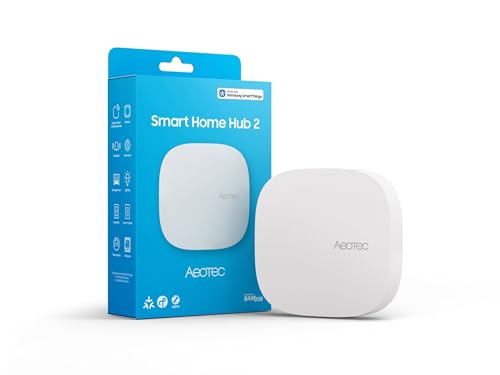
- Powered by the SmartThings app and ecosystem
- Supports Matter and Zigbee devices
- Offers local automations plus Wi-Fi or Ethernet
Best For: SmartThings homes adding Matter and Zigbee devices
Best Whole-Home Energy Monitor

- Monitors whole-home and individual circuit usage
- Includes sixteen branch sensors
- Supports solar, net metering, and peak-demand management
Best For: Detailed electrical-use tracking and energy-cost optimization
Flexible Local Bridge
SONOFF Bridge Max Smart Home Hub
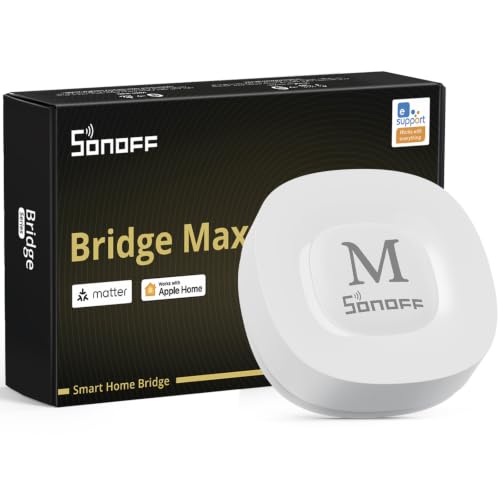
- Bridges Zigbee, BTHome, and eWeLink devices to Matter platforms
- Local web console works without cloud access
- Supports Home Assistant, Ethernet, Wi-Fi, and Zigbee
Best For: Local, cross-platform Zigbee automation
Measured Power Control
Tapo P110M Matter Smart Plug 4-Pack

- Provides detailed energy tracking and bill estimates
- Supports Matter, Alexa, Apple HomeKit, Google Home, and SmartThings
- Offers scheduling plus threshold-based power shutoff
Best For: Monitoring and reducing plug-in appliance usage
Expandable Thread Hub
YEELIGHT E1 Matter and Thread Hub

- Acts as a Matter Controller and Thread Border Router
- Runs local automations and supports LAN API access
- Handles up to 150 sub-devices over Ethernet or Wi-Fi
Best For: Large, Yeelight-centered Thread smart homes
Best for Whole-Home Power Tracking

- Six individually controlled outlets with energy monitoring
- Matter support for major smart home platforms
- Three USB ports plus surge protection
Best For: Multi-device setups needing outlet-level energy tracking
Best Zigbee Value Pack
THIRDREALITY Smart Plug 4-Pack

- Four Zigbee smart plugs with energy monitoring
- Compact design and Zigbee repeater capability
- Works with listed Echo, Home Assistant, and SmartThings setups
Best For: Expanding a Zigbee network across multiple appliances
Best for Privacy-Focused Matter Homes

- Matter smart plugs with power metering
- Thread networking and local communication
- Works across listed Apple, Alexa, Google, and SmartThings hubs
Best For: Privacy-focused homes with a compatible Matter hub
Best Local-First Hub – Hubitat Elevation C-8 Pro
For energy-efficient smart home hubs that prioritize quick, dependable automation, the Hubitat Elevation C-8 Pro is a strong choice. Its local processing keeps routines running when the internet is unavailable, while support for Matter, Z-Wave, Zigbee, and Bluetooth helps consolidate compatible devices.
Best For: Homeowners building privacy-conscious, multi-brand automations with local control and broad protocol support.
Pros:
- Runs automations locally for fast responses and continued operation during internet outages.
- Supports Matter, Z-Wave 800 Long Range, Zigbee 3.0, and Bluetooth without requiring extra bridges.
- Works with Alexa, Google Home, and Apple HomeKit, with no subscription required.
- Rule Machine and AI-assisted routine building support advanced automations.
Cons:
- Its advanced rule engine may require a learning curve for less technical users.
- Device compatibility is broad, but individual device integrations may still need setup through the community or documentation.
The C-8 Pro is especially compelling when dependable local automation and long-term flexibility matter more than a simple, single-brand setup.
Best for Energy Tracking – Tapo P115 Smart Plug 4-Pack
The Tapo P115 4-pack adds practical energy management to everyday appliances, making it a useful option among energy-efficient smart home hubs and connected accessories. Built-in monitoring, scheduling, and automatic shutoff features can help identify waste and control when devices operate.
Best For: Households that want plug-level energy data, off-peak scheduling, and remote control for multiple appliances.
Pros:
- Tracks energy use with statistics and charts in the Tapo app.
- Supports bill estimates and schedules devices for lower-cost off-peak periods.
- Includes smart charging and auto-shutoff features for added energy and overload management.
- Works with Alexa and Google Assistant for voice and remote control.
Cons:
- These are Wi-Fi plugs rather than a standalone whole-home hub.
- Energy monitoring and remote management depend on the Tapo app and network connectivity.
For targeted energy savings, the four-pack makes it easier to monitor and automate several high-use devices without replacing an existing smart home platform.
Best SmartThings Option – Aeotec Smart Home Hub2
The Aeotec Smart Home Hub2 is a practical choice for energy-efficient smart home hubs built around SmartThings. It combines Matter and Zigbee support with local automation capability, allowing compatible lighting, climate, security, and energy routines to run more reliably.
Best For: SmartThings users who want Matter and Zigbee compatibility with Wi-Fi or Ethernet setup.
Pros:
- Uses the SmartThings ecosystem for device coordination, monitoring, and automation.
- Supports Matter and Zigbee devices, including sensors, plugs, thermostats, and switches.
- Some local automations can continue working during temporary internet outages.
- Offers Wi-Fi and Ethernet connectivity and works with Alexa and Google Assistant.
Cons:
- Z-Wave is not supported.
- Its capabilities are closely tied to compatible SmartThings, Matter, and Zigbee devices.
This hub fits best in a SmartThings-centered home, particularly where local routines and newer Matter devices are more important than Z-Wave support.
Best Whole-Home Energy Monitor – Emporia Vue 3
The Emporia Vue 3 takes a measurement-first approach to energy-efficient smart home hubs and energy systems. Installed in the electrical panel, it provides real-time whole-home and circuit-level usage data, helping you identify major loads and configure automation around peak demand, time-of-use rates, and excess solar.
Best For: Homeowners who want detailed whole-home and appliance-level electricity monitoring for energy and cost management.
Pros:
- Includes sixteen branch sensors for monitoring critical circuits and appliances.
- Supports solar and net-metering monitoring plus time-of-use and peak-demand management.
- Provides real-time data with stated accuracy of plus or minus 2%.
- UL Listed and backed by a one-year warranty.
Cons:
- Installation in the electrical panel may require appropriate electrical expertise.
- Requires 2.4 GHz Wi-Fi and an internet connection for monitoring through the app.
- One-second data is available only while the app is actively open and retained for three hours.
The Vue 3 is a strong fit when actionable energy visibility matters most, but its panel installation and cloud-dependent reporting should be considered before purchase.
Flexible Local Bridge – SONOFF Bridge Max Smart Home Hub
The SONOFF Bridge-M is a practical choice for building energy-efficient smart home hubs around local device control. It bridges Zigbee, BTHome, and eWeLink devices to Matter platforms while offering Ethernet, Wi-Fi, and local web management without requiring cloud access.
Best For: Users who want local Zigbee automation, broad ecosystem bridging, and Home Assistant compatibility.
Pros:
- Bridges compatible Zigbee, BTHome, and eWeLink devices to Alexa, Google Home, and Apple Home.
- Local web console supports configuration without an app or cloud service.
- Supports Home Assistant through MQTT and offers Ethernet or Wi-Fi connectivity.
- Can pair with Zigbee sensors for local alerts, including a built-in 90 dB alarm.
Cons:
- It is a Matter Bridge, not a Matter Controller, so it cannot add Matter devices directly.
- Matter functionality depends on compatible non-Matter devices and platforms.
The Bridge-M stands out when privacy, local control, and cross-platform compatibility matter more than direct Matter-device commissioning. Verify your device types and automation platform before buying.
Measured Power Control – Tapo P110M Matter Smart Plug 4-Pack
The Tapo P110M 4-pack is a useful building block for energy-efficient smart home hubs and routines, especially when you want to measure and manage appliance consumption. Matter compatibility, scheduling, and energy tracking make it suitable for coordinating devices across several major platforms.
Best For: Households that want energy monitoring, scheduled control, and overcharge protection for multiple plug-in devices.
Pros:
- Tracks energy consumption with statistics and visual usage information.
- Matter compatibility works with Alexa, Apple HomeKit, Google Home, and SmartThings.
- Schedules can run high-consumption devices during lower-rate periods.
- Set thresholds and durations to cut power for overcharge and overcurrent protection.
Cons:
- Each plug is rated for up to 15A and 1800 watts, limiting use with higher-demand equipment.
- Energy management features require setup through compatible apps or billing integrations.
Choose this pack if energy visibility and appliance-level control are priorities. Its four-plug format is convenient for expanding a Matter-based setup, though load ratings should be checked for every connected device.
Expandable Thread Hub – YEELIGHT E1 Matter and Thread Hub
The YEELIGHT E1 is designed for larger, energy-efficient smart home hubs that benefit from local automation and Thread support. It combines Matter control, a Thread Border Router, Ethernet or Wi-Fi connectivity, and support for up to 150 sub-devices in one central gateway.
Best For: Growing Yeelight-centered homes that need local routines, Thread connectivity, and multi-platform control.
Pros:
- Controls Matter devices across Apple Home, Alexa, Google Home, and SmartThings.
- Local automation can continue responding during an internet interruption.
- Built-in Thread Border Router supports Thread-based Matter devices.
- Supports up to 150 sub-devices and offers Home Assistant compatibility through a LAN API.
Cons:
- Currently supports Yeelight Matter devices, while other brands are limited to certain color-capable and adjustable-color-temperature lights.
- Single-band Wi-Fi specifications may offer less network flexibility than dual-band hubs.
The E1 is a strong fit for users planning a sizable Yeelight-focused installation with local scenes and Thread devices. Its brand and device compatibility limits make checking your existing equipment especially important.
Best for Whole-Home Power Tracking – Tapo P316M Smart Power Strip
The Tapo P316M is a practical choice for energy-efficient smart home hubs and setups that need centralized control for multiple devices. Its six individually controlled AC outlets offer per-outlet energy monitoring, scheduling, surge protection, and compatibility with Matter-enabled platforms.
Best For: Home offices, entertainment centers, and appliance clusters that need detailed outlet-level monitoring and control.
Pros:
- Six individually controlled AC outlets with energy monitoring.
- Works with Matter-compatible Alexa, Google Home, Apple HomeKit, and SmartThings setups.
- Includes three always-on USB ports, surge protection, schedules, and LAN control during internet outages.
Cons:
- USB ports are always on rather than individually controlled.
- Requires a Wi-Fi connection for its connected features.
Choose this model when you want one power strip to manage and measure several devices at once. The flush-fitting plug and three-foot cord also make it easier to place behind furniture.
Best Zigbee Value Pack – THIRDREALITY Smart Plug 4-Pack
The THIRDREALITY four-pack suits energy-efficient smart home hubs built around Zigbee. Each plug supports real-time energy monitoring through compatible platforms, while the compact design preserves the neighboring wall socket and the plugs can also act as Zigbee repeaters.
Best For: Users expanding a Zigbee network across several lamps or appliances with one purchase.
Pros:
- Four plugs provide real-time energy monitoring with supported hubs.
- Compatible with Home Assistant, SmartThings, Hubitat, Echo devices with built-in Zigbee, and other listed hubs.
- Compact design avoids blocking the adjacent outlet and supports Zigbee repeating.
Cons:
- A compatible Zigbee hub or Echo device is required.
- Energy monitoring is not supported equally across every compatible platform.
- Power-restore customization currently depends on supported hubs or software.
This pack is a strong fit for a Zigbee-centered home where several devices need remote control and usage visibility. Confirm that your hub supports the specific monitoring and power-restore features you want.
Best for Privacy-Focused Matter Homes – Eve Energy 2-Pack
The Eve Energy two-pack is designed for energy-efficient smart home hubs using Matter and Thread. It combines smart plug control with power metering, supports major platforms through a compatible hub, and keeps communication local without an Eve cloud account.
Best For: Privacy-conscious households that want Matter compatibility, Thread networking, and appliance power monitoring.
Pros:
- Includes power metering and app or voice control for lights and appliances.
- Matter compatibility supports Apple, Alexa, Google, and SmartThings platforms.
- Uses Thread and offers local communication without cloud dependency, registration, or tracking.
Cons:
- Requires a compatible hub or Thread Border Router.
- Platform and operating-system requirements must be met before setup.
- Only two plugs are included in the pack.
Eve Energy is a good match when local control and broad Matter compatibility matter as much as energy tracking. It is especially appealing for households already equipped with one of the listed Apple, Samsung, Amazon, or Google hubs.
How We Picked These Energy-Efficient Smart Home Hubs
We selected products based on the features that matter most for practical energy management: supported protocols, energy-monitoring capability, automation flexibility, ecosystem compatibility, installation requirements, and scalability. The list includes dedicated hubs such as Hubitat Elevation, Aeotec, SONOFF, and YEELIGHT, as well as smart plugs and power strips that add energy data to an existing setup.
Because “hub” can mean different things, this guide distinguishes between central controllers, protocol bridges, whole-home energy monitors, and connected outlets. A plug with energy monitoring can be more useful for measuring a specific appliance, while a dedicated hub is better for coordinating many devices and automations.
Quick Comparison
| Best For | Recommended Type | What to Look For |
|---|---|---|
| Advanced local automations | Hubitat Elevation C-8 Pro | Z-Wave, Zigbee, Matter, and local processing |
| SmartThings-compatible setups | Aeotec Smart Home Hub2 | Zigbee, Matter, Alexa and Google Assistant support |
| Whole-home electricity tracking | Emporia Vue 3 | Real-time circuit and solar monitoring |
| Affordable appliance monitoring | Tapo, Eve, or THIRDREALITY plugs | Energy readings, automation, and suitable protocol support |
| Multi-device control | Tapo P316M power strip | Multiple outlets, Matter support, and energy monitoring |
Key Buying Factors for Energy-Efficient Smart Home Hubs
Protocol Compatibility
Check whether your current devices use Wi-Fi, Zigbee, Z-Wave, Matter, or Thread. Matter can improve cross-platform compatibility, but a Matter controller may not replace a Zigbee or Z-Wave hub. Thread devices also require a compatible Thread Border Router.
Energy-Management Features
Energy-monitoring plugs are useful for individual appliances, office equipment, entertainment systems, and standby loads. For usage across an entire property, choose a panel-based monitor such as the Emporia Vue 3. Look for real-time readings, historical data, thresholds, and automation triggers.
Local Control and Reliability
Local processing can make automations faster and less dependent on cloud services. Wi-Fi products are convenient, but they may add network traffic and depend on a strong wireless signal. Zigbee, Z-Wave, and Thread devices generally require a compatible controller or border router.
Safety and Load Limits
Verify the outlet rating before connecting heaters, appliances, or other high-draw equipment. Choose ETL- or similarly certified products where available, and never exceed the stated amperage. Energy monitoring does not make an outlet safe for loads beyond its rating.
Who Should Buy Which Energy-Efficient Smart Home Hubs?
Choose Hubitat if you want powerful, highly customizable automations with broad device support. Aeotec is a sensible option for users building around SmartThings, while YEELIGHT suits shoppers seeking Matter and Thread functionality with Apple Home, Alexa, or Google integration.
Choose Emporia for whole-home or solar visibility. Select Tapo, Eve, or THIRDREALITY smart plugs when you want to measure and automate individual devices. The Tapo power strip is better for a desk, media center, or workspace with several connected loads. SONOFF is worth considering when you need a compact bridge for compatible devices and prefer a simpler, focused setup.