Small studios need door seals that improve comfort and privacy without making a narrow entryway harder to use. The right option can reduce drafts, dust, outside noise, and light leaks while fitting neatly around the frame or beneath the door.
We compared 10 studio door seals for small spaces, including adhesive foam, brush, V-shaped, D-shaped, and under-door designs. Use the guide below to match the seal style, size, and installation method to your door.
Best 10 Studio Door Seals for Small Spaces Picks for 2026
Best Corner Fix
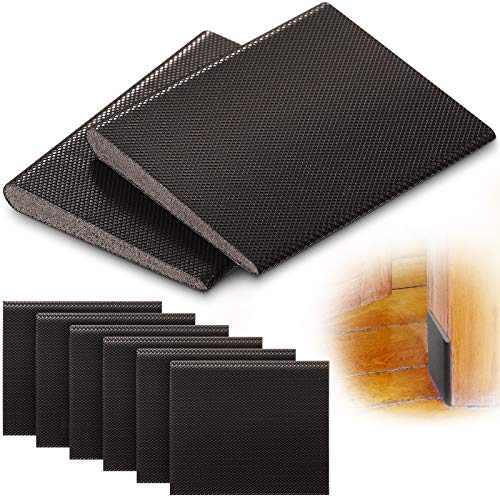
- Compact wedges target draft-prone door corners.
- Peel-and-stick installation needs no tools.
- Six pieces can be stacked or cropped for fit.
Best For: Small corner gaps around studio doors and windows
Best Multi-Use Insulation

- Tapered profile handles varied gap sizes.
- Supports insulation, sound reduction, and light blocking.
- 118-inch strip works on doors, windows, and cabinets.
Best For: Studios needing versatile gap and light control
Best Flexible Gap Fit

- Fits narrow 0.11–0.28-inch gaps
- PVC spine helps resist deformation
- Two adhesive 8-foot rolls
Best For: Small studio doors and windows with narrow gaps
Best for Brush-Style Coverage

- 33 feet of synthetic-fiber brush strip
- Trims to fit frame lengths
- Self-adhesive, tool-free installation
Best For: Doors and windows needing flexible brush coverage
Best Compression Seal

- Fits 3.5–6 mm gaps
- Hollow D profile helps dampen sound
- 32.8-foot self-adhesive strip
Best For: Studio doors with moderate gaps and noise concerns
Flexible Silicone Door Sweep
Adjustable Draft and Noise Seal

- Covers gaps up to 1.5 inches
- Flexible silicone suits uneven floors
- Helps block drafts, noise, and pests
Best For: Small studios with larger bottom-door gaps
Long Gray Felt Strip
Multi-Use Door and Window Weather Seal

- Includes 33 feet of seal strip
- Soft felt helps limit noise and drafts
- Works on doors, windows, cabinets, and closets
Best For: Multiple narrow gaps around a compact studio
Premium Silicone Door Sweep
Quick-Install Energy and Noise Seal

- Fills gaps up to 1.5 inches
- Thick silicone helps reduce drafts and sound
- Trims easily and installs quickly
Best For: One studio door with a sizable bottom gap
Best Corner Fix – Jetec Door Corner Foam Seals
For studio door seals for small spaces, these compact wedge-style corner seals target draft-prone gaps at the frame corners without requiring a long strip. The peel-and-stick design makes them a simple option for quick installation around doors or windows.
Best For: Sealing door-frame corners, reducing drafts, and blocking dust or odors in compact studios.
Pros:
- Compact 2 × 1.75-inch wedge design suits corner gaps.
- Self-adhesive backing supports a straightforward peel-and-stick installation.
- PU leather and polyurethane rubber construction is moistureproof and windproof.
- Six pieces can be stacked or cropped to adjust the fit.
Cons:
- Designed for corners rather than continuous sealing along an entire door.
- Brown color may not blend with every studio door or frame.
Choose this set when the main problem is leakage at door corners and you want a small, adjustable solution. For larger perimeter gaps, a roll-style seal may be more practical.
Best Long-Roll Value – Holikme Flexible Door Seal
This flexible roll is a versatile choice for studio door seals for small spaces when you need enough material to cover multiple gaps. Its 1.8-inch width is intended for gaps up to 1.2 inches, and the adhesive backing supports a cut-to-length installation.
Best For: Covering broad gaps under interior doors, along frames, or around windows in a studio.
Pros:
- Includes two rolls with 33 feet of total seal length.
- Flexible TPE conforms to uneven door gaps and frames.
- Helps block drafts, dust, insects, smoke, and light gaps.
- Can also be used on shower glass door bottoms to reduce splashes.
Cons:
- Its 1.8-inch width may be excessive for very narrow gaps.
- Surface preparation is important for reliable adhesion.
- Best suited to gaps up to 1.2 inches rather than larger openings.
For a small studio with several doors, windows, or other gaps to address, the generous roll length is useful. Clean the surface carefully and follow the backing-warming tip to help the adhesive hold.
Best Multi-Use Insulation – Wedge Foam Door Seal
When shopping for studio door seals for small spaces, this 118-inch wedge strip offers adjustable coverage for doors, windows, cabinets, and other household gaps. Its tapered profile is designed to accommodate several gap sizes while supporting insulation, sound reduction, and light blocking.
Best For: Interior doors and windows where draft control, light blocking, and added sound reduction are priorities.
Pros:
- Tapered 5/32- to 11/32-inch profile fits varied gap sizes.
- PU foam core is designed to remain elastic and avoid deformation.
- Nylon cloth exterior is waterproof and scratch-resistant.
- Grid adhesive backing is intended to provide a durable hold.
Cons:
- One 118-inch roll may not cover multiple large openings.
- Cold-weather installation may require warming the backing with a hair dryer.
- White finish may be visible against darker frames.
This is a strong all-purpose option when one compact studio needs more than basic draft blocking. Its wedge shape and broad application range make it useful for doors, windows, closets, and cabinets, provided the gap falls within its intended profile.
Best for Sliding Doors – Self-Adhesive Brush Seal
For studio door seals for small spaces with narrow sliding gaps, this brush-style strip is designed to move smoothly while filling openings around doors and windows. Its low-profile dimensions suit gaps approximately 0.1 to 0.3 inches wide.
Best For: Sliding glass doors, windows, wardrobes, closets, and other narrow tracks where a flexible brush seal is appropriate.
Pros:
- Dense pile brush helps block drafts, dust, and insects.
- Flexible construction adapts to uneven surfaces and sliding tracks.
- Self-adhesive backing installs without drilling.
- 16.5 feet can be cut to fit individual sections.
Cons:
- Designed for relatively narrow gaps of about 0.1 to 0.3 inches.
- One roll may be limiting for multiple door or window installations.
- Brush seals may not suit large stationary gaps.
This is the most targeted pick for a compact studio with sliding doors or windows. Measure the gap first; the narrow profile is useful for tracks but less suitable for broad door-bottom openings.
Best Flexible Gap Fit – V-Shape Small Door Frame Seal
For studio door seals for small spaces, this V-shaped strip is designed for narrow gaps where a bulkier seal could interfere with door movement. Its flexible profile fits gaps from 0.11 to 0.28 inches, while the PVC spine helps it retain its shape.
Best For: Small studio doors, windows, cabinets, and wardrobes with narrow gaps requiring a flexible adhesive seal.
Pros:
- Fits gaps from 0.11 to 0.28 inches.
- Two 8-foot rolls provide 16 feet of stated material.
- PE cloth, PU foam, and a PVC spine support water resistance, cushioning, and shape retention.
- Self-adhesive installation requires no special tools.
Cons:
- Best suited to narrow gaps within its specified range.
- Adhesion may benefit from brief hair-dryer warming in cold conditions.
The combination of a slim V profile and reinforced construction makes this a practical option when a small studio needs draft, dust, light, or noise reduction without adding much bulk around the frame.
Best for Brush-Style Coverage – Self-Adhesive Door Brush Seal
Among studio door seals for small spaces, this brush-style weather strip offers a low-profile way to address drafts, dust, insects, and some outside noise. The self-adhesive backing and trimmable length make it convenient for fitting window or door frames.
Best For: Studio doors and windows where a customizable brush seal is preferred for blocking drafts, dust, and insects.
Pros:
- Includes 33 feet of gray brush weather stripping.
- Self-adhesive backing allows tool-free installation.
- Can be trimmed to match the required frame length.
- Designed for door and window applications.
Cons:
- The supplied notes do not specify a supported gap range.
- Brush construction may not provide the same compression seal as a solid rubber profile.
This is a useful choice for compact studios needing easy-to-cut coverage across several frames, especially when dust, insects, and light drafts are the main concerns.
Best Compression Seal – D-Shaped EPDM Door Strip
For studio door seals for small spaces with slightly wider gaps, this D-shaped EPDM strip creates a compressible barrier around door frames and windows. It is specified for gaps from 3.5 to 6 mm and is intended to reduce drafts, dust, airflow, and noise.
Best For: Studio doors or windows with 3.5–6 mm gaps that need a durable compression seal and added sound-dampening support.
Pros:
- D-shaped hollow EPDM profile supports compression and sound absorption.
- Fits gaps from 3.5 to 6 mm.
- Self-adhesive backing simplifies installation.
- Designed to maintain elasticity across a wide temperature range.
Cons:
- Its specified gap range may be too large for very narrow gaps.
- Only one 32.8-foot strip is indicated in the product title.
- White may be more noticeable on darker door frames.
The EPDM construction and hollow D profile make this the strongest fit of the three for a more substantial compression seal, particularly when reducing door-slamming noise and unwanted airflow matters.
Flexible Silicone Door Sweep – Adjustable Draft and Noise Seal
For studio door seals for small spaces, this adjustable silicone sweep is a practical choice when you need to cover a bottom gap without taking up much room. Its 39-inch length can be trimmed, and it is designed to seal gaps up to 1.5 inches on interior or exterior doors.
Best For: Small studios needing a flexible bottom-door seal for drafts, dust, and some outside noise.
Pros:
- Flexible silicone construction glides over carpet and uneven floors.
- Helps reduce airflow, energy loss, noise, and pests beneath the door.
- Wide adhesive backing installs quickly and can be trimmed to size.
Cons:
- Adhesion may be less effective on rough or textured surfaces.
- The adhesive should be warmed in cold weather and left undisturbed for 24 hours.
This is a versatile pick for compact rooms with a noticeable under-door gap, especially where floor flexibility and added sound reduction matter. Measure carefully before cutting and prepare the surface thoroughly.
Long Gray Felt Strip – Multi-Use Door and Window Weather Seal
For studio door seals for small spaces, this 33-foot self-adhesive strip offers plenty of material for doors, windows, cabinets, and other narrow gaps. Its slim 0.35-inch profile is useful when you want discreet sealing around compact studio fixtures.
Best For: Studios that need a long roll for multiple narrow door, window, cabinet, or closet gaps.
Pros:
- 33 feet of material supports several sealing projects.
- Soft 5P high-density hair bends without deforming and is designed for quiet operation.
- Helps reduce drafts, dust, noise, and collisions across varied applications.
Cons:
- Its 0.35-inch thickness is intended for narrower gaps rather than large under-door openings.
- Installation requires measuring and cutting each section to fit.
This roll is the most flexible option for a small studio with several modest gaps to address. It is better suited to perimeter and narrow-gap sealing than to filling a deep space beneath a door.
Premium Silicone Door Sweep – Quick-Install Energy and Noise Seal
For studio door seals for small spaces, this 39-inch silicone door sweep provides a straightforward way to block drafts, dust, and heat transfer at the threshold. The 2-inch height and stated 1.5-inch maximum gap fill make it suitable for doors with a substantial bottom gap.
Best For: Studio doors needing a quick, adhesive-mounted seal with added ambient-noise reduction.
Pros:
- Industry-grade silicone and strong adhesive are designed for indoor and outdoor use.
- Three-dimensional chambers help reduce external noise as well as drafts.
- Can be trimmed for fit and installs by cleaning the surface and applying the strip.
Cons:
- It is a single 39-inch piece, so wider doors may require another solution.
- Adhesive installation depends on a clean, suitable door surface.
This is a focused choice when the main problem is airflow beneath one door and you want installation to be fast. Its thick silicone profile also makes it appealing for studios where reducing ambient sound is useful.
How We Picked the Best Studio Door Seals for Small Spaces
We focused on seals that suit compact rooms, home studios, bedrooms, offices, and other spaces where easy installation and minimal bulk matter. The selection includes products for door frames, thresholds, corner gaps, and larger perimeter openings. We considered material, adhesive design, flexibility, coverage length, gap-filling ability, and whether each style is better suited to drafts, dust, sound leakage, or general insulation.
Because door gaps vary widely, no single seal works best for every installation. Measure the opening first, then choose a profile that can compress or overlap the gap without preventing the door from closing.
Quick Comparison
| Seal style | Best for | Main advantage | Watch for |
|---|---|---|---|
| Foam | Small, uneven frame gaps | Soft compression and simple cutting | Can wear faster in high-use areas |
| Brush | Dust, light, and modest drafts | Flexible around uneven surfaces | Usually offers limited sound blocking |
| V-shaped | Consistent side or top gaps | Low-profile compression | Needs accurate positioning |
| D-shaped | Medium-to-large perimeter gaps | Thicker cushioning and insulation | May require more closing force |
| Door sweep | Gaps beneath the door | Targets the largest common leak | Can drag on thick carpets |
Key Buying Factors for Studio Door Seals for Small Spaces
Measure the Gap and Available Clearance
Check the gap at the top, sides, and bottom independently. A compact foam or V-shaped strip may suit a narrow frame gap, while a D-shaped seal or door sweep is more appropriate for a larger opening. Confirm that the door has enough clearance to close smoothly after installation.
Choose the Right Installation Location
Frame-mounted seals generally address drafts, noise, dust, and light around the perimeter. Bottom seals handle threshold gaps and can make a noticeable difference when air enters beneath the door. Corner patches are useful for small leakage points but are not a substitute for a complete perimeter seal.
Prioritize Adhesive and Surface Compatibility
Self-adhesive products are convenient for renters and quick upgrades, but the surface must be clean, dry, and free of loose paint. Painted wood, metal, glass, and laminate may hold adhesive differently. For frequent-use doors, press the strip firmly and allow the adhesive to set before repeated opening and closing.
Set Realistic Soundproofing Expectations
Weather stripping can reduce rattles, high-frequency leakage, and air gaps, but it will not fully soundproof a hollow or lightweight door. For better results, combine perimeter seals with a properly fitted bottom sweep and, if possible, a heavier door or acoustic treatment.
Who Should Buy Which Studio Door Seals for Small Spaces?
- For narrow, uneven gaps: Choose soft foam or small V-shaped weather stripping.
- For dust and light control: Consider a brush seal that flexes across minor surface irregularities.
- For broader frame gaps: A D-shaped or thicker foam profile can provide more compression and insulation.
- For a cold or drafty threshold: Select an adjustable door draft stopper or under-door sweep.
- For a quick renter-friendly upgrade: Look for self-adhesive strips that can be trimmed without drilling.
For most small studios, the best approach is to seal the largest gap first, then add frame strips or corner seals where air, dust, or sound still enters. Recheck the door’s operation after installation and trim any excess material that causes rubbing.