Window cleaning robots can reduce the effort and risk involved in washing large panes, high windows, and hard-to-reach exterior glass. The best models combine dependable suction with automatic spraying, intelligent route planning, and safeguards that help prevent falls.
This roundup compares 10 window cleaning robots with low maintenance, focusing on the features that matter most after setup: simple upkeep, secure operation, effective coverage, and easy control.
Best 10 Window Cleaning Robots with Low Maintenance Picks for 2026
Compact Convenience Pick
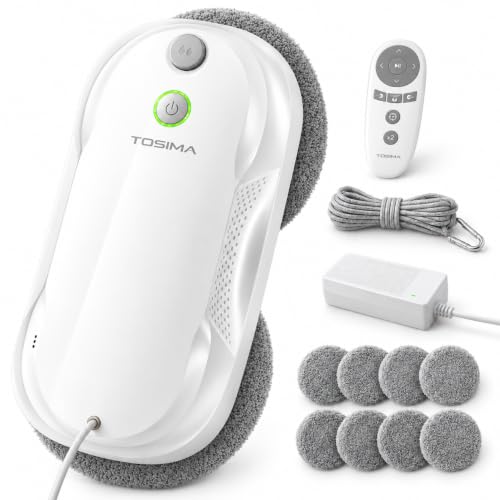
- Compact and easy to store
- 6400Pa adaptive suction
- Replaceable spray components
Best For: Apartments and smaller homes
Edge-Cleaning Specialist

- Round-square dual-stage cleaning
- 6500Pa suction with 55N pressure
- 30-minute power-off protection
Best For: Edges, corners, and polished finishes
High-Window Coverage Pick

- 6400Pa variable suction
- Works on windows, mirrors, and tile walls
- 30-minute UPS power protection
Best For: High windows and hard-to-reach glass
Best for Large Glass Areas
WISEBOT AI Window Cleaning Robot

- AI navigation with spot-cleaning mode
- Triple spray and 200 ml water tank
- Reusable microfiber system with edge cleaning
Best For: Large or high windows and broad glass surfaces
Best for Safety-Focused Routine Cleaning

- 6500Pa suction with UPS anti-drop protection
- Three selectable cleaning paths
- Includes 10 washable cleaning pads
Best For: Regular cleaning of high windows and glass doors
Most Versatile Spray System
WA9C Pro Window Cleaning Robot

- Four-nozzle spray system for even coverage
- Six cleaning modes with remote control
- 25-minute backup battery and safety sensors
Best For: High windows, mirrors, and glass doors needing adjustable spray coverage
Best Maintenance Guidance
Dual-Spray Window Cleaning Robot

- Includes 10 microfiber cloths
- Dry-then-wet cleaning method helps manage residue
- Edge detection and 3000 Pa suction
Best For: Smooth windows, glass doors, mirrors, and suitable skylights
Best for Large Windows
6400Pa Dual-Spray Window Cleaning Robot

- Up to 6400 Pa variable-frequency suction
- 90 ml tank with dual-direction spray
- Includes 10 replacement microfiber mops
Best For: High-rise indoor and outdoor glass needing strong suction
Compact Convenience Pick – Tosima W5
The Tosima W5 is a practical choice for shoppers comparing window cleaning robots with low maintenance. Its compact body is easy to handle and store, while automatic navigation, dual spray, and adaptive suction simplify regular glass cleaning.
Best For: Apartments, condos, and smaller homes that need an easy-to-store robot for smooth glass surfaces.
Pros:
- Compact, lightweight design with simple setup.
- Adaptive suction reaches up to 6400Pa and adjusts to the surface.
- Replaceable spray nozzle and water-tank cap support easier upkeep.
- Triple safety system includes edge sensing, a 220kg-rated rope, and up to 25 minutes of backup power.
Cons:
- Designed for smooth surfaces rather than general-purpose household cleaning.
- The 6-inch cleaning path may require more passes on larger windows.
With automatic operation, remote control, and replaceable components, the W5 offers a low-fuss maintenance routine. Its smaller format is especially useful when storage space is limited.
Edge-Cleaning Specialist – HUTT 10 Premium
The HUTT 10 Premium stands out among window cleaning robots with low maintenance for its dual-stage cleaning design. A round wet-lifting pad and square dry-polishing pad work together to address everyday dirt, fingerprints, edges, and streaks.
Best For: Users who want stronger edge coverage and a more polished finish on windows, mirrors, shower doors, and sliding doors.
Pros:
- Round-square dual-pad system combines wet cleaning with dry polishing.
- 6500Pa suction and constant 55N pressure support stable, thorough cleaning.
- NAVI 7.0 mapping and 14 sensors help plan paths and detect edges.
- Includes a visible 80ml tank, multiple nozzles, cleaning pads, and a 30-minute UPS battery.
Cons:
- Purified water is recommended to help reduce mineral buildup and nozzle clogging.
- Pads and drive tracks need to stay properly wrung out, clean, and dry for traction.
The HUTT offers more specialized cleaning than a basic automated wiper, but its best results depend on simple pad and track care. That maintenance is worthwhile for shoppers prioritizing edge reach and reduced streaking.
Easy Daily-Cleaning Pick – ECOVACS WINBOT MINI
The ECOVACS WINBOT MINI is a strong fit for shoppers seeking window cleaning robots with low maintenance for routine touch-ups. Its lightweight compact design, automatic path planning, app control, and washable filter keep everyday glass cleaning straightforward.
Best For: Apartments, small windows, narrow or hard-to-reach indoor glass, and light dust or fingerprint buildup.
Pros:
- Compact, lightweight form is convenient for frequent use.
- Simple attach-and-start setup with three cleaning modes.
- Dual ultrasonic spray nozzles and intelligent path planning support automatic cleaning.
- Washable filter and quiet operation suit regular indoor maintenance.
Cons:
- For heavy soil, the pads may need cleaning or multiple cycles.
- It is intended for indoor use and glass surfaces.
The WINBOT MINI is best viewed as a convenient maintenance tool rather than a heavy-duty restoration machine. Its small footprint and washable filter make it appealing for quick, repeat cleaning in compact homes.
High-Window Coverage Pick – X6 Window Cleaning Robot
The X6 is designed for shoppers comparing window cleaning robots with low maintenance for high or hard-to-reach surfaces. Its 6400Pa variable suction, dual-spray system, edge detection, and smart navigation help automate cleaning across windows, skylights, mirrors, and tile walls.
Best For: Homes and offices with high windows, floor-to-ceiling glass, skylights, mirrors, or compatible tile walls.
Pros:
- 6400Pa variable suction helps maintain adhesion on vertical surfaces.
- Dual spray nozzles and a round body support broad coverage with fewer blind spots.
- UPS backup provides up to 30 minutes of power-outage protection.
- Remote operation, edge detection, and smart navigation reduce hands-on effort.
Cons:
- Proper water amounts and timely pad replacement are needed to avoid smears.
- Very dirty glass may require two cleaning passes and a final dry-pad wipe.
- The product is corded electric, so placement still depends on access to power.
The X6 offers useful coverage and safety features for elevated cleaning, while routine pad care helps preserve its streak-free results. It is a practical option when ladders or manual reach are the main inconvenience.
Best for Large Glass Areas – WISEBOT AI Window Cleaning Robot
For shoppers seeking window cleaning robots with low maintenance, the WISEBOT stands out with reusable microfiber cloths, AI route planning, and a 200 ml water tank. Its square design and edge-cleaning mode are especially useful for large windows, glass doors, and other hard-to-reach surfaces.
Best For: Large or high windows, balcony glass, mirrors, and users who want broader wet-cleaning coverage with less manual effort.
Pros:
- AI navigation includes edge detection, frameless-glass detection, obstacle recognition, and spot cleaning.
- Triple-spray wet-cleaning system and 200 ml tank support longer cleaning sessions.
- Square body, corner pads, and dedicated edge mode improve coverage near edges and corners.
- Washable microfiber cloths help reduce ongoing replacement needs.
Cons:
- The supplied notes do not specify noise level, cleaning speed, or exact runtime.
- As with other powered window robots, users must still set up the safety rope and supervise operation.
WISEBOT is a strong fit when edge coverage, reusable cleaning materials, and reduced ladder use matter more than keeping the design especially compact.
Best for Visible Water-Level Tracking – Tosima X1 Window Cleaning Robot
The Tosima X1 is a practical choice among window cleaning robots with low maintenance, pairing an 85 ml tank with a viewing window so refills are easier to anticipate. Its dual-nozzle ultrasonic atomization, automatic S-shaped route, and remote control suit routine cleaning on large or small glass surfaces.
Best For: Households that want simple operation, visible water-level monitoring, and a compact robot for indoor glass cleaning.
Pros:
- The visible 85 ml tank makes it easy to check remaining water before or during cleaning.
- Dual nozzles spray in the direction of travel to help support wet, streak-conscious cleaning.
- Automatic S-shaped cleaning works on windows from 30×30 cm, with remote manual adjustment.
- A backup battery keeps the robot attached for about 25 minutes during a power outage.
Cons:
- The 85 ml tank is smaller than some options, so larger jobs may require more attention to refilling.
- The supplied usage information lists indoor use, despite support for overhead sunroom-window cleaning.
- At 65 dB, it may not be the quietest option for noise-sensitive users.
The X1 emphasizes straightforward upkeep and control: its visible reservoir, water-resistant materials, and included cleaning cloths make routine jobs easier to manage.
Best for Safety-Focused Routine Cleaning – 6500Pa Window Cleaning Robot
For buyers comparing window cleaning robots with low maintenance, this model combines 6500Pa suction, a 25-minute UPS backup, and 10 included cleaning pads. It is designed for regularly maintained windows, glass doors, and mirrors, with remote operation and multiple cleaning paths for flexible coverage.
Best For: Homes with high, framed, or frameless glass that need regular dust and fingerprint cleaning without ladder work.
Pros:
- 6500Pa suction, a 5-meter safety rope, and UPS backup provide multiple safety measures.
- Edge detection and obstacle awareness help the robot adjust around frames and glass edges.
- Three cleaning paths—top-down, left-down, and right-down—offer route flexibility.
- Includes 10 cleaning pads and a 60 ml tank with dual-sided spray nozzles.
Cons:
- The 60 ml water tank is smaller than the reservoirs on some competing models.
- It is intended for routine cleaning; heavy buildup or stubborn water stains may need pre-cleaning or extra cycles.
- Pad care requires dampening, wringing, even attachment, and washing after each cycle.
This robot is best viewed as a maintenance cleaner rather than a heavy-duty stain remover. Its safety features and generous pad supply make it appealing for frequent, light-duty glass cleaning.
Most Versatile Spray System – WA9C Pro Window Cleaning Robot
For shoppers comparing window cleaning robots with low maintenance needs, the WA9C Pro stands out with four spray nozzles, reusable cleaning mops, and multiple navigation modes. Its remote control and safety features make it practical for high windows, mirrors, and glass doors, though it still requires a power connection during normal use.
Best For: High windows and glass surfaces where adjustable spray coverage and remote-controlled cleaning are useful.
Pros:
- Four-nozzle system provides even water coverage.
- Six cleaning modes include N-, Z-, and manual operation.
- 2600–3200 Pa suction, drop sensors, and a 25-minute backup battery support secure operation.
- Includes four mops, replacement nozzles, an unclogging needle, and a water bottle.
Cons:
- Requires a safety rope for overhead work.
- Normal operation relies on AC power; the battery is for outage protection.
- At 6 pounds, it may be less convenient to move than lighter models.
The WA9C Pro is a strong fit if low-maintenance window cleaning means having useful accessories and fewer manual passes. Its spray controls and manual mode add flexibility, while the included unclogging kit helps with routine upkeep.
Best Maintenance Guidance – Dual-Spray Window Cleaning Robot
This dual-spray model is a practical choice among window cleaning robots with low maintenance requirements because it includes 10 microfiber cloths and clearly defined cleaning steps. Its dry-then-wet two-pass method can reduce residue, but users should replace cloths regularly and pre-clean heavy grime before operation.
Best For: Smooth glass windows, glass doors, mirrors, and skylights angled at least 30 degrees from horizontal.
Pros:
- 50 ml tank and upgraded dual-spray nozzles support even coverage.
- Includes 10 microfiber cloths and two cleaning rings.
- Edge detection, pressure sensing, and three cleaning paths help guide coverage.
- 3000 Pa suction, a safety rope, and a 20-minute UPS battery provide layered protection.
Cons:
- Not suitable for curved glass, thick trim, raised decorative elements, or horizontal surfaces.
- Heavy stains require manual pre-cleaning to protect suction.
- The backup battery is emergency support, not cordless operating power.
Its strongest low-maintenance advantage is the generous cloth supply and straightforward dry- and wet-pass guidance. Choose it when your glass is smooth and accessible, but expect some preparation for sandy, greasy, or heavily soiled windows.
Best for Large Windows – 6400Pa Dual-Spray Window Cleaning Robot
For large or hard-to-reach glass, this window cleaning robot combines variable-frequency suction up to 6400 Pa, dual-direction spray, and edge and corner detection. It can reduce hands-on effort for indoor and outdoor windows, while the included replacement pads help simplify ongoing cleaning.
Best For: Indoor or outdoor high-rise glass, windows, and other compatible smooth surfaces requiring strong suction and extended reach.
Pros:
- Up to 6400 Pa variable-frequency suction adapts to surface and dirt conditions.
- Dual-direction ultrasonic spray and edge detection support broad coverage.
- 90 ml tank and 10 replacement microfiber mops reduce refill and restocking frequency.
- Includes a 178-inch safety rope and backup battery for added protection during outages.
Cons:
- Cleaning solution should be applied to the glass or pads, not poured into the machine.
- Pads need to be moistened to approximately 50%–70% before use.
- The supplied notes do not specify the backup battery duration.
This model is appealing for low-maintenance window cleaning when strong hold, a larger tank, and spare mops matter more than compactness. Following the pad-moistening and solution instructions is important to help prevent nozzle clogging and maintain streak-free results.
How We Picked the Best Window Cleaning Robots with Low Maintenance
We compared the selected models by looking at the features most likely to affect everyday ownership. These include suction strength, backup power, safety ropes, edge detection, navigation, spray design, water-tank capacity, cleaning modes, and control options. We also considered whether a robot appears straightforward to prepare, refill, wipe down, and store between uses.
Low maintenance does not mean maintenance-free. Every window-cleaning robot needs clean microfiber pads, an appropriate cleaning solution or water, and occasional inspection of its sensors, cord, and safety tether. Models with accessible tanks, washable pads, clear status indicators, and automated path planning generally require less hands-on attention.
Quick Comparison
| Feature | What to look for | Why it matters |
|---|---|---|
| Suction | About 3,000Pa to 6,500Pa or adaptive suction | Helps the robot stay attached across different glass surfaces. |
| Spraying | Dual, triple, or ultrasonic nozzles | Distributes moisture more evenly and can reduce manual pre-treatment. |
| Safety | UPS backup, safety rope, drop detection, and alarms | Provides protection if power or grip is interrupted. |
| Navigation | Edge detection, intelligent paths, and automatic return | Improves coverage and reduces repeated passes. |
| Maintenance | Washable pads, visible tank, and easy controls | Makes routine cleaning and refilling less inconvenient. |
Key Buying Factors for Window Cleaning Robots with Low Maintenance
Glass Compatibility and Robot Shape
Confirm that the robot is designed for your window type, size, thickness, and surface. Square models may reach corners more effectively, while compact designs can be easier to position on smaller panes. Check whether the manufacturer excludes textured, frosted, framed, tiled, or heavily divided glass.
Suction, Backup Power, and Tethering
Higher suction ratings can be useful, but the number alone does not guarantee better cleaning. Look for adaptive grip, a reliable safety rope, and UPS or battery backup. These features are especially important for exterior windows and upper floors.
Spray System and Pad Care
Automatic spray reduces interruptions, but it can also increase refilling and pad-cleaning needs. A visible tank helps you monitor fluid levels, while washable microfiber pads keep running costs lower. Avoid over-wetting the glass, since excess liquid can affect grip and leave streaks.
Navigation and Controls
Intelligent path planning, edge detection, remote controls, and automatic stopping can make the robot easier to supervise. A model with several cleaning modes may be useful when switching between light dust, fingerprints, and more persistent marks.
Who Should Buy Which Window Cleaning Robots with Low Maintenance?
Choose a compact model if you clean smaller panes or want easier storage. Consider a square-edge design for broad windows where corner coverage is a priority. A higher-suction model with strong safety protection is better suited to large or elevated exterior glass, provided it is compatible with the surface.
For frequent cleaning, prioritize accessible water tanks, durable washable pads, dependable route planning, and simple controls over flashy extras. For occasional use, a straightforward robot with solid suction and basic safety features may offer better value. Whichever model you choose, supervise the first cleaning cycle, secure the tether, use clean pads, and follow the manufacturer’s instructions.