Small rooms and narrow windows can make routine glass cleaning awkward, especially when reaching upper panes or exterior surfaces. The best compact window cleaning robots help reduce manual effort while fitting more easily into limited storage and working areas.
This roundup compares 10 window cleaning robots for small spaces, focusing on compact designs, suction performance, edge handling, spray systems, safety features, and everyday usability.
Best 10 Window Cleaning Robots for Small Spaces Picks for 2026
Best Simple Remote-Control Pick

- 6500Pa suction with UPS backup
- Three selectable cleaning paths
- Includes 10 cleaning pads
Best For: Routine cleaning of small windows, mirrors, and glass doors
Best Dual-Pad Cleaning System

- Round wet-lift and square dry-polish pads
- Supports surfaces from 30 x 30 cm
- Smart mapping with 14 sensors
Best For: Small glass surfaces needing polishing and edge-focused cleaning
High-Window Coverage Pick

- 6400Pa suction with multi-level safety protection
- Round body covers about 95% of window area
- Works on glass, mirrors, skylights, and tile walls
Best For: High or hard-to-reach windows and varied smooth surfaces
Remote-Controlled Value Pick
BSD16 Automatic Window Cleaner

- AI path planning with edge detection
- Remote control with three automatic modes
- 3000Pa suction and up to 30-minute UPS support
Best For: Indoor windows, mirrors, and doors needing flexible remote operation
Compact Premium Pick
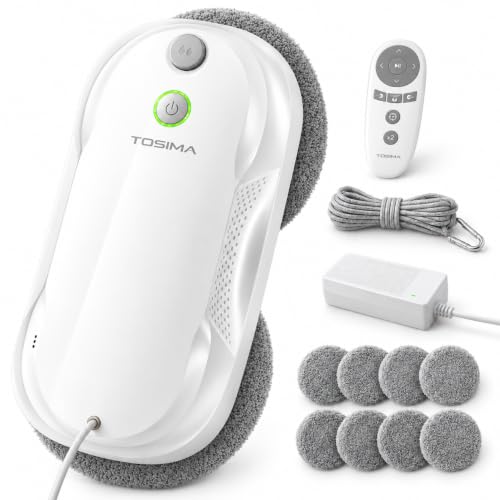
- Compact design for apartments and condos
- 6400Pa adaptive suction with dual spray
- Triple safety system and 25-minute backup battery
Best For: Small homes needing powerful, compact glass cleaning
Simple Glass-Care Pick

- 50ml tank with upgraded dual-spray nozzles
- Includes 10 microfiber cloths
- Edge detection and three cleaning paths
Best For: Routine cleaning of suitable glass surfaces in small homes
Versatile Surface Pick

- 5600Pa suction with automatic or manual spray
- Cleans smooth windows, tiles, and glass doors
- Three path-planning modes and ample accessories
Best For: Small homes cleaning multiple smooth surface types
Best Compact Edge Cleaner – WINBOT MINI 2
For shoppers comparing window cleaning robots for small spaces, the ECOVACS WINBOT MINI 2 stands out for its compact 8.46-inch footprint and minimum applicable window size of 8.66 x 9.84 inches. Its edge-focused design, fine misting, and app-controlled cleaning modes make it well suited to narrow windows, mirrors, and glass doors.
Best For: Small or hard-to-reach glass areas where edge coverage and compact sizing matter.
Pros:
- Compact design fits tighter glass areas than larger window robots.
- Corner brushes and side wings bring the pad within about 1 mm of edges.
- Ultrasonic mist helps limit over-wetting while loosening everyday dust and fingerprints.
- Offers five cleaning modes, including Spot and Edge Clean.
Cons:
- Designed primarily for routine dust, fingerprints, and light stains; heavier buildup may need multiple cycles.
- At 65 dB, it is not completely quiet.
- Requires the safety rope to be anchored before use.
The WINBOT MINI 2 is the most purpose-built option here for genuinely tight glass areas. Choose it when compact dimensions and close edge cleaning are more important than minimizing setup.
Best Visible-Tank Option – Tosima X1
The Tosima X1 is a practical choice among window cleaning robots for small spaces, supporting glass surfaces from 30 x 30 cm while also handling larger windows. Its visible 85 ml tank, dual spray nozzles, and remote control make operation straightforward for routine household cleaning.
Best For: Buyers who want a compact robot with an easy-to-monitor water tank and manual remote control.
Pros:
- Works on smaller glass surfaces starting at 30 x 30 cm.
- Viewing window makes the remaining water level easy to check.
- Dual nozzles spray in the direction of travel to help reduce smearing.
- Automatically follows an S-shaped top-to-bottom path and supports manual adjustments.
Cons:
- The included backup battery keeps the robot attached for about 25 minutes during an outage.
- At 65 dB, operation may be noticeable indoors.
- Its 5-pound weight is heavier than some compact alternatives.
With its larger visible tank and flexible remote operation, the X1 is a sensible everyday cleaner for apartments and mixed-size glass. It is especially appealing when checking water level at a glance is more useful than app-based control.
Best Simple Remote-Control Pick – 6500Pa Window Cleaning Robot
This 6500Pa window cleaning robot offers a straightforward option for small spaces, glass doors, mirrors, and larger panes. It combines edge detection, three selectable cleaning paths, dual-sided spray, and remote control for users who prefer simple operation without relying on an app.
Best For: Small-space and hard-to-reach window cleaning where remote operation and basic route choices are priorities.
Pros:
- 6500Pa suction, a 5-meter safety rope, and 25-minute UPS backup provide layered protection.
- Three cleaning paths accommodate different window layouts.
- Dual spray nozzles and a 60 ml tank help loosen light dirt and fingerprints.
- Includes 10 cleaning pads.
Cons:
- Routine cleaning is its stated use; stubborn buildup may require pre-cleaning or extra cycles.
- Remote control is the listed control method, rather than app control.
- The 60 ml tank is smaller than the tanks on some competing models.
This model favors accessible controls and broad surface compatibility over advanced features. It makes sense for shoppers who want a budget-minded, remote-operated cleaner for regularly maintained glass.
Best Dual-Pad Cleaning System – HUTT 10
The HUTT 10 brings a more specialized approach to window cleaning robots for small spaces, using a round pad for wet lifting and a square pad for dry wiping and polishing. It supports tiny glass surfaces starting at 30 x 30 cm while adding smart mapping, ultrasonic spray, and strong safety features.
Best For: Users who want targeted cleaning, polishing, and improved edge and corner reach on small glass surfaces.
Pros:
- Dual-stage round-and-square pad system is designed for wet lifting and dry polishing.
- Works on glass surfaces starting at 30 x 30 cm.
- NAVI 7.0 mapping and 14 sensors support route planning and edge detection.
- Includes 30-minute power-off protection and a 220 kg-rated safety rope.
Cons:
- Pad moisture and dirty drive tracks can affect traction and movement.
- Purified water is recommended, and cleaning liquid is not included.
- The dual-pad process requires more preparation than a basic single-pad robot.
The HUTT 10 is the feature-rich choice for shoppers willing to manage pad moisture and water quality. Its dual-stage cleaning design is particularly attractive when polishing and close edge work matter as much as basic dust removal.
Compact Everyday Pick – ECOVACS WINBOT MINI
For shoppers comparing window cleaning robots for small spaces, the ECOVACS WINBOT MINI stands out for its lightweight, compact body and straightforward setup. It is designed for routine indoor glass cleaning, including apartments, narrow windows, and quick touch-ups. Its dual ultrasonic spray nozzles, three cleaning modes, app control, and safety system add convenience without a bulky setup.
Best For: Apartments, small windows, narrow or hard-to-reach indoor glass, and light everyday dirt.
Pros:
- Compact 8.46-by-8.46-inch body is suited to small spaces and narrow windows.
- Dual nozzles, three cleaning modes, and intelligent path planning support convenient routine cleaning.
- Strong suction and a 9-stage protection system help it stay attached during operation.
- Quiet operation and washable pads are practical for frequent home use.
Cons:
- Designed primarily for light dirt, dust, fingerprints, and routine touch-ups; heavily soiled glass may need multiple cycles.
- Corded electric operation requires access to a power source.
The WINBOT MINI is a sensible choice when storage space and ease of handling matter more than heavy-duty stain removal. Its compact design and simple controls make it particularly appealing for smaller homes and regular maintenance.
High-Window Coverage Pick – X6 Window Cleaning Robot
The X6 is a strong option for shoppers seeking window cleaning robots for small spaces that can also handle high or hard-to-reach glass. Its slim round body is designed to cover about 95% of the window area, while 6400Pa variable suction, dual spray nozzles, edge detection, and smart navigation support inside and outside cleaning.
Best For: High windows, narrow frames, skylights, mirrors, tile walls, and homes or offices needing broader surface versatility.
Pros:
- 6400Pa variable suction, anti-fall sensors, and a safety cable rated to hold at least 150 pounds provide multiple safety measures.
- Built-in UPS function reportedly keeps the robot attached for up to 30 minutes during a power cut.
- Round design is intended to reduce blind spots and cover approximately 95% of the window area.
- Remote control, automatic edge detection, smart navigation, and dual spray make operation convenient.
Cons:
- At 63 dB, it may be more noticeable than a quiet compact model.
- For very dirty glass, the supplied guidance recommends multiple passes and timely pad changes.
- Its corded electric design still requires a power connection while cleaning.
The X6 makes the most sense for users prioritizing reach, safety features, and surface flexibility. It is more feature-focused than a basic small-window robot, especially for high-rise, skylight, and mixed glass-surface cleaning.
Remote-Controlled Value Pick – BSD16 Automatic Window Cleaner
The BSD16 is worth considering among window cleaning robots for small spaces if you prefer remote operation and multiple cleaning modes. Its AI 5.0 path planning and edge detection help it navigate framed glass, while dual water nozzles, double helix cleaning heads, and microfiber pads target dust, fingerprints, and smudges on windows, mirrors, and doors.
Best For: Indoor windows, mirrors, and doors where remote control, adjustable spray, and automated path planning are priorities.
Pros:
- AI path planning and edge detection help it adjust around frames and obstacles.
- Dual nozzles, double helix cleaning heads, and microfiber pads support streak-free maintenance.
- Infrared remote offers three automatic cleaning modes plus manual control.
- 3000Pa suction, UPS power storage for up to 30 minutes, and a safety rope add security during use.
Cons:
- The supplied specifications list a 50 ml capacity, smaller than some competing models.
- It is specified for indoor use rather than general outdoor cleaning.
- Remote control operation requires keeping the controller available during cleaning.
The BSD16 is a practical fit for users who want hands-off cleaning with direct control over spray and cleaning modes. Its safety features are useful, but the smaller water capacity and indoor-use specification may matter for larger or more demanding jobs.
Compact Premium Pick – Tosima W5
For shoppers comparing window cleaning robots for small spaces, the Tosima W5 stands out for its compact 11-by-5.5-inch design, adaptive suction, and automatic spray system. It is designed for smooth glass surfaces and can be controlled with its remote when you want more control over the cleaning path.
Best For: Apartments, condos, and smaller homes that need a compact robot for glass windows and frameless surfaces.
Pros:
- Compact, lightweight design is easier to store and handle.
- Adaptive suction reaches up to 6400Pa and adjusts to the surface.
- Includes edge detection, dual spray, remote control, and a 25-minute emergency backup battery.
- Replaceable spray nozzle and water tank cap support easier maintenance.
Cons:
- Designed for smooth glass surfaces rather than general household flooring.
- Requires a power connection during normal operation.
The W5 is a strong fit when storage space matters but you still want advanced safety features and powerful suction. Its compact footprint and frameless-glass support make it especially practical for smaller homes with hard-to-reach windows.
Simple Glass-Care Pick – Dual-Spray Window Robot
This dual-spray model is a practical option among window cleaning robots for small spaces, particularly for glass windows, doors, mirrors, and skylights. Its edge detection and three cleaning paths help it navigate suitable glass surfaces, while the included cloths support a two-pass cleaning routine.
Best For: Small-space users who want an affordable glass cleaner with dual spray, remote control, and plentiful replacement cloths.
Pros:
- Upgraded atomizing nozzles and a 50ml water tank provide even water coverage.
- Includes 10 microfiber cleaning cloths and two cleaning rings.
- Pressure sensing and three cleaning paths support edge detection, including on frameless windows.
- Triple safety protection combines 3000Pa suction, a safety rope, and UPS backup.
Cons:
- Heavily soiled areas and stubborn stains need manual pre-cleaning.
- Not recommended for curved glass, thick trim, raised decorative elements, or horizontal surfaces.
- The robot must remain plugged in during operation; the backup battery is for emergencies only.
This model makes sense for routine glass maintenance when you are comfortable following the recommended dry-then-wet cleaning process. Its surface limitations are important, but the included cloths and dual-spray setup add practical value for smaller residences.
Versatile Surface Pick – HCR-10 Window Cleaner
The HCR-10 is a versatile choice for shoppers seeking window cleaning robots for small spaces, with support for smooth windows, tiles, and glass doors. Its 5.7-inch cleaning path, automatic or manual water spray, and three path-planning modes provide useful flexibility without requiring bulky equipment.
Best For: Small homes that need one robot for smooth windows, glass doors, and tile surfaces.
Pros:
- 5600Pa suction and automatic or manual water spraying support hands-free cleaning.
- Works on smooth windows, tiles, and glass doors.
- Automatically detects window frames and obstacles while following three cleaning modes.
- Includes four cleaning rings, 10 pads, a water container, remote, and safety rope.
Cons:
- It is a corded electric device, so it needs a power connection while cleaning.
- Best suited to smooth surfaces rather than textured or irregular materials.
- The 30ml water container is smaller than the tank on some competing models.
Choose the HCR-10 if surface versatility matters as much as compact storage. Its rectangular 11.8-by-5.5-by-2.7-inch body remains relatively easy to store, while the included accessories help cover routine cleaning across several smooth surfaces.
How We Picked the Best Window Cleaning Robots for Small Spaces
We focused on the features that matter most in compact homes, apartments, offices, and rooms with limited access. Our comparison considers overall footprint, suction strength, anti-drop protection, power-cord and safety-rope arrangements, navigation, edge detection, water delivery, and compatibility with different glass surfaces.
Because product specifications can vary by seller and region, verify the included accessories, supported window types, minimum usable pane size, and warranty before ordering. A compact robot is only useful if it can maintain reliable contact with your particular glass.
Quick Comparison
| Feature | What to look for | Why it matters in small spaces |
|---|---|---|
| Size and shape | Compact body with practical edge clearance | Helps the robot work around narrow panes, frames, and nearby walls |
| Suction | Strong, stable grip suited to the glass surface | Supports safer operation on vertical windows |
| Navigation | Intelligent path planning and edge detection | Reduces missed areas and unnecessary repositioning |
| Spray system | Automatic or dual-nozzle water delivery | Limits manual spraying and helps manage fine dust |
| Safety | UPS backup, anti-drop systems, alarms, and safety rope | Provides protection if power or suction is interrupted |
Key Buying Factors for Window Cleaning Robots for Small Spaces
Measure the Usable Glass Area
Measure the clear pane rather than the entire window frame. Check the manufacturer’s minimum and maximum dimensions, and allow room for the robot to turn or follow edges. Very narrow panes, divided windows, heavy frames, stickers, and uneven surfaces may limit performance.
Prioritize Safety Over Peak Suction
Higher suction figures can be useful, but stability, sensor reliability, and backup protection matter just as much. Look for a safety rope, battery or UPS backup, audible alerts, and clear instructions for attaching the robot before operation. Never treat a window robot as unattended equipment, particularly above ground level.
Match the Cleaning System to Your Surface
Spray-equipped models can make maintenance easier, but too much moisture may leave streaks or affect framed, tinted, coated, or textured glass. Use the recommended cloths and cleaning solution, keep pads clean, and avoid surfaces the manufacturer excludes. Some models may also work on tiles or doors, but compatibility should be confirmed first.
Consider Noise, Cables, and Storage
Compact homes benefit from a short setup routine and easy storage. Check cord length, remote-control requirements, operating noise, cloth replacement costs, and whether the robot can be stored without damaging its pads or spray nozzles.
Who Should Buy Which Window Cleaning Robots for Small Spaces?
Choose the smallest, simplest model if you have narrow interior panes, limited storage, or occasional cleaning needs. A compact ECOVACS or similarly small-format design may suit apartments and rooms with obstructed access. Pick a model with stronger suction and robust anti-drop protection for tall, exterior, or hard-to-reach windows. Automatic spray and intelligent path planning are worthwhile if you clean frequently or want less manual preparation.
For mixed surfaces such as windows, glass doors, and compatible tiles, prioritize a versatile model with clear surface guidance. Whichever option you choose, test it first on an accessible pane, supervise every cleaning cycle, and keep the safety system attached throughout operation.