The best window alarm sensors make it easier to monitor entry points without installing a complex security system. This roundup compares 10 practical options, from compact standalone alarms to smart-compatible contact sensors.
Use the buying guide below to match alarm volume, sensor type, installation method, and coverage needs to your home.
Best 10 Window Alarm Sensors Picks for 2026
Best Connected Pick
Ring Alarm Contact Sensor 6-Pack
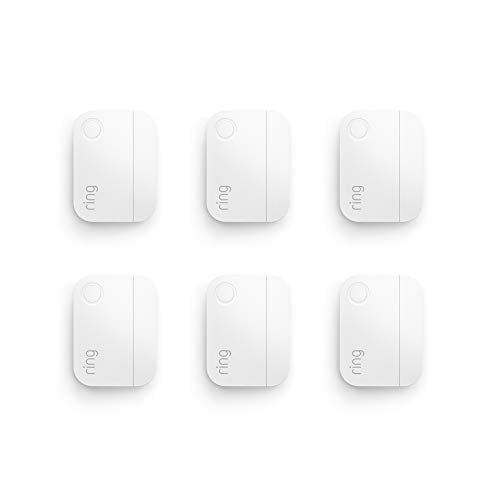
- Monitors six doors or windows
- Mobile alerts with Ring Protect
- Requires Ring Alarm Base Station
Best For: Ring Alarm users needing connected entry-point monitoring
Best No-Fee Siren Pack
UltraPro Window and Door Alarm 6-Pack

- Six standalone magnetic alarms
- 120dB siren or selectable chime
- No app or monthly fees
Best For: Simple indoor protection with local audible alerts
Best Adjustable Volume
SanJie Door and Window Alarm Sensors 5-Pack

- 125dB, 100dB, and chime modes
- Covers doors, windows, cabinets, and drawers
- Up to 13 months of normal battery life
Best For: Flexible alert settings across varied household openings
Best Glass Vibration Detection
EVA LOGIK Window Alarm System 4-Pack

- Detects vibration on glass windows
- 120dB alarm sounds for 60 seconds
- Includes sensitivity settings and flashing LED
Best For: Glass windows and doors needing vibration-based protection
Best Value Coverage
UltraPro 5-Pack Window and Door Alarms

- Five alarms for broad indoor coverage
- 120dB siren with chime mode
- Tool-free adhesive installation
Best For: Homes and other spaces needing several basic entry alarms
Best for Family Safety
METAK 5-Pack Window and Door Alarms

- Adjustable 90dB or 120dB volume
- Five wireless contact alarms
- Red LED for trigger and low battery
Best For: Families monitoring doors, windows, cabinets, and restricted areas
Best Branded Option
Philips 4-Pack Window and Door Alarms

- Four magnetic contact alarms
- 120dB alarm with chime mode
- Adhesive, wireless installation
Best For: Homes and small spaces wanting branded local entry alerts
Best Value Multipack
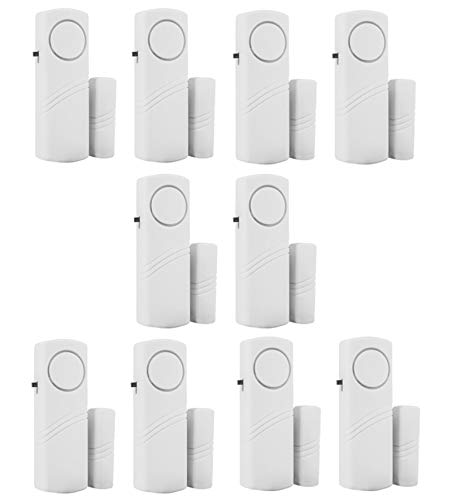
- 10 adhesive-mounted contact alarms
- 90 dB alert for opened doors or windows
- Batteries required and not included
Best For: Covering multiple indoor entry points affordably
Best Small-Scale Option
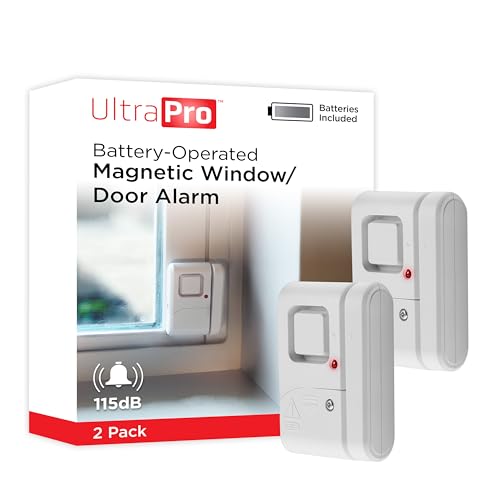
- 120 dB siren with selectable chime mode
- Adhesive, wireless installation
- Includes LR44 batteries and low-battery LED
Best For: Targeted coverage for two indoor entry points
Best for Whole-Home Coverage
UltraPro 12-Pack Window Alarms

- 12 alarms for broad entry-point coverage
- 120 dB siren or selectable chime
- Includes 48 LR44 batteries
Best For: Monitoring many indoor doors, windows, and cabinets
Best Connected Pick – Ring Alarm Contact Sensor 6-Pack
For shoppers seeking connected window alarm sensors, the Ring Alarm Contact Sensor 6-Pack monitors six doors or windows and can send instant mobile alerts with a Ring Protect subscription. Its slim, tool-free installation suits frames where placement flexibility matters.
Best For: Ring Alarm users who want app-based alerts across multiple doors or windows.
Pros:
- Monitors six entry points in one pack.
- Provides instant mobile alerts with a Ring Protect subscription.
- Slim design and no-tool installation offer flexible placement.
- Approximately three-year battery life.
Cons:
- Requires a Ring Alarm Base Station.
- Mobile alerts require a Ring Protect subscription, sold separately.
This is the most suitable option for an existing Ring ecosystem, but its required base station and optional subscription make it less convenient for standalone use.
Best No-Fee Siren Pack – UltraPro Window and Door Alarm 6-Pack
These window alarm sensors provide straightforward indoor protection without apps or monthly fees. Each magnetic alarm offers selectable chime or siren modes, while the six-pack helps cover several doors and windows.
Best For: Apartments, dorms, offices, RVs, and homes needing simple local alerts.
Pros:
- Six alarms help cover multiple indoor entry points.
- 120dB siren provides a strong audible deterrent.
- Selectable OFF, chime, and alarm modes suit different routines.
- Includes double-sided tape for wireless installation and requires no app or monthly fee.
Cons:
- Designed for indoor installation.
- Uses included LR44 batteries that will eventually need replacement.
The UltraPro is a practical standalone choice when audible notification is more important than smartphone monitoring or integration with a larger security system.
Best Adjustable Volume – SanJie Door and Window Alarm Sensors 5-Pack
These window alarm sensors combine magnetic contact detection with adjustable alert levels. The five-pack can be installed on windows, sliding doors, cabinets, or drawers using the included adhesive, making it useful for both security and household awareness.
Best For: Buyers who want flexible volume settings and coverage for varied openings.
Pros:
- Offers 125dB alarm, 100dB alarm, and chime modes.
- Works on windows, doors, cabinets, drawers, and other openings.
- Peel-and-stick installation is simple and wireless.
- Battery life is rated up to 13 months under normal use, with a low-battery indicator.
Cons:
- Recommended for indoor installation.
- Uses LR44 button batteries that require periodic replacement.
- The alarm continues for 31 seconds until the opening is closed.
With multiple volume options and broad mounting uses, this pack is a versatile fit for households that want to tailor alerts rather than use one fixed siren level.
Best Glass Vibration Detection – EVA LOGIK Window Alarm System 4-Pack
Unlike contact-style window alarm sensors, the EVA LOGIK system uses vibration detection to respond when glass is disturbed. High- and low-sensitivity settings, a 120dB alarm, and a flashing LED make it a focused option for windows and glass doors.
Best For: Windows, sliding glass doors, garages, RVs, offices, and dormitories needing vibration-based alerts.
Pros:
- Built-in vibration sensor is designed for glass-window protection.
- High- and low-sensitivity settings help reduce false alarms.
- 120dB alarm sounds for 60 seconds when vibration is detected.
- Peel-and-stick installation, flashing LED, and warning stickers add visible deterrence.
Cons:
- Requires two AAA batteries per alarm, and batteries are not included.
- Vibration detection differs from a simple open/close contact sensor.
This pack is the strongest match for shoppers specifically concerned about vibration at glass surfaces, especially where a standard magnetic contact sensor may not address the intended use.
Best Value Coverage – UltraPro 5-Pack Window and Door Alarms
For shoppers comparing window alarm sensors, the UltraPro 5-pack provides broad indoor coverage with magnetic contact sensors, a 120dB siren, and a selectable chime mode. The adhesive installation is tool-free, and no app or monthly fee is required.
Best For: Homes, apartments, dorm rooms, offices, RVs, and campers needing several basic entry-point alarms.
Pros:
- Includes five alarms for covering multiple doors, windows, cabinets, or drawers.
- Offers selectable off, chime, and alarm settings.
- Uses included double-sided tape for wireless, tool-free installation.
- Includes LR44 batteries and a front low-battery LED indicator.
Cons:
- Designed for local audible alerts rather than app or remote monitoring.
- Uses small LR44 batteries rather than standard AAA cells.
The UltraPro is a practical pick when you want several straightforward window alarm sensors in one package. Its multiple modes make it useful for both security and everyday entry notifications.
Best for Family Safety – METAK 5-Pack Window and Door Alarms
Among window alarm sensors for household awareness, the METAK D130 5-pack combines a 120dB alarm with adjustable 90dB or 120dB volume settings. Its contact design can help alert you when doors, windows, cabinets, or other restricted areas are opened.
Best For: Families monitoring entry points, cabinets, pools, basements, or areas used by children or elderly individuals.
Pros:
- Provides five wireless sliding-door opening sensor alarms.
- Allows arming, disarming, and volume adjustment through the Set button.
- Offers 90dB and 120dB alert levels.
- Includes a flashing red LED for triggered or low-battery status.
Cons:
- Requires two AAA batteries per alarm, and batteries are not included.
- Does not support the RC5311 remote control.
- Settings are controlled at the alarm rather than remotely.
The METAK stands out for households that want adjustable volume and visual status feedback. It is especially suited to practical, localized monitoring rather than connected smart-home control.
Best Branded Option – Philips 4-Pack Window and Door Alarms
The Philips 4-pack is a straightforward choice among window alarm sensors, using magnetic contact detection to trigger a 120dB alert when a protected door or window opens. It also includes a chime setting for convenient entry and exit notifications.
Best For: Homes, apartments, dorm rooms, offices, garages, and RVs seeking a branded four-alarm security set.
Pros:
- Includes four alarms for expanded coverage.
- Provides off, chime, and alarm controls.
- Installs wirelessly with included double-sided mounting tape.
- Includes LR44 batteries and a low-battery LED indicator.
Cons:
- Uses a 0.5-inch maximum sensor range, so careful alignment is important.
- Provides local chime or siren alerts rather than app-based monitoring.
The Philips set offers an uncomplicated balance of coverage and convenience. Its chime mode is useful for routine awareness, while the loud alarm adds a basic layer of intrusion notification.
Best Value Multipack – HIIXHC 10-Pack Window Alarms
If you need broad coverage, these window alarm sensors provide a simple adhesive-mounted contact alarm for doors and windows. Each unit sounds at 90 dB or more when the magnetic sensor separates beyond 0.59 inches, and the 10-pack can cover multiple entry points.
Best For: Covering several windows, doors, garages, apartments, or other indoor entry points on a budget.
Pros:
- Includes 10 wireless contact alarms.
- Tool-free adhesive installation.
- 90 dB alarm helps alert occupants to an opened entry point.
- Works across homes, offices, hotel rooms, garages, and mobile homes.
Cons:
- Two AAA batteries are required for each alarm and are not included.
- It has a lower stated volume than the UltraPro alternatives.
- The alarm activates when the sensor gap exceeds 0.59 inches, so placement matters.
This HIIXHC set is a practical choice when quantity matters more than app connectivity or advanced controls. Plan the sensor alignment carefully and purchase the required batteries separately.
Best Small-Scale Option – UltraPro 2-Pack Window Alarms
These window alarm sensors suit shoppers who want coverage for just a few entry points without wiring or monthly fees. The magnetic alarms offer a selectable 120 dB siren or door chime, plus an off setting for everyday flexibility.
Best For: Apartments, dorm rooms, offices, garages, or homes needing a compact two-alarm starter setup.
Pros:
- Selectable 120 dB siren or chime alerts.
- Includes double-sided tape for tool-free mounting.
- Front LED indicates low battery status.
- Four LR44 batteries are included for each alarm.
Cons:
- The two-pack covers fewer entry points than the 10- and 12-pack options.
- It uses LR44 batteries rather than more common AAA cells.
- Designed for indoor installation and does not include app-based monitoring.
With its louder siren, chime mode, and included batteries, this UltraPro pack is convenient for targeted protection. Choose it when two monitored doors or windows are enough.
Best for Whole-Home Coverage – UltraPro 12-Pack Window Alarms
For broader coverage, this 12-pack of window alarm sensors uses magnetic contact detection and adhesive installation to monitor many doors, windows, cabinets, or drawers. Each unit provides a selectable 120 dB siren or chime and requires no wiring, app, or monthly fee.
Best For: Larger homes, offices, dorms, RVs, or other spaces with many indoor entry points to monitor.
Pros:
- Includes 12 alarms for extensive indoor coverage.
- Offers a 120 dB siren and a chime setting.
- Installs wirelessly with included double-sided tape.
- Includes 48 LR44 batteries and carries a limited lifetime warranty.
Cons:
- Requires 48 LR44 batteries in total, adding battery-management needs.
- Adhesive mounting may require careful positioning on each entry point.
- The supplied details describe local audible alerts rather than remote notifications.
This is the strongest fit for shoppers who want one purchase to cover numerous indoor openings. Its large quantity and loud alert make it more suitable for comprehensive basic coverage than for a minimal setup.
How We Picked the Best Window Alarm Sensors
We evaluated these Window Alarm Sensors by focusing on the features that matter most in everyday use: detection method, alarm volume, installation simplicity, battery expectations, pack size, and suitability for different rooms. We also considered whether each product is best used as a standalone warning device or as part of a broader home security setup.
Because the products vary considerably, there is no single best choice for every household. A loud local siren may be ideal for a basement or rental, while a connected contact sensor may be more useful if you want phone notifications and centralized monitoring.
Quick Comparison
| Best For | What to Look For |
|---|---|
| Whole-home coverage | Large multipacks with simple adhesive installation |
| Smart security systems | Compatible contact sensors with app alerts |
| Deterring casual entry | Standalone alarms with loud sirens |
| Children’s rooms and cabinets | Basic open-trigger alarms with easy controls |
| Glass or vibration concerns | Models specifically designed for vibration or break detection |
Key Buying Factors for Window Alarm Sensors
Detection Type
Magnetic contact sensors activate when a window or door separates from its frame. They are generally reliable for detecting opening. Vibration-sensitive models can respond to force or movement, but they may require more careful placement and adjustment to reduce false alarms.
Alarm Volume and Controls
A 120dB or 125dB rating can provide a strong local deterrent, but advertised loudness varies by testing conditions. Volume controls, chime modes, and adjustable sensitivity are useful when installing alarms near bedrooms, pets, or shared walls.
Installation and Battery Life
Most standalone units use adhesive mounting and are suitable for renters or quick DIY installation. Check that the window frame has enough flat surface for both sensor pieces. Also review battery access and expected runtime, since an alarm with a depleted battery cannot protect an opening.
Smart Alerts and Compatibility
If you need notifications while away, choose a sensor that works with your existing alarm hub or smart-home platform. Standalone sirens usually alert people nearby but do not automatically send phone notifications.
Coverage and Pack Size
Count accessible windows, doors, patio entrances, and other vulnerable openings before buying. Larger packs can reduce the per-unit cost, while smaller packs are better for testing a product or covering only a few priority locations.
Who Should Buy Which Window Alarm Sensors?
Choose a connected contact sensor if you already use a compatible security hub and want centralized monitoring, app notifications, or integration with other alarms.
Choose a loud standalone alarm if your main goal is an immediate local warning with minimal setup. These are useful for apartments, garages, dorms, and secondary entry points.
Choose a multipack if you need to cover many windows or doors throughout the home. Multipacks are especially practical when consistent installation and matching controls matter.
Choose vibration-focused protection for windows where impact or attempted glass entry is a concern, but follow the installation instructions carefully and test sensitivity after mounting.