The best energy-efficient keypad door locks make daily entry easier without adding unnecessary power demands. This roundup compares dependable deadbolts, fingerprint models, Wi-Fi locks, and complete handle sets for different homes and budgets.
Use the buying guide below to match access methods, connectivity, battery expectations, and installation requirements with the way you use your doors.
Best 10 Energy-Efficient Keypad Door Locks Picks for 2026
Best Budget Pick
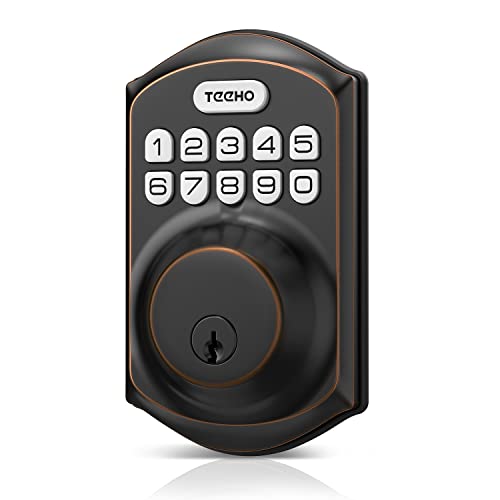
- Up to 365 days on four AA batteries
- 20 user codes plus one-time guest codes
- IP54 weather resistance and auto-lock
Best For: Budget-conscious households and rental properties
Best Smart Access Control

- At least 12 months of battery life
- Remote user and permission management
- Fingerprint, app, code, fob, and key access
Best For: Multi-tenant properties and remote access management
Best Long-Term Battery Rating
Schlage Camelot Keypad Deadbolt

- Up to two years of typical battery life
- Grade 2/AAA-rated construction
- Supports up to 21 total access codes
Best For: Traditional keypad security without app connectivity
Best Fingerprint Value
TEEHO TE002 Fingerprint Deadbolt

- Up to 365 days on four AA batteries
- Stores 20 fingerprints and 20 passcodes
- Fingerprint, keypad, one-time PIN, and key access
Best For: Families wanting fast local fingerprint entry
Best Smart Wi-Fi Pick

- Up to 300 days in Bluetooth mode
- Up to 200 customizable codes
- Wi-Fi, Bluetooth, app, and voice access
Best For: Homes wanting flexible smart access and app monitoring
Best Fingerprint Entry
Philips 4200 Series Wi-Fi Lock
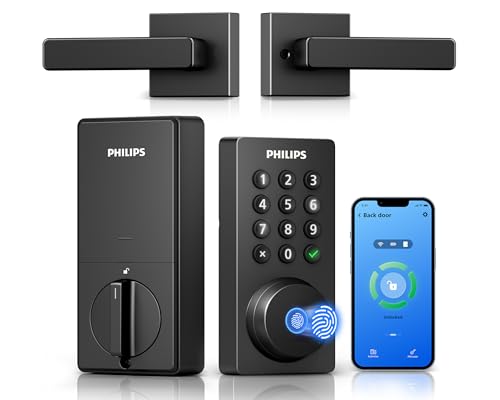
- 0.3-second fingerprint access
- Built-in Wi-Fi with no hub
- Up to six months of battery life
Best For: Front doors prioritizing biometric access and remote control
Best Long-Battery Keypad Value

- Over one year on four AA batteries
- 20 permanent user codes plus guest passwords
- Includes lever handles and backup keys
Best For: Doors needing simple access and minimal battery maintenance
Best Simple Keypad Lock

- Up to 20 unique entry codes
- Auto-lock and low-battery alerts
- No app, Wi-Fi, or phone setup
Best For: Straightforward keyless entry without connected features
Best High-Capacity Keypad Lock
Voice-Guided Electronic Keypad Deadbolt

- Stores up to 300 access codes
- Adjustable 5–60-second auto-lock
- Four AA batteries rated for over a year
Best For: Busy households needing numerous codes and guided controls
Best Keypad Door Knob
Yamiry Digital Lock with Handle

- Up to 20 codes plus a guest code
- 5–99-second adjustable auto-lock
- Backlit keypad and low-battery indicator
Best For: Doors suited to a keypad handle instead of a deadbolt
Best Budget Pick – TEEHO TE001 Keypad Deadbolt
The TEEHO TE001 is a practical choice for shoppers seeking energy-efficient keypad door locks without app connectivity. Its four-AA-battery design can run for up to 365 days, while programmable codes and automatic locking simplify everyday entry.
Best For: Front doors, back doors, rentals, and households that want keypad access with long battery life.
Pros:
- Supports up to 20 user codes plus a self-deleting one-time guest code.
- Battery life is rated for up to 365 days, with a low-battery warning below 15%.
- Offers auto-lock timing, one-touch locking, anti-peep protection, and IP54 weather resistance.
- Installs with a screwdriver and includes two backup keys.
Cons:
- AA batteries are not included.
- Fits 2-1/8-inch door holes only and is not compatible with 38mm holes.
- Requires a reset before first use to detect door handing.
With straightforward keypad operation, useful guest-code controls, and a year-plus battery rating, the TE001 is a sensible low-maintenance option. Confirm the door-hole requirements before ordering.
Best Smart Access Control – Veise VE017 Fingerprint Lock
The Veise VE017 combines several access methods with app-based management, making it a flexible option among energy-efficient keypad door locks. Its battery is rated for at least 12 months, and the app can manage users, permissions, codes, and activity records remotely.
Best For: Multi-tenant properties, busy households, and owners who want remote access management with fingerprint entry.
Pros:
- Provides fingerprint, app, code, fob, mechanical-key, and other listed unlocking options.
- Supports one-time, duration, permanent, and recurring access codes.
- On-device AES128 encryption stores credentials and access data locally.
- Offers activity logs, alerts, auto-lock settings from 0 to 180 seconds, and intrusion lockouts.
Cons:
- The product notes do not specify the exact battery type or capacity.
- Alexa and Google Assistant compatibility requires the optional G1 Gateway.
- Its many management features may be more than needed for a basic keypad-only installation.
The VE017 stands out when access needs change frequently or multiple users must be managed remotely. It is a feature-rich choice, but buyers should account for the gateway requirement for voice-assistant control.
Best Long-Term Battery Rating – Schlage Camelot Keypad Deadbolt
The Schlage Camelot is a dependable, non-connected keypad deadbolt for shoppers comparing energy-efficient keypad door locks with conventional electronic operation. Its included 9V battery is rated for up to two years of typical use, and illuminated silicone-coated numbers help with nighttime entry.
Best For: Homeowners who prefer a trusted, easy-to-install keypad deadbolt without app or hub requirements.
Pros:
- Offers up to two years of battery life with typical use.
- Includes two pre-programmed codes and supports up to 19 additional codes.
- Grade 2/AAA-rated construction provides residential and light-commercial security.
- Fits 2-3/8-inch or 2-3/4-inch backsets and installs with a screwdriver.
Cons:
- Uses a 9V battery rather than standard AA batteries.
- Does not offer fingerprint entry or connected app control.
- Requires checking the door’s backset, cross bore, and thickness for compatibility.
For buyers who value established hardware, simple operation, and a longer stated battery interval, the Camelot is a strong conventional pick. Its lack of connected features keeps operation straightforward but limits remote control.
Best Fingerprint Value – TEEHO TE002 Fingerprint Deadbolt
The TEEHO TE002 adds fingerprint entry to a keypad deadbolt while retaining a battery rating of up to 365 days. For shoppers seeking energy-efficient keypad door locks, it offers several convenient access methods, automatic locking, and a low-battery indicator without requiring a connected app.
Best For: Families and busy households that want fast fingerprint access alongside passcodes and physical-key backup.
Pros:
- Stores up to 20 fingerprints and 20 passcodes, plus one-time PINs.
- Fingerprint recognition is designed to unlock in about one second.
- Runs on four AA batteries for up to 365 days and provides a low-battery alert.
- Includes anti-peep passcodes, wrong-entry lockout, silent mode, away mode, and IP54 resistance.
Cons:
- AA batteries are not included.
- Fits 2-1/8-inch door holes only.
- It is nonconnected, so there is no app-based remote management listed.
The TE002 is a useful middle ground for households that want faster biometric entry without moving to a connected smart-lock ecosystem. Its battery rating and broad local-access options make it convenient, provided the door dimensions match.
Best Smart Wi-Fi Pick – Tapo DL100 Smart Deadbolt
The Tapo DL100 is a versatile option for shoppers comparing energy-efficient keypad door locks. It offers keypad entry, Bluetooth access for nearby use, remote Wi-Fi control, voice commands with PIN verification, and two backup keys.
Best For: Homes that want flexible smart access, app monitoring, and long battery life without adding a hub.
Pros:
- Battery life lasts up to 200 days in Wi-Fi mode or 300 days in Bluetooth mode.
- Supports up to 200 customizable access codes, with guest and family management in the app.
- Includes auto-lock, anti-peeping password entry, failed-attempt limits, and real-time activity alerts.
- Works with Alexa, Google Home, and Samsung SmartThings and includes USB-C emergency power.
Cons:
- Wi-Fi operation uses more battery than Bluetooth mode.
- Remote features require the Tapo app and a compatible Wi-Fi connection.
- BHMA Grade 3 certification is suited to standard residential use rather than higher security grades.
The DL100 stands out when you want energy-conscious local access alongside full smart-home features. Its weather resistance, standard-door installation, and backup power options add practical everyday flexibility.
Best Fingerprint Entry – Philips 4200 Series Wi-Fi Lock
The Philips 4200 Series combines a keypad, fingerprint reader, handle set, and built-in Wi-Fi in one front-door upgrade. For shoppers seeking energy-efficient keypad door locks, its stated six-month battery life and low-battery alerts provide a useful balance of convenience and maintenance.
Best For: Front doors where fingerprint entry, remote access, and an included handle set are priorities.
Pros:
- Fingerprint unlocking is rated at 0.3 seconds and supports multiple fingerprints.
- Built-in 2.4GHz Wi-Fi enables remote control without a separate hub.
- Supports permanent, one-time, periodic, and recurring PIN codes.
- Offers app status checks, access history, auto-lock settings from 0–180 seconds, and voice-assistant compatibility.
Cons:
- Batteries are not included, and the manufacturer recommends standard 1.5V alkaline batteries only.
- Wi-Fi performance depends on keeping the lock within about 33 feet of the router with limited interference.
- Auto-lock is off by default and must be enabled in the app.
This lock is a strong fit for households that prefer biometric entry over relying solely on a PIN. The included lever handles simplify a front-door replacement, while the app provides useful remote visibility and code management.
Best Long-Battery Keypad Value – Veise KS01B Handle Set
The Veise KS01B is a straightforward keypad lock with matching lever handles and no app or hub requirement. Its claimed battery life of more than a year makes it a practical choice among energy-efficient keypad door locks for homeowners who prefer simple, local access.
Best For: Front, back, garage, or side doors needing long battery life, temporary codes, and uncomplicated installation.
Pros:
- Runs on four AA alkaline batteries for over a year, with a low-battery alert.
- Provides a master code, 20 permanent user codes, one-time passwords, and two backup keys.
- Includes auto-lock settings from 10–99 seconds, one-touch locking, and anti-peeping password entry.
- Offers vacation, silent, and passage modes and fits standard doors from 1-3/8 to 2 inches thick.
Cons:
- Batteries are not included.
- It does not provide app, Wi-Fi, Bluetooth, or remote access features.
- Its ANSI Grade 3 and BHMA testing is intended for typical residential applications.
The KS01B favors dependable keypad operation over connected features. Its long stated battery life, temporary-code support, protective modes, and included handles make it especially appealing for households and secondary entry doors.
Best Simple Keypad Lock – Yale Digital Keypad Deadbolt
The Yale Digital Keypad Deadbolt is a practical choice for shoppers comparing energy-efficient keypad door locks without connected features. It uses a straightforward keypad, runs without an app or Wi-Fi, and includes low-power alerts to help you monitor its batteries.
Best For: Homeowners who want keyless entry, multiple user codes, and simple operation without smart-home setup.
Pros:
- Creates up to 20 unique entry codes.
- Auto-Lock secures the deadbolt after you leave.
- Backlit keypad, backup key, and low-battery alerts add convenience.
- BHMA Grade 3 certification and weather-resistant construction support everyday residential use.
Cons:
- No app, Wi-Fi, or phone-based control.
- It is a deadbolt replacement rather than a door-knob lock.
Choose this Yale model if dependable code entry and low-maintenance operation matter more to you than remote access. Its low-power warning and non-connected design make it a sensible fit for a straightforward keypad setup.
Best High-Capacity Keypad Lock – Voice-Guided Electronic Keypad Deadbolt
This voice-guided electronic deadbolt is a flexible option among energy-efficient keypad door locks, using four AA batteries for more than a year according to the supplied specifications. It combines a large code capacity with anti-peeping entry, adjustable auto-locking, and a low-battery alert.
Best For: Households that need many access codes, guided installation, and configurable automatic locking.
Pros:
- Supports up to 300 access codes and includes two mechanical keys.
- Anti-peeping password allows random numbers before or after the correct code.
- Auto-lock can be set from 5 to 60 seconds, with one-touch locking available.
- Voice navigation, IP56 waterproofing, and low-battery alerts add practical usability.
Cons:
- Four AA batteries are required but not included.
- The supplied notes do not identify app or Wi-Fi connectivity.
- Its broader feature set may be more than needed for basic keypad entry.
This lock stands out when access-code capacity and configurable security features are priorities. The stated battery life and low-battery indicator are useful for reducing maintenance surprises, while voice guidance can simplify installation and daily use.
Best Keypad Door Knob – Yamiry Digital Lock with Handle
The Yamiry YR04 is a keypad door-knob option for shoppers seeking energy-efficient keypad door locks with a compact, familiar handle design. It uses a programmable code, backup keys, and adjustable auto-locking, while its low-battery indicator helps signal when maintenance is needed.
Best For: Interior or residential doors where a keypad handle is preferred over a separate deadbolt.
Pros:
- Installs in less than 15 minutes with a screwdriver, according to the supplied notes.
- Supports up to 20 user codes plus a one-time guest code.
- Auto-lock can be adjusted from 5 to 99 seconds or disabled.
- Includes two backup keys, a backlit keypad, and a low-battery indicator.
Cons:
- IP54 weather resistance is specified, so exposure should be considered before exterior installation.
- It is a knob lock rather than a deadbolt.
- The supplied information does not state battery life or battery type.
This Yamiry model makes sense when you want keyless access in a door-knob format and do not need a large code capacity. Adjustable auto-locking and the low-battery indicator provide useful everyday controls without requiring a complicated installation.
How We Picked These Energy-Efficient Keypad Door Locks
We focused on keypad locks that balance secure access with practical power use. The selection includes models with physical buttons, fingerprint readers, app control, built-in Wi-Fi, mechanical keys, and traditional lever hardware. We also considered installation simplicity, compatibility with common exterior doors, backup entry methods, weather exposure, and the likelihood that a feature-heavy lock may use batteries more quickly.
Because battery performance depends on temperature, usage, network strength, and settings, manufacturers’ runtime claims should be treated as estimates. A lock with efficient standby operation and clear low-battery alerts may be more useful than one with more connected features but frequent battery changes.
Quick Comparison
| Lock type | Best for | Power considerations |
|---|---|---|
| Basic keypad deadbolt | Simple code-based entry | Usually fewer power demands |
| Fingerprint keypad lock | Fast key-free access | Biometric sensors add usage demands |
| Wi-Fi smart lock | Remote control and notifications | Connected features may shorten battery life |
| Keypad handle set | Replacing both lock and lever | Check latch and door-prep compatibility |
Key Buying Factors for Energy-Efficient Keypad Door Locks
Battery Life and Power Management
Look for low-battery warnings, accessible battery compartments, and an emergency power option. Temporary power contacts or a mechanical key can prevent lockouts when batteries fail. Wi-Fi models commonly require more energy than keypad-only designs, especially when the signal is weak.
Access Methods
Choose the method your household will actually use. Keypads work well for families, guests, and service providers because codes can be changed without issuing physical keys. Fingerprint readers are convenient for frequent users, while app control is useful for remote unlocking and activity alerts. A physical key remains valuable as a backup.
Security and Privacy
Prioritize auto-lock settings, anti-peeping keypad entry, one-time or temporary codes, and a dependable lockout response after repeated incorrect attempts. For connected models, review account security, firmware support, and whether remote access can be disabled.
Fit and Installation
Confirm your door thickness, backset, bore-hole size, handing, and deadbolt or latch configuration before ordering. A deadbolt-only replacement is different from a complete handle set. Also check whether the lock is intended for exterior exposure and whether your door closes and aligns smoothly.
Who Should Buy Which Energy-Efficient Keypad Door Locks?
Choose a basic keypad deadbolt if low complexity, straightforward code access, and efficient battery use matter most. A fingerprint model suits busy households that want quick entry without remembering codes. Select a Wi-Fi lock if remote management, notifications, and integration with a smart-home system justify the added power demands. For a front-door refresh that includes the handle, choose a compatible keypad handle set rather than a deadbolt alone.
Before installation, measure the existing hardware and identify your preferred backup method. After installation, create unique codes, enable low-battery alerts, test the emergency entry procedure, and keep fresh batteries available.