Low water pressure can make showers, faucets, and appliances frustrating—especially in apartments, compact homes, shallow-well setups, and utility areas where space is limited. The right booster system can improve consistency without requiring a bulky installation.
We compared these 10 options by pressure output, flow capacity, motor design, controls, installation flexibility, and space-saving features. Use the guide below to narrow your choice based on your plumbing layout and daily water demand.
Best 10 Water Pressure Booster Systems for Small Spaces Picks for 2026
Best Smart Compact Booster
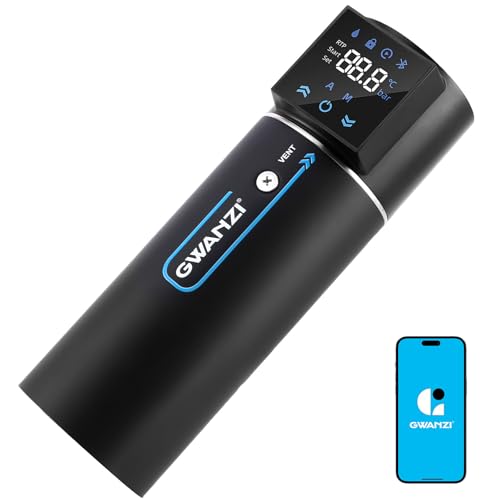
- Compact 11-by-3.5-inch in-line design
- 15–90 PSI range and 1,320 GPH maximum flow
- App control with quiet water-cooled operation
Best For: Whole-house or apartment boosting in tight, hard-to-reach spaces
Best Space-Saving Electronic System

- About 30% smaller than traditional systems
- Supports horizontal or vertical mounting
- Designed for consistent, energy-conscious pressure control
Best For: Multi-room homes and installations with limited mounting space
Best Whole-House Capacity

- 22–80 PSI adjustable pressure range
- Up to 1,500 GPH flow and 150-foot head
- Self-priming design with extensive motor protection
Best For: Whole-house, apartment, tank, shallow-well, and irrigation boosting
Best Mini Fixture Booster

- Compact 3.7-by-4.1-by-5.3-inch footprint
- Automatic or manual modes with variable-speed control
- Quiet 40 dB operation with 32.7 PSI maximum pressure
Best For: Showers, kitchens, water heaters, and other low-demand installations
Quiet Constant-Pressure Pick
Hanchen Variable-Speed Booster Pump

- Compact 12.6-by-8-by-10.6-inch footprint
- Adjustable pressure with automatic on/off control
- Quiet operation rated at 45 dB or less
Best For: Apartments and small homes needing quiet, adjustable water pressure
High-Capacity Smart Pick
AIDPATH EVO BOOST5 Booster Pump

- 26.5 GPM flow with adjustable 22–92 PSI pressure
- Wireless app control and real-time monitoring
- Stainless steel body with multiple safety protections
Best For: Multi-floor homes needing high flow and connected controls
Quiet Whole-Home Boost
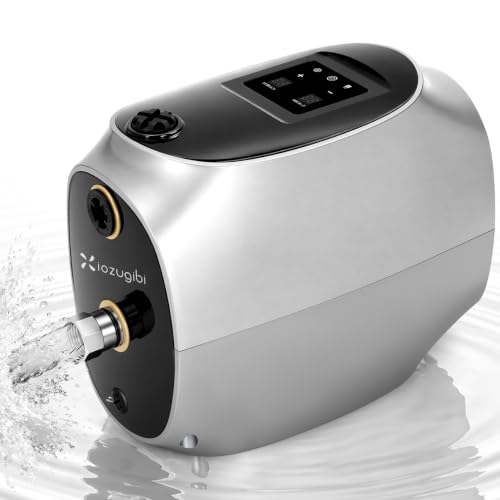
- Adjustable output up to 80 PSI
- Variable-speed motor with automatic flow sensing
- Below-45 dB operation with safety protections
Best For: Compact whole-home installations needing quiet, adjustable pressure
Smart Compact Control

- 15–90 PSI adjustable pressure range
- Remote monitoring and OTA upgrades via app
- Compact 11-inch inline design with water cooling
Best For: Tight installations where remote pump monitoring is valuable
Value Variable-Speed Support

- 22–73 PSI adjustable pressure settings
- 1,268 GPH flow and 148-foot maximum head
- Includes protection features and one-year warranty
Best For: Residential and shallow-well systems with moderate pressure needs
Best Smart Compact Booster – GWANZI K90S600L
For shoppers comparing water pressure booster systems for small spaces, the GWANZI K90S600L stands out with a compact, in-line design and wireless controls. Its variable-speed motor supports adjustable pressure up to 90 PSI, while water cooling helps keep operation quiet.
Best For: Whole-house, apartment, kitchen, and bathroom systems where installation space is limited and remote monitoring is useful.
Pros:
- Compact 11-by-3.5-inch design with aligned inlet and outlet
- Adjustable 15–90 PSI pressure range and up to 1,320 GPH flow
- App control, OTA updates, and multiple protection features
- Water-cooled operation rated at approximately 30 dB
Cons:
- Maximum pressure varies depending on whether the source is mains water or a tank
- Requires app setup for wireless monitoring and firmware updates
- Uses 1-inch NPT connections, which may require adapters in some systems
This is a strong choice when quiet operation, remote access, and a small footprint matter as much as boosting capacity. Confirm the available space, connection size, and water-source pressure before installation.
Best Space-Saving Electronic System – DAB E.SYBOX Mini
The DAB E.SYBOX Mini is a practical option among water pressure booster systems for small spaces because it is about 30% smaller than traditional pump-and-controller setups. Its electronic controls provide consistent pressure and allow horizontal or vertical mounting.
Best For: Homes needing consistent pressure across multiple rooms, elevated areas, or installations with flexible mounting requirements.
Pros:
- About 30% smaller than conventional pump-and-controller systems
- Can be mounted horizontally or vertically
- Electronic control maintains consistent water pressure
- Uses only the power needed for the required pressure and flow
Cons:
- Supplied notes do not specify a pressure range or maximum head
- Its cast-iron and stainless-steel construction may not be as lightweight as smaller residential boosters
- Installation still requires choosing an appropriate orientation and location
The E.SYBOX Mini is best suited to buyers prioritizing a compact electronic system and mounting flexibility. It is worth confirming detailed performance specifications and plumbing compatibility for your particular installation.
Best Whole-House Capacity – Aquastrong Smart 45
The Aquastrong Smart 45 combines an integrated design with automatic variable-speed control, making it a capable choice among water pressure booster systems for small spaces. It delivers up to 80 PSI and 1,500 GPH while adapting output to household demand.
Best For: Homes, apartments, showers, tanks, city mains, shallow wells, and garden systems that need broad application flexibility.
Pros:
- Adjustable 22–80 PSI range with constant-pressure control
- Maximum flow of 1,500 GPH and maximum head of 150 feet
- Integrated design with self-priming capability for shallow wells up to 26 feet
- Includes dry-run, overheating, leakage, blockage, and sensor protections
Cons:
- At 17.2 by 7.95 by 13.07 inches, it needs more room than the smallest boosters
- Typical operation is rated at 55 dB(A), louder than the quietest compact options
- Its broad capabilities may be more than needed for a single shower or fixture
This model offers a useful balance of capacity, automation, and source compatibility. Measure the installation area carefully, especially if fitting it into a compact utility space or apartment enclosure.
Best Mini Fixture Booster – AIDPATH M88
The AIDPATH M88 is especially well suited to water pressure booster systems for small spaces, measuring just 3.7 by 4.1 by 5.3 inches. Its 100-watt permanent-magnet variable-frequency motor supports automatic start-stop operation for showers, kitchens, water heaters, and apartments.
Best For: Individual fixtures or compact residential installations needing modest pressure assistance rather than whole-house capacity.
Pros:
- Very small 4-pound form factor for tight installations
- Automatic or manual operating modes with adjustable pressure and flow
- Quiet 40 dB operation and 304 stainless-steel wetted parts
- IP67 waterproofing, 194°F heat resistance, and a two-year full warranty
Cons:
- Maximum pressure is 32.7 PSI, below the larger whole-house models
- Rated flow is 264 GPH, so it is better suited to limited-demand applications
- Manual mode does not provide automatic on/off operation
The M88 makes the most sense when space is the primary constraint and the system only needs to support a fixture or small apartment application. Its modest output should be matched to the expected demand rather than a full-house water supply.
Quiet Constant-Pressure Pick – Hanchen Variable-Speed Booster Pump
For shoppers comparing water pressure booster systems for small spaces, the Hanchen is a compact whole-house option measuring 12.6 by 8 by 10.6 inches. Its variable-speed motor adjusts to demand, while the automatic controls and quiet operation suit apartments and smaller homes.
Best For: Small homes or apartments needing adjustable, steady pressure for showers, faucets, or garden use.
Pros:
- Variable-speed operation helps maintain pressure when multiple taps are running.
- Adjustable target pressure supports different household and gardening needs.
- Built-in check valves and dry-run protection reduce the need for extra fittings.
- Runs at 45 dB or less and starts or stops automatically on demand.
Cons:
- Its 26-foot maximum lift is more limited than some larger booster pumps.
- At 18.5 GPM, it offers less stated flow than the 1.2 HP option in this roundup.
The Hanchen balances useful control features with a relatively small footprint and low noise. It is a practical fit where living-space comfort and simple pressure adjustment matter more than maximum lift capacity.
High-Capacity Smart Pick – AIDPATH EVO BOOST5 Booster Pump
The AIDPATH EVO BOOST5 is a higher-capacity choice among water pressure booster systems for small spaces, offering variable-speed constant pressure and wireless app control. Its stainless steel body and 26.5 GPM flow rating support whole-house use, although its 20.7-by-10.8-by-16.3-inch housing requires more installation room.
Best For: Households that want strong, steady pressure across multiple floors and remote monitoring through a smartphone app.
Pros:
- 1.2 HP motor delivers a stated 26.5 GPM flow and adjustable 22–92 PSI range.
- Designed to maintain pressure for up to eight faucets across three floors.
- Smart Life app supports remote status, pressure, energy, and temperature monitoring.
- Includes dry-run, overcurrent, and voltage-fault protections, plus a three-year warranty.
Cons:
- The larger, 20.7-inch-long housing may be difficult to fit in very tight utility areas.
- At 20.4 pounds, it is heavier than the Hanchen model.
This model offers the broadest capacity and most connected controls in the group. Choose it when the installation area can accommodate its larger enclosure and your priority is multi-floor performance with app-based oversight.
Versatile Utility Pick – 1/2 HP On-Demand Booster Pump
This 1/2 HP pump is a flexible option for water pressure booster systems for small spaces, especially where one unit may serve household lines, shallow-well tasks, or irrigation. It provides 14 GPM flow and uses a standard 110V plug, but its inlet requires a reinforced suction hose rather than a soft garden hose.
Best For: Home pressure boosting, lawn irrigation, and water-transfer setups that need a self-priming pump with straightforward electrical connection.
Pros:
- Self-priming design provides 14 GPM flow and up to 105 feet of stated lift.
- Automatic controller starts with water flow and shuts down during dry pumping.
- Standard 1-inch ports, 110V plug, and 6.5-foot power cable simplify placement.
- Pressure can be adjusted using the push screw behind the controller.
Cons:
- The inlet is not compatible with ordinary soft garden hoses.
- Its 180-day warranty is shorter than the three-year warranty listed for the AIDPATH pump.
- The 14 GPM flow rating is lower than the other two products in this roundup.
This pump makes sense for buyers who need one unit for several practical water tasks rather than a dedicated high-capacity whole-house system. Plan the inlet plumbing carefully to avoid the hose-compatibility issue.
Quiet Whole-Home Boost – Adjustable 80 PSI Pump
For homeowners comparing water pressure booster systems for small spaces, this 3/4 HP model combines adjustable pressure up to 80 PSI with a compact, all-in-one design. Its automatic flow sensing, LCD controls, and claimed below-45 dB operation make it suited to utility areas where space and noise matter.
Best For: High-rise apartments, two- to three-story homes, villas, and rural well systems needing whole-house pressure support.
Pros:
- Adjustable pressure up to 80 PSI and support for multiple outlets operating at once.
- Permanent-magnet variable-speed motor automatically adapts to water demand.
- LCD pressure display, automatic start/stop flow sensor, and below-45 dB operation.
- Stainless-steel housing and impeller plus dry-run, overheat, overload, and leak protection.
Cons:
- The supplied notes do not provide exact dimensions, so verify cabinet or utility-space clearance before installation.
- Although DIY installation is described as straightforward, plumbing compatibility should be confirmed before purchase.
This is a well-rounded option when you want quiet, automated whole-house boosting in a confined installation area. Its adjustable controls and broad protection package add convenience, but space planning and connection fit remain important.
Smart Compact Control – 90 PSI App-Enabled Booster
If you need water pressure booster systems for small spaces with remote monitoring, this 1.35 HP V3-45 PRO stands out for its compact 11-by-3.5-by-3.5-inch form factor and wireless app control. It offers adjustable pressure from 15 to 90 PSI, while water cooling is designed to keep operating noise around 30 dB.
Best For: Apartments, homes, and villas where the pump must fit in a tight or hard-to-reach location and remote status checks are useful.
Pros:
- Adjustable 15–90 PSI range, 180-foot maximum head, and flow up to 1,600 GPH.
- Wireless app control supports monitoring and OTA firmware upgrades.
- Compact inline design with aligned inlet and outlet and 1-inch NPT connections.
- 304 stainless-steel internal construction, water cooling, and multiple fault protections.
Cons:
- The app and OTA upgrade features add a technology requirement compared with a basic manual pump.
- Maximum pressure depends on the water supply method: the notes specify up to 80 PSI on mains water and 58 PSI from a tank.
- The supplied information does not state a warranty period.
This is the most connectivity-focused choice in the group and one of the easiest to place in a restricted area. Confirm your available power, pipe connections, and supply type so its pressure range matches your system.
Value Variable-Speed Support – 70 PSI Home Booster
For shoppers seeking water pressure booster systems for small spaces at a simpler price-oriented feature level, this 500W variable-speed pump provides pressure settings from 22 to 73 PSI and flow up to 1,268 GPH. Its sensors adjust output to demand, while the included 1-inch NPT connectors and standard 110V plug support a relatively direct setup.
Best For: Homes, apartments, gardens, and shallow-well applications dealing with low municipal pressure or multi-floor water demand.
Pros:
- Automatic pressure adjustment with a maximum 148-foot head and 1,268 GPH flow rate.
- Permanent-magnet motor and frequency conversion are designed to reduce energy waste.
- Dry-run, leakage, overheating, overload, and power-failure protection are built in.
- Includes 1-inch NPT connectors, a 110V AC power connection, and a one-year warranty.
Cons:
- Its listed dimensions are 15 by 9.84 by 13.4 inches, so it may require more floor or shelf space than the smallest inline designs.
- The pressure range tops out at 73 PSI, below the 80–90 PSI maximums of the other listed pumps.
- The supplied details do not specify an exact noise rating.
This pump offers practical automatic boosting and a useful protection package for common residential pressure problems. It is worth considering where the larger listed footprint is acceptable and a one-year warranty is a priority.
How We Picked the Best Water Pressure Booster Systems for Small Spaces
We focused on systems suited to homes and smaller installations, prioritizing compact designs, automatic or on-demand operation, useful pressure ranges, and compatibility with common 110V or 115V electrical service. We also considered whether a pump offers variable-speed control, self-priming, built-in check valves, constant-pressure performance, wireless controls, or an integrated design.
Specifications such as maximum PSI and flow rate are important, but they do not guarantee identical real-world results. Actual performance depends on incoming supply, pipe size, elevation, plumbing restrictions, and how many fixtures operate at once.
Quick Comparison
| What to Compare | Best For | Why It Matters |
|---|---|---|
| Maximum pressure | Homes with very weak supply | Indicates the pump’s potential pressure ceiling |
| Flow rate | Multiple fixtures | Shows how much water the system can deliver |
| Variable speed | Consistent household pressure | Adjusts output as demand changes |
| Compact or integrated design | Small utility areas | Reduces installation footprint and clutter |
| Automatic operation | Everyday convenience | Starts and stops with water demand |
Key Buying Factors for Water Pressure Booster Systems for Small Spaces
Pressure and Flow
Do not choose by PSI alone. A high-pressure pump with insufficient flow may perform poorly when a shower, sink, and appliance run together. Match the system to your household’s peak demand, and check whether the advertised flow is measured at a specific pressure or under ideal conditions.
Physical Size and Installation
Measure the available wall, floor, and pipe-clearance space before buying. Integrated systems can simplify a tight installation, while larger whole-house pumps may need room for unions, valves, wiring, and service access. Confirm inlet and outlet sizes as well as the required pipe orientation.
Controls and Pressure Consistency
Automatic pressure boosting is convenient, while variable-speed and constant-pressure systems can reduce surging as demand changes. Wireless app control may help with monitoring and adjustments, but it should not outweigh basic compatibility, reliability, and serviceability.
Electrical and Plumbing Requirements
Verify voltage, amperage, grounding, and circuit requirements. Some pumps are designed for household water boosting, while others are better suited to shallow wells, irrigation, or limited-flow applications. Use appropriate check valves, filters, shutoff valves, and expansion or pressure components where required by the installation.
Who Should Buy Which Water Pressure Booster Systems for Small Spaces?
Choose a compact automatic pump if you need a straightforward pressure improvement for a small home or apartment. A variable-speed constant-pressure model is a better fit for households that regularly use several fixtures and want smoother delivery. Integrated electronic systems are attractive when installation space is especially limited and simplified controls are valuable.
For shallow wells or irrigation, select a model specifically rated for those duties rather than assuming a whole-house booster is interchangeable. Higher-capacity 1HP-plus systems make more sense for larger homes or multiple simultaneous fixtures, provided the plumbing and electrical setup can support them. Before installation, confirm local code requirements and consult a qualified plumber or electrician when the pump connects directly to household water or power.