Low shower pressure, slow-filling fixtures, and inconsistent flow can make apartment living frustrating—especially when several taps run at once. The right booster system can improve everyday water delivery without requiring an oversized setup.
This roundup compares 10 automatic and variable-speed options by pressure rating, flow capability, controls, installation considerations, and likely apartment use. Check your building’s plumbing rules and electrical requirements before buying.
Best 10 Water Pressure Booster Systems for Apartments Picks for 2026
Quiet Whole-Home Pick
70 PSI Constant-Pressure Booster

- Automatic 22–70 PSI adjustment
- Quiet 30 dB permanent-magnet motor
- 20-foot self-priming capability
Best For: Apartments needing quiet, steady pressure at multiple fixtures
High-Range Smart Choice
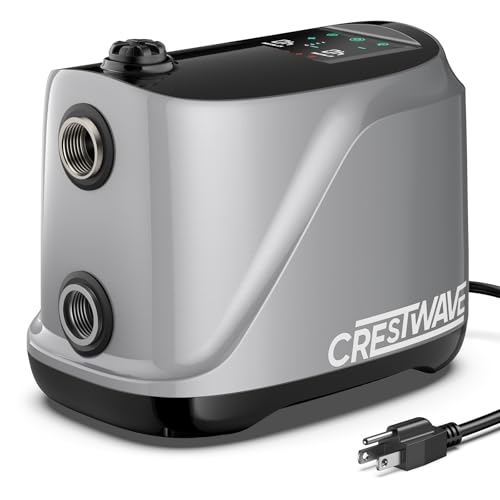
- 15–80 PSI adjustable pressure range
- Up to 150 feet of head
- Fault codes and timed water-tower mode
Best For: Larger systems needing flexible settings and diagnostics
Digital Whole-House Pick
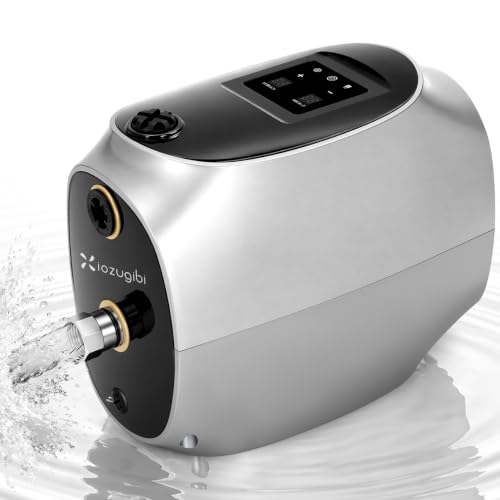
- Up to 80 PSI adjustable pressure
- LCD display with flow-sensor control
- Stainless steel and multi-layer protection
Best For: High-rise or multi-story systems with multiple outlets
Best Smart-Controlled Option
1.2 HP 85 PSI Whole-House Booster Pump

- Adjustable 22–92 PSI output
- Smart Life app control and monitoring
- Three-year warranty with safety protections
Best For: Users wanting app control and strong, adjustable apartment water pressure
Best Balanced Apartment Pick
1 HP 80 PSI Variable-Speed Booster Pump

- Automatic demand-based pressure adjustment
- 22–80 PSI settings and 180-foot maximum head
- Multiple protections and 304 stainless steel pump head
Best For: Apartment systems seeking automatic boosting with durable construction
Best Quiet Operation
PM750S 80 PSI Smart Booster Pump
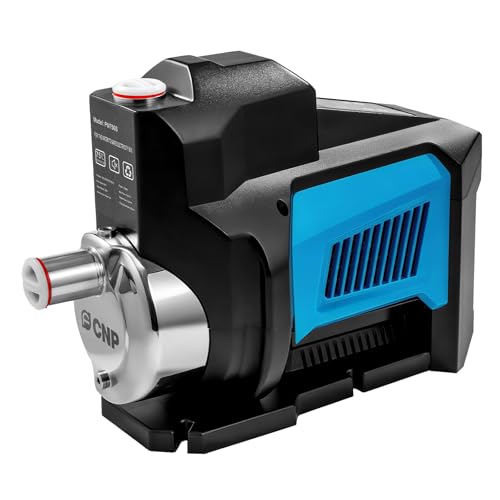
- Low stated noise range of 25–40 dB
- Automatic variable-speed constant-pressure control
- Rated for up to 10 faucets across three floors
Best For: Apartment users who need steady pressure with minimal pump noise
Quiet Constant-Pressure Pick
Hanchen Variable-Speed Booster Pump

- Variable-speed pressure control
- Adjustable settings with LED status display
- Automatic operation rated at ≤45 dB
Best For: Apartment households seeking quiet, adjustable pressure boosting
High-Lift Value Option
70 PSI Variable-Speed Booster Pump

- Adjustable 22–73 PSI pressure range
- 148-foot maximum lifting height
- Multiple motor and system protections
Best For: Multi-floor apartments needing high lift and flexible pressure
Premium Smart-System Pick
Aquastrong Smart 45 Booster Pump

- 22–80 PSI range with 44 PSI preset
- 150-foot head and 1,500 GPH flow
- Broad protection and self-priming design
Best For: Feature-focused apartments with varied water-source needs
Quiet Whole-Home Pick – 70 PSI Constant-Pressure Booster
For shoppers comparing water pressure booster systems for apartments, this model stands out for automatic pressure adjustment, quiet operation, and whole-home coverage. Its variable-speed motor supports adjustable pressure from 22 to 70 PSI, while the built-in pressure tank and controls help simplify the setup.
Best For: Apartments and homes needing steady pressure across multiple fixtures with minimal operating noise.
Pros:
- Automatically adjusts output to maintain consistent water pressure.
- 30 dB operation and a 550W permanent-magnet motor suit residential spaces.
- Built-in protection monitors dry running, leaks, abnormal electrical conditions, temperature, and overpressure.
- Self-primes from lifts up to 20 feet and works with city water, storage tanks, and shallow wells.
Cons:
- The unit is relatively substantial at 13.4 by 16.9 by 9.1 inches.
- It is designed for corded 110–120V installation rather than portable use.
This is a strong apartment-oriented choice when quiet, automatically regulated pressure matters more than a compact point-of-use pump. Its integrated design and broad protection features may also reduce the need for separate components.
High-Range Smart Choice – CrestWave 80 PSI Booster
This CrestWave is worth considering among water pressure booster systems for apartments when you want a broad pressure range and variable-speed control. It supports 15–80 PSI, reaches up to 150 feet of head, and includes a small pressure tank, check valve, and diagnostic display.
Best For: Larger household water systems or apartment setups that need flexible pressure adjustment and status monitoring.
Pros:
- Variable-speed operation automatically responds to water demand.
- Adjustable from 15 to 80 PSI, with up to 150 feet of head and 1,500 GPH flow.
- Water tower mode supports timed replenishment at 1-, 3-, 6-, or 12-hour intervals.
- Fault indicators help identify power, leakage, blockage, and pressure-sensor issues.
Cons:
- At 45 dB, it is quieter than many traditional pumps but not the quietest option here.
- Initial use requires filling the pump body and bleeding air from the system.
- The control display reports head in meters, so pressure settings require using the B6 parameter.
The CrestWave offers useful control flexibility and strong head capability, but installation and settings require careful attention. It is best suited to buyers comfortable configuring a more feature-rich booster system.
Compact Point-of-Use Pick – 120W Automatic Booster
For a smaller apartment installation, this 120W model offers a more targeted alternative to full whole-house water pressure booster systems for apartments. Its flow switch starts the pump automatically, and the 1/2-inch NPT connections and included brass fittings are intended for household, water-heater, and solar-water-heater boosting.
Best For: Kitchens, bathrooms, water heaters, and other localized applications with modest pressure needs.
Pros:
- Compact 6.9 by 3.94 by 3.6-inch design can fit tighter installations.
- Automatic flow-switch operation responds to water demand.
- Provides up to 21.7 PSI, 396 GPH, and 49.2 feet of head.
- Includes full brass fittings and is designed for relatively straightforward wrench installation.
Cons:
- Its 21.7 PSI maximum is lower than the whole-house models in this roundup.
- The 1/2-inch connections and 120W motor make it less suited to several fixtures running simultaneously.
- It is intended more for point-of-use or water-heater boosting than comprehensive whole-home pressurization.
This is the practical choice when you need a compact, lower-power boost rather than apartment-wide pressure management. Confirm the application and connection size before choosing it for a larger plumbing system.
Digital Whole-House Pick – 80 PSI Variable-Speed Pump
This 3/4 HP unit is a compelling option among water pressure booster systems for apartments when multiple outlets need stable flow. It combines pressure up to 80 PSI, a variable-speed permanent-magnet motor, an LCD display, and automatic flow-sensor start/stop control in an all-in-one design.
Best For: High-rise apartments, multi-story homes, and systems where digital pressure monitoring and simultaneous fixture use are priorities.
Pros:
- Adjustable pressure up to 80 PSI for whole-house boosting.
- Variable-speed operation automatically matches output to demand and is designed to reduce energy use.
- LCD controls show operating status and allow pressure adjustment.
- Stainless-steel housing and impeller resist corrosion, while dry-run, overheat, overload, and leak protection add safeguards.
Cons:
- Below-45 dB operation is quiet but not as silent as the 30 dB model.
- Its whole-house configuration may be more pump than necessary for a single shower or faucet.
- Although installation is described as DIY-friendly, plumbing compatibility should still be verified before fitting.
The digital display and automatic sensing make this a well-rounded choice for users who want visible control over a whole-home booster. Its corrosion-resistant construction and safety features are especially useful in damp utility areas.
Best Smart-Controlled Option – 1.2 HP 85 PSI Whole-House Booster Pump
For apartments or multi-floor homes dealing with inconsistent supply, this 1.2 HP model is a capable choice among water pressure booster systems for apartments. Its variable-speed motor adjusts to demand, while the 22–92 PSI range and reported capacity for up to eight faucets provide flexible pressure control.
Best For: Apartment or whole-home users who want strong, adjustable pressure with app monitoring and quiet operation.
Pros:
- Variable-speed, constant-pressure operation with a 22–92 PSI adjustable range.
- Smart Life app supports remote monitoring and parameter adjustments.
- Stainless steel construction, 50 dB operation, and multiple safety protections.
- Includes a three-year full warranty and 1-inch MNPT ports.
Cons:
- Its 20.4-pound, 20.7-inch-long housing may require careful installation planning in a compact apartment utility area.
- The app-based features may be more than needed for a simple pressure-boosting setup.
Choose this model if remote controls, broad pressure adjustment, and a longer warranty matter more than minimizing equipment size. Its 115V power requirement and 1-inch connections should be confirmed against the existing plumbing before installation.
Best Balanced Apartment Pick – 1 HP 80 PSI Variable-Speed Booster Pump
This 1 HP pump offers a practical balance of capacity, automatic control, and installation simplicity for water pressure booster systems for apartments. Its sensors adjust performance as demand changes, with pressure settings from 22 to 80 PSI and a maximum flow rate of 1,400 GPH.
Best For: Apartment and home systems needing automatic pressure adjustment, stainless steel construction, and straightforward 1-inch connections.
Pros:
- Automatically adjusts output based on real-time water demand.
- Pressure settings range from 22 to 80 PSI, with a maximum head of 180 feet.
- Includes dry-run, overheating, leakage, overload, and power-failure protections.
- 304 stainless steel pump head resists rust and corrosion.
Cons:
- It has a one-year warranty, shorter than some competing options.
- The notes do not specify an operating noise level.
- At 15 inches long, it still needs dedicated installation space and compatible plumbing.
This is a sensible middle-ground option when you want automatic pressure management without app control. Verify that the apartment’s electrical supply, pipe size, and installation location can accommodate the corded 110V pump.
Best Quiet Operation – PM750S 80 PSI Smart Booster Pump
The PM750S is designed for residential pressure boosting where quiet operation is especially important. As one of the water pressure booster systems for apartments, it combines automatic variable-speed control with a 22–80 PSI range, up to 1,532 GPH, and a stated noise range as low as 25–40 decibels.
Best For: Apartment residents who prioritize low operating noise and steady pressure across kitchens, bathrooms, and other fixtures.
Pros:
- Reported operating noise of approximately 25–40 dB.
- Smart controls automatically adjust speed and shut the motor down when demand stops.
- Supports stable flow for up to 10 faucets across three floors.
- Stainless steel pump head handles water temperatures up to 167°F and includes dry-run protection.
Cons:
- The industrial-style unit may be more equipment than needed for a small, single-fixture installation.
- The supplied notes do not list a warranty period.
- Its 16.93-inch length may be challenging in a cramped utility cabinet.
This model stands out when noise could disturb an apartment household. Its 115V corded-electric design and 1 HP rating are convenient for residential use, but the available space and existing water connections should be checked before purchase.
Quiet Constant-Pressure Pick – Hanchen Variable-Speed Booster Pump
For apartments dealing with pressure drops when several fixtures run at once, this Hanchen model is a practical option among water pressure booster systems for apartments. Its variable-speed motor adjusts to demand, while the adjustable control panel lets you choose the target pressure for everyday showering, faucets, or light garden use.
Best For: Apartment households that want automatic, relatively quiet pressure boosting with adjustable settings.
Pros:
- Variable-frequency control is designed to maintain stable pressure across multiple faucets.
- Adjustable target pressure and a clear LED status display simplify operation.
- Automatic start/stop, dry-run protection, and built-in check valves add convenience.
- Rated at up to 45 dB, making it suitable where pump noise is a concern.
Cons:
- Its listed maximum lift is 26 feet, so it is less suited to high-lift applications.
- At 14 pounds and roughly 12.6 by 8 by 10.6 inches, it still requires suitable installation space.
Choose this pump when quiet operation, simple pressure adjustment, and steady performance at multiple fixtures matter more than maximum lifting height.
High-Lift Value Option – 70 PSI Variable-Speed Booster Pump
This 110V variable-speed pump is aimed at homes and apartments that need stronger delivery over greater vertical distances. It offers adjustable pressure from 22 to 73 PSI, automatic demand-based speed control, and a listed maximum head of 148 feet, making it one of the more capable water pressure booster systems for apartments with multi-floor or high-usage needs.
Best For: Multi-floor homes or apartments needing substantial lift and adjustable pressure control.
Pros:
- Pressure settings range from 22 to 73 PSI for flexible system adjustment.
- Variable-speed operation responds to water demand and is designed to reduce energy waste.
- Protection features include dry-running, overheating, leakage, overload, and power-failure safeguards.
- Uses 1-inch NPT connectors and a standard 110V AC plug.
Cons:
- The supplied details do not specify an operating noise rating.
- Its approximately 15 by 9.84 by 13.4-inch footprint may be substantial for a compact apartment utility area.
This model stands out when maximum lift and broad pressure adjustment are priorities, especially in taller buildings or systems with difficult pressure demands. A one-year warranty is also included.
Premium Smart-System Pick – Aquastrong Smart 45 Booster Pump
The Aquastrong Smart 45 combines automatic variable-speed control with a preset 44 PSI setting and an adjustable 22–80 PSI range. For shoppers comparing water pressure booster systems for apartments, its self-priming design, 150-foot maximum head, compact integrated pressure tank, and broad protection package make it a versatile choice for domestic water systems.
Best For: Apartment or residential users wanting a feature-rich pump for city mains, tanks, shallow wells, or garden supply.
Pros:
- Maintains pressure automatically and supports up to 1,500 GPH flow with a 150-foot maximum head.
- Stainless steel impeller and connectors support operation with water temperatures up to 175°F.
- Protection features cover dry running, leakage, blockage, overheating, power failure, and sensor faults.
- Listed operating noise is about 55 dB(A), with continuous-operation support.
Cons:
- Its 550W rated power can reach 750W maximum, which may be more capacity than a small apartment system needs.
- Installation may require careful planning because the supplied notes do not provide unit dimensions.
This is the most feature-rich option of the three, particularly for users who need high lift, multiple water-source options, and extensive automatic protection in one pump.
How We Picked These Water Pressure Booster Systems for Apartments
We focused on pumps suited to residential water-pressure problems, prioritizing automatic operation, adjustable or constant-pressure performance, self-priming features, and standard 115V or 110–120V power. The selection also spans compact household pumps and higher-output whole-house models so shoppers can match capacity to their apartment, fixtures, and building setup.
Published pressure, horsepower, flow, noise, and control specifications were compared alongside practical features such as built-in check valves, water-flow switches, and variable-speed motors. Because apartment plumbing varies widely, treat these specifications as starting points rather than a guarantee of performance in every installation.
Quick Comparison
For a fast shortlist, look at the pump’s maximum pressure and flow together. Models rated around 70–80 PSI generally target common household pressure boosting, while higher-capacity 1 HP or 1.2 HP units may better support multiple fixtures—but they can demand more space, power, and careful pressure regulation. Compact 120W models are easier to place and may suit a single kitchen, bathroom, or modest demand, but they are not equivalent to whole-house pumps.
Variable-speed systems are typically the strongest choice when you want steadier pressure as demand changes. Automatic pumps with flow switches can be simpler for occasional use, provided their activation thresholds match your plumbing. Noise ratings, included fittings, and installation orientation should also influence the final choice.
Key Buying Factors for Apartment Water Pressure Booster Systems
Pressure and Flow
Do not choose by PSI alone. Maximum pressure is a ceiling, not the pressure you will receive at every fixture. Compare flow ratings, pipe size, elevation, and the number of outlets that may operate simultaneously. A system that is too powerful can create excessive pressure or unnecessary cycling.
Control and Consistency
Variable-speed and constant-pressure designs adjust output as demand changes, which can make showers and faucets feel more consistent. Automatic flow-switch models may be more affordable and straightforward, but confirm that they start reliably with low-flow fixtures.
Apartment Installation Limits
Before ordering, verify building approval, available clearance, pipe connections, voltage, and whether a dedicated circuit or professional installation is required. Some apartments cannot accommodate a full-house pump near the incoming line, and shared or landlord-controlled plumbing may not be modified without permission.
Noise, Maintenance, and Protection
Prioritize quieter motors where the pump will sit near bedrooms or living areas. Self-priming designs and built-in check valves can simplify setup, while dry-run protection, thermal protection, and accessible service parts may improve long-term reliability. Use a pressure regulator or expansion tank when required by the installation.
Who Should Buy Which Water Pressure Booster Systems for Apartments?
Choose a compact, lower-wattage booster for one problem fixture or a small apartment with modest demand. Select a 70–80 PSI automatic variable-speed model for balanced whole-apartment use and steadier pressure. If multiple bathrooms, a kitchen, and appliances may run together, consider a higher-horsepower, higher-flow unit—but only after confirming that the plumbing and electrical system can support it. Shoppers prioritizing quiet operation should favor low-noise permanent-magnet or variable-speed designs, while buyers seeking simpler controls may prefer an automatic pump with a flow switch.