Well water treatment does not have to require a crowded utility room. The best compact systems combine effective filtration with manageable installation footprints, making them practical for smaller homes, cabinets, and mechanical spaces.
This roundup compares 10 space-conscious options, from whole-house sediment and carbon systems to under-sink ultrafiltration and reverse-osmosis units. Use the buying guide below to match filtration performance, capacity, maintenance, and installation requirements to your water conditions.
Best 10 Space-Saving Well Water Filtration Systems Picks for 2026
Compact Whole-House Pick
BLUONICS PRO Series Well Water Filtration System

- Three-stage sediment, carbon, and UV treatment
- Preassembled wall-mounted design with dual 20-inch filters
- Up to 12 GPM under optimal conditions
Best For: Whole-house well-water treatment where wall space is limited
Tankless Under-Sink RO Pick
Waterdrop G3P600 Reverse Osmosis System

- Tankless design saves under-sink space
- Eight-stage filtration with NSF/ANSI certifications listed
- 600 GPD capacity with 2:1 low drain ratio
Best For: Compact, high-capacity drinking-water filtration under the kitchen sink
Heavy-Metal Filtration Pick
WF3-01 3-Stage Whole House System

- GAC+KDF stage targets several heavy metals and chlorine
- Three 20-inch filters for whole-house treatment
- Pressure gauges and 180-day filter timers included
Best For: Whole-house filtration focused on heavy metals without electrical power
DIY Under-Sink Pick
Waterdrop TSA 8-Layer Water Filter System

- Eight-stage filtration across three compact cartridges
- DIY installation with quick-connect fittings
- Does not reduce TDS; well water needs pre-filtration
Best For: Compact under-sink filtration for municipal or prefiltered well water
Reliable Whole-Home Coverage
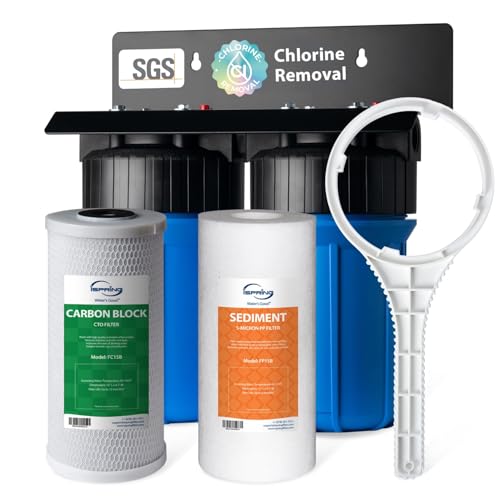
- Two-stage sediment and carbon filtration
- Up to 50,000 gallons of capacity
- 15 GPM flow with 1-inch ports
Best For: Families needing whole-home filtration with mineral retention
Compact Cabinet Pick
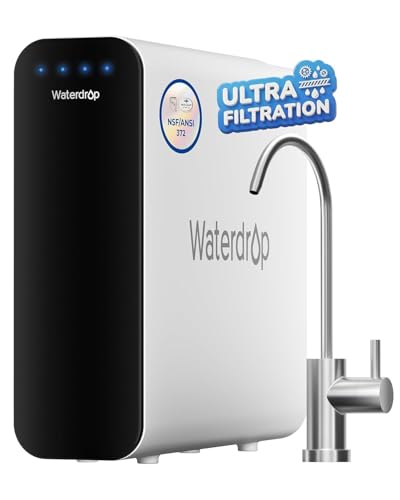
- Slim under-sink footprint
- 0.01-micron ultrafiltration membrane
- No wastewater or power required
Best For: Small municipal-water kitchens needing point-of-use filtration
Extended-Supply Well Water Choice
3-Stage Whole House Well Water Filter

- Three-stage sediment and carbon filtration
- Nine cartridges included for up to two years
- Built-in bypass and dual shut-off valves
Best For: Families wanting compact well-water filtration with replacement filters included
Best Tankless Pick
WINGSOL Near-Zero TDS UV RO System

- Tankless design saves under-sink space
- UV plus multi-stage RO filtration
- 400 GPD stated capacity and quick-change cartridge
Best For: Space-conscious households wanting on-demand, near-zero-TDS water
Best Traditional Value
APEC ROES-50 5-Stage RO System

- Five-stage filtration with NSF certifications listed
- Includes tank, faucet, filters, and installation kit
- DIY-friendly quick-connect design
Best For: Buyers wanting a complete tank-based RO setup
Best Mineral-Boosted Option
iSpring RCC7AK-BN Alkaline RO System

- Six-stage RO filtration with alkaline remineralization
- NSF/ANSI 58 certification listed
- Top-mounted faucet fastener eases installation
Best For: DIY users who want remineralized RO water
Compact Whole-House Pick – BLUONICS PRO Series Well Water Filtration System
For shoppers comparing space-saving well water filtration systems, the BLUONICS PRO Series stands out as a preassembled wall-mounted option. It combines sediment filtration, carbon-block treatment, and UV sterilization in one compact setup for whole-house use.
Best For: Homes needing whole-house well-water filtration and UV treatment in a compact wall-mounted format.
Pros:
- Three-stage treatment targets sediment, taste and odor, plus microbial treatment with UV.
- Factory-assembled all-in-one design includes dual 20-inch housings, UV chamber, pressure gauge, and protective cover.
- Supports up to 12 GPM under optimal conditions and includes standard replacement cartridges.
- Digital ballast provides a 365-day countdown and delay timer for UV maintenance.
Cons:
- UV treatment requires corded electrical power.
- Wall mounting and whole-house plumbing installation require suitable space and setup.
- Replacement filters are generally listed with a six-month filter life.
This is a strong fit when installation space is limited but you still want whole-house sediment, carbon, and UV treatment. Its preassembled construction can simplify installation, although it remains a larger system than an under-sink filter.
Tankless Under-Sink RO Pick – Waterdrop G3P600 Reverse Osmosis System
The Waterdrop G3P600 is a practical choice for shoppers seeking space-saving well water filtration systems at a single drinking-water point. Its tankless reverse-osmosis design saves under-sink room while providing eight-stage filtration and a smart display faucet.
Best For: Kitchens needing high-capacity drinking-water filtration without a bulky storage tank.
Pros:
- Tankless design saves 70% of under-sink space compared with the stated reference design.
- Eight-stage filtration is designed to reduce TDS, PFAS, fluoride, arsenic, chlorine, and other listed contaminants.
- 600 GPD capacity and a 2:1 pure-to-drain ratio support frequent drinking-water use.
- Smart faucet displays TDS and filter-life information.
Cons:
- Requires under-sink electricity.
- It is a point-of-use system rather than whole-house filtration.
- Cabinet dimensions must accommodate the 18.12-by-5.67-by-17.72-inch unit.
Although it is not a whole-house solution, this compact RO system works well when the goal is highly treated drinking water in a small kitchen cabinet. Buyers should confirm both electrical access and available cabinet clearance before choosing it.
Heavy-Metal Filtration Pick – WF3-01 3-Stage Whole House System
The WF3-01 offers three-stage whole-house filtration for buyers who want broad contaminant reduction without adding powered equipment. Its sediment, carbon-block, and GAC+KDF filters are designed to address particles, chlorine, odor, VOCs, and several heavy metals.
Best For: Homes prioritizing heavy-metal and chlorine reduction with a manual, whole-house filtration setup.
Pros:
- Compound GAC+KDF filtration is designed to reduce lead, mercury, arsenic, cadmium, chromium, chlorine, and other chemicals.
- Three 20-by-5.5-inch filters provide sediment and carbon treatment for whole-house water.
- Multiple pressure gauges and 180-day timers help monitor clogging and cartridge service intervals.
- Includes pressure-relief and drain valves, adapters, and a housing-cleaning brush.
Cons:
- Its listed dimensions—31 inches high by 23 inches wide by 8 inches deep—need substantial installation space.
- The 44-pound system may require sturdy mounting or support.
- It has no UV stage and does not use powered treatment.
This system is useful when contaminant coverage and maintenance tracking matter more than the smallest footprint. Compared with genuinely compact wall-mounted designs, its three-housing layout occupies more space, so measure the installation area carefully.
DIY Under-Sink Pick – Waterdrop TSA 8-Layer Water Filter System
For a small kitchen installation, the Waterdrop TSA is one of the more space-conscious options among these space-saving well water filtration systems. It uses three cartridges for eight-stage filtration, connects to standard cold-water lines, and is designed for quick DIY installation.
Best For: Municipal or prefiltered well water users wanting compact under-sink taste and contaminant reduction.
Pros:
- Three filters provide eight-stage filtration targeting chlorine, PFAS, fluoride, silt, rust, cysts, and other listed substances.
- Push-to-connect fittings support installation in under three minutes on compatible 3/8- or 1/2-inch cold-water connections.
- Twist-and-lock cartridges are designed for replacement in about three seconds.
- Filter lifespans range from six months to 12–18 months, depending on the cartridge.
Cons:
- It does not reduce TDS and is not intended for hot water.
- The manufacturer notes that well water should use a pre-filtration system.
- No faucet is included, and deeply filtered water flows more slowly than direct tap water.
This is a convenient compact option for point-of-use filtration when the incoming water is already suitable for the system. Well-water households should treat the pre-filtration requirement seriously and verify faucet-thread compatibility before installation.
Reliable Whole-Home Coverage – iSpring WGB21B 2-Stage
For households seeking space-saving well water filtration systems with whole-home coverage, the iSpring WGB21B uses a two-stage design to reduce sediment, chlorine, odors, and select VOCs. Its 1-inch ports support flow rates up to 15 GPM, while the preassembled bracket simplifies installation at the main water supply.
Best For: Families wanting whole-house filtration, long filter intervals, and mineral retention without adding power or wastewater requirements.
Pros:
- Two-stage filtration combines a 5-micron sediment filter with a CTO carbon filter.
- Rated for up to 50,000 gallons or approximately one year for a family of four.
- Preassembled mounting bracket, pressure-release valve, and included wrench support DIY maintenance.
- Retains TDS and naturally occurring minerals instead of reducing them like reverse osmosis.
Cons:
- At 26 x 19 x 11 inches, it needs more installation space than an under-sink system.
- It is not designed to reduce total dissolved solids.
The WGB21B is a practical choice when you need high-flow filtration at the home’s main inlet and want fewer annual filter changes. Measure the installation area carefully before choosing it for a compact utility space.
Compact Cabinet Pick – Waterdrop TSU 0.01 Micron
The Waterdrop TSU is a compact under-sink option for shoppers comparing space-saving well water filtration systems, but its supplied specifications make it suitable for municipal tap water rather than well water. Its 0.01-micron ultrafiltration membrane, separate faucet, and no-waste operation suit kitchens with limited cabinet room.
Best For: Compact kitchens using municipal cold water that need point-of-use filtration while retaining minerals and avoiding wastewater.
Pros:
- Compact 4.68 x 13.97 x 14.81-inch design fits cabinets with limited space.
- Three-stage filtration reduces more than 30 substances, including chlorine, PFAS, taste, odor, and heavy metals.
- Produces no wastewater, requires no power, and maintains stable pressure up to 1.05 GPM.
- Smart indicator lights and a 24-month ultrafiltration filter help simplify maintenance.
Cons:
- The manufacturer notes that it is not suitable for well water.
- A separate faucet requires countertop drilling.
- It is designed for one cold-water point of use rather than whole-house filtration.
Choose the TSU when cabinet space is the main concern and your water source is municipal. Well-water households should consider a system explicitly rated for well water instead.
Extended-Supply Well Water Choice – 3-Stage Whole House Well Water Filter
This three-stage system is a strong contender among space-saving well water filtration systems for homes that want a compact setup and replacement cartridges included. It targets sediment, chlorine, and odors, works with well or city water, and includes three complete filter sets for up to roughly two years of coverage.
Best For: Families seeking an economical well-water setup with whole-home or under-sink flexibility and a substantial starter supply of replacement filters.
Pros:
- Three-stage PP, GAC, and CTO filtration addresses sediment, chlorine, and odors.
- Includes nine replacement filters, described as a 1.5- to 2-year supply.
- Built-in bypass and two shut-off valves simplify filter changes without shutting off the main water line.
- Compact 14 x 13 x 10-inch housing can fit under a sink or in a utility room.
Cons:
- Filter cartridges are listed with a six-month life cycle, so periodic changes are still required.
- It does not lower TDS.
- The supplied details list a 10,000-gallon capacity, lower than the iSpring’s stated capacity.
This model balances compact dimensions, well-water compatibility, and reduced near-term replacement costs. Its bypass and shut-off valves are especially useful for homeowners who want simpler maintenance.
Best Tankless Pick – WINGSOL Near-Zero TDS UV RO System
For shoppers comparing space-saving well water filtration systems, the WINGSOL is a compact tankless option with a 13.78-by-6.3-by-17.52-inch footprint. Its reverse osmosis, UV, and multi-stage filtration design is built for on-demand drinking water without a bulky storage tank.
Best For: Households that prioritize under-sink space savings, fast water delivery, UV treatment, and near-zero-TDS water.
Pros:
- Tankless design saves under-sink space and provides water on demand.
- Combines RO filtration with visible UV sterilization and a stated 400 GPD capacity.
- All-in-one cartridge is designed for quick, leak-free replacement.
- Advertised 6:4 pure-to-drain ratio reduces wastewater compared with conventional RO systems.
Cons:
- Requires a plug-in power connection.
- Replacement cartridges are model-specific and must be purchased separately.
- The compact unit still needs suitable under-sink plumbing and installation space.
With its tankless format, high stated flow capacity, and UV stage, the WINGSOL is a strong fit when cabinet space and quick access matter more than a traditional storage tank.
Best Traditional Value – APEC ROES-50 5-Stage RO System
The APEC ROES-50 is a conventional under-sink reverse osmosis system for buyers who want space-saving well water filtration systems with a familiar tank-based setup. Its 15.5-by-5.25-by-17-inch filter assembly uses five stages and includes a storage tank, faucet, and installation kit.
Best For: DIY-minded households seeking a proven, tank-based RO system with broad contaminant-reduction claims and included installation components.
Pros:
- Five-stage filtration is designed to reduce arsenic, chlorine, lead, fluoride, heavy metals, PFAs, microplastics, and other impurities.
- Includes the storage tank, brushed nickel faucet, filter set, tubing, and installation materials.
- Quick-connect fittings and colored tubing support DIY installation and servicing.
- NSF/ANSI 58 certification is listed for the system, along with NSF 372 certification.
Cons:
- The storage tank takes more cabinet space than a tankless design.
- Its listed maximum flow rate is 0.03 GPM, so filling containers may take time.
- Filter replacement timing varies from 6 to 24 months depending on incoming water quality.
The ROES-50 is a practical choice for shoppers who prefer a complete, DIY-friendly traditional RO package and can accommodate its storage tank under the sink.
Best Mineral-Boosted Option – iSpring RCC7AK-BN Alkaline RO System
The iSpring RCC7AK-BN combines six-stage reverse osmosis filtration with an alkaline remineralization stage. For shoppers evaluating space-saving well water filtration systems, its under-sink layout and top-mounted faucet fastener can simplify countertop faucet installation, though the included storage tank requires cabinet room.
Best For: Households that want NSF/ANSI 58-certified RO filtration plus mineral remineralization and a DIY-oriented faucet installation design.
Pros:
- Six-stage system includes an alkaline stage intended to add minerals and balance pH.
- NSF/ANSI 58 certification is stated for the complete RO system.
- Transparent first-stage housing makes filter buildup easier to monitor.
- Top-mounted faucet fastener and quick fittings support installation from above the counter.
Cons:
- Includes a storage tank, so it is less space-efficient than a tankless system.
- Listed operating pressure is 70 psi, which may require checking household water conditions for compatibility.
- Filters generally require replacement about every six months, depending on use and water quality.
The RCC7AK-BN stands out when remineralized water and certified RO performance are priorities. Its top-mounted faucet design adds installation convenience, but buyers should plan for the tank and full under-sink assembly.
How We Picked These Space-Saving Well Water Filtration Systems
We focused on systems that offer useful treatment without demanding excessive installation space. The selection includes compact whole-house units for point-of-entry protection, under-sink systems for drinking and cooking water, and specialized options with reverse osmosis, ultrafiltration, UV treatment, or remineralization.
We also considered filtration stages, stated certifications, flow or production capacity, replacement-filter availability, pressure requirements, wastewater needs, and the practical difference between treating every tap and treating only one fixture. Because well water varies widely, laboratory testing remains essential before choosing a filter.
Quick Comparison
| System type | Best suited for | Main advantage | Important limitation |
|---|---|---|---|
| Compact whole-house filter | Homes needing treatment at every tap | Point-of-entry coverage | May require plumbing space and pressure checks |
| Under-sink ultrafiltration | Drinking and cooking water | Usually retains useful minerals | Does not address every contaminant |
| Under-sink reverse osmosis | Reduced dissolved solids and many contaminants | Broad treatment capability | Uses storage or drain connections and may produce wastewater |
| UV-equipped system | Microbiologically vulnerable well water | Helps inactivate microorganisms | Requires clear, prefiltered water and electricity |
Key Buying Factors
Test the Water First
Choose filtration based on a current laboratory report. Common well-water concerns include sediment, iron, manganese, hardness, sulfur odor, nitrates, arsenic, lead, bacteria, and elevated dissolved solids. A carbon filter is not a universal solution, and UV does not remove chemicals or sediment.
Match Coverage to Your Goal
Whole-house systems protect showers, laundry, appliances, and faucets, but they generally need larger cartridges and suitable flow rates. Under-sink systems are more space-efficient and often provide stronger drinking-water treatment, but they do not treat water used elsewhere in the home.
Check Space, Pressure, and Maintenance
Measure cabinet clearance, filter-change access, outlet locations, drain connections, and available plumbing. Confirm minimum inlet pressure and expected flow. Replacement cartridges, UV lamps, membranes, and prefilters are recurring costs; easy access can matter as much as the initial purchase price.
Understand Certifications and Claims
Look for certifications relevant to the contaminant and performance claim, not just a general statement about testing. NSF/ANSI standards can help compare specific reductions, while manufacturer claims should be checked against the exact model and configuration.
Who Should Buy Which Space-Saving Well Water Filtration Systems?
Choose a compact whole-house system if sediment, chlorine, or selected metals affect multiple fixtures and you have adequate plumbing space. Choose under-sink ultrafiltration when you want a low-waste drinking-water solution that typically preserves minerals. Choose reverse osmosis when testing shows dissolved contaminants or high TDS that require more intensive treatment, and ensure you can accommodate its drain and faucet connections.
A UV-equipped setup is most appropriate when bacteria or other microorganisms are a verified concern and the water can be adequately prefiltered. Renters, apartment residents, and households with limited installation access will usually find an under-sink system more practical than a point-of-entry unit. For any well with confirmed contamination, pair filtration with professional testing and installation guidance rather than relying on a generic filter alone.