A damp crawl space can encourage mold, wood rot, odors, and higher indoor humidity. The right dehumidifier helps protect your home while fitting into a tight, awkwardly shaped area.
We selected 10 space-saving crawl space dehumidifiers with useful combinations of compact designs, continuous drainage, built-in pumps, commercial-grade capacity, and energy-conscious operation.
Best 10 Space-Saving Crawl Space Dehumidifiers Picks for 2026
Best Heavy-Duty Value
Waykar 70-Pint Crawl Space Dehumidifier

- 70-pint capacity with up to 158 CFM airflow
- Pump hose lifts drainage up to 16.4 feet
- Metal housing and ENERGY STAR certification
Best For: Large crawl spaces and demanding installations
Best Smart Compact Pick
ALORAIR Smart Wi-Fi 70-Pint Dehumidifier

- Wi-Fi app enables remote humidity control
- Compact body for confined installations
- Pump lifts drainage up to 19.6 feet
Best For: Smaller crawl spaces needing remote monitoring
Best Low-Clearance High-Capacity Pick
Airecoler GT-X5 125-Pint Dehumidifier
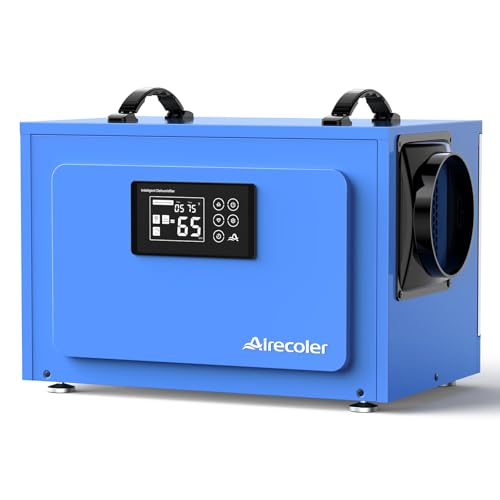
- Up to 125 pints per day for areas up to 6,000 square feet
- Compact design fits low-clearance spaces
- Auto drain, defrost, timer, and restart functions
Best For: Large low-clearance crawl spaces with gravity drainage
Best for Very Large Spaces
Airzentti 155-Pint Commercial Dehumidifier

- Up to 155 pints per day for 7,500 square feet
- Built-in pump lifts water up to 16.4 feet
- ENERGY STAR with unattended-operation features
Best For: Very large crawl spaces and restoration work
Best for Quiet Operation
ALORAIR 70-Pint Crawl Space Dehumidifier

- Compact 15.2-by-11.2-inch footprint
- Built-in pump with 19.6-foot lift
- Operates at less than 50 dB
Best For: Smaller spaces needing quiet, pumped drainage
Best Compact Pumped Option
Stellar SP10 70-Pint Dehumidifier

- Compact cabinet for low-clearance spaces
- Built-in pump with 16.4-foot lift
- Detachable wired remote control panel
Best For: Crawl spaces where remote access and pumped drainage matter
Heavy-Duty Pick
70-Pint Commercial Crawl Space Dehumidifier

- Covers up to 5,000 square feet
- Continuous gravity drainage with included hose
- Joist-mount option and low-temperature operation
Best For: Large crawl spaces needing durable, continuous moisture removal
Maximum Capacity Pick
125-Pint Crawl Space Dehumidifier with Pump
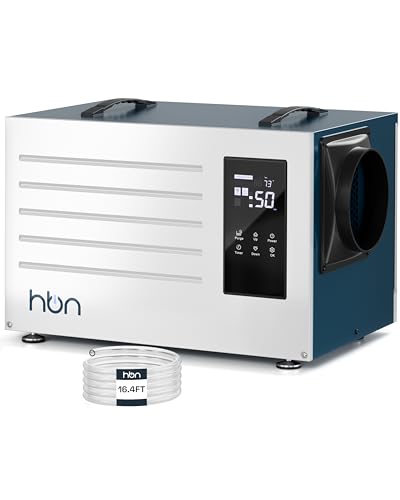
- Up to 125 pints per day under listed conditions
- Built-in pump lifts water up to 16.4 feet
- Gravity and pump drainage options
Best For: Large commercial spaces with difficult or elevated drainage routes
Compact Installation Pick
70-Pint Crawl Space Dehumidifier with Pump

- Compact design fits between floor joists
- Pump and gravity drainage included
- Floor or ceiling installation options
Best For: Tight crawl spaces needing flexible placement and drainage
Best Heavy-Duty Value – Waykar 70-Pint Crawl Space Dehumidifier
For shoppers comparing space-saving crawl space dehumidifiers, the Waykar combines a compact format with strong circulation, pump drainage, and metal construction. Its 70-pint capacity is designed for areas up to 5,000 square feet, while ENERGY STAR certification may help control ongoing energy costs.
Best For: Large crawl spaces, basements, garages, and commercial areas needing flexible drainage and durable construction.
Pros:
- Removes up to 70 pints per day with up to 158 CFM airflow.
- Includes pump drainage up to 16.4 feet and a 6.6-foot gravity hose.
- Metal casing, adjustable feet, and handles support demanding installations.
- Includes ENERGY STAR certification and extensive warranty coverage.
Cons:
- The optional remote control is sold separately.
- The larger commercial capacity may be more than needed for smaller crawl spaces.
Choose this Waykar when installation flexibility and rugged construction matter as much as moisture-removal capacity. Its pump and long hose are particularly useful where a nearby floor drain is unavailable.
Best Smart Compact Pick – ALORAIR Smart Wi-Fi 70-Pint Dehumidifier
The ALORAIR Sentinel HD35P WiFi is one of the more convenient space-saving crawl space dehumidifiers for remote monitoring. Its compact 15.2-by-11.2-by-11.4-inch body includes app control, continuous drainage, automatic defrost, and a built-in pump for crawl spaces and basements up to 1,000 square feet.
Best For: Homeowners who want app-based humidity monitoring and automatic drainage in a smaller crawl space.
Pros:
- Wi-Fi app supports remote monitoring and humidity adjustments.
- Compact dimensions suit confined crawl spaces and basements.
- Built-in pump can push water up to 19.6 feet.
- Automatic defrost and a six-year limited warranty add operating support.
Cons:
- The recommended coverage is limited to 1,000 square feet.
- Its AHAM dehumidification capacity is 35 pints per day, despite the 70-pint saturation rating.
This is a practical choice when remote access is a priority and the area falls within its stated coverage. The compact footprint and long pump reach can simplify installation in hard-to-access locations.
Best Low-Clearance High-Capacity Pick – Airecoler GT-X5 125-Pint Dehumidifier
The Airecoler GT-X5 pairs commercial moisture removal with a relatively compact 19.2-by-12.2-by-13.4-inch design. Among space-saving crawl space dehumidifiers, it stands out for fitting low-clearance areas while offering up to 125 pints per day, continuous drainage, automatic defrost, and timer controls.
Best For: Large crawl spaces, basements, warehouses, and other low-clearance areas requiring high-capacity drying.
Pros:
- Rated for up to 6,000 square feet and 125 pints per day maximum removal.
- Compact dimensions support placement in tight or low-clearance spaces.
- Includes auto drain, auto defrost, timer, and restart-after-outage functions.
- R32 system and 24-hour timer are designed with efficiency in mind.
Cons:
- It does not list a built-in pump, so drainage depends on gravity installation.
- At 50 pounds, it is less convenient to reposition than smaller residential units.
The GT-X5 is a strong fit when you need substantial capacity without an unusually tall enclosure. Confirm that gravity drainage works for your layout before choosing it over a pump-equipped model.
Best for Very Large Spaces – Airzentti 155-Pint Commercial Dehumidifier
The Airzentti ACD155P-PG100(B) is built for extensive moisture-control jobs, with a stated capacity of up to 155 pints per day and coverage up to 7,500 square feet. It remains a practical option among space-saving crawl space dehumidifiers by combining a commercial compressor system with a built-in pump, gravity drainage, and a 220 CFM airflow rating.
Best For: Very large crawl spaces, basements, attics, warehouses, and water-damage restoration areas.
Pros:
- Up to 155-pint maximum capacity and 70-pint AHAM rating for large areas.
- Built-in pump lifts water up to 16.4 feet, with gravity drainage also supported.
- Auto defrost, auto drain, restart, screen lock, and timer functions support unattended operation.
- ENERGY STAR certified and TUV compliant.
Cons:
- At 24.3 inches wide and about 59 pounds, it is not the easiest unit to maneuver in very tight spaces.
- Its high capacity may be excessive for a small residential crawl space.
Choose the Airzentti when the crawl space is unusually large or moisture loads are severe. Its pump and set-and-forget controls make it better suited to long unattended runs than basic portable units.
Best Overall Capacity – CADPXS 145-Pint Crawl Space Dehumidifier
For larger moisture problems, the CADPXS is a strong space-saving crawl space dehumidifier option that combines high extraction capacity with a relatively compact, portable cabinet. It is rated for spaces up to 1,800 square feet and includes continuous gravity drainage, automatic defrost, and restart memory.
Best For: Large crawl spaces, basements, garages, and restoration areas where high-capacity moisture removal and flexible placement matter.
Pros:
- Removes up to 60 pints per day at AHAM conditions and is rated for areas up to 1,800 square feet.
- Includes a 6.56-foot gravity drain hose for continuous drainage without frequent tank emptying.
- Offers auto defrost, auto restart with memory, a timer, LCD controls, and floor- or ceiling-mount flexibility.
- ETL certified and backed by a stated five-year limited warranty.
Cons:
- At 51 pounds, it is heavier than the smaller options in this roundup.
- Gravity drainage may require a suitable drain location because the supplied system does not include a built-in pump.
- Its 20.9-inch length may be challenging in especially tight crawl spaces.
The CADPXS stands out when maximum moisture-removal capacity is the priority. Its metal housing and installation flexibility add practicality, but measure the access route and confirm that gravity drainage will work before buying.
Best for Quiet Operation – ALORAIR 70-Pint Crawl Space Dehumidifier
The ALORAIR Sentinel HD35P is a compact space-saving crawl space dehumidifier designed for areas up to 1,000 square feet. Its built-in pump supports long-distance or upward drainage, while operation below 50 dB makes it a practical choice when noise is a concern.
Best For: Smaller crawl spaces and basements that need pumped drainage, low-temperature operation, and comparatively quiet performance.
Pros:
- Compact 15.2-by-11.2-by-11.4-inch design fits more easily in confined areas.
- Built-in condensate pump lifts water up to 19.6 feet and includes a 19.6-foot drain hose.
- Automatic defrost and auto restart support operation in cool environments and after power interruptions.
- Runs at less than 50 dB and includes a MERV-1 filter for dust and pollutant capture.
Cons:
- Its stated AHAM extraction rate is 35 pints per day, lower than the larger CADPXS model.
- Coverage is limited to up to 1,000 square feet.
- The supplied details list varying warranty terms, so buyers should verify the applicable coverage before purchase.
With its small footprint, quiet operation, and powerful drainage pump, the ALORAIR is well suited to crawl spaces where installation access and water routing are difficult. It is less appropriate for very large areas or unusually heavy moisture loads.
Best Compact Pumped Option – Stellar SP10 70-Pint Dehumidifier
The Stellar SP10 is a space-saving crawl space dehumidifier with a 15.51-by-13.15-by-12.28-inch footprint, built-in pump, and detachable wired remote. It is designed for areas up to 1,000 square feet and supports continuous operation where a crawl-space installation would make frequent manual adjustments inconvenient.
Best For: Low-clearance crawl spaces where compact dimensions, remote access, and automatic pumped drainage are useful.
Pros:
- Compact metal cabinet fits crawl spaces, utility rooms, and other confined areas.
- Built-in pump lifts water up to 16.4 feet and includes both pump and gravity drain hoses.
- Detachable wired control panel lets users adjust the unit without entering the crawl space.
- Offers auto defrost, automatic restart, adjustable humidity control, and a five-year limited warranty.
Cons:
- Coverage is limited to up to 1,000 square feet.
- Its stated 24.43-pint daily output at 65°F and 60% RH is substantially below the 70-pint maximum rating.
- The pump lift is lower than the ALORAIR’s stated 19.6-foot capability.
The Stellar SP10 is a practical fit when access is the main challenge: its remote panel reduces crawling, and the pump simplifies drainage. Compare the real-world extraction rating with your moisture conditions rather than relying only on the maximum 70-pint figure.
Heavy-Duty Pick – 70-Pint Commercial Crawl Space Dehumidifier
For large or difficult-to-access areas, this 70-pint unit is a practical option among space-saving crawl space dehumidifiers. Its compact installation flexibility, continuous gravity drainage, low-temperature operation, and 5,000-square-foot coverage suit demanding crawl spaces and basements.
Best For: Large crawl spaces, basements, warehouses, and other areas needing continuous drainage and durable construction.
Pros:
- Covers up to 5,000 square feet with 159 CFM airflow.
- Supports 24/7 gravity drainage with the included 6.56-foot hose.
- Offers 10–90% RH control, auto-defrost, and low-temperature operation.
- Metal housing, joist-mount capability, washable filter, and automatic restart support long-term use.
Cons:
- Gravity drainage requires a suitable floor drain or downward route.
- The commercial metal design may be more equipment than smaller spaces require.
- It does not include a built-in pump.
This is a strong choice when capacity, durability, and narrow-space installation matter more than pump-assisted drainage. The included coverage plan and compressor protection add reassurance for extended operation.
Maximum Capacity Pick – 125-Pint Crawl Space Dehumidifier with Pump
This 125-pint model is designed for large commercial spaces and challenging drainage layouts. As one of the space-saving crawl space dehumidifiers with both gravity drainage and a built-in pump, it can move condensate upward or across longer distances without relying on a nearby floor drain.
Best For: Large crawl spaces, basements, warehouses, and commercial areas requiring high moisture-removal capacity and flexible drainage.
Pros:
- Removes up to 125 pints per day under high-temperature, high-humidity conditions.
- Built-in pump lifts water up to 16.4 feet, while gravity drainage is also available.
- Automatic defrost and 10–90% RH control support low-temperature and precise operation.
- Power-outage memory, touchscreen controls, adjustable feet, and a metal handle improve usability.
Cons:
- Its high capacity may be excessive for smaller crawl spaces.
- The optional remote control is sold separately.
- Pump operation adds mechanical complexity compared with a gravity-only model.
Choose this unit when drainage flexibility and maximum stated capacity are priorities. The pump is especially useful where condensate must reach a sink, window, or elevated discharge point.
Compact Installation Pick – 70-Pint Crawl Space Dehumidifier with Pump
For tight areas, this 70-pint unit combines a compact footprint with pump-assisted drainage. It is a practical space-saving crawl space dehumidifier for low-clearance installations, with floor or ceiling placement, 4,000-square-foot coverage, and both gravity and upward drainage options.
Best For: Low-clearance crawl spaces, garages, basements, and spaces needing flexible installation and drainage.
Pros:
- Compact 16.5-by-13.7-by-12.5-inch design fits between floor joists and in tight spaces.
- Built-in pump and included 16.4-foot hose support upward or long-distance drainage.
- 200 CFM airflow and stated coverage up to 4,000 square feet.
- Supports ceiling or floor installation, auto-restart, auto-defrost, and washable-filter maintenance.
Cons:
- Coverage is lower than the larger 125-pint model in this roundup.
- The wired remote control is not included and must be sourced separately.
- Installation may require planning for either pump routing or gravity drainage.
This model stands out when available space is limited but a pump is still useful. Its carry handle, adjustable feet, and mounting flexibility make it easier to position than many fixed, large-format units.
How We Picked the Best Space-Saving Crawl Space Dehumidifiers
We focused on the features that matter most below a home: moisture-removal capacity, physical footprint, drainage options, controls, operating range, and suitability for sustained use. The lineup includes compact 70-pint units for typical crawl spaces as well as higher-capacity commercial models for severe dampness, water damage, or larger areas.
We also considered practical installation details, including included drain hoses, condensate pumps, humidity controls, washable filters, automatic restart, and certifications or energy-efficiency claims when listed. Coverage figures are manufacturer estimates; real-world performance depends on temperature, air leakage, insulation, and the severity of moisture intrusion.
Quick Comparison
| Best For | Recommended Capacity | Drainage Priority | Useful Features |
|---|---|---|---|
| Most standard crawl spaces | About 70 pints per day | Gravity drain or pump | Compact size, humidity control, automatic restart |
| Large or persistently wet spaces | 125–155 pints per day | Built-in pump preferred | Long-duty operation, stronger airflow, commercial construction |
| Remote monitoring | About 70 pints per day | Continuous hose connection | Wi-Fi controls and alerts |
| Water-damage recovery | 125 pints or more | Pump and continuous drain | High extraction rate and rugged housing |
Key Buying Factors for Crawl Space Dehumidifiers
Capacity and Coverage
A 70-pint machine is often a practical starting point for a moderately damp crawl space, while 125- to 155-pint models are better suited to large, very wet, or poorly sealed areas. Do not choose solely by the advertised square-foot rating: unusually cold conditions, standing water, and major air leaks can reduce performance.
Size, Airflow, and Placement
Measure the access opening and the intended installation area before buying. A compact cabinet is easier to position, but it still needs clearance around the intake and exhaust. Keep the unit level, off standing water, and where its airflow will circulate through the space rather than being blocked by insulation or framing.
Drainage and Pump Design
Continuous drainage is essential for unattended operation. Gravity-drain models need a dependable downhill route, while a built-in pump can move condensate upward or across a longer distance. Verify hose diameter, lift height, drain length, and whether the included hose reaches your outlet.
Controls and Efficiency
Look for adjustable humidity settings, auto-defrost, automatic restart after a power outage, and a washable filter. Energy Star labeling can help reduce operating costs, while Wi-Fi control is useful when the crawl space is difficult to access. A humidistat that cycles the compressor is generally more efficient than constant operation.
Who Should Buy Which Space-Saving Crawl Space Dehumidifiers?
Choose a compact 70-pint model if you need dependable moisture control in a typical residential crawl space and have limited installation room. Choose a Wi-Fi-equipped unit if remote status checks and adjustments are especially valuable. Move up to a 125- or 155-pint commercial model for severe humidity, recent flooding, a large footprint, or a space that repeatedly overwhelms smaller machines.
Regardless of capacity, fix plumbing leaks, improve exterior drainage, and seal obvious air gaps first. A dehumidifier works best as part of a broader moisture-control plan, not as a substitute for correcting the source of water.