A well-chosen tub shower door can make a compact bathroom feel more open while keeping water contained. Sliding, folding, and pivot designs each solve a different space problem.
This roundup compares 10 options across common tub widths, glass configurations, frame styles, and installation needs so you can narrow the field before measuring and buying.
Best 10 Space-Saving Bathtub Shower Door Systems Picks for 2026
Best Adjustable Sliding Fit
ENSO SENKA 56–60-Inch Tub Door

- Reversible sliding installation
- 1/4-inch easy-clean tempered glass
- 28-inch walk-in clearance
Best For: Adjustable sliding coverage for 56–60-inch tubs
Best Compact Pivot Design
48-Inch Frameless Tub Shower Door
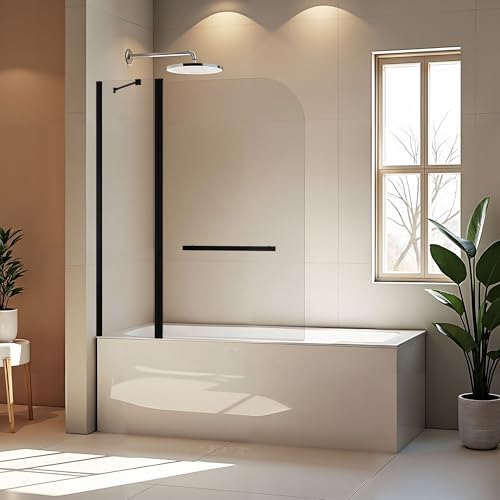
- 48-by-58-inch compact size
- Nearly 180-degree pivot panel
- Reversible installation with bottom seal
Best For: Straight tubs with limited-width openings
Best Flexible Double Slider
55–61-Inch Brushed Silver Tub Door
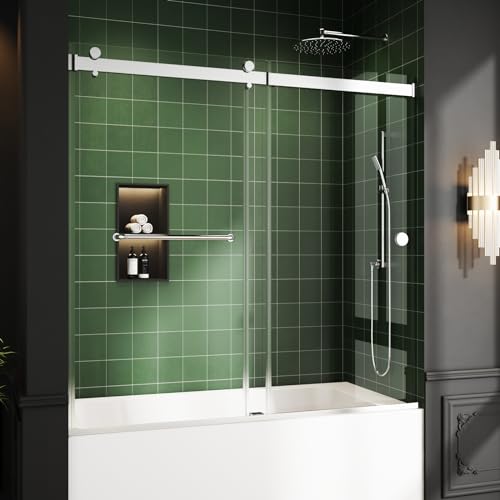
- Cut-to-fit 55–61 1/8-inch width
- Double sliding panels
- Explosion-proof-film tempered glass
Best For: Wider tubs requiring flexible sliding coverage
Best Matte Black Hardware
56–60-Inch Double Sliding Door

- Trim-to-fit 56–60-inch width
- 54-inch entrance height
- 304 stainless steel sliding hardware
Best For: Contemporary bathrooms with matte black finishes
Compact Foldaway Pick
VEVOR Tri-Fold Bathtub Shower Door
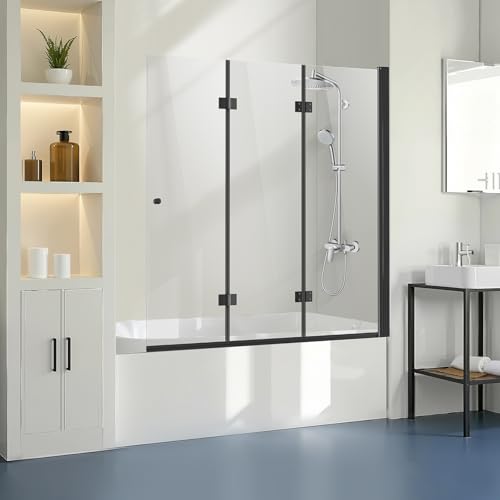
- Tri-fold panels rotate 180 degrees for a wider opening
- 6mm tempered glass with nano water-repellent coating
- Reversible installation with bottom leak-prevention strips
Best For: Compact bathrooms needing easy tub access
Adjustable Sliding Pick
Matte Black Double-Sliding Tub Door

- Fits 56–60-inch openings with trimmable top and bottom frames
- Reversible dual-sliding design saves swing space
- Includes 6mm certified tempered glass and towel bars
Best For: Standard tubs needing an adjustable sliding enclosure
Small-Opening Pick
KEIKI Frameless Folding Pivot Door
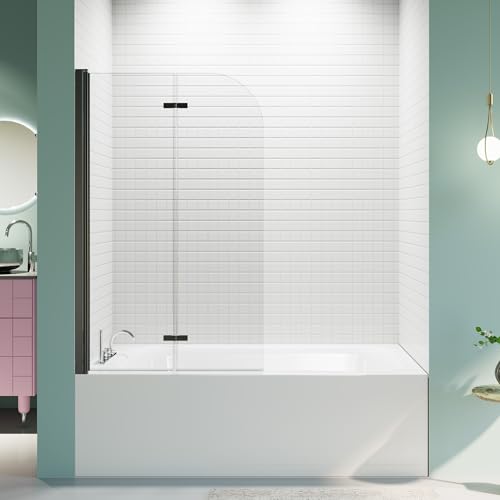
- 34-inch-wide profile suits narrower tub areas
- Bi-fold door folds inward 90 degrees to save space
- 6mm tempered glass with adjustable waterproof seals
Best For: Tight bathrooms with narrow tub openings
Best Space-Saving Slider
Frameless Matte Black Sliding Door
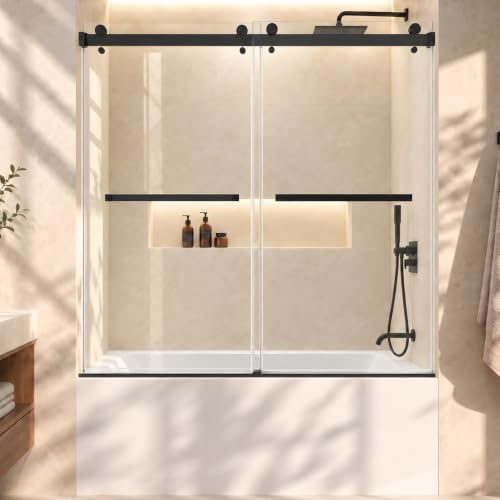
- Double sliding panels save swing space
- 6mm clear tempered glass
- 304 stainless steel hardware
Best For: Standard 60-inch tub openings and modern bathrooms
Best Compact Hinged Option

- Narrow profile suits compact bathrooms
- 180-degree reversible pivot
- 6mm tempered glass with towel bar
Best For: Small bathrooms, apartments, and tub-to-shower conversions
Best Fold-Away Design
Tri-Fold Matte Black Tub Screen

- Tri-fold panels reclaim space when folded
- 47-by-55-inch bathtub screen
- Water-stopping strips help limit splashes
Best For: Tub layouts needing a fold-away enclosure
Best Adjustable Sliding Fit – ENSO SENKA 56–60-Inch Tub Door
For space-saving bathtub shower door systems, the ENSO SENKA uses a reversible sliding design that fits 56–60-inch tubs without requiring a swing clearance. Its 58-inch height, 28-inch walk-in clearance, semi-frameless styling, and polished chrome finish suit modern bathroom updates.
Best For: Bathrooms needing a reversible sliding door with an adjustable 56–60-inch fit.
Pros:
- Sliding panels help conserve bathroom floor space.
- 1/4-inch SGCC-certified tempered glass has an easy-clean coating.
- Reversible left- or right-side installation and a polished chrome finish.
Cons:
- Professional installation is required for safety and best results.
- At 88 pounds, the unit may require careful handling during installation.
This is a strong option when adjustable sizing, water containment, and a polished chrome look matter more than a lightweight installation.
Best Compact Pivot Design – 48-Inch Frameless Tub Shower Door
This 48-by-58-inch frameless pivot door is a practical choice among space-saving bathtub shower door systems when a narrower tub opening is needed. Its fixed panel and nearly 180-degree swing panel provide flexible entry without the footprint of a conventional hinged room door.
Best For: Straight bathtubs with a compact 48-inch opening and a pivot-style entry.
Pros:
- Two-panel design includes a fixed panel and a swing panel that rotates almost 180 degrees.
- 1/4-inch clear tempered glass provides a modern, easy-to-clean surface.
- Reversible left- or right-opening installation with a bottom PVC water seal.
- Aluminum hardware and an overhead support bar add stability.
Cons:
- The pivot panel needs clearance to swing open.
- The supplied notes list both matte black in the title and chrome in the specifications, so finish details should be confirmed before ordering.
Choose this model when a 48-inch width and flexible pivot access fit your tub better than a wider sliding enclosure.
Best Flexible Double Slider – 55–61-Inch Brushed Silver Tub Door
The double-sliding design makes this model well suited to space-saving bathtub shower door systems, especially where a wide opening is preferred without a swinging panel. Its rails can be cut to adjust the width from 55 to 61 1/8 inches, while both doors slide left or right.
Best For: Wider tubs needing flexible sizing, two-way sliding access, and brushed silver hardware.
Pros:
- Adjustable 55–61 1/8-inch width accommodates varied tub layouts.
- Double doors slide in either direction and provide a 27 15/16-inch walk-in opening.
- 1/4-inch tempered glass includes explosion-proof film and resists stains and scratches.
- Stainless steel rollers, guide bar, seals, and towel-rack handle support everyday use.
Cons:
- Rails must be cut to achieve the desired fit.
- The installation instructions include a specific handle orientation near the shower head.
This is a practical wide-opening choice for shoppers who want quiet sliding hardware, a brushed silver finish, and more sizing flexibility than a fixed-width door.
Best Matte Black Hardware – 56–60-Inch Double Sliding Door
With a 56–60-inch adjustable width and double sliding panels, this matte black model fits the space-saving bathtub shower door systems category well. Its 54-inch entrance height, semi-frameless profile, water-resistant coating, and reversible layout combine practical access with contemporary styling.
Best For: Modern bathrooms seeking adjustable double sliders with matte black hardware.
Pros:
- Upper and lower tracks can be trimmed for a 56–60-inch fit.
- Double sliding panels conserve space and create a 54-inch entrance height.
- 1/4-inch SGCC-certified tempered glass has an easy-clean, water-resistant coating.
- 304 stainless steel rollers and tracks are designed for smooth, quiet operation.
Cons:
- Professional installation is recommended even though DIY instructions and tools are included.
- The 86.8-pound unit may be difficult to position without assistance.
This model stands out for shoppers who want the visual contrast of matte black hardware while retaining adjustable sizing, reversible installation, and a compact sliding layout.
Compact Foldaway Pick – VEVOR Tri-Fold Bathtub Shower Door
For shoppers comparing space-saving bathtub shower door systems, this VEVOR model uses three folding panels and 180-degree rotation to maximize entry space. Its reversible installation and black modern finish make it practical for compact bathrooms and tight layouts.
Best For: Compact bathrooms that need a wide, easy-access opening.
Pros:
- Tri-fold design folds away to maximize shower access.
- 6mm SGCC-standard tempered glass offers shatter-resistant safety.
- Nano water-repellent coating helps reduce water stains and dirt buildup.
- Bottom waterproof strips help prevent leaks, and installation is reversible.
Cons:
- At 51 inches wide, it may not suit larger tub openings.
- Its 62.6-pound weight may make installation easier with assistance.
The folding layout is the main advantage here: it preserves usable bathroom space without giving up a full tub enclosure. Consider it when access and compact operation matter more than a traditional sliding-door setup.
Adjustable Sliding Pick – Matte Black Double-Sliding Tub Door
This double-sliding option is a practical choice among space-saving bathtub shower door systems when you want a conventional enclosure with an adjustable fit. Its frame can accommodate openings from 56 to 60 inches, while reversible sliding lets the door open from either side.
Best For: Standard tub layouts that benefit from adjustable width and sliding access.
Pros:
- Adjustable 56-to-60-inch width supports a more customized fit.
- Dual sliding panels avoid the swing space required by hinged doors.
- 6mm ANSI- and SGCC-certified tempered glass provides impact resistance.
- Bottom guide rail helps direct water back into the tub, and two stainless steel towel bars are included.
Cons:
- Its 80-pound weight may make handling and installation more demanding.
- The frame and sliding hardware require more components than a frameless folding design.
Choose this model if you prefer quiet, conventional sliding operation and need flexibility around the tub opening. The trim-to-fit frame is particularly useful when the available width is not exactly standard.
Small-Opening Pick – KEIKI Frameless Folding Pivot Door
For a narrower tub area, the KEIKI folding pivot door is one of the more compact space-saving bathtub shower door systems to consider. Its bi-fold panel folds inward 90 degrees, while adjustable seals and a minimalist frameless design help preserve usable bathroom space.
Best For: Narrow tub openings and bathrooms that need inward-folding access.
Pros:
- 34-inch width suits smaller openings.
- Bi-fold design reduces the door’s space footprint and improves access.
- 6mm ANSI-certified tempered glass, rounded corners, and security angles add safety features.
- Adjustable waterproof seals and stainless steel hardware support durable use.
Cons:
- At 34 inches wide, it provides a narrower entry than the VEVOR and sliding models.
- The supplied notes identify the finish as both chrome and black, so confirm the exact finish before ordering.
This is a focused solution for bathrooms where every inch matters. Its inward-folding operation and 34-inch profile make it well suited to tighter tub configurations, while the towel-bar handle adds everyday convenience.
Best Space-Saving Slider – Frameless Matte Black Sliding Door
For standard tub openings where floor clearance matters, this frameless sliding system is a practical choice among space-saving bathtub shower door systems. Its double-slider layout provides access from either side without requiring a door-swing area.
Best For: Standard 60-inch bathtub openings and modern bathrooms that need a wide, low-profile enclosure.
Pros:
- Double sliding panels help maximize usable bathroom space.
- Clear 6mm tempered glass provides a transparent, durable enclosure.
- 304 stainless steel hardware is designed to resist rust and corrosion.
- Includes approximately 4 inches of width adjustment for a flexible fit.
Cons:
- At 90 pounds, the unit may require careful handling during installation.
- Its 56- to 60-inch width range is less suitable for unusually sized tub openings.
This is the strongest fit for shoppers prioritizing a clean frameless appearance, quiet sliding operation, and space efficiency across a standard tub enclosure.
Best Compact Hinged Option – 31-Inch Frameless Tub Door
This narrow hinged enclosure is a practical pick for compact bathrooms and tub-to-shower conversions. Its frameless 31-inch profile keeps the installation visually light, while the reversible pivot design accommodates different bathroom layouts.
Best For: Small master bathrooms, guest bathrooms, apartments, condos, and remodeling projects with limited space.
Pros:
- The 31-inch-wide profile is designed for compact spaces.
- 180-degree pivot operation allows the door to swing inward or outward.
- Reversible installation supports left- or right-side opening.
- ANSI-certified 6mm tempered glass includes an integrated towel bar.
Cons:
- A hinged door needs clearance for its swing, unlike a sliding system.
- Professional installation is recommended for the best fit.
Choose this model when a slim, adaptable entry is more important than a wide opening or a fully folding design.
Best Fold-Away Design – Tri-Fold Matte Black Tub Screen
For bathrooms that need an enclosure to disappear when not in use, this tri-fold screen offers one of the most flexible space-saving bathtub shower door systems in the lineup. The panels can swing open for bathing and fold horizontally when you want to reclaim access space.
Best For: Bathtubs where a fold-away screen is preferred over a permanently extended hinged or sliding door.
Pros:
- Triple-fold design can open fully and fold inward or outward when not in use.
- 47-inch width provides broad coverage for many bathtub layouts.
- High-strength 1/5-inch glass and an aluminum alloy frame emphasize durability.
- Water-stopping strips at the glass joints and bottom help reduce splashing.
Cons:
- The 47-inch-by-55-inch dimensions may not match every tub opening.
- Its multiple hinges and panels may require more adjustment than a simple screen.
This model stands out when flexible storage and access are priorities, especially in a bathroom where a conventional door would remain in the way.
How We Picked the Best Space-Saving Bathtub Shower Door Systems
We focused on Space-Saving Bathtub Shower Door Systems that suit standard tub surrounds and smaller bathrooms. The selection covers sliding doors, folding and tri-fold screens, pivot panels, frameless designs, and framed options in common widths from roughly 31 to 60 inches. We also considered height, tempered-glass construction, finish choices, adjustability, and whether the design can accommodate limited clearance outside the tub.
Because installation conditions vary, treat listed dimensions as a starting point rather than a guarantee of fit. Confirm the finished opening, wall plumb, tub ledge depth, and manufacturer requirements before ordering.
Quick Comparison
| Door type | Best for | Main advantage | Trade-off |
|---|---|---|---|
| Sliding | Standard tub openings | No outward swing clearance | Requires a clear, level track |
| Folding or bi-fold | Tight bathrooms | Compact operating footprint | More hinges and seals to maintain |
| Tri-fold | Very limited clearance | Folds largely within the tub area | More moving components |
| Pivot | Smaller openings or partial screens | Simple access and flexible positioning | Needs swing clearance |
| Frameless | Minimalist remodels | Clean sightlines and open appearance | Less forgiving of uneven walls |
Key Buying Factors for Space-Saving Bathtub Shower Door Systems
Measure the Opening Carefully
Measure the finished wall-to-wall opening at the top, middle, and bottom, then compare those measurements with the product’s adjustment range. Also check the height from the tub threshold and allow for trim, tile, and wall irregularities.
Match the Operating Style to the Room
Sliding doors are usually the safest choice where a toilet, vanity, or narrow walkway blocks an outward swing. Folding doors are useful when you want a wider entry without a large exterior footprint. Pivot doors can be practical for partial-width installations, but verify that the panel will not hit nearby fixtures.
Check Glass, Seals, and Hardware
Tempered glass is a key safety feature. Look for suitable thickness, stable wall hardware, adjustable waterproof seals, and a bottom track or guide that can be cleaned easily. Frameless systems may look lighter, but they typically demand more precise installation and sealing.
Consider Maintenance and Finish
Chrome, stainless, and matte-black finishes create different maintenance demands. Smooth surfaces and fewer tracks generally simplify cleaning, while any sliding system should have accessible rollers and drainage paths to reduce buildup.
Who Should Buy Which Space-Saving Bathtub Shower Door Systems?
- Choose a sliding system for a conventional 56-to-60-inch tub opening and minimal clearance outside the tub.
- Choose a folding or tri-fold system when the bathroom is exceptionally tight or you want the door to occupy less exterior space.
- Choose a pivot panel for a narrower opening or when easy, wide access matters more than swing clearance.
- Choose a frameless design if clean lines are a priority and your walls and tub ledge are straight enough for precise fitting.
- Choose a smaller partial-width door for compact tubs, targeted splash protection, or layouts that cannot accept a full enclosure.
Before checkout, verify the exact width range, height, glass thickness, door orientation, included hardware, installation method, and return policy. Those details matter more than appearance when fitting a tub enclosure into a challenging space.