Smart attic ventilation fans can help remove trapped heat and moisture while giving you more control than a basic thermostat-only fan. The right model depends on your attic layout, required airflow, noise tolerance, and access to power.
We compared 10 leading smart attic fans, including gable, roof-mount, shutter, and hybrid solar designs, to help you choose a practical match for your home and climate.
Best 10 Smart Attic Ventilation Fans Picks for 2026
Best High-Capacity Smart Attic Fan

- Up to 2,801 CFM
- App, thermostat, and humidistat control
- Three-speed brushless ECM motor
Best For: Large attics needing high airflow and automated control
Best Heavy-Duty Smart Exhaust Fan

- 1,513 CFM airflow
- Wi-Fi programs, alarms, and climate data
- 14-inch wall-mounted EC fan
Best For: Remote-controlled wall ventilation projects
Best Midrange Smart Attic Fan
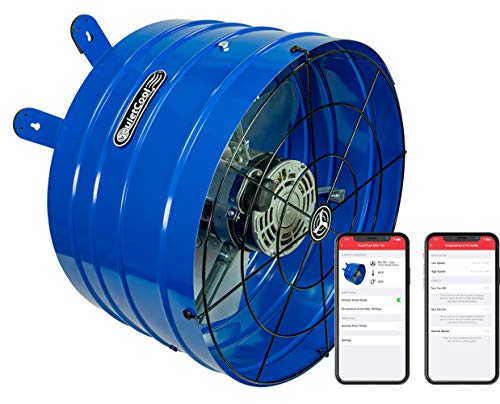
- Up to 1,945 CFM
- App control with thermostat and humidistat
- Plug-and-play two-speed design
Best For: Moderate attic ventilation with smart controls
Best Compact Smart Exhaust Fan

- 631 CFM airflow
- Wi-Fi climate monitoring and alerts
- Compact 10-inch wall mount
Best For: Smaller ventilation areas needing remote control
Best Smart Gable Fan

- App-controlled thermostat and humidistat
- Up to 2,940 CFM with two speeds
- Plug-and-play with 20-foot power cord
Best For: App-controlled gable ventilation
Best Variable-Speed Attic Exhaust Fan
VEVOR 16-Inch Variable-Speed Fan

- 10 speed settings with temperature and humidity triggers
- Up to 3,000 CFM of airflow
- Automatic rain-blocking shutter and steel body
Best For: Adjustable wall-mounted ventilation
Best Solar Attic Fan
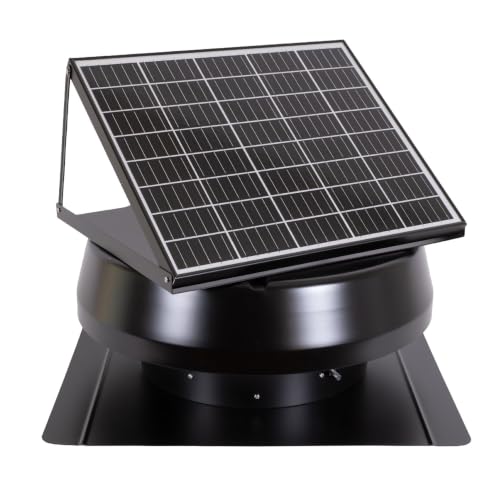
- Solar-powered 40-watt motor with 1,150 CFM
- Thermostat control from 50°F to 122°F
- Adjustable panel and IP68 waterproof motor
Best For: Roof-mounted solar attic ventilation
Best Value Smart Ventilation
VEVOR 12-Inch Variable-Speed Attic Fan

- 1,500 CFM airflow with 10 speeds
- Temperature and humidity automation
- Steel housing with rain-blocking shutters
Best For: Attics, garages, sheds, and workshops needing programmable exhaust
Best Solar Hybrid Option
OmniPV Smart Hybrid Solar Attic Fan Pro

- Up to 2,850 CFM from a 50W solar panel
- AC adapter supports night and rainy-day use
- Adjustable temperature activation from 50°F to 104°F
Best For: Large roof-mounted spaces prioritizing solar-assisted ventilation
Best App-Controlled Pick
QuietCool AFR SMT ES-2.0 Smart Attic Fan

- App control with thermostat and humidistat
- Up to 1,950 CFM across three speeds
- As little as 24.6 watts on low
Best For: Homeowners wanting automated, app-controlled roof ventilation
Best High-Capacity Smart Attic Fan – QuietCool AFG SMT ES-3.0
For shoppers comparing smart attic ventilation fans, the QuietCool AFG SMT ES-3.0 stands out with app control, built-in thermostat and humidistat monitoring, and airflow up to 2,801 CFM. Its plug-and-play design and 20-foot power cord can simplify installation where a gable-mounted fan is appropriate.
Best For: Large attic spaces needing high airflow and automated temperature and humidity control.
Pros:
- Moves up to 2,801 CFM on high.
- Smart app control works with the built-in thermostat and humidistat.
- Three-speed brushless ECM motor and plug-and-play installation.
- Includes anti-vibration mounting pads and a 15-year manufacturer warranty.
Cons:
- Its listed 45 dB noise level and larger 20-by-12-by-20-inch form factor may not suit every installation.
- High-speed operation is listed at up to 142 watts, with a 148-watt product wattage specification.
This is the strongest option in the group for buyers prioritizing maximum airflow and detailed automation. Confirm that your gable opening and electrical setup match the fan’s requirements before purchasing.
Best Heavy-Duty Smart Exhaust Fan – AC Infinity AIRLIFT T14
The AC Infinity AIRLIFT T14 is a wall-mounted 14-inch exhaust fan with an environment controller and Wi-Fi app access. Among smart attic ventilation fans, it is suited to buyers who want remote climate data, programmable operation, alarms, and notifications alongside a 1,513-CFM EC motor.
Best For: Wall-mounted ventilation projects where remote monitoring and environmental alerts are priorities.
Pros:
- Wi-Fi app provides climate data, advanced programs, alarms, and notifications.
- 14-inch aluminum-blade fan delivers up to 1,513 CFM.
- EC motor and temperature-and-humidity controller support automated operation.
- Powder-coated alloy steel and aluminum construction.
Cons:
- Its listed 68 dB noise level is relatively high for noise-sensitive spaces.
- Uses a 240-volt power specification, so electrical compatibility should be verified.
- The fan is listed with one speed, despite three controller power levels.
The T14 makes the most sense when app-based supervision and a larger wall-mounted exhaust format matter more than quiet operation. Check voltage, mounting dimensions, and the intended vent opening before installation.
Best Midrange Smart Attic Fan – QuietCool AFG SMT PRO-2.0
The QuietCool AFG SMT PRO-2.0 offers a practical balance for shoppers seeking smart attic ventilation fans without stepping up to the highest-capacity model. It combines app control with thermostat and humidistat functionality, two-speed operation, and up to 1,945 CFM in a plug-and-play package.
Best For: Bedrooms or smaller-to-medium attic spaces needing app-based ventilation control and moderate airflow.
Pros:
- Provides up to 1,945 CFM on high.
- Smart app control supports convenient operation.
- Includes a smart control hub and vent covers.
- Plug-and-play installation avoids hardwiring, and Fire Safety Sense shut-off is included.
Cons:
- Its two-speed PSC motor is less versatile than a three-speed design.
- At up to 120 watts, it uses more power than the listed 22-watt minimum of the ES-3.0 model.
- Wall-mount installation and included vent covers still require a suitable mounting location.
This model is a sensible middle ground for buyers who want smart controls and useful attic airflow in a simpler two-speed design. Verify the opening, mounting surface, and 120-volt supply before ordering.
Best Compact Smart Exhaust Fan – AC Infinity AIRLIFT T10
The AC Infinity AIRLIFT T10 is a compact 10-inch wall-mounted exhaust fan for buyers who need app-connected environmental control in a smaller installation. It provides remote access to climate data, advanced programs, alarms, and notifications, with airflow rated at 631 CFM.
Best For: Smaller indoor ventilation areas where compact dimensions and remote climate monitoring are useful.
Pros:
- Wi-Fi app supports programs, alarms, notifications, and climate-data viewing.
- Compact 10-inch wall-mounted format.
- Brushless EC motor and temperature-and-humidity controller.
- Uses only 50 watts according to the listed specifications.
Cons:
- Its 631-CFM rating is substantially lower than the larger fans in this roundup.
- The listed 67 dB noise level may be noticeable in occupied areas.
- It is listed with one power level and fixed installation rather than multi-speed operation.
The T10 is best viewed as a compact, connected exhaust solution rather than a high-output whole-attic fan. Confirm that 631 CFM meets your ventilation needs and check compatibility with the required mounting and power connections.
Best Smart Gable Fan – QuietCool AFG SMT PRO-3.0
For shoppers comparing smart attic ventilation fans, the QuietCool AFG SMT PRO-3.0 stands out with app control, two operating speeds, and automatic thermostat and humidistat management. Its plug-and-play design, included vent covers, and 20-foot power cord can simplify installation.
Best For: Homeowners who want app-controlled gable ventilation with automated temperature and humidity settings.
Pros:
- Smart app control works with built-in thermostat and humidistat automation.
- Delivers up to 2,940 CFM on high and 1,650 CFM on low.
- Plug-and-play setup includes a 20-foot power cord and vent covers.
- Built-in fire safety shutoff and anti-vibration mounting pads add useful practical features.
Cons:
- Its two-speed design offers fewer adjustment levels than variable-speed models.
- The 264-watt high setting uses more power than the supplied solar option.
This is a strong choice when convenient smart control and high airflow matter more than having many speed settings. The gable-mount format and included accessories make it especially approachable for plug-and-play installations.
Best Variable-Speed Attic Exhaust Fan – VEVOR 16-Inch Variable-Speed Fan
The VEVOR 16-inch is a versatile option among smart attic ventilation fans, combining temperature and humidity triggers with 10 speed settings. Its 3,000-CFM-class airflow, automatic shutter, and all-metal construction suit attic, garage, shed, and workshop exhaust applications.
Best For: Buyers who want adjustable automatic ventilation and a durable wall-mounted fan for larger or multipurpose spaces.
Pros:
- Temperature and humidity controller supports automatic operation across 10 speed settings.
- Provides up to 3,000 CFM of rapid exhaust airflow.
- EC motor uses 98 watts and is designed for efficient, stable operation.
- Automatic shutters close when the fan is off to help block rain and small debris.
Cons:
- Its listed 70 dB noise level is higher than quieter attic-fan alternatives.
- Wall mounting and a 240-volt specification may require more installation planning.
- Button control is less app-focused than some smart ventilation fans.
Choose this model if flexible airflow adjustment and weather-conscious construction are priorities. It offers more speed control than two-speed designs, though buyers should verify electrical requirements and noise expectations before installation.
Best Solar Attic Fan – iLIVING Hybrid Ready 14-Inch
The iLIVING Hybrid Ready is a solar-powered choice for smart attic ventilation fans, pairing a built-in thermostat with a 40-watt adjustable solar panel. Its 1,150-CFM airflow, waterproof brushless motor, and roof-mount design are aimed at ventilating attics without relying on standard electrical power during normal daylight operation.
Best For: Homeowners seeking roof-mounted, solar-powered attic ventilation with thermostat control.
Pros:
- Solar-powered 40-watt system delivers up to 1,150 CFM.
- Smart thermostat can be enabled or disabled across a 50°F–122°F range.
- Adjustable panel angle supports 0°, 15°, 30°, and 45° positioning.
- Waterproof IP68 brushless motor and a 15-year limited manufacturer warranty are included.
Cons:
- Its 1,150-CFM capacity is lower than the high-airflow gable and wall-mounted alternatives.
- The AC/DC adapter kit for non-solar operation is sold separately.
- It has only one speed and is listed at 65 dB.
This model makes the most sense for buyers prioritizing solar operation and roof mounting over maximum airflow or detailed speed control. The adjustable panel and thermostat add flexibility, while the optional adapter can support hybrid use at additional cost.
Best Value Smart Ventilation – VEVOR 12-Inch Variable-Speed Attic Fan
For shoppers comparing smart attic ventilation fans, the VEVOR 12-inch model combines high airflow with automated temperature and humidity control. Its 1,500 CFM output, 10 speed settings, and automatic shutter make it a practical choice for attics and other utility spaces.
Best For: Attics, garages, sheds, and workshops needing powerful, programmable exhaust ventilation.
Pros:
- Moves up to 1,500 CFM for rapid heat, stale-air, and odor removal.
- Temperature and humidity triggers can adjust among 10 speed settings.
- Steel construction and closing shutters provide durability and rain protection.
- EC motor is designed for efficient, stable operation.
Cons:
- Its listed 67 dB noise level may be noticeable in quieter spaces.
- Wall mounting may not suit roofs or locations without a suitable wall opening.
- The 240-volt specification requires careful electrical compatibility checks.
This VEVOR fan stands out when airflow and automatic environmental control matter more than ultra-quiet operation. Verify the electrical requirements and wall-mount fit before buying.
Best Solar Hybrid Option – OmniPV Smart Hybrid Solar Attic Fan Pro
The OmniPV is one of the more flexible smart attic ventilation fans for roof-mounted installations, pairing a 50W solar panel with a backup AC adapter. It delivers up to 2,850 CFM and can automatically respond to selectable temperature settings while also helping dehumidify spaces.
Best For: Large attics, sheds, barns, garages, and other roof-mounted spaces where solar operation and high airflow are priorities.
Pros:
- Provides up to 2,850 CFM for spaces up to 4,000 square feet, according to the supplied specifications.
- Solar operation can continue with limited sunlight, while the included AC adapter supports nighttime or rainy-day use.
- Temperature activation can be set between 50°F and 104°F, or disabled for continuous operation.
- Adjustable panel angles help optimize positioning, and the aluminum-alloy body is designed for rooftop durability.
Cons:
- Roof mounting and cable anchoring involve more installation work than a plug-in wall fan.
- Temperature control is less granular than a system offering both temperature and humidity triggers.
- The larger roof-mounted design may be excessive for small attic spaces.
Choose the OmniPV when reducing grid use and maximizing roof ventilation are central goals. Its hybrid power design adds flexibility, but confirm roof compatibility, mounting requirements, and available space before installation.
Best App-Controlled Pick – QuietCool AFR SMT ES-2.0 Smart Attic Fan
The QuietCool AFR SMT ES-2.0 is a roof-mounted choice for shoppers who want smart attic ventilation fans with app control and built-in environmental automation. Its three-speed brushless ECM offers up to 1,950 CFM, while low-power operation and a 20-foot cord support a relatively straightforward setup.
Best For: Homeowners seeking app-controlled roof ventilation with thermostat and humidistat functionality.
Pros:
- Smart app control supports automated fan operation.
- Built-in thermostat and humidistat help respond to attic conditions.
- Delivers up to 1,950 CFM and can use as little as 24.6 watts on low.
- Includes a 20-foot power cord and built-in fire safety shutoff.
Cons:
- Only three speeds are available, fewer than some variable-speed alternatives.
- Interchangeable flashings for multiple roof types are sold separately.
- Roof installation may require more planning than a wall-mounted exhaust fan.
This QuietCool model is a strong fit when smartphone control, thermostat and humidistat automation, and efficient low-speed operation are more important than maximum airflow. Budget separately for compatible roof flashing if needed.
How We Picked the Best Smart Attic Ventilation Fans
We focused on the features that matter most in real attic installations: airflow, control options, installation style, energy use, and environmental sensing. The lineup includes models with mobile-app control, thermostats, humidistats, variable-speed operation, automatic shutters, and solar-assisted power.
We also considered whether each fan is designed for a gable vent, roof opening, or wall installation. Airflow ratings are useful for comparison, but actual performance depends on attic size, ventilation openings, duct or grille restrictions, insulation, and weather conditions.
Quick Comparison
| Fan type | Best for | Key advantage |
|---|---|---|
| Smart gable fan | Homes with usable gable vents | Simple installation without cutting the roof |
| Roof-mount fan | Attics needing direct roof exhaust | Effective placement near the highest point |
| Shutter exhaust fan | Wall or gable openings | High airflow and automatic weather protection |
| Solar or hybrid fan | Reducing grid electricity use | Solar-powered operation with optional backup or smart controls |
Key Buying Factors for Smart Attic Ventilation Fans
Airflow and Attic Size
Higher CFM ratings generally suit larger or hotter attics, but more airflow is not automatically better. Make sure intake ventilation—such as soffit or ridge vents—can provide enough replacement air. Without adequate intake, a powerful exhaust fan may perform poorly or pull conditioned air from the living space.
Control and Sensors
App control is useful for scheduling, monitoring, and adjusting operation remotely. A thermostat starts the fan when temperatures rise, while a humidistat can help address moisture. If your attic is damp, prioritize models that support humidity-based control rather than temperature-only activation.
Installation and Noise
Confirm whether the fan fits an existing gable vent, roof opening, or wall opening. Check dimensions, power-cord length, electrical requirements, and clearance before buying. For bedrooms or living spaces near the attic, compare noise specifications and favor electronically controlled or low-speed operation when available.
Energy Use and Weather Protection
Low-wattage models can reduce operating costs, while solar and hybrid designs may limit grid power consumption. Automatic shutters help block rain, insects, and unwanted airflow when the fan is off. Any roof-mounted installation also requires careful flashing and weather sealing.
Who Should Buy Which Smart Attic Ventilation Fans?
Choose a smart gable fan if your home already has a suitable gable opening and you want to avoid roof work. Select a roof-mount model when exhaust must be placed at the attic’s highest point. Shutter fans are a practical choice for larger wall or gable openings and buyers who prioritize strong airflow.
Solar or hybrid options make the most sense for sunny locations and homeowners focused on reducing electrical consumption. For humid climates, prioritize a model with a humidistat; for convenience and remote monitoring, choose app-enabled controls. Finally, match the fan’s CFM and installation design to your attic—not simply the highest number on the specification sheet.