Choosing the right attic fan can help move trapped heat and humidity out of your roof space, potentially improving comfort and reducing strain on your cooling system.
This roundup compares 10 roof ventilation fans for home use across electric, solar, roof-mounted, and gable-mounted designs, with attention to airflow, controls, installation, coverage, and operating cost.
Best 10 Roof Ventilation Fans for Home Use Picks for 2026
High-Capacity Pick

- 1,500 CFM airflow
- Covers up to 2,800 sq. ft.
- Thermostat and galvanized steel construction
Best For: Large attics needing powerful powered ventilation
Automatic Control Pick
Air Vent 53832 Power Ventilator

- 1,320 CFM airflow
- Automatic thermostat and humidistat
- 10-year limited warranty listed
Best For: Attics needing temperature and humidity-based exhausting
Gable-Mount Value
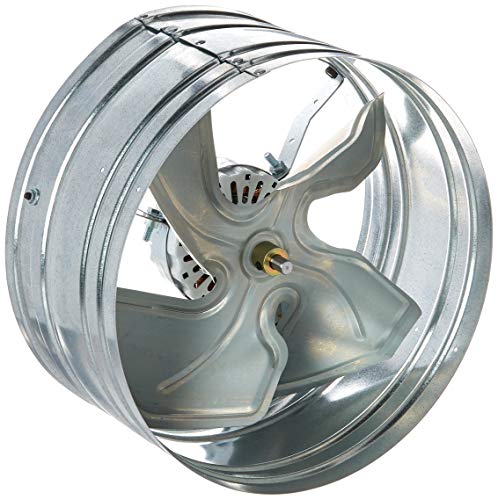
- 760 CFM airflow
- Adjustable built-in thermostat
- Galvanized steel housing and 14-inch blade
Best For: Attics or garages with suitable gable installation
Solar Hybrid Pick
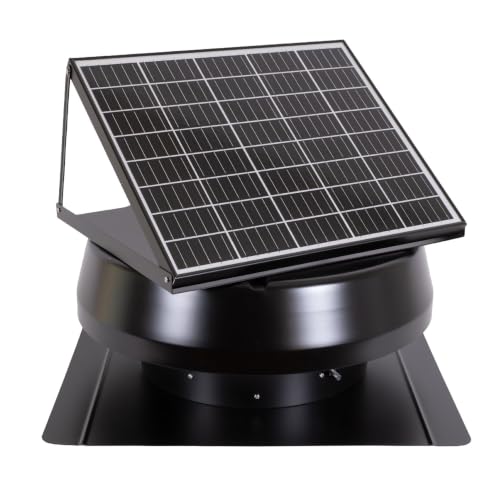
- 40-watt solar power
- 1,150 CFM and 2,900 sq. ft. coverage
- Adjustable panel and smart thermostat
Best For: Attics suited to solar-powered ventilation
Efficient Roof Mount Pick
High-Efficiency 1250 CFM Attic Fan

- 1250 CFM for attics up to 2,200 square feet
- Efficient PSC motor design
- Galvanized steel with internal screen
Best For: Medium-to-large residential attics needing electric roof ventilation
Off-Grid Cooling Choice
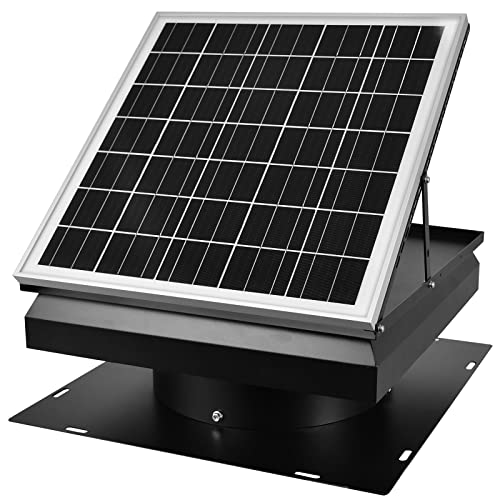
- 32W solar-powered operation
- 1600 CFM airflow with automatic activation
- Weather-resistant IP68 motor and corrosion-proof mount
Best For: Sunny locations needing wiring-free ventilation
High-Airflow Gable Option

- 2339 CFM for attics up to 3,400 square feet
- Adjustable built-in thermostat
- Galvanized steel housing with brackets
Best For: Large attics with compatible gable openings
Best Solar High-Airflow Pick

- Up to 2,000 CFM airflow
- Controller-free solar operation
- Weather-resistant metal housing
Best For: Daytime attic, garage, shed, or greenhouse ventilation
Best Traditional Roof-Mount Pick
Master Flow 1000 CFM Attic Fan

- 1,000 CFM attic airflow
- Thermostat-controlled operation
- Galvanized steel construction
Best For: Hard-wired attic ventilation on compatible sloped roofs
Best Adjustable Multi-Use Pick
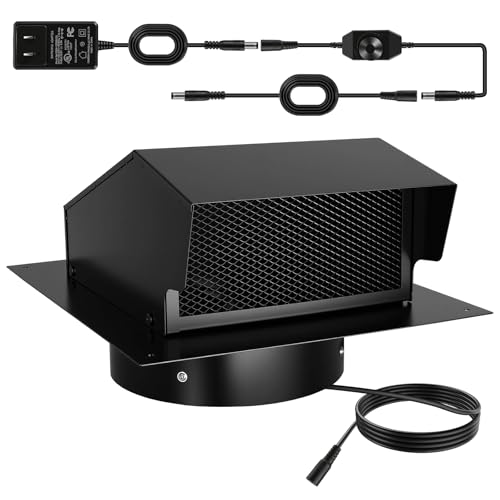
- Up to 2,500 CFM airflow
- Includes a speed controller
- Designed for multiple utility spaces
Best For: Adjustable ventilation for attics, garages, sheds, and workshops
High-Capacity Pick – Master Flow 1500 CFM Roof Fan
For homeowners comparing roof ventilation fans for home use, the Master Flow ERV6BL stands out with 1,500 CFM of airflow and coverage for attics up to 2,800 square feet. Its galvanized steel construction, built-in screen, and included thermostat controller make it a practical powered roof-mount option.
Best For: Large attic spaces needing high-capacity powered ventilation.
Pros:
- Moves up to 1,500 CFM to remove hot and humid attic air.
- Designed for attic areas up to 2,800 square feet.
- Galvanized steel construction and built-in screen support durable use.
- Includes a thermostat controller for automatic operation.
Cons:
- Requires hard-wired electrical installation.
- Not compatible with tile roofing systems.
With its strong airflow and broad stated coverage, this fan is a solid choice when attic ventilation capacity is the main priority. Confirm roof compatibility and electrical requirements before installation.
Automatic Control Pick – Air Vent 53832 Power Ventilator
The Air Vent 53832 is a roof-mounted choice for shoppers seeking roof ventilation fans for home use with automatic temperature and humidity management. It delivers up to 1,320 CFM and includes both a thermostat and humidistat for responsive attic exhausting.
Best For: Homeowners who want roof-mounted ventilation with thermostat and humidistat controls.
Pros:
- Provides up to 1,320 CFM of attic exhaust airflow.
- Automatic thermostat and humidistat help manage heat and moisture.
- Includes a stated 10-year limited warranty and five-year replacement protection.
Cons:
- Uses an AC power source and roof-mounted installation.
- The supplied specifications list plastic blades and a wood material/finish description, so buyers should verify installation details.
This model is appealing when automatic humidity control matters alongside airflow. Its warranty coverage is another useful consideration, but installation specifications should be confirmed for the intended roof.
Gable-Mount Value – Broan-NuTone 353 Attic Fan
Broan-NuTone 353 Gable Mount Attic and Garage Ventilation Fan, 760 CFM, Red, 1630
Check Price On AmazonThe Broan-NuTone 353 takes a different approach to roof ventilation fans for home use: it mounts at the gable rather than directly on the roof. Its 760 CFM output, adjustable thermostat, and galvanized steel housing make it suitable for attic or garage ventilation where a gable installation is available.
Best For: Attics or one- to three-car garages with a suitable gable opening.
Pros:
- Gable-mount design avoids direct roof mounting.
- Moves 760 CFM for attic or garage ventilation.
- Adjustable built-in thermostat supports automatic operation.
- Precision-balanced 14-inch metal blade and galvanized steel housing support airflow and durability.
Cons:
- Intended for gable installation only.
- Requires permanent electrical wiring and grounding; an extension cord should not be used.
- Provides less airflow than the higher-capacity roof-mounted models in this roundup.
If your structure has the right gable configuration, the 353 offers a straightforward way to ventilate an attic or garage without a roof-mounted fan. Its installation limitation is important to check before buying.
Solar Hybrid Pick – iLIVING 1150 CFM Attic Fan
For homeowners interested in roof ventilation fans for home use that can run from sunlight, the iLIVING ILG8SF301 combines a 40-watt adjustable solar panel with 1,150 CFM airflow. It is rated for up to 2,900 square feet and includes a smart thermostat with enable/disable control.
Best For: Attics where solar-powered daytime ventilation and flexible panel positioning are priorities.
Pros:
- Solar-powered 40-watt design delivers up to 1,150 CFM.
- Rated to cool spaces up to 2,900 square feet.
- Adjustable panel angles of 0°, 15°, 30°, and 45° help accommodate roof orientation.
- Waterproof IP68 brushless motor and 15-year limited manufacturer warranty are listed.
Cons:
- AC/DC adapter kit for non-solar operation is sold separately.
- Solar performance depends on available sunlight.
- The listed noise level is 65 dB.
This fan is a strong fit for buyers prioritizing solar operation and broad coverage. The adjustable panel and hybrid-ready design add flexibility, while the separately sold adapter is worth factoring into a continuous-operation setup.
Efficient Roof Mount Pick – High-Efficiency 1250 CFM Attic Fan
For homeowners comparing roof ventilation fans for home use, the Master Flow GAF ERV5WW offers powered attic exhaust with a high-efficiency PSC motor and durable galvanized steel construction. It is designed for attics up to 2,200 square feet and roof slopes from 3:12 to 12:12.
Best For: Homeowners seeking a weather-resistant electric roof-mount fan for a medium-to-large attic.
Pros:
- 1250 CFM capacity for attics up to 2,200 square feet
- High-efficiency PSC motor helps reduce electricity use compared with typical competitive motors
- Galvanized steel housing and heavy-duty internal screen support durability and intrusion resistance
- UL Listed and approved for several demanding regional building requirements
Cons:
- Requires electrical installation rather than solar operation
- Humidistat is optional, not included as a standard feature in the supplied details
- Roof-mount installation must match the compatible 3:12 to 12:12 slope range
This is a practical choice when you want a conventional roof-mounted attic ventilator with documented construction and efficiency features. Confirm roof slope, attic size, and electrical requirements before installation.
Off-Grid Cooling Choice – 1600 CFM Solar Attic Fan
If you want roof ventilation fans for home use without added electrical consumption, this 32W solar attic fan runs from its integrated monocrystalline panel. It starts automatically in sunlight, delivers 1600 CFM, and is designed for roof areas with strong, direct sun.
Best For: Sunny homes, garages, workshops, RVs, greenhouses, and other spaces where off-grid ventilation is useful.
Pros:
- Solar-powered operation avoids electricity costs and extra wiring
- 1600 CFM airflow helps move heat and humidity from enclosed spaces
- Weather-resistant construction includes a waterproof IP68 motor and corrosion-proof mounting system
- Automatic sunrise-to-sunset operation with reported 43 dB noise level
Cons:
- Performance depends on strong, direct sunlight
- Solar panel and fan are factory-connected, limiting installation flexibility for cable placement
- It may require pairing with existing vents for optimal whole-house airflow
This model stands out for simple, off-grid installation and broad use across residential and accessory structures. Check the planned roof location for adequate sunlight before choosing it.
High-Airflow Gable Option – 2339 CFM Thermostat Fan
For buyers considering roof ventilation fans for home use but working with a gable opening, the iLiving ILG8G14-12T provides high-volume electric exhaust without a roof-mount design. Its adjustable thermostat controls the 2.85-amp, 120-volt fan, which is rated at 2339 CFM for attics up to 3,400 square feet.
Best For: Large attics with a suitable gable opening and access to hardwired 120-volt power.
Pros:
- 2339 CFM airflow capacity for spaces up to 3,400 square feet
- Built-in adjustable thermostat supports automatic operation
- Galvanized steel housing and included mounting brackets simplify installation
- 14-inch steel propeller is engineered to maximize air movement
Cons:
- Gable-mount design is not intended for direct roof installation
- Single-speed operation provides less airflow adjustment
- Listed noise level is 63 dB
This fan is a strong fit when maximum listed airflow matters more than quiet operation or variable-speed control. Verify that your attic has a compatible gable opening and suitable hardwired power.
Best Solar High-Airflow Pick – 40W Solar Attic Fan
If you want roof ventilation fans for home use without adding regular electrical consumption, this solar attic fan is a practical option. Its 40W panel, 12-inch metal blades, and claimed 1,800–2,000 CFM airflow are designed to remove attic heat and moisture automatically during daylight.
Best For: Homeowners seeking controller-free solar ventilation for an attic, garage, shed, or greenhouse.
Pros:
- Solar-powered operation automatically runs from sunrise to dusk.
- High claimed airflow of up to 2,000 CFM.
- Weather-resistant metal construction with a pure copper motor.
- Pre-connected components support a simpler DIY setup.
Cons:
- Performance depends on available sunlight.
- At 25.4 pounds, it is relatively substantial for a DIY roof installation.
- It is not a grid-powered backup ventilation solution.
This is the strongest fit for off-grid or energy-conscious ventilation where daytime airflow is the priority. The controller-free design keeps operation simple, but buyers should plan the roof installation carefully.
Best Traditional Roof-Mount Pick – Master Flow 1000 CFM Attic Fan
For homeowners comparing roof ventilation fans for home use, the Master Flow GAF provides a conventional hard-wired solution with a built-in thermostat. Its 1,000 CFM capacity is intended for attic spaces up to 1,600 square feet, helping exhaust hot and humid air more actively than static vents.
Best For: Attics needing a durable electric roof-mount fan with thermostat control.
Pros:
- Designed to ventilate attic spaces up to 1,600 square feet.
- Thermostat controller helps automate operation.
- Galvanized steel construction and a heavy-duty animal screen support durability.
- Suitable for roof slopes from 3:12 to 12:12.
Cons:
- Requires hard-wired electrical installation.
- Not compatible with tile roofing systems.
- Its 1,000 CFM rating is lower than some higher-output options.
This is a sensible choice when you prefer thermostat-controlled electric ventilation and have a compatible shingle-style roof. Confirm the roof slope, roofing material, and wiring requirements before installation.
Best Adjustable Multi-Use Pick – 2500 CFM Roof Exhaust Fan
This model stands out among roof ventilation fans for home use when adjustable airflow and broad placement options matter. The AC-powered fan claims up to 2,500 CFM, includes a speed controller, and is designed for attics, garages, sheds, greenhouses, workshops, and other enclosed spaces.
Best For: Users who want high airflow and manual speed adjustment across multiple utility spaces.
Pros:
- High claimed airflow of up to 2,500 CFM.
- Included speed controller allows airflow adjustment.
- IP68 motor, corrosion-resistant housing, and aluminum mesh guard support outdoor use.
- Low claimed operating noise of about 40–45 dB.
Cons:
- Requires AC power and uses a plug-in setup rather than solar operation.
- The supplied details list a 230-volt rating, which buyers should verify for compatibility.
- Installation gaps must be sealed to help prevent water leakage.
Choose this fan when maximum stated airflow and manual control outweigh the simplicity of an automatic thermostat or solar system. Its multi-scenario design is useful, but electrical compatibility and weather-sealing deserve particular attention.
How We Picked These Roof Ventilation Fans for Home Use
We focused on the specifications that matter most in real attic installations: airflow capacity, mounting style, power source, thermostat or controller options, stated coverage, construction, and installation flexibility. The selection includes roof-mount fans for direct exhaust through the roof, gable fans that work with an existing vent opening, and solar models designed to reduce grid electricity use.
Advertised CFM and coverage figures are useful for comparison, but they are not guarantees of performance in every home. Attic size, insulation, roof design, intake vents, duct or grille restrictions, and local climate all affect results. A properly sized intake system is especially important because an exhaust fan cannot work efficiently if replacement air cannot enter the attic.
Quick Comparison
| Type | Best suited to | Main advantage | Potential limitation |
|---|---|---|---|
| Powered roof-mount | Homes needing direct roof exhaust | Integrated, targeted ventilation | Requires roof penetration and electrical planning |
| Gable-mount | Attics with suitable gable openings | No new roof opening required | Needs an appropriately sized gable vent |
| Solar roof fan | Daytime heat reduction with low running cost | Uses sunlight instead of household power | Output varies with sun and panel placement |
| Compact exhaust fan | Sheds, garages, workshops, and small spaces | Flexible placement and lower capacity needs | May not suit a whole-house attic |
Key Buying Factors for Roof Ventilation Fans for Home Use
Airflow and Attic Size
Compare the fan’s CFM rating with your attic’s size and ventilation layout. Higher CFM is not automatically better if the intake vents are inadequate, and a powerful fan can pull conditioned air from the living space when the attic is poorly sealed.
Mounting and Installation
Roof-mount models are convenient when you want an integrated exhaust point, but installation requires careful flashing and weatherproofing. Gable fans are often easier to install when a compatible opening already exists. Check dimensions, clearances, wiring requirements, and whether professional installation is recommended.
Power Source and Controls
Electric fans offer consistent operation and commonly include thermostats. Solar fans can reduce operating costs but depend on available sunlight; models with batteries, hybrid capability, or adjustable controls may provide more flexibility. A humidistat is useful in climates where attic moisture is a concern.
Build Quality and Noise
Look for weather-resistant housings, durable motors, reliable screens, and corrosion-resistant materials. If the fan is near bedrooms or occupied rooms, check noise information and consider vibration isolation during installation.
Who Should Buy Which Roof Ventilation Fans for Home Use?
Choose a powered roof-mount fan if you want dependable, thermostat-controlled ventilation and have a suitable roof installation location. Choose a gable-mount model when your attic already has a compatible gable vent and you want to avoid adding another roof penetration. A solar roof fan is a practical choice for sunny locations and homeowners prioritizing low electrical consumption. For garages, sheds, workshops, greenhouses, or other compact spaces, a smaller exhaust fan may be more appropriate than a high-capacity whole-attic unit.
Before buying, confirm the fan’s dimensions, voltage, coverage claims, local code requirements, and compatibility with your existing intake and exhaust vents. Professional installation is worth considering whenever roof cutting, electrical wiring, or moisture control is involved.