Quiet kerosene heaters can provide dependable heat during power outages, cold-weather emergencies, camping trips, and work in unheated spaces. The right model depends on whether you prioritize low operating noise, portability, indoor suitability, cooking capability, or high-output forced-air performance.
This roundup compares 10 options ranging from compact wick heaters and heater-stove combinations to powerful portable forced-air units. Use the guide below to narrow your choices by heating method, fuel capacity, room size, safety features, and practical operating needs.
Best 10 Quiet Kerosene Heaters Picks for 2026
Best Compact Pick

- Heats up to about 380–400 square feet
- Runs up to 14 hours on a 1.2-gallon tank
- Push-button start with tip-over protection
Best For: Portable backup heat for garages, rooms, and camping
Best Multi-Use Pick
3-Wick Radiant Heater and Stove

- Provides up to 9,000 BTU of radiant heat
- Works as a heater, stove, and water boiler
- Uses three replaceable long-life wicks
Best For: Camping and emergency heating with cooking capability
Best Long-Running Pick
Kero World 10,500 BTU Wick Heater

- Heats spaces up to 450 square feet
- Runs up to 15 hours on a 1.1-gallon tank
- Uses radiant and convective heat
Best For: Extended indoor backup heating for homes and garages
Best Accessory Bundle

- Runs 15–21 hours on a 1.35-gallon tank
- Includes pump, funnel, gloves, bag, and extra wicks
- Doubles as a heater and cooking surface
Best For: Emergency kits, garages, camping, and small-to-medium spaces
Best Long-Run Pick
Bluefire 2-in-1 Radiant Heater
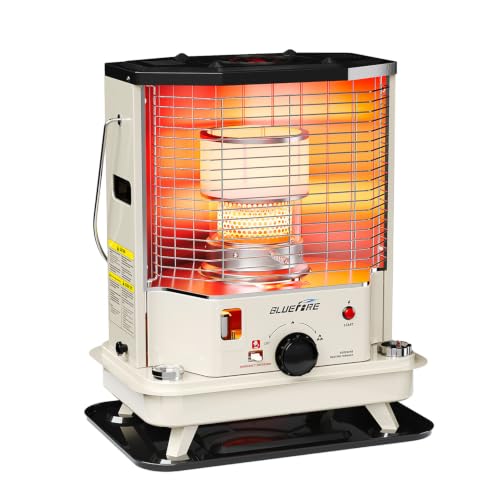
- 11,000 BTUs with adjustable flame control
- Advertised runtime of up to 16 hours
- Heats and boils water without electricity
Best For: Extended backup heat and outdoor use
Best Adjustable-Height Option
10,000 BTU Kerosene Heater & Stove
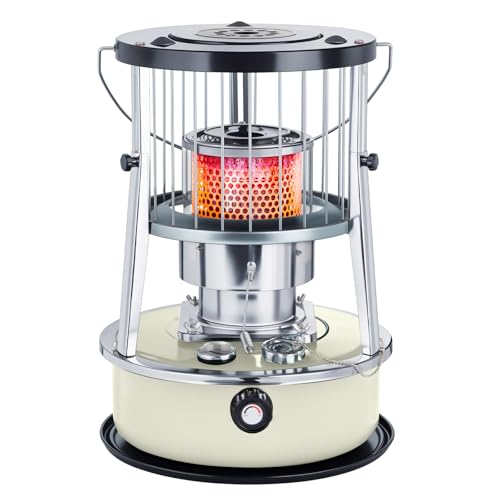
- Up to 20 hours from a 1.4-gallon tank
- Adjustable height and anti-tip base
- Includes pump, funnel, gloves, and extra wicks
Best For: Room, garage, RV, and camping backup heat
Best Compact Heating-and-Cooking Pick

- Heats about 150-170 square feet
- Runs up to 13 hours per fill
- Cooking grate and spare wick included
Best For: Small spaces, camping, and combined heating and cooking
Versatile Pick
Portable 9,000 BTU Kerosene Heater and Stove

- 9,000 BTU radiant heat for smaller spaces
- Works as a heater, grill, boiler, and stove
- Includes safety shutoffs and two spare wicks
Best For: Small rooms, camping, and emergency use
Large-Space Pick
CAMMOO 85,000 BTU Forced-Air Heater

- Heats up to 2,200 square feet
- Produces warm air in about five seconds
- Includes thermostat, wheels, and safety controls
Best For: Large garages, workshops, barns, and jobsites
Thermostat Pick
InoKraft 80,000 BTU Portable Forced-Air Heater

- Covers up to 2,000 square feet
- Runs up to 8.5 hours on a 5-gallon tank
- Adds thermostat control and LED diagnostics
Best For: Garages, barns, and workshops needing regulated heat
Best Compact Pick – HeatMate Portable 10,000 BTU
The Sengoku HeatMate 110 is a practical choice among quiet kerosene heaters when you need portable warmth without electricity. Its 10,000 BTU output is rated for spaces up to about 380–400 square feet, while the 1.2-gallon tank can provide up to 14 hours of operation.
Best For: Garages, poorly insulated rooms, camping areas, and other spaces that need portable emergency or supplemental heat.
Pros:
- Portable design with indoor and outdoor use listed.
- Up to 14 hours of runtime from a 1.2-gallon tank.
- Push-button start eliminates the need for matches or electricity.
- Includes automatic shut-off, tip-over switch, safety grills, and flame adjustment.
Cons:
- Its listed coverage is limited to roughly 380–400 square feet.
- At about 22 inches deep, it may require more floor space than smaller heaters.
Choose this model if compact portability, straightforward ignition, and built-in safety features matter most. Its moderate coverage and 14-hour burn time make it a balanced option for backup heating.
Best Multi-Use Pick – 3-Wick Radiant Heater and Stove
This three-wick model stands out among quiet kerosene heaters because it is designed for both radiant heating and cooking. It produces up to 9,000 BTU per hour, uses no electricity, and is rated to heat approximately 15–20 square meters.
Best For: Campers, emergency preparedness, and users who want one portable kerosene appliance for heating, boiling water, or cooking.
Pros:
- Combines a radiant heater with a cooking function.
- Operates without electricity for outages and outdoor use.
- Three wicks are described as long-lasting, with each lasting up to 12 months.
- Adjustable hood and 360-degree radiant heating help direct warmth and cooking heat.
Cons:
- Its listed heating capacity is smaller than models rated for larger rooms.
- The product’s cooking function may be unnecessary if you only need space heating.
- The notes give multiple runtime figures, so actual operation may vary with use.
This is a versatile option for situations where heating and cooking are both useful. Its compact format and fuel-powered operation suit emergency kits and camping, but its smaller coverage is better matched to localized warmth.
Best Long-Running Pick – Kero World 10,500 BTU Wick Heater
The Kero World KW-12 is a strong candidate among quiet kerosene heaters for larger rooms and extended use. Its 10,500 BTU output is rated to warm up to 450 square feet, and its 1.1-gallon tank can run for up to 15 hours.
Best For: Homes, garages, basements, and emergency preparedness situations where broad, sustained heat is important.
Pros:
- Rated for up to 450 square feet of coverage.
- Combines radiant and convective heating.
- Up to 15 hours of operation from a 1.1-gallon fuel tank.
- Lightweight, compact design with a Sure Seat Chimney System and UL listing.
Cons:
- It is intended for indoor use, limiting outdoor flexibility.
- The product does not list an electric-free push-button ignition.
With its high heat output, broad stated coverage, and long runtime, the KW-12 is well suited to sustained backup warmth. Its safety certification details add reassurance for buyers prioritizing established safety features.
Best Accessory Bundle – 9,000 BTU Portable Heater
This 9,000 BTU model is a practical pick among quiet kerosene heaters for buyers who want a portable, non-electric backup with useful accessories included. Its 1.35-gallon tank is rated for 15–21 hours of heat, with stated coverage ranging from 150 to 350 square feet.
Best For: Emergency heating, garages, camping, porches, and buyers who want a heater bundled with refueling and maintenance accessories.
Pros:
- Long stated runtime of 15–21 hours per fill.
- Includes a funnel, siphon pump, gloves, storage bag, and extra wicks.
- Non-electric design with adjustable height and temperature.
- Top doubles as a cooking surface for heating food or boiling water.
Cons:
- Coverage is rated for smaller spaces than the largest heaters in this roundup.
- The listed coverage varies from 150 to 350 square feet.
- Its cooking surface may not be useful for buyers seeking heating only.
The accessory bundle makes this model especially convenient for preparedness and outdoor use. Consider it when long runtime, portability, and a built-in cooking surface are more important than maximum room coverage.
Best Long-Run Pick – Bluefire 2-in-1 Radiant Heater
For shoppers comparing quiet kerosene heaters, the Bluefire stands out as a portable radiant model with strong output and a long advertised runtime. It produces 11,000 BTUs, operates without electricity, and can also boil water, making it useful for backup heating and outdoor activities.
Best For: Power outages, workshops, camping, and other situations requiring extended, electricity-free heat.
Pros:
- Up to 16 hours of operation from a 1.2-gallon tank.
- 11,000-BTU radiant heat with adjustable flame control.
- Flat top supports water boiling, cooking, or grilling.
- Includes a siphon pump and features a fuel gauge, leak-resistant cap, and tip-over protection.
Cons:
- Its 15-pound weight and floor-mount design are less convenient for frequent carrying.
- The product notes give differing coverage figures, listing both up to 500 and 1,000 square feet.
The Bluefire is a versatile choice when runtime matters most. Its radiant design and adjustable flame make it suitable for targeted supplemental heat, while the cooking surface adds practical value during outages or outdoor trips.
Best Adjustable-Height Option – 10,000 BTU Kerosene Heater & Stove
This 9,000-10,000-BTU pedestal heater is a practical option for shoppers seeking quiet kerosene heaters with flexible placement. Its adjustable-height design, non-electric operation, and flat cooking top suit rooms, garages, RVs, and outdoor settings.
Best For: Emergency heating in spaces of roughly 200-500 square feet, plus camping and patio use.
Pros:
- Runs up to 20 hours on a 1.4-gallon tank, according to the product notes.
- Adjustable height helps control heat output.
- Protective safety net and anti-tip base add stability features.
- Includes a funnel, siphon tube, gloves, user manual, and extra wicks.
Cons:
- Its listed coverage is more limited than higher-output models.
- The pedestal design may be less compact to store than a smaller portable heater.
With a long stated burn time and useful starter accessories, this model is geared toward preparedness. The adjustable height and cooking surface make it adaptable, though buyers should match its 200-500-square-foot guidance to their intended room.
Best Compact Heating-and-Cooking Pick – Garvee 9800 BTU Heater
The Garvee combines no-electric heating with a sturdy cooking grate in a compact square design. Among quiet kerosene heaters, it is suited to smaller areas, with an advertised 8,300-9,800 BTU output and coverage of about 150-170 square feet under average insulation.
Best For: Small tents, cabins, greenhouses, garages, and outdoor trips where cooking and heating are both useful.
Pros:
- Provides up to 13 hours of continuous heat from a 0.98-gallon tank.
- Compact shape helps with storage and placement.
- Top grate supports pots, kettles, and other cookware.
- Includes a siphon pump, funnel, and spare cotton wicks.
Cons:
- Its stated 150-170-square-foot coverage is narrower than larger heaters.
- The electronic ignition requires AA batteries, which are not included.
- At 31.8 pounds, it is relatively heavy for a portable unit.
The Garvee makes the most sense when compact storage and cooking capability are priorities. Its automatic shutoff, adjustable flame, and long-burn design add convenience, but the limited coverage and heavier build are worth considering before purchase.
Versatile Pick – Portable 9,000 BTU Kerosene Heater and Stove
If you want quiet kerosene heaters for flexible home, garage, tent, or outdoor use, this compact radiant model combines heating with cooking and boiling capabilities. It produces up to 9,000 BTU and operates without electricity.
Best For: Small rooms, camping, emergency heating, and users who want a multipurpose kerosene stove.
Pros:
- Provides radiant heat for areas of about 20–30 square meters.
- Functions as a heater, grill, fireplace, fire boiler, and cooking stove.
- Includes a 4.6-liter tank, funnel, tube, and two spare wicks.
- Has tilt shutoff, automatic flame extinguishing, and oxygen-deficiency protection.
Cons:
- Its 9,000 BTU output is intended for smaller areas than forced-air jobsite heaters.
- Requires kerosene fuel and appropriate ventilation when used indoors.
This is a practical choice when portability and versatility matter more than maximum heating power. Its fuel-powered, quiet design suits smaller spaces and off-grid situations.
Large-Space Pick – CAMMOO 85,000 BTU Forced-Air Heater
For large garages, workshops, barns, and jobsites, this CAMMOO is a high-output option among quiet kerosene heaters. Its 85,000 BTU forced-air system can heat areas up to 2,200 square feet and starts producing warm air in about five seconds.
Best For: Large outdoor work areas and demanding jobsite heating where fast heat and mobility are priorities.
Pros:
- Delivers 85,000 BTU and coverage up to 2,200 square feet.
- Features thermostat control from 40°F to 110°F for automatic cycling.
- Includes a large tank, wheels, a sturdy frame, and a 3.3-foot cord.
- Offers flame-sensing fuel shutoff, overheat protection, ETL certification, and V-0 materials.
Cons:
- Designed for outdoor use rather than indoor living spaces.
- Its 32.2-pound body is less convenient for carrying than compact radiant heaters.
- Diesel use requires additional fresh-air ventilation, and fuels should not be mixed.
With rapid startup, substantial coverage, and rolling mobility, this model is built for large workspaces. It is a stronger fit for industrial heating than quiet operation in occupied rooms.
Thermostat Pick – InoKraft 80,000 BTU Portable Forced-Air Heater
The InoKraft combines high-output forced-air heating with automatic temperature regulation, making it a useful option when comparing quiet kerosene heaters for garages, barns, and workshops. It provides 80,000 BTU, covers up to 2,000 square feet, and can run for up to 8.5 hours on its 5-gallon tank.
Best For: Large enclosed work areas needing thermostat control, extended runtime, and portable forced-air heat.
Pros:
- Heats areas up to 2,000 square feet with 80,000 BTU output.
- Offers automatic on/off temperature regulation and LED troubleshooting diagnostics.
- Provides up to 8.5 hours of continuous heating from a 5-gallon tank.
- Includes CSA certification, overheat protection, and a one-year warranty.
Cons:
- Uses AC power for operation, so it is not fully independent of electricity.
- Its forced-air design and high output are better suited to work areas than quiet living spaces.
- The supplied dimensions are unusually large, so confirm available storage space before buying.
This model stands out for its thermostat and long stated runtime. Choose it when consistent warmth and worksite coverage are more important than the simplicity of a small, electricity-free radiant heater.
How We Picked the Best Quiet Kerosene Heaters
We evaluated these heaters by comparing their heating style, stated BTU output, portability, operating requirements, and intended use. Wick models are generally simpler and quieter because they do not rely on a blower, while forced-air heaters can deliver substantially more heat across large areas but may produce fan noise. We also considered whether each unit is designed for indoor use, offers cooking functionality, includes thermostat or control features, and has safeguards such as overheat protection or stable chimney construction.
Because product specifications and local requirements can vary, confirm the manufacturer’s ventilation instructions, approved fuel type, clearance requirements, and safety certifications before buying or operating any heater.
Quick Comparison
- Best for compact backup heat: Sengoku HeatMate and similar portable wick models.
- Best for quiet, no-electric operation: Kero World and the compact 9,000- to 10,000-BTU heater-stove options.
- Best for heating and cooking: the three-wick, Bluefire, Garvee, and other heater-stove designs.
- Best for large workshops or open areas: CAMMOO 85,000 BTU and InoKraft 80,000 BTU forced-air heaters.
Key Buying Factors for Quiet Kerosene Heaters
Heating Method and Noise
For the lowest operating noise, choose a wick-based radiant or convection heater. These models typically heat more gradually but work without electricity and without a blower. Forced-air units distribute heat quickly and are better for large spaces, but their fans create more audible noise.
BTU Output and Room Size
Match output to the space rather than automatically choosing the highest rating. Compact 9,000- to 10,000-BTU heaters suit localized heating, while 80,000- to 85,000-BTU models are intended for large, ventilated work areas. Oversizing can waste fuel and make temperature control difficult.
Indoor Use, Ventilation, and Safety
Never assume that a kerosene heater is safe for indoor use solely because a listing says “indoor.” Check the manual and local regulations, provide the required ventilation, keep combustible materials clear, and use a carbon monoxide detector. Look for stable bases, automatic shutoff, tip-over protection, overheat protection, and secure fuel handling.
Fuel, Controls, and Portability
Check the approved kerosene grade, tank capacity, expected runtime, ignition method, and whether the heater needs household power. Handles and compact dimensions help with relocation, while thermostat controls can improve comfort and fuel efficiency on higher-output models.
Who Should Buy Which Quiet Kerosene Heaters?
Choose a compact wick heater if you need quiet, electricity-free backup heat for a small room or emergency kit. Select a heater-stove combination if cooking or boiling water is an important secondary use, but verify cookware guidance and ventilation requirements. For workshops, garages, construction areas, or large open spaces, a forced-air model is the more practical choice when rapid heat matters more than near-silent operation. If noise is your top priority, favor the simplest wick-based design and avoid blower-equipped units.