Finding the right whole-house ventilation system can improve indoor air quality, manage humidity, and make your home more comfortable without wasting energy. The best choice depends on your climate, home size, ductwork, and whether you need fresh-air exchange or high-volume cooling.
We compared energy-efficient whole-house ventilation systems across airflow, controls, filtration, installation flexibility, and energy-saving features to help you narrow down the right fit.
Best 10 Energy-Efficient Whole House Ventilation Systems Picks for 2026
Best High-Capacity Pick
QA-Deluxe 6500 Whole House Fan

- Up to 5,878 CFM of airflow
- Remote timer and economical operation
- Fits common joist spacing without framing
Best For: Large single- or two-story homes
Best Coordinated Ventilation Control
Panasonic SelectCycler 4-Inch System

- Programmable wall-mounted controller
- Supports supply or balanced ventilation
- Includes motorized damper and wall switch
Best For: Integrated HVAC and fan control
Best Energy Recovery Option

- 210 CFM energy recovery ventilation
- Auto-balancing with integrated LCD screen
- Includes MERV 8 filter and mounting hardware
Best For: Filtered, balanced fresh-air exchange
Best Quiet Multi-Speed Pick
Solatube EPS Ultra Whole House Fan

- 3,785 CFM with seven adjustable speeds
- HushMount 2 system targets quieter operation
- Complete DIY kit with insulated damper doors
Best For: Adjustable attic cooling in homes up to 3,200 square feet
Best Balanced Fresh-Air Exchange
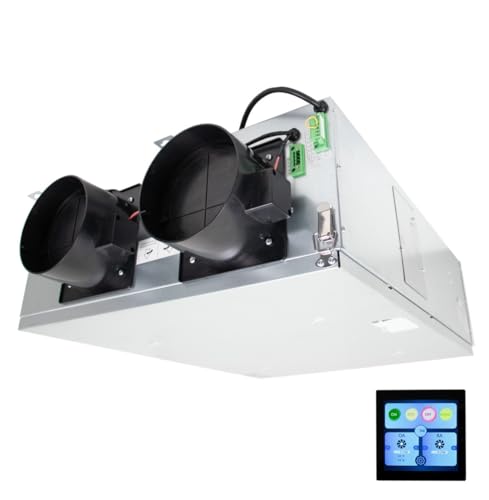
- Balanced supply and exhaust airflow
- Adjustable 40–100 CFM operation
- Washable filters and humidity sensor
Best For: Attic installations needing adjustable, balanced ventilation
Best Whole-House Cooling Fan
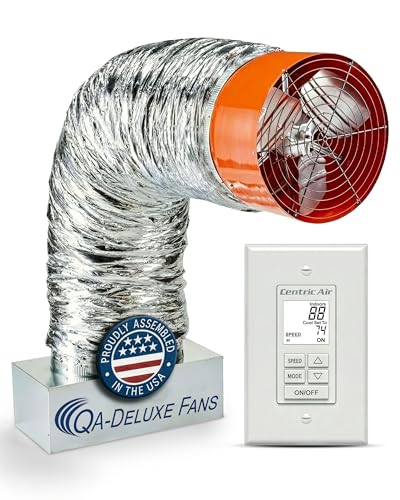
- High airflow up to 4,203 CFM
- Three-speed switch with timer
- R-5 insulated damper
Best For: Large homes needing whole-house cooling airflow
Best Quiet Ceiling-Mount ERV
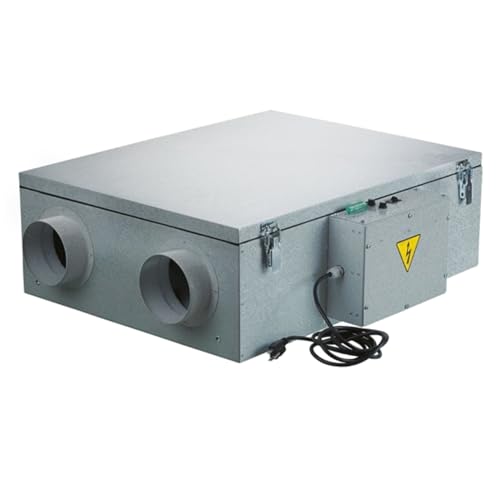
- Up to 180 CFM balanced ventilation
- Quiet 1.9-sones operation
- Heat, humidity, and frost protection
Best For: Ceiling installations needing quiet, balanced ventilation
High-Capacity Value Pick

- Up to 5,500 CFM airflow
- Remote control and insulated R5 damper
- Fits 16- or 24-inch joist spacing
Best For: Large two-story or moderate-size single-story homes
Large-Home Performance Pick

- Up to 6,878 CFM on high
- Efficient ECM motor with two speeds
- Wireless control with 12-hour timer
Best For: Large homes needing powerful ceiling-mounted ventilation
Fresh-Air Exchange Pick

- Balanced ventilation up to 162 CFM
- Uses as little as 19 watts on low
- Heat, moisture, and freeze protection
Best For: Continuous fresh-air exchange in cold-climate homes
Best High-Capacity Pick – QA-Deluxe 6500 Whole House Fan
For large homes that need fast, economical cooling, the QA-Deluxe 6500 is a strong option among energy-efficient whole house ventilation systems. It delivers up to 5,878 CFM, includes a timed remote, and is designed for straightforward ceiling installation between common joist spacings.
Best For: Two-story homes up to 4,400 square feet or single-story homes up to 3,000 square feet with adequate attic ventilation.
Pros:
- High airflow capacity of up to 5,878 CFM.
- Remote control includes an on/off timer, and operation costs just pennies per hour.
- Acoustical ducting, rubber bushings, and an insulated damper box help limit noise, vibration, and air infiltration.
- Designed for 16- and 24-inch on-center joists without additional framing; includes a 10-year motor warranty.
Cons:
- Requires approximately 5.5 square feet of attic ventilation.
- Permanent ceiling installation may require planning and electrical work.
- The listed configuration has one speed and a 51 dB noise level.
Choose this model when maximum whole-house airflow and broad coverage matter more than multi-speed adjustment. Verify attic ventilation and installation clearance before buying.
Best Coordinated Ventilation Control – Panasonic SelectCycler 4-Inch System
The Panasonic SelectCycler is a control system rather than a standalone whole-house fan, making it useful for coordinating central HVAC equipment, dampers, and compatible ventilation fans. Its programmable controller supports energy-efficient supply or balanced ventilation strategies for homes using 4-inch ducting.
Best For: Homeowners who want programmable control over compatible Panasonic WhisperGreen Select or other 110V ventilation fans.
Pros:
- Coordinates the HVAC system, motorized supply damper, and ventilation fan.
- Offers dual operating modes for supply or balanced ventilation strategies.
- Complete kit includes a programmable wall controller, 24VAC damper, and Fanconnect wall switch.
- Low listed wattage of 45 watts and Energy Star specification.
Cons:
- It is a control system and requires a compatible ventilation fan or HVAC setup.
- Designed around 4-inch ducting, which may limit retrofit flexibility.
- Installation is built-in and may require professional wiring or system integration.
This is a practical choice when precise scheduling and system coordination are more important than adding a high-CFM exhaust fan. Confirm fan compatibility, duct size, and the desired ventilation strategy before installation.
Best Energy Recovery Option – Broan AI 210 CFM ERV
The Broan B210E75RS is an energy recovery ventilator for homes needing controlled fresh-air exchange rather than the high-volume cooling of a whole-house fan. Its 210 CFM capacity, brushless motor, MERV 8 filter, and auto-balancing technology make it a considered option among energy-efficient whole house ventilation systems.
Best For: Homes seeking balanced, filtered ventilation with flexible wall- or ceiling-mount installation.
Pros:
- Energy recovery ventilation helps support controlled fresh-air exchange.
- VIRTUO technology provides auto-balancing and an integrated LCD screen.
- Can be suspended or mounted on a wall or ceiling.
- Includes chains, brackets, and a MERV 8 filter; uses a brushless motor.
Cons:
- Its 210 CFM airflow is lower than high-capacity whole-house cooling fans.
- At 270 watts, it is not a minimal-power ventilation controller.
- The unit is relatively large, so mounting space must be checked carefully.
Consider the Broan when indoor-air exchange, filtration, and automatic balancing are priorities. It is better suited to continuous or controlled ventilation than rapid whole-home temperature reduction.
Best Quiet Multi-Speed Pick – Solatube EPS Ultra Whole House Fan
The Solatube EPS Ultra combines high airflow with seven adjustable speeds and noise-conscious mounting. It is a useful choice for shoppers comparing energy-efficient whole house ventilation systems and wanting flexible control, insulated damper doors, and a complete attic-mount installation kit.
Best For: Homes up to 3,200 square feet where adjustable airflow and quieter operation are important.
Pros:
- Provides up to 3,785 CFM with seven adjustable speeds.
- HushMount 2 technology and a precision-cut jet-blade design are intended to reduce noise and vibration.
- R6 insulated damper doors help prevent air infiltration when the fan is off.
- DIY kit includes the fan, mounting hardware, remote, grille, ducting, and fasteners.
Cons:
- Its 697-watt rating is higher than some lower-power ventilation controls.
- Attic mounting requires suitable space and access.
- Installation still requires attention to ducting, damper placement, and electrical connections.
This model stands out for homeowners who want to fine-tune airflow rather than use a single fixed speed. Its complete kit can simplify the project, but confirm attic dimensions and installation requirements first.
Best Balanced Fresh-Air Exchange – Awoco 100 CFM ERV
The Awoco 100 CFM ERV is a practical choice for homeowners comparing energy-efficient whole house ventilation systems that exchange stale indoor air for filtered outdoor air. Its balanced airflow, heat and moisture retention, adjustable speeds, and built-in humidity sensing support more consistent indoor comfort.
Best For: Attic installations needing adjustable, balanced ventilation with touch-panel control.
Pros:
- Adjustable outside and return airflow from 40 to 100 CFM.
- ERV operation helps retain heat and optimize indoor moisture.
- Includes washable filters, built-in dampers, humidity sensing, and a timer.
- Continuous-duty EC motors and HVI, ETL, and cETL certifications.
Cons:
- Requires multiple 6-inch ducts and insulated ducting for specified connections.
- Rated at 50 dB and limited to 100 CFM.
- Warranty coverage is limited to one year.
With four power levels and a touch control panel, this compact ERV offers useful installation flexibility. It is better suited to controlled fresh-air exchange than high-volume whole-house cooling.
Best Whole-House Cooling Fan – QA-Deluxe 4800 ECM
The QA-Deluxe 4800 ECM is designed for shoppers seeking energy-efficient whole house ventilation systems that cool a home by moving large volumes of air. Its ECM motor, three-speed wall switch, timer, temperature control, and insulated damper help manage airflow while limiting unwanted attic-air transfer when the fan is off.
Best For: Two-story homes up to 2,800 square feet or one-story homes up to 1,900 square feet that need whole-house cooling.
Pros:
- Delivers up to 4,203 CFM, or 3,209 CFM under the listed California Title 24 airflow figure.
- Three-speed control includes timer and temperature settings.
- R-5 insulated damper helps block hot attic air when inactive.
- Includes a 10-year motor warranty and three-year parts warranty.
Cons:
- Requires 4 square feet of attic ventilation.
- At 491 watts, it uses more listed power than the ERV options here.
- Its 51 dB rating may matter in noise-sensitive installations.
This is primarily a high-airflow cooling fan rather than a heat-recovery ventilator. Its insulated damper and efficient ECM motor make it a strong option when the goal is reducing reliance on air conditioning through whole-house air movement.
Best Quiet Ceiling-Mount ERV – VENTS Frigate ERV 150
The VENTS Frigate ERV 150 suits buyers evaluating energy-efficient whole house ventilation systems for balanced, filtered air exchange. Its enthalpy core recovers heat and moisture, while electronic frost protection, MERV 6 filters, and a slim corrosion-resistant housing support year-round ceiling-mounted operation.
Best For: Ceiling installations needing up to 180 CFM of quiet, balanced ventilation.
Pros:
- Recovers heat and humidity while supplying fresh air and exhausting stale air.
- Provides up to 180 CFM with a listed noise level of 1.9 sones.
- Electronic defrost protection helps protect the energy core in cold conditions.
- Includes MERV 6 supply and exhaust filters, mounting brackets, and no-drain enthalpy-core operation.
Cons:
- Listed with one power level and push-button control.
- The 31-by-24-by-12-inch housing may require careful ceiling-space planning.
- MERV 6 filtration is less intensive than higher-rated filtration options.
At 9.6 inches deep, this ERV is well suited to tighter installation spaces while still providing more airflow than the Awoco model. Its low listed sound level and heat-and-moisture recovery make it a compelling option for continuous whole-house ventilation.
High-Capacity Value Pick – QA-Deluxe 5500
The QA-Deluxe 5500 is a practical choice among energy-efficient whole house ventilation systems for homeowners who want powerful airflow, remote operation, and a design intended to simplify installation. It delivers up to 5,500 CFM and is sized for homes up to 3,400 square feet, depending on the home’s layout.
Best For: Two-story homes up to 3,400 square feet or single-story homes up to 2,400 square feet that have adequate attic ventilation.
Pros:
- High airflow capacity with two-speed operation and a remote control.
- Designed to fit between 16- and 24-inch on-center joists without additional framing.
- Includes acoustical ducting, an insulated R5 damper box, and vibration-reducing mounting components.
- Backed by a 10-year fan motor warranty and three-year parts warranty.
Cons:
- Requires approximately 4.5 square feet of attic ventilation.
- Its 662-watt rating may be less attractive for shoppers seeking the lowest possible electrical draw.
- A vertical wall-mount adapter costs extra.
With its strong airflow, included remote, and installation-focused design, the QA-Deluxe 5500 is a solid whole-house cooling option when the attic can provide the required ventilation area.
Large-Home Performance Pick – QuietCool QC ES-7000 RF
The QuietCool QC ES-7000 RF is built for shoppers comparing energy-efficient whole house ventilation systems for larger homes. Its ECM motor provides up to 6,878 CFM on high and 4,304 CFM on low, while wireless controls and a countdown timer make daily operation convenient.
Best For: Large homes up to approximately 3,440 square feet that need high-volume cooling and ventilation from a ceiling-mounted system.
Pros:
- Moves up to 6,878 CFM on high for rapid cooling and ventilation.
- ECM motor uses 727 watts on high and 164 watts on low.
- Includes wireless RF control, glass wireless switch, and up to a 12-hour countdown timer.
- R5 damper doors help insulate the home from the attic when the fan is off.
Cons:
- Ceiling-mount installation may require more planning than a simpler portable or wall-mounted fan.
- The system is intended for larger installations and may be more capacity than smaller homes need.
- Its supplied notes specify a 120-volt connection and substantial installation components.
The QC ES-7000 RF stands out for large-home airflow and flexible wireless control, with its efficient ECM motor and insulated damper box adding useful performance and seasonal insulation benefits.
Fresh-Air Exchange Pick – VENTS-US Frigate ERV 120s
The VENTS-US Frigate ERV 120s takes a different approach to energy-efficient whole house ventilation systems by providing balanced fresh-air exchange rather than only moving indoor air. Its enthalpy core transfers heat and moisture, while low-speed operation uses as little as 19 watts.
Best For: Homes needing continuous fresh-air supply and stale-air exhaust, especially in colder climates where freeze protection and humidity recovery are useful.
Pros:
- Provides balanced supply and exhaust ventilation with airflow up to 162 CFM.
- Electronic anti-frost protection helps safeguard the core in freezing conditions.
- Enthalpy core transfers heat and moisture with up to 65% apparent sensible effectiveness.
- Includes washable MERV 6 filters and supports standard five-inch duct connections.
Cons:
- Its 162 CFM maximum airflow is far lower than high-capacity whole-house cooling fans.
- Requires duct connections and ceiling mounting with brackets.
- Supplied filters are MERV 6, which may not suit shoppers seeking higher filtration levels.
For continuous indoor-air exchange, the Frigate ERV 120s offers a more ventilation-focused solution than a cooling fan, pairing low-power operation with freeze protection, washable filters, and heat-and-moisture recovery.
How We Picked the Best Energy-Efficient Whole House Ventilation Systems
We focused on systems designed to move air efficiently while supporting healthier, more consistent indoor conditions. The selection includes whole-house fans for rapid cooling and energy recovery ventilators (ERVs) for controlled fresh-air exchange. We considered published airflow ratings, motor efficiency, speed controls, filtration, heat- or moisture-recovery capabilities, installation options, and suitability for different home sizes.
Because ventilation needs vary significantly, no single system is ideal for every house. A high-CFM fan may be excellent for nighttime cooling, while a compact ERV may be better for continuous ventilation in a tightly sealed home.
Quick Comparison
| System Type | Best For | Main Advantage | Important Consideration |
|---|---|---|---|
| Whole-house fan | Fast, low-cost cooling | Moves large volumes of air | Works best when outdoor air is cooler and reasonably clean |
| ERV | Year-round fresh-air exchange | Helps retain indoor energy and balance humidity | Requires suitable ducting and regular filter care |
| Compact ERV | Bedrooms, apartments, or smaller homes | Flexible installation and lower airflow | May not ventilate large spaces alone |
Key Buying Factors for Energy-Efficient Whole-House Ventilation Systems
Choose the Right Airflow
Compare the system’s rated CFM with your home’s size, layout, and ventilation requirements. Whole-house fans often deliver several thousand CFM for rapid air movement, while ERVs typically provide lower, continuous airflow. Oversizing can increase noise and unnecessary air exchange, while undersizing may leave rooms poorly ventilated.
Understand Fan Versus ERV Operation
A whole-house fan is primarily a cooling tool: it exhausts warm indoor air and draws in cooler outdoor air. An ERV provides controlled fresh air while transferring some heat and moisture between outgoing and incoming air. Choose an ERV when balanced ventilation and efficiency matter more than rapid cooling.
Check Controls, Noise, and Installation
Remote controls, timers, multiple speeds, wireless operation, and wall controls make daily use easier. Review noise ratings where available, especially for systems installed near bedrooms. Confirm duct size, grille requirements, ceiling or wall placement, electrical needs, and attic access before buying.
Prioritize Filtration and Maintenance
Accessible filters can help reduce dust and airborne particles, but they must be cleaned or replaced on schedule. ERV cores and condensate or freeze-protection features may also require seasonal maintenance. Verify replacement-filter availability and installation instructions before committing.
Who Should Buy Which Energy-Efficient Whole House Ventilation Systems?
For Fast Whole-Home Cooling
Choose a high-CFM whole-house fan if you live in a climate with cool evenings and want to reduce air-conditioning use. Models with multiple speeds, timers, or remote controls offer better comfort and convenience.
For Balanced Year-Round Ventilation
Select an ERV if your home is well sealed, has humidity concerns, or needs a steady supply of filtered outdoor air. Energy recovery is especially useful when conditioned indoor air would otherwise be lost through exhaust-only ventilation.
For Smaller Spaces or Targeted Ventilation
A compact ERV can suit smaller homes, additions, apartments, or individual zones. Confirm its airflow capacity and duct layout so it can meet the needs of the intended space rather than relying on an undersized unit for the entire house.