The best energy-efficient desktop air purifiers make it easier to improve air quality in personal spaces without the size, noise, or power demands of a full-room unit. Compact models can be especially useful beside a bed, on a desk, or in a dorm room.
Our roundup compares filtration, coverage, controls, noise features, maintenance needs, and value so you can choose a desktop purifier that fits your room and daily routine.
Best 10 Energy-Efficient Desktop Air Purifiers Picks for 2026
Best Compact Certified Pick

- 7-watt Energy Star certified design
- Three-in-one filtration for smoke, dust, odors, and allergens
- Quiet 25 dB operation with aroma pad
Best For: Small rooms, desktops, bedrooms, and offices
Best Adjustable Desktop Option
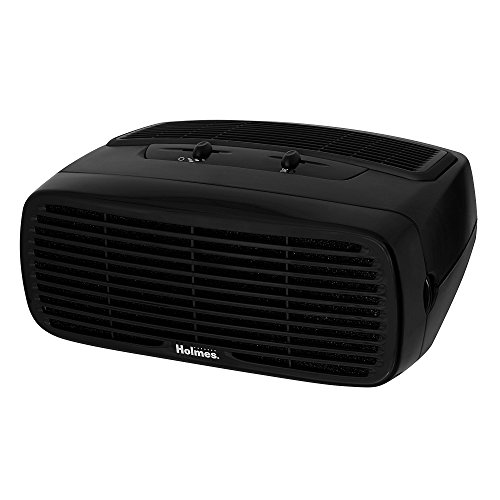
- Three fan speeds for adjustable airflow
- Optional ionizer for smoke, dust, and pollen
- Slim design supports vertical or horizontal placement
Best For: Small rooms needing flexible settings
Best Quiet High-Coverage Pick

- Energy Star Most Efficient designation
- 24 dB low-speed operation
- HEPASilent filtration with up to 432-square-foot coverage
Best For: Quiet bedrooms, offices, and larger small spaces
Best Ultra-Low-Wattage Value

- 7-watt energy-conscious operation
- 24 dB sleep mode with switchable lights
- Touch controls, aroma box, and filter reminder
Best For: Bedrooms, dorms, offices, and apartments
Best Dual-Pack Value

- Two compact 10-watt units
- Four-stage filtration with activated carbon
- Timers, child lock, and fragrance sponges
Best For: Small offices, bedrooms, and multi-room use
Best for Quiet Coverage

- 22 dB sleep-mode operation
- 360-degree air inlets
- Covers rooms up to 287 square feet
Best For: Quiet bedrooms and medium-size rooms
Quiet Compact Pick
FULMINARE H13 True HEPA Air Purifier
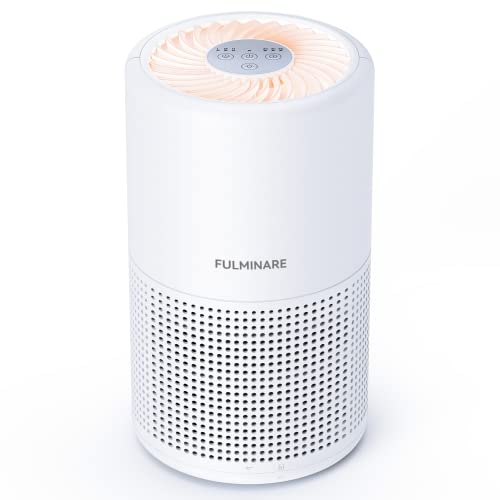
- 24-watt plug-in design
- About 20 dB on low speed
- Night light and five timers
Best For: Quiet bedroom and desk use
Smart Energy Saver

- ENERGY STAR certified; about 125 kWh annually
- PM2.5 monitor with Auto Mode
- AHAM Verified 115 CFM CADR
Best For: Automated, low-energy room purification
Personal Workspace Pick
HoMedics TotalClean Desktop Purifier

- Designed for spaces up to 128 square feet
- HEPA-type and carbon filtration
- Three speeds and 12-hour timer
Best For: Small offices and personal desk areas
Best Compact Certified Pick – Levoit Core Mini-P
The Levoit Core Mini-P is a practical choice for shoppers seeking energy-efficient desktop air purifiers for bedrooms, offices, and other small spaces. Its 7-watt design, 255-square-foot coverage, and 25 dB operation balance low energy use with everyday filtration.
Best For: Desktops, bedrooms, offices, and users who want certified, low-wattage purification with optional aromatherapy.
Pros:
- Uses just 7 watts and carries Energy Star certification.
- Three-in-one filtration targets dust, smoke, odors, pet dander, pollen, and VOCs.
- Quiet 25 dB operation, sleep mode, auto-off display, and aroma pad.
- Compact 6.5-inch square footprint and AHAM certification.
Cons:
- Its 255-square-foot coverage is better suited to smaller rooms.
- The included filter requires removal of its protective plastic packaging before use.
With efficient power consumption and a broad list of filtration targets, the Core Mini-P is a well-rounded desktop option. Its compact size and quiet settings make it especially convenient for close-range use.
Best Adjustable Desktop Option – Holmes HAP242B-U
The Holmes HAP242B-U is a straightforward desktop purifier for shoppers who value adjustable airflow and a slim form factor. It offers three speeds, optional ionization, and a 70 CADR rating for rooms up to 109 square feet.
Best For: Small rooms and desktops where adjustable fan speeds and optional ionizer operation are priorities.
Pros:
- Three speed settings provide flexible operation.
- Optional ionizer is designed to help bind smoke, dust, and pollen particles.
- Can be positioned vertically or horizontally.
- Includes a three-year limited warranty.
Cons:
- At 45 watts, it uses substantially more power than the 7-watt models in this roundup.
- Its 70 dB listed noise level may be less suitable for quiet workspaces or bedrooms.
- Coverage is limited to rooms up to 109 square feet.
The Holmes stands out for control flexibility rather than maximum energy efficiency. Its optional ionizer and small-room design may appeal to users who want a simple purifier with multiple operating settings.
Best Quiet High-Coverage Pick – BLUEAIR Blue Pure 511
The BLUEAIR Blue Pure 511 is a strong fit for shoppers comparing energy-efficient desktop air purifiers that can also handle larger spaces. Its Energy Star Most Efficient designation, 24 dB low-speed operation, and HEPASilent filtration make it a quiet, efficient choice for bedrooms and home offices.
Best For: Users who want quiet, efficient filtration with coverage up to 432 square feet and a washable pre-filter.
Pros:
- Energy Star Most Efficient model and designed to use less energy than a light bulb.
- HEPASilent filtration captures at least 99.97% of airborne particles down to 0.1 microns.
- Runs at 24 dB on low speed.
- Offers a washable, customizable fabric pre-filter.
Cons:
- Its 7.9-inch square footprint and 13.9-inch height are larger than the most compact desktop models.
- It is intended for North American 110–120V use only.
- The supplied details do not list a wattage figure for direct power comparisons.
The Blue Pure 511 combines quiet operation with unusually broad stated coverage for a compact purifier. It is particularly compelling when low noise and recognized energy efficiency matter as much as portability.
Best Ultra-Low-Wattage Value – AROEVE MK20
The AROEVE MK20 targets shoppers looking for energy-efficient desktop air purifiers with very low power consumption and extra convenience features. Its 7-watt motor, 24 dB sleep mode, three-stage filtration, and aroma box suit bedrooms, dorms, offices, and apartments.
Best For: Energy-conscious users who want quiet operation, touch controls, aromatherapy, and coverage for spaces up to 335 square feet.
Pros:
- Uses 7 watts and is presented as a 2025 Super Energy Star model.
- Three-stage filtration is rated to capture 99.97% of particles as small as 0.3 microns.
- 24 dB sleep mode and independently switchable lights support nighttime use.
- Touch controls, four fan speeds, aroma box, and filter reminder add convenience.
Cons:
- The supplied specifications list 31 square meters of coverage, while the marketing notes state up to 335 square feet; shoppers should confirm the intended room size.
- Its 0.3-micron particle rating is less fine than the 0.1-micron ratings listed for some alternatives.
The MK20 offers an appealing feature set for its low 7-watt draw, especially if aromatherapy and nighttime controls are useful to you. Confirm the coverage figure before buying, particularly for larger rooms.
Best Dual-Pack Value – AIRTOK Desktop Air Purifier
For shoppers comparing energy-efficient desktop air purifiers, this two-pack AIRTOK model is a practical choice for pairing a home office with a bedroom or placing units in separate small spaces. Its 10-watt motor, combination filtration, and timer settings support everyday use without a large power draw.
Best For: Small offices, bedrooms, and buyers who need two compact purifiers.
Pros:
- Two units are included, each rated at 10 watts.
- Four-stage filtration combines a pre-filter, activated carbon, and high-efficiency filtration for particles, smoke, dander, and odors.
- Includes 2-, 4-, and 8-hour timers, three fan speeds, child lock, night light, and fragrance sponges.
- Low-speed operation is rated near 25 dB, with CARB, FCC, and ETL certifications.
Cons:
- The supplied coverage recommendation is around 100 square feet, despite the broader listing claim of up to 376 square feet.
- Replacement filters are recommended about every three to four months.
- Essential oils are not included.
The AIRTOK stands out when you want two low-wattage units and useful scheduling controls. Verify the room size against the more conservative 100-square-foot recommendation before buying.
Best for Quiet Coverage – AROEVE MK01A Air Purifier
The AROEVE MK01A is a compact option among energy-efficient desktop air purifiers, using 17 watts while offering 360-degree air inlets and stated coverage up to 287 square feet. Its quiet sleep mode makes it suited to workspaces and bedrooms where fan noise matters.
Best For: Quiet bedrooms, offices, and rooms needing broad air circulation.
Pros:
- Sleep mode reduces noise to as low as 22 dB.
- Dual-channel, 360-degree air inlets are designed to circulate air throughout rooms up to 287 square feet.
- Filter targets smoke, pollen, pet dander, hair, and odors.
- Includes an aroma pad and filter-replacement reminder.
Cons:
- At 17 watts, it uses more power than the other listed desktop models.
- The 120-volt design is intended for use in the United States.
- Filter replacement is recommended every three to six months.
Choose the AROEVE if quiet operation and room coverage are more important than minimizing wattage. Its one-year product service and lifetime customer service add reassurance for routine use.
Lowest-Power Pick – MOOKA M01 Desktop Air Purifier
With a listed 5-watt power draw, the MOOKA M01 is the strongest fit for shoppers seeking energy-efficient desktop air purifiers for a desk, dorm, bedside table, or travel setup. Its USB-C cable and compact size make placement flexible, while the H13 HEPA filter addresses common household particles and odors.
Best For: Desks, dorm rooms, bedside tables, travel, and other personal spaces.
Pros:
- Uses a listed 5 watts and includes a USB-A-to-C power cable for use with compatible adapters, computers, or power banks.
- H13 HEPA filtration targets dust, pollen, smoke, odors, pet dander, and pet hair.
- 15 dB sleep mode is designed for quiet nighttime use.
- Includes four fan speeds, timer, aroma function, night light, child lock, and wide-voltage compatibility.
Cons:
- The charger block is not included.
- Its particle retention specification is listed as 0.3 micrometer.
- The compact design may be better suited to personal spaces than whole-home purification.
The MOOKA M01 is the most power-conscious and travel-friendly option in this group. It is a sensible choice for close-range desktop use, provided you already have a compatible USB power source.
Quiet Compact Pick – FULMINARE H13 True HEPA Air Purifier
For shoppers seeking energy-efficient desktop air purifiers, the compact FULMINARE PU-P05 uses 24 watts and is easy to place in a bedroom, office, or living area. Its H13 HEPA filter, 360-degree outlet, and low-speed noise level of about 20 dB make it particularly suitable for quiet spaces.
Best For: Light sleepers, desks, bedrooms, and small personal spaces where quiet operation matters.
Pros:
- H13 HEPA filtration targets particles down to 0.3 micron.
- Near-silent low-speed operation at approximately 20 dB.
- Compact 1.9-pound design includes a night light and multiple timer settings.
Cons:
- The plug-in design requires access to an outlet.
- The filter should normally be replaced about every three months.
- Its listed 225-square-foot floor-area specification is better suited to smaller spaces than large rooms.
The FULMINARE is a practical desktop-style choice when low noise, portability, and modest power use are more important than advanced sensors or automatic operation. Remember to remove the filter’s plastic packaging before use.
Smart Energy Saver – DREO 338 HEPA Air Purifier
The DREO 338 is a strong option for shoppers comparing energy-efficient desktop air purifiers with smarter controls. It is ENERGY STAR certified, uses approximately 125 kWh annually, and combines Auto Mode, a PM2.5 monitor, and a three-in-one filter for more responsive everyday operation.
Best For: Home offices, bedrooms, and users who want automatic airflow adjustment with real-time air-quality feedback.
Pros:
- ENERGY STAR certified performance uses approximately 125 kWh annually.
- AHAM Verified CADR of 115 CFM, with coverage listed up to 856 square feet at 1 ACH.
- PM2.5 monitoring, Auto Mode, Turbo Mode, Sleep Mode, and four speeds provide flexible control.
- Sleep operation is rated at 24 dB and turns off display lights.
Cons:
- At 14.21 inches tall and 5.6 pounds, it is less compact than a typical desktop unit.
- The supplied information does not specify a filter replacement interval.
Choose the DREO 338 if you want energy-conscious operation without giving up automation or monitoring. Its larger footprint and broader coverage make it more suitable beside a desk or in a small room than directly on a crowded desktop.
Personal Workspace Pick – HoMedics TotalClean Desktop Purifier
The HoMedics TotalClean is designed specifically for desks and compact work areas, making it a straightforward choice among energy-efficient desktop air purifiers for spaces up to 128 square feet. Its three speed settings, timer, HEPA-type filtration, and carbon odor filter support customizable personal-air cleaning.
Best For: Home offices, workplace desks, bedrooms, and other small areas needing a compact purifier.
Pros:
- Compact desktop format is rated for spaces up to 128 square feet.
- HEPA-type filtration captures up to 99.97% of airborne particles, according to the supplied product claim.
- Carbon filtration helps reduce odors and VOCs, while the prefilter captures larger particles.
- Three speeds, a timer of up to 12 hours, and three essential-oil pads add convenience.
Cons:
- The supplied specifications do not provide a wattage or ENERGY STAR rating, so energy use is less clearly documented.
- The filtration is described as HEPA-type rather than H13 or true HEPA.
- The built-in ionizer may not suit shoppers who prefer purifier operation without ionization.
The HoMedics is best viewed as a personal desktop purifier rather than a whole-room solution. It offers useful odor control and desk-friendly features, but shoppers prioritizing verified energy consumption should compare its power specifications with models that publish annual usage.
How We Picked the Best Energy-Efficient Desktop Air Purifiers
We focused on compact air purifiers suited to bedrooms, offices, dorms, and other personal spaces. Each model was assessed for filtration design, stated room coverage, operating modes, noise-conscious features, filter replacement requirements, and practical controls. Energy efficiency is not determined by wattage alone: a purifier that cleans the intended space effectively on a lower setting may be more economical than a smaller unit that must run continuously at maximum speed.
We also considered useful extras such as sleep mode, air-quality monitoring, fragrance pads, timer controls, filter reminders, and optional ionization. Because manufacturer coverage ratings can use different testing methods, treat them as guidance rather than a guarantee of identical performance in every room.
Quick Comparison
| What to compare | Why it matters |
|---|---|
| Filtration | HEPA or HEPA-type filters capture airborne particles; activated carbon can help with some odors and gases. |
| Coverage | Choose a model rated for at least your room’s size, with extra capacity if doors stay open or air is heavily polluted. |
| Noise and modes | Sleep mode and multiple fan speeds make overnight or desk use more comfortable. |
| Running cost | Check power draw, replacement-filter prices, and recommended filter life before buying. |
Key Buying Factors for Energy-Efficient Desktop Air Purifiers
Match the Purifier to the Room
Measure the space and compare it with the stated coverage area. For a desk or bedside zone, a compact unit may be sufficient, but larger bedrooms often benefit from stronger airflow and a higher clean-air delivery rate. Avoid paying for oversized coverage if the purifier will occupy a small personal space.
Look Beyond the Filter Label
A true HEPA or H13-style filter can be useful for particles such as dust, pollen, smoke, and pet dander. Carbon layers may reduce certain odors, though they are not a substitute for ventilation. If you prefer to avoid ozone concerns, select a model without ionization or leave that feature disabled.
Calculate the Long-Term Cost
Compare estimated energy use with filter prices and replacement intervals. A purifier with an efficient motor, automatic or sleep settings, and a readily available filter can cost less to own even when its purchase price is higher.
Who Should Buy Which Energy-Efficient Desktop Air Purifiers?
For a bedside or desk: Choose a compact model with quiet operation, dimmable controls, and a sleep mode. For smoke, pets, or allergies: Prioritize effective particle filtration, sufficient airflow, and affordable replacement filters. For a dorm or small office: Look for portability, simple controls, and coverage appropriate to the room. For larger bedrooms: Favor a higher-capacity purifier, preferably with air-quality feedback or automatic speed adjustment. Whichever model you choose, place it where airflow is unobstructed and replace filters according to the manufacturer’s schedule.