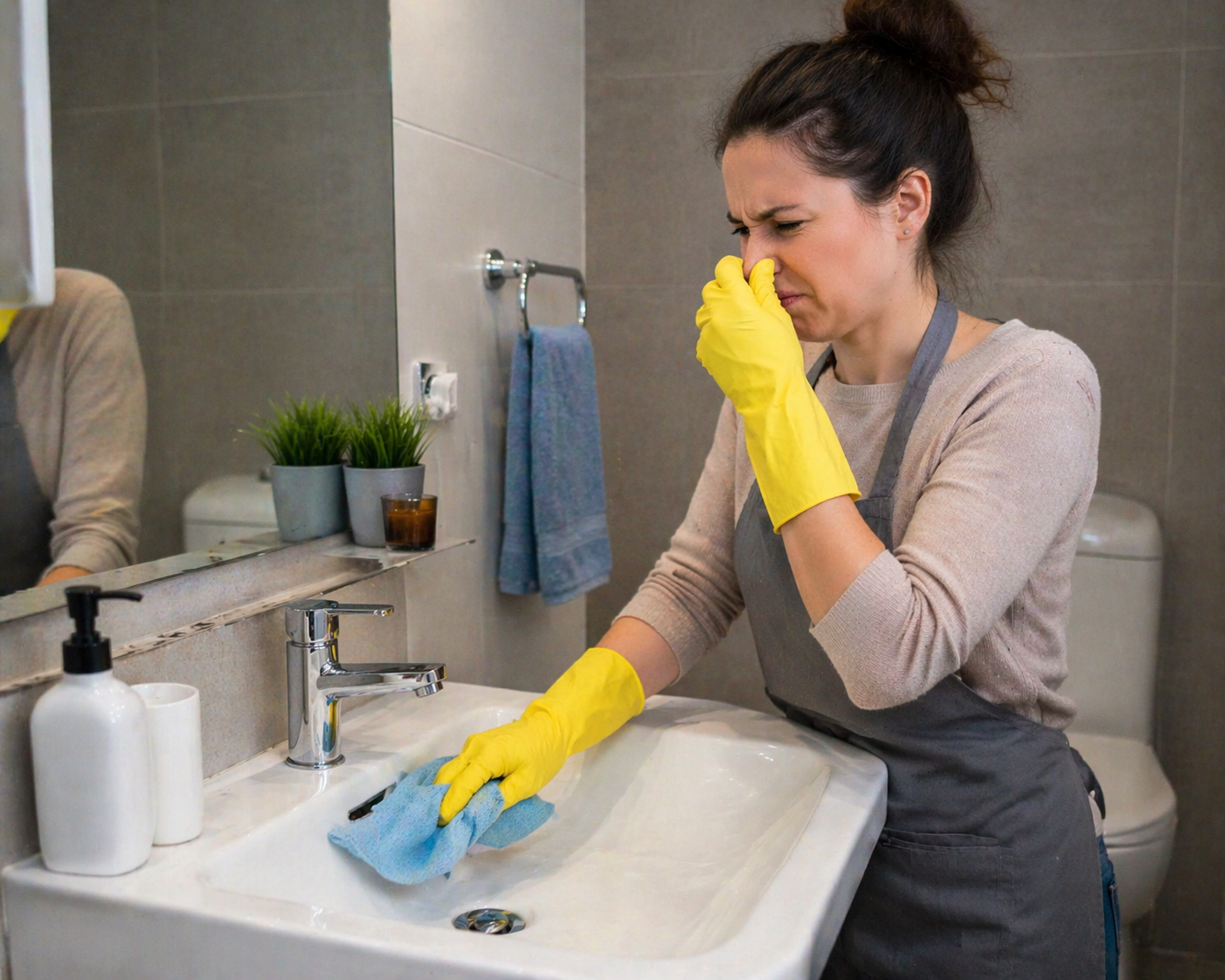
That “rotten egg” whiff hitting you the second you brush your teeth is enough to ruin a perfectly good morning. It’s gross, it’s embarrassing when guests come over, and honestly, it makes you feel like your house is judging you. I’ve been there. I remember one summer I spent three days thinking a literal egg had rolled behind the vanity, only to realize the stench was coming from inside the pipes.
The culprit is usually hydrogen sulfide gas. It’s a byproduct of bacteria living in your drains, or worse, sewer gas leaking back into your home because a mechanical component has failed. The good news? You probably don’t need to call a plumber yet. I’ve spent the last decade tearing apart vanities and snaking drains, and most of the time, the fix is sitting right under your sink or up on your roof.
Most people assume they just need to pour a gallon of bleach down the drain and call it a day. I’m telling you right now: don’t do that. Bleach is a temporary Band-Aid that can actually damage older pipes and kill the “good” bacteria if you’re on a septic system. We need to look at the P-trap and the plumbing vent, because that’s where the real magic (and the real stink) happens.
If you’re tired of holding your breath while you wash your face, let’s get into the nitty-gritty of how to kill that smell for good. We are going to look at the anatomy of your sink, why water levels matter, and how a clogged pipe on your roof can actually make your bathroom smell like a swamp.
Cleaning a Dirty P-Trap to Stop Sewer Gas
The P-trap is that U-shaped pipe under your sink. Its only job is to stay filled with water to create a seal that blocks sewer gases from coming up the drain. If that water seal disappears—or if the trap is filled with a decade’s worth of hair, soap scum, and toothpaste—you’re going to have a bad time. I once pulled a P-trap apart and found what looked like a sentient wig made of gray slime. It’s no wonder the bathroom smelled like a landfill.
To get started, clear out everything under your sink. You need room to move. Grab a bucket and some old towels because even if you think the sink is empty, there is always “trap water” waiting to spill on your cabinet floor. I’ve ruined many a vanity base by being lazy and skipping the bucket. Unscrew the slip nuts on either side of the “U” section. If they are plastic, you can usually do this by hand. If they are metal and stubborn, use a pair of channel-lock pliers, but wrap a rag around the nut so you don’t chew up the finish.
Once the trap is off, take it to a different sink or outside to the garden hose. Do not try to rinse it in the sink you just disassembled; I’ve made that mistake exactly once, and it resulted in a very wet lap. Use a bottle brush or an old toothbrush to scrub the inside of the pipe. You want to remove all the “biofilm”—that’s the fancy word for the slimy gunk that bacteria call home. If the pipe is pitted or paper-thin (common in old chrome-plated brass), throw it away and buy a plastic replacement.
When you put it back together, make sure the rubber washers are facing the right way. The tapered side should point toward the joint. Hand-tighten everything first, then give it a quarter-turn with pliers. Run the water for a minute to refill the trap and check for leaks. If the smell was coming from gunk inside that U-bend, your problem is solved. If it persists, we need to look higher up—specifically, at your roof.
Clearing Blocked Plumbing Vents on the Roof
This is the part most DIYers overlook because it involves a ladder. Every plumbing system has a vent stack—a pipe that sticks out through your roof. Its job is to let air into the plumbing system so water can flow out. Think of it like putting your finger over the top of a straw; the liquid won’t move until you let air in. If your vent is clogged, your drains will “glug,” and that suction can actually pull the water out of your P-trap, leaving the door wide open for rotten egg smells.
I learned this the hard way during a particularly brutal autumn. A bird had decided my vent pipe was the perfect place for a high-rise nest. Every time we flushed the toilet, the sink would gurgle and start stinking. I spent hours scrubbing the drain before I finally climbed up and saw the blockage. If you have overhanging trees, your vent might be stuffed with leaves, or in colder climates, it could be frozen shut with “hoar frost” or ice.
Safely get a ladder and check the pipe sticking out above your bathroom. Use a flashlight to peer down inside. If you see debris, try to fish it out with a wire coat hanger or a specialized “grabber” tool. Do not just shove it further down, or you’ll end up with a blockage deep in your walls that requires a professional. If the pipe looks clear but you suspect a clog further down, you can use a garden hose to flush it. Have someone inside the house listen for water flowing clearly through the pipes.
A quick side note: If you live in an area with lots of squirrels, buy a vent cap. It’s a cheap plastic or wire mesh cover that lets air through but keeps the critters out. Just make sure it’s a style that won’t easily clog with snow. If your vent was the issue, clearing it will normalize the pressure in your pipes, and your P-trap will finally be able to do its job of keeping the stink in the sewers where it belongs.
Fixing a Dry P-Trap in Guest Bathrooms
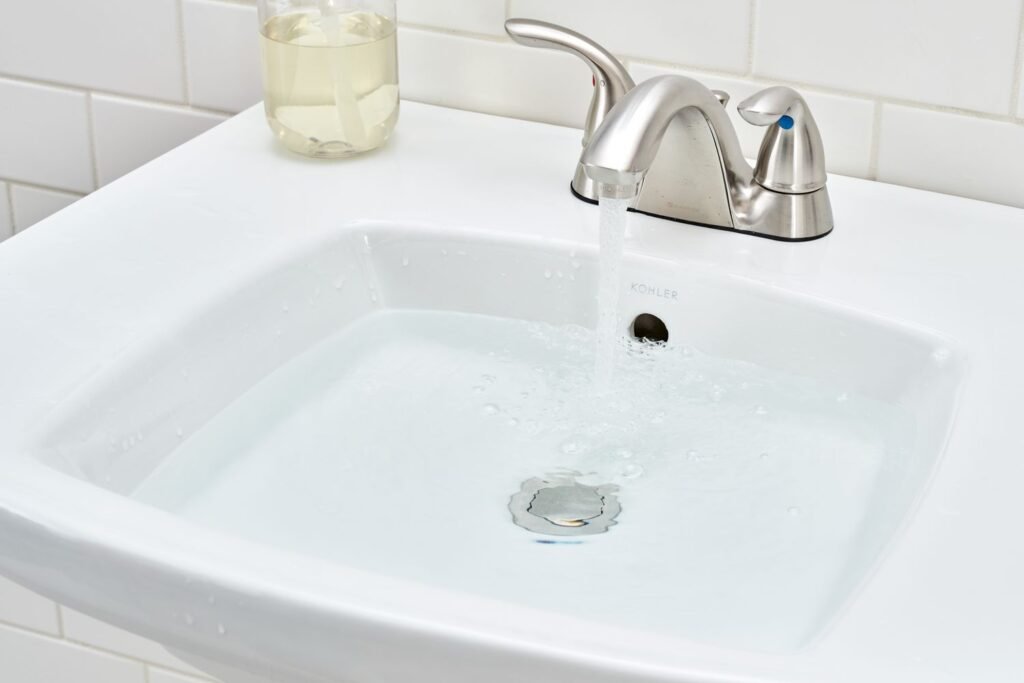
Sometimes the “rotten egg” smell isn’t caused by filth, but by nothing at all. Specifically, no water. If you have a guest bathroom or a basement powder room that rarely gets used, the water in the P-trap will eventually evaporate. Once that water line drops below the bend of the pipe, the seal is broken. It’s basically an open highway for sewer gas to drift right into your home.
I’ve seen people spend hundreds of dollars on “drain cleaning” services for a basement sink, only to find out they just needed to turn on the faucet for ten seconds. I once went to “help” a friend who was convinced her house had a cracked sewer main. I walked into her guest bath, smelled the swamp, and just ran the sink for a minute. The smell vanished in an hour. We felt pretty silly, but hey, it was a free fix.
If you have a sink that you don’t use every day, make it a habit to run the water once a week. This “recharges” the trap. If you’re going away for a long time—say, heading south for the winter—you can pour a tiny bit of mineral oil down the drain after the water. The oil floats on top of the water and prevents it from evaporating. Just a tablespoon is enough to keep that seal intact for months.
Another sneaky spot for a dry trap is the floor drain if you have one in your bathroom or laundry area. These are notorious for drying out because we rarely think to pour water down them. If your sink seems fine but the room still smells like a sulfur pit, check the floor. Pour a gallon of water down any floor drains you see. It’s the easiest DIY “repair” you’ll ever do, and it works 100% of the time for evaporation issues.
Eliminating Bacteria in the Sink Overflow
This is the hidden “stink chamber” that everyone forgets. You know that little hole near the top of your sink that prevents it from overflowing? That’s the overflow channel. It’s a dark, damp, and neglected space where soap scum and hair love to congregate. Because water doesn’t constantly rush through it like the main drain, bacteria can grow there undisturbed for years.
I discovered this during a bathroom remodel when I accidentally knocked over a sink and saw the black sludge inside the overflow. It was horrifying. If you’ve cleaned your P-trap and your vents are clear, but you still get a whiff of eggs when you’re leaning over the basin, the overflow is your prime suspect. Since it connects back to the main drain above the P-trap, any smell generated in there comes straight up into your nose.
Cleaning it is a bit tricky because you can’t really get a brush in there. My preferred method is using a flexible silicone funnel and some white vinegar. Pour about a cup of baking soda down the overflow hole—use a small funnel if you have to—and then slowly follow it with a cup of white vinegar. It’s going to fizz like a middle school science project. That’s the reaction breaking down the organic gunk.
After the fizzing stops, let it sit for ten minutes, then flush it out with boiling water. Be careful not to splash yourself. If you have a porcelain sink, boiling water is fine, but if you have a cheap plastic or acrylic insert, stick to hot tap water so you don’t crack the finish. This “fizz and flush” method usually kills the odor-causing bacteria instantly. I’ve found that doing this once every six months keeps the bathroom smelling like a spa instead of a locker room.
Real Talk: When DIY Isn’t Enough
I’m all for fixing things yourself, but I’ve also learned when to put the wrench down before I make a $50 problem into a $5,000 disaster. Sometimes, the rotten egg smell isn’t a simple clog or a dry trap. If you smell that sulfur scent when you run hot water specifically, the problem isn’t your pipes—it’s your water heater. Most water heaters have an “anode rod” made of magnesium. Over time, it can react with sulfates in your water to create hydrogen sulfide gas. If that’s the case, cleaning your sink won’t do a thing.
Another “Real Talk” moment: If you smell rotten eggs throughout the entire house, and not just near a drain, get out. Seriously. Natural gas is odorless, so utility companies add a chemical called mercaptan to make it smell like—you guessed it—rotten eggs. If the smell is overwhelming and not localized to a sink, call the gas company from outside. Don’t flip any light switches on your way out. Better safe than sorry.
Also, be wary of those “As Seen on TV” drain sticks. I tried them once thinking they’d be a miracle cure for a stinky sink. Instead, one snapped off inside my P-trap and caused a massive clog that I had to manually disassemble anyway. They’re a waste of money. Stick to a good old-fashioned bottle brush and some vinegar. It’s cheaper, safer for your plumbing, and actually gets the job done.
Lastly, if you see “AAVs” (Air Admittance Valves) under your sink—those little plastic mushroom caps on a pipe—they can fail. These are mechanical vents that sometimes replace the roof vent. When the internal spring or seal wears out, they stay open and let sewer gas into your cabinet. They are easy to replace (they just unscrew), but don’t bother trying to “clean” them. Once they’re shot, they’re shot. Just buy a new one for twenty bucks and save yourself the headache.
Parting Wisdom
Fixing a smelly sink is mostly about understanding that your plumbing needs to “breathe” and it needs to stay “sealed.” Between the P-trap, the vent stack, and the overflow, you’ve got three main areas where things usually go sideways. Don’t be intimidated by the pipes; they are just Lego sets for adults. Just remember: Bucket first, pliers second, and never, ever trust a “wig” of hair to not be gross.
I’m curious—have you ever found something truly weird inside your P-trap? Or maybe you’ve got a “tried and true” home remedy for drain smells that I didn’t mention here? Drop a comment below and let’s talk shop! I try to answer as many questions as I can between my own DIY disasters.