
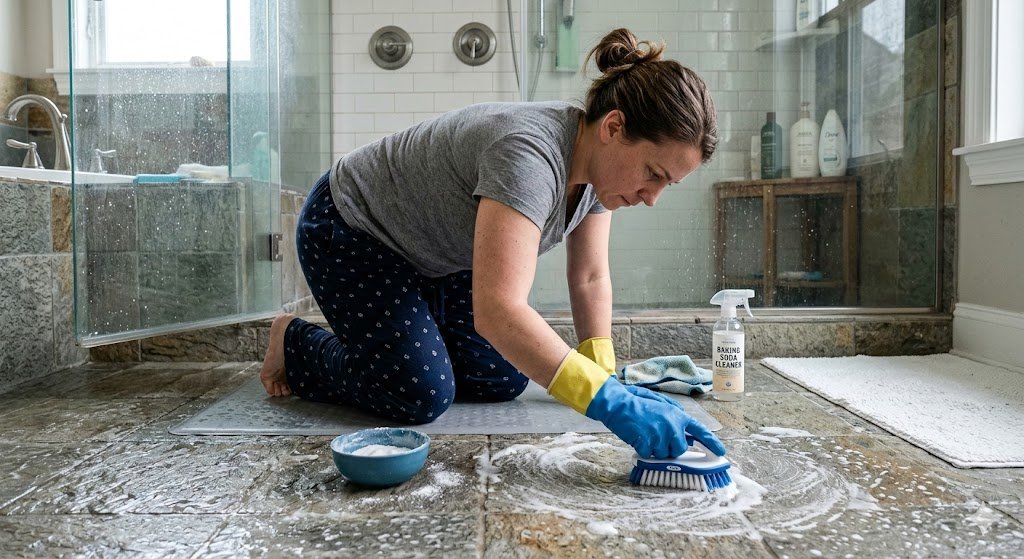
You walk into your bathroom, and instead of a relaxing spa vibe, you are greeted by a shower floor that looks like it’s been through a mud run. Those textured “non-slip” floors are a nightmare because every little groove acts like a magnet for soap scum, body oils, and mystery orange grime. I’ve lived in houses where the shower floor was so pebbly and stubborn that I considered just wearing flip-flops indefinitely rather than trying to scrub it one more time.
I’ve been swinging hammers and fixing up rentals for over fifteen years, and I’ve tried every toxic “blue” spray and “industrial” foam on the market. Most of them just make your eyes water while the grime stays firmly tucked in those tiny crevices. I remember one time I got so desperate I tried using a power sander on a fiberglass pan—I didn’t just remove the stain; I removed the entire finish and half the floor thickness. I’m here to tell you that you don’t need a hazmat suit or power tools. You just need that orange box of baking soda sitting in the back of your pantry and a little bit of neighborly advice on how to actually use it.
1. Creating a Heavy-Duty Baking Soda Cleaning Paste
If you want to get the gunk out of those non-slip bumps, you can’t just sprinkle dry powder and hope for a miracle. You need a vehicle to get the baking soda into the cracks. I’ve found that mixing baking soda with just enough water to make a thick, toothpaste-like consistency is the secret. It needs to be sticky enough to hang onto the vertical edges of those textures without sliding straight down the drain the second you let go.
I’ve found that using liquid dish soap—the blue kind specifically—instead of water makes this paste ten times more effective. The soap breaks down the oils from your shampoo and body wash, while the baking soda provides the grit to lift the physical dirt. I once tried using “natural” bar soap shavings for this, and it was a total waste of time. It just created more scum. Stick with a grease-cutting liquid soap; it’s the heavy lifter in this duo.
Apply the paste generously across the entire floor. Don’t be stingy. You want to see a thick white layer covering every square inch of that textured surface. I usually let it sit for at least 30 minutes. This is the part where most people fail; they start scrubbing immediately. If you give it time, the alkaline nature of the baking soda starts to soften the mineral deposits and soap scum for you. It’s like letting a lasagna pan soak before you try to clean it.
While you’re waiting, you can go tackle another chore or finally look for that 10mm wrench you lost in the garage. I’ve found that the longer it sits (without drying out completely), the less elbow grease you have to use later. If it does start to dry, just spritz it with a little water from a spray bottle to “reactivate” the goo. You want it damp and hungry for grime when you finally come back with your brush.
2. Using the Best Brush for Textured Shower Floors
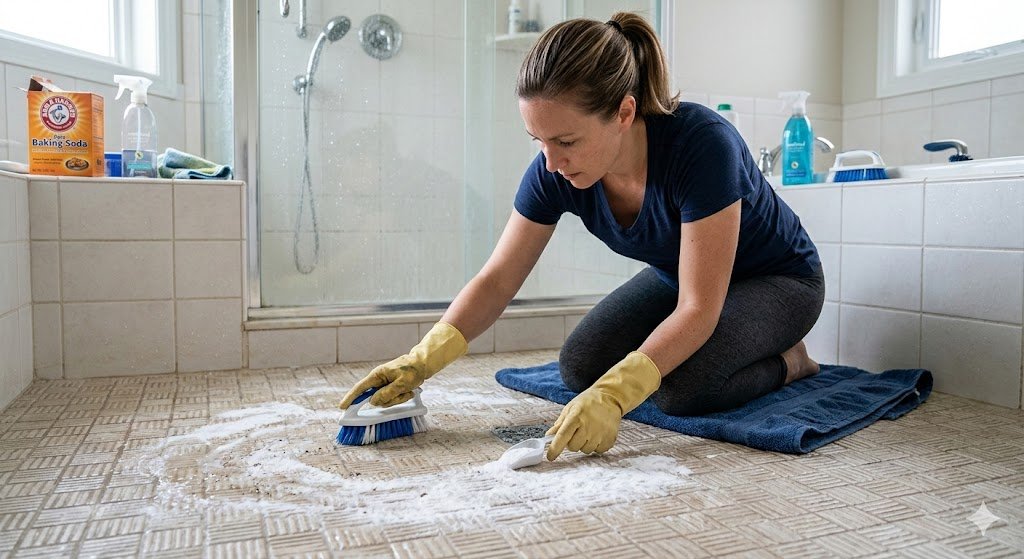
The tool you choose to scrub with is just as important as the cleaner itself. If you are using a soft sponge or a rag, you are wasting your energy. Those tools just glide over the top of the bumps, leaving the dirt deep in the “valleys” of the texture. You need something with bristles that can actually reach down into the grooves and agitate the baking soda paste where it counts.
I’ve found that a stiff-bristled nylon scrub brush with a handle is the only way to go. I’m very opinionated about this: avoid those “electric” spinning brushes you see in infomercials. Most of them don’t have enough torque to actually scrub; the second you press down, the motor stalls out. A good old-fashioned hand brush—or even a stiff grout brush—is far superior because you can control the pressure. I once bought a “sonic” scrubber for $40 and it was less effective than a $2 toothbrush.
Scrub in circular motions. This ensures that the bristles hit the texture from every possible angle. If you just go back and forth, you’ll miss the sides of the bumps. Think of it like brushing your teeth; you want to get into all the hidden spots. I usually start in the far corner and work my way toward the drain so I’m not kneeling in the dirty slurry I’ve just created.
If your back is acting up, you can buy a scrub brush that attaches to a long pole (like a broom handle). I used one of these after the “great zucchini harvest of 2022” when I threw my back out lifting crates of squash. It’s a lifesaver for your spine, but make sure the bristles are still stiff. A soft broom won’t do a thing for a textured floor. You need that friction to let the baking soda do its job.
3. The Vinegar Rinse for Extra Cleaning Power
Once you’ve scrubbed the floor and the paste looks like a grey, muddy mess, it’s time for the “science fair” portion of the cleaning. I’ve found that spraying plain white vinegar over the baking soda paste is the best way to finish the job. The fizzing reaction isn’t just for show; the carbon dioxide bubbles help physically lift the loosened debris away from the floor surface.
I’ve found that “cleaning vinegar” (the 6% acidity stuff) is worth the extra dollar over the grocery store salad vinegar. It has just enough extra kick to melt through lime scale and hard water spots. I keep a spray bottle of it under every sink in my house. When you spray it on the baking soda, let it sit until the fizzing stops completely. It’s a satisfying sound that tells you the chemistry is working.
Don’t use apple cider vinegar for this. It’s a total waste of money and the sugar content can actually leave a sticky residue behind if you don’t rinse it perfectly. Plus, nobody wants their bathroom to smell like a fermented orchard. Stick to the clear, cheap white stuff. It’s an effective disinfectant and it leaves the floor squeaky clean.
After the fizzing dies down, give it one final quick pass with your brush. You’ll notice that the “gunk” that was stuck in the texture is now floating in the liquid. This is the moment of truth. If you still see dark spots in the grooves, hit those specific areas with a little more paste and vinegar. Usually, one round of this “fizz and scrub” is enough to bring back the original color of the floor.
4. Rinsing and Drying to Prevent New Soap Scum
The most overlooked step in cleaning a textured shower floor is the rinse. If you leave even a tiny bit of baking soda residue behind, it will dry into a white, hazy film that feels chalky under your feet. Even worse, that residue acts as a new foundation for soap scum to stick to. You’ll be right back where you started in a week if you don’t rinse thoroughly.
I’ve found that a handheld showerhead is the greatest invention for bathroom maintenance. If you don’t have one, go to the hardware store and buy a $20 “add-on” kit tomorrow. It makes rinsing the corners and the floor ten times easier than trying to splash water with a cup. Use hot water for the final rinse to help melt away any lingering soap oils that the baking soda lifted.
Once the floor is rinsed, you need to dry it. This sounds like a pain, but it is the “Real Talk” secret to keeping a shower clean for longer. Hard water spots and mold love standing water. I keep a dedicated squeegee or a microfiber towel in the bathroom. After the “big clean,” I wipe the floor dry. It takes thirty seconds, but it prevents the minerals in your water from settling back into those textured grooves.
I once lived in a place with a white fiberglass shower pan that turned orange every two weeks. I realized it was because our water had high iron content. By simply drying the floor after each use, I cut my deep-cleaning time down to once a month instead of once a week. It’s a small habit that saves you hours of scrubbing in the long run.
5. Bonus: Removing Hard Water Stains with Lemon and Baking Soda
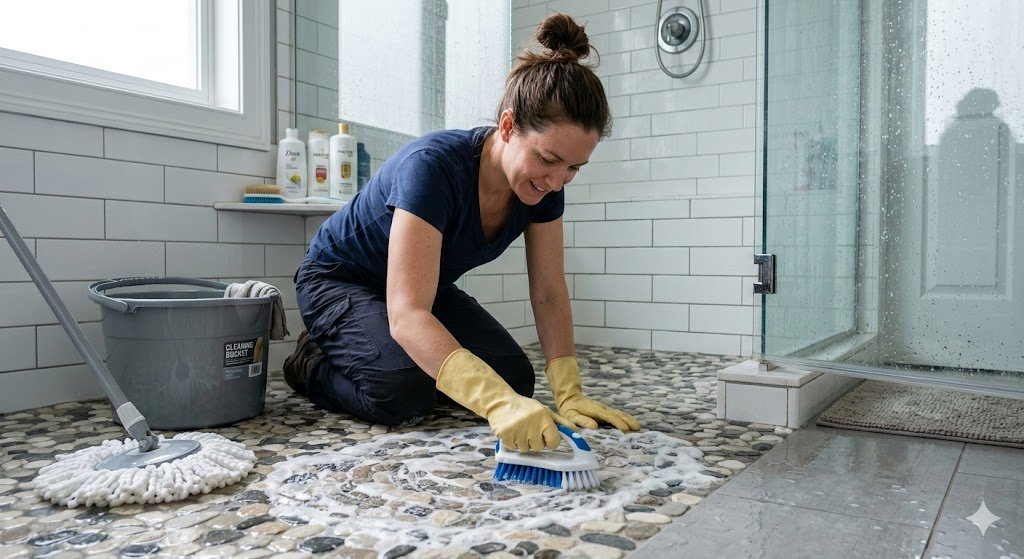
If your textured floor has those stubborn, crusty white spots that baking soda and vinegar won’t touch, it’s time to bring in the citric acid. I’ve found that using a halved lemon as a “scrubby” for your baking soda is a genius move. The natural oils in the lemon peel add a nice shine, and the juice is a fantastic descaler for calcium buildup.
Dip the cut side of a lemon directly into a bowl of baking soda so it sticks to the fruit. Then, use the lemon like a sponge to scrub the hard water spots. It’s a bit of a “Pinterest” hack, but this is one of the few that actually works better than the chemical alternatives. Plus, your bathroom will smell like a fresh lemon grove instead of a pickle factory.
I’ve found that bottled lemon juice is a total waste of time compared to the real thing. You need the physical structure of the lemon half to really push the baking soda into the texture. I used this trick on a shower floor in a 1920s bungalow that looked like it hadn’t been cleaned since the Great Depression. It took a few lemons, but that floor eventually looked brand new.
Just remember to rinse the lemon juice away completely. It contains natural sugars that can get sticky if left to dry. A quick blast of water and a wipe-down will leave the floor sparkling. This is my favorite “finishing move” for a deep clean because it tackles the mineral buildup that vinegar sometimes leaves behind.
Real Talk: What’s Not Worth the Effort
I’m going to be blunt with you: some shower floors are beyond saving with baking soda alone. If your “textured” floor is actually just old, cracked plastic or pitted fiberglass, no amount of scrubbing is going to make it look new. When the finish is gone, the dirt isn’t just sitting on top; it’s literally inside the material. In those cases, you are just polishing a sinking ship.
I’ve found that those “as seen on TV” bleach pens and grout whiteners are a total waste of money for textured floors. They are designed for flat lines, not the sprawling landscape of a non-slip floor. You’ll spend three hours coloring in little circles and it will still look blotchy. If the baking soda method doesn’t work after two tries, you might need to look into a professional refinishing kit or, heaven forbid, a new shower pan.
Also, avoid using steel wool or metal scouring pads on fiberglass or acrylic floors. I’ve seen people do this, and it’s a tragedy. You’ll create millions of microscopic scratches that will trap dirt even deeper. Once you scratch the surface, you’ll be cleaning that floor every three days just to keep it from looking grey. Stick to nylon bristles and let the baking soda do the “scratching” safely.
Lastly, don’t fall for the “essential oil” cleaning trend. People say to add tea tree oil or lavender to your baking soda for “antifungal” properties. It’s a waste of perfectly good oil. The concentration you’d need to actually kill mold is way higher than a few drops in a paste. Use the oil in a diffuser if you want the scent, but don’t expect it to do the heavy lifting in your shower. Baking soda and vinegar are the real MVPs here.
Wrap Up
Cleaning a textured shower floor doesn’t have to be a back-breaking ordeal if you use the right chemistry and give it time to work. It’s about being smarter than the grime, not stronger than it. Once you get those grooves white again, a quick weekly maintenance scrub with baking soda will keep them that way without the need for harsh chemicals.
What’s the absolute worst stain you’ve ever had to deal with in a bathroom, and did you manage to beat it or did it beat you? Drop your stories in the comments below—I’ve probably made the same mess at least once!