
I’ve spent fifteen years in the trenches of home remodeling, and if there is one thing I’ve learned, it’s that a “clean” bathroom and an “aesthetic” bathroom are two very different animals. One just doesn’t smell like a gym locker; the other looks like it belongs in a high-end spa where they charge you $20 for a glass of cucumber water.
I’ve made every mistake you can imagine. I once tried to deep clean my grout with a pressure washer indoors (spoiler: do not do that unless you want a literal indoor swamp), and there was that time I accidentally knocked out a load-bearing stud while trying to install a “simple” recessed medicine cabinet. My house didn’t fall down, but my pride certainly did.
By the time you finish this checklist, your bathroom won’t just be sanitary; it will be the kind of space that makes your neighbors jealous when they come over to “borrow sugar” and end up lingering in your loo.
15 Must Have Aesthetic Bathroom Deep Clean Checklist 2026
1. The Purge: Getting Rid of the Visual Noise
Before you touch a sponge, you have to deal with the “stuff.” I’m talking about that half-empty bottle of shampoo from 2022 and the three different types of dental floss you never use. Visual clutter is the enemy of bathroom aesthetic. I’ve found that keeping every “just in case” lotion is a total waste of space, even if the packaging looks pretty on a shelf.
Start by clearing every single surface. I mean everything. Empty the shower niches, the vanity top, and even that little tray on the back of the toilet. Put it all in a laundry basket and move it to the hallway. This gives you a blank canvas. When the room is empty, you can actually see the grime hiding in the corners.
Check the expiration dates on your skincare. If that “miracle” night cream has separated into a weird oily sludge, throw it out. If you haven’t used that beard oil since the Great Zucchini Takeover of 2024 (when my garden literally ate my backyard), it’s time to let it go. Your goal here is to only put back what you actually use and what looks intentional.
Wipe down the inside of your cabinets while they’re empty. Use a simple mix of warm water and a drop of dish soap. I’ve seen people use heavy-duty degreasers inside wooden cabinets, which is a great way to ruin your finish. Stick to the gentle stuff here. Once the cabinets are dry, you can think about organizers, but don’t buy those plastic bins yet—we’re deep cleaning first.
Finally, take down the shower curtain and toss it in the wash. If it’s plastic and covered in orange slime, just buy a new fabric one with a weighted liner. It’s an instant $15 upgrade that makes the room feel ten times more expensive. Trust me, nobody feels relaxed while showering next to a piece of mildewed plastic that sticks to their leg.
2. Top-Down Dusting and Ventilation Rescue
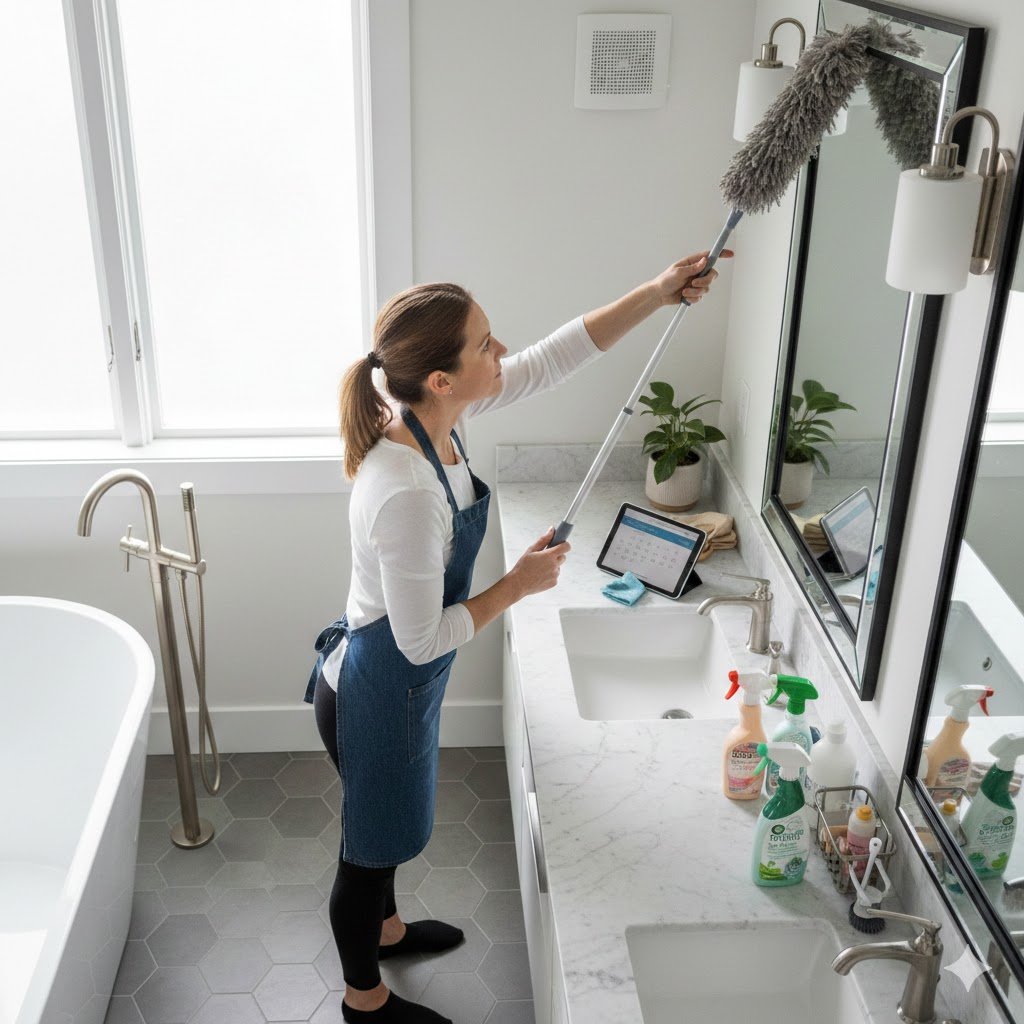
This season, we are finally admitting that the bathroom exhaust fan is the most neglected part of the house. If yours looks like it’s growing a grey, fuzzy beard, it’s not venting anything; it’s just making noise. I used to think a loud fan meant it was working hard. Nope. It usually means the motor is dying because it’s choking on five years of hairspray and dust.
Pop the cover off that fan. Usually, it’s just held in by two metal springs—don’t overthink it. Take the cover to the sink and scrub it with an old dish brush. While that’s drying, use your vacuum hose to suck the dust out of the fan housing. Be careful not to poke the wiring. If you’re feeling brave, a quick blast of canned air can dislodge the stuff the vacuum can’t reach.
Next, look up at your light fixtures. Dust loves the tops of vanity lights. Use a microfiber cloth—dry, not wet—to wipe them down. If you use a wet cloth on a dusty light, you just create a muddy smear that dries into a permanent crust. I learned that the hard way during a guest bathroom flip where I ended up having to repaint the mounting plates because I made such a mess.
While you’re up there, check your bulbs. For that “aesthetic” look, you want a “Soft White” or “Warm White” temperature (around 2700K to 3000K). Avoid “Daylight” bulbs in a bathroom unless you want your morning reflection to look like a medical examiner’s report. Lighting is 90% of the vibe, so don’t skimp on getting the right glow.
Wrap up the high-level work by wiping down the tops of your door frames and the medicine cabinet. These are the “invisible” spots that trap allergens. If you leave them dusty, the steam from your next shower will just turn that dust into a sticky film that eventually drips down your walls. Save yourself the future headache and hit it now.
3. The Great Grout Revival and Tile Shine
Grout is the soul of your bathroom, and if the soul is grey and mottled, the vibe is dead. I’m a huge advocate for the “sit and wait” method. People spend way too much energy scrubbing when they should be letting chemistry do the heavy lifting. I’ve found that those “as seen on TV” grout pens are usually a band-aid fix that looks like white-out by the second month.
Apply a dedicated grout cleaner or a thick paste of baking soda and hydrogen peroxide to your lines. Let it sit for at least 15 to 20 minutes. This gives the solution time to break down the body oils and soap scum that have settled into the porous grout. If you try to scrub immediately, you’re just moving dirt around.
When it’s time to scrub, skip the wimpy sponges and get a stiff-bristled grout brush or an old electric toothbrush. Scrub in circular motions. You’ll see the gunk lifting to the surface. Rinse with hot water. If your grout is still stained after this, it might be time for a professional-grade sealer or a regrout, but 9 times out of 10, a long “soak” saves the day.
For the tiles themselves, avoid anything that leaves a waxy residue. You want a squeaky clean finish so the light reflects off the surface. I’m a fan of a simple vinegar and water solution for ceramic tile. It cuts through the film without leaving streaks. However, if you have natural stone like marble, stay far away from vinegar. The acid will etch the stone and leave permanent dull spots.
Pro tip: Once the tiles are clean and dry, use a squeegee every single time you shower. It takes five seconds and prevents the buildup from coming back. I used to think squeegeeing was for “neat freaks,” but after I had to scrape three years of calcified soap scum off a client’s glass door with a razor blade, I became a believer.
4. Fixture Polishing and Mineral Dissolving
Nothing kills the “spa” aesthetic faster than a crusty, green-tinged faucet. That green stuff is mineral buildup, and it’s essentially rock. You can’t just wipe it away. Most people make the mistake of using a scouring pad on their chrome or matte black fixtures, which just leaves permanent scratches.
For your showerhead, fill a plastic bag with white vinegar, submerge the head in it, and secure it with a rubber band. Leave it overnight. In the morning, the minerals will have dissolved, and your water pressure will probably double. It’s the closest thing to magic you’ll find in home maintenance.
For the sink faucets, soak some paper towels in vinegar and wrap them around the base and the spout. Let them sit for an hour. Use an old toothbrush to gently flick away the softened debris. Rinse with plain water and—this is the secret—buff it dry with a clean microfiber cloth. If you let it air dry, you’ll get water spots, and we didn’t do all this work for spots.
If you have those trendy matte black fixtures, be extra careful. They are notorious for showing every single drop of dried toothpaste and hard water. I’ve found that a tiny drop of mineral oil on a cloth can help restore the deep black look and help water bead off, but use it sparingly so it doesn’t get greasy.
Don’t forget the drain flanges. Use a small brush to get inside the rim of the drain where hair and soap like to congregate. If the drain is slow, don’t pour those harsh liquid “bombs” down there; they can eat through older pipes. Use a plastic drain snake to pull out the “hair monster.” It’s disgusting, but it’s the only way to truly fix the problem.
5. The Throne: Beyond the Basic Scrub
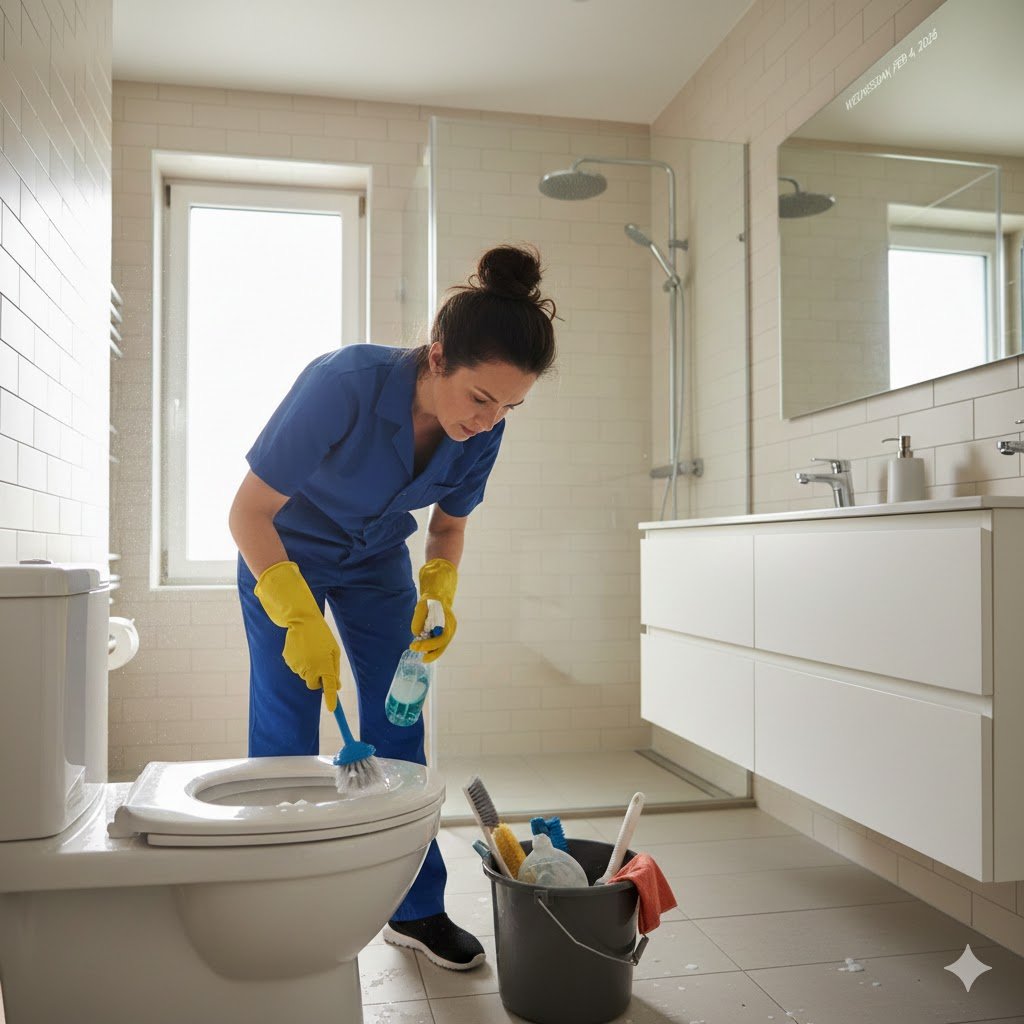
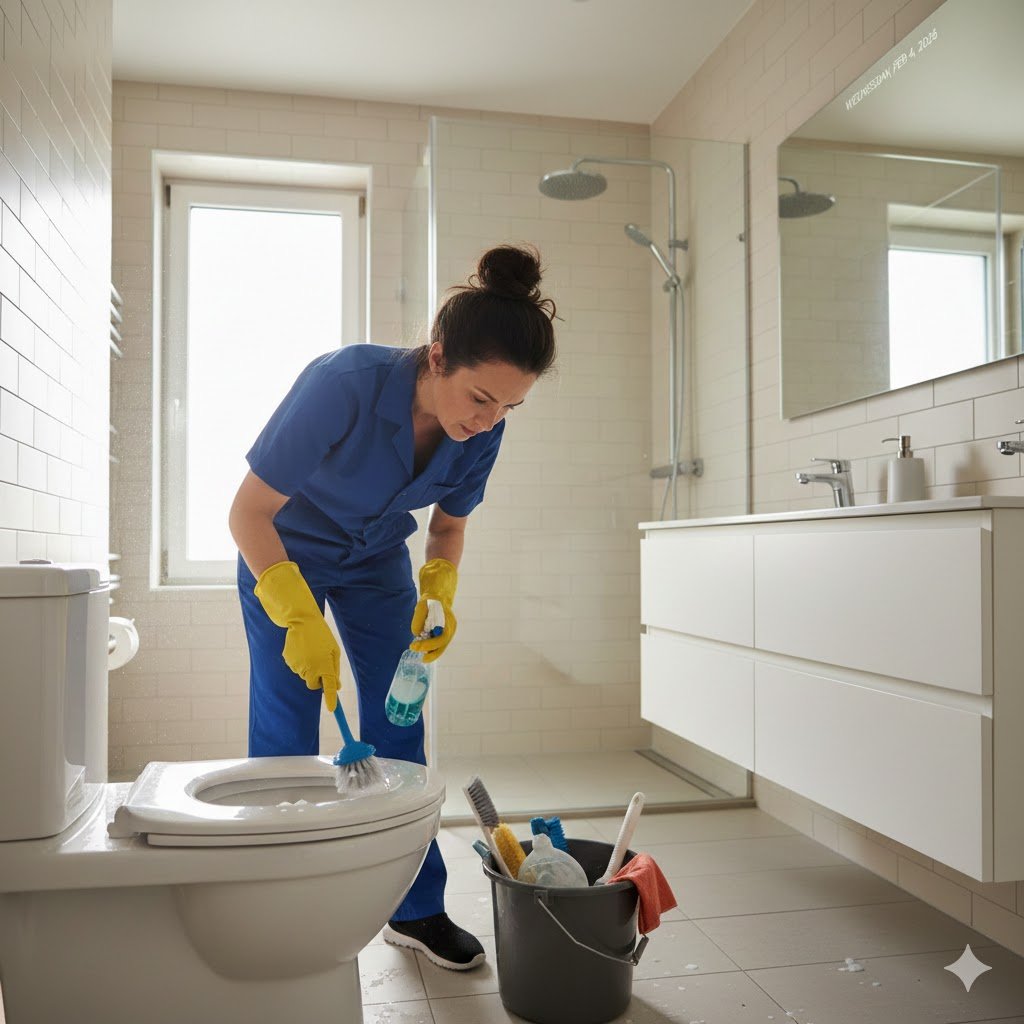
We have to talk about the toilet. Everyone hates it, but it’s the centerpiece of bathroom hygiene. A deep clean means going where the regular brush doesn’t go. I once lived in a house where the previous owner clearly never cleaned the mounting bolts, and by the time I got there, they were basically part of the floor.
Start by turning off the water valve behind the toilet and flushing until the bowl is nearly empty. This lets you apply your cleaner directly to the porcelain without it getting diluted by a gallon of water. Use a pumice stone for those stubborn rings at the waterline, but make sure the stone is wet first so you don’t scratch the finish.
Spray the entire exterior of the toilet with a disinfectant—tank, handle, lid, and base. Let it sit for ten minutes. Use this time to clean the floor around the base. This is where “drips” go to live, and if you don’t get the caulk line clean, your bathroom will always have a faint, mysterious smell.
I’m going to be honest: if your toilet seat has those plastic hinges that have turned yellow, no amount of cleaning will save them. Go to the hardware store and buy a new “slow-close” wooden or high-quality plastic seat. It’s a 10-minute install that makes the whole fixture feel brand new. Plus, no more “clank” in the middle of the night.
Finally, clean the inside of the tank. If there’s a layer of rusty silt at the bottom, it’s wearing down your flapper and seals. You don’t need harsh chemicals here; just a gentle scrub with a long-handled brush will do. Turn the water back on, flush a few times, and enjoy the fact that your toilet is now cleaner than a five-star hotel’s.
6. Mirror Magic and Glass Clarity Hacks
If your mirror has those mysterious black spots around the edges, that’s “desilvering,” and no amount of Windex will fix it. But if it’s just covered in a film of hairspray and toothpaste splatter, we can work with that. I’ve found that using paper towels is a rookie mistake; they leave behind tiny lint “pillows” that drive me absolutely bonkers when the sun hits the glass.
Start by pre-treating any stubborn spots—like that glob of dried toothpaste from your toddler—with a little rubbing alcohol on a cotton pad. It dissolves the gunk instantly. Then, use a dedicated glass microfiber cloth (the flat-weave kind, not the fluffy ones) and a 50/50 mix of water and white vinegar. I swear by this over the blue stuff any day.
Don’t forget the very top edge of the mirror. Dust settles there, and as soon as you spray your cleaner, that dust turns into a muddy streak that runs down your freshly cleaned glass. Wipe the frame first, then the top edge, then work your way down in a “Z” pattern. This ensures you aren’t dragging dirt from the dirty sections into the clean ones.
For those with glass shower doors, we need to talk about “etching.” If you have cloudy spots that won’t come off with vinegar, those are actually tiny scratches in the glass caused by hard water minerals. At that point, you might need a polishing compound. But for a deep clean, a magic eraser (used gently) can work wonders on soap scum buildup that a spray won’t touch.
Quick side note: If you have a medicine cabinet mirror, clean the back of the door too. You’d be surprised how much “product mist” ends up back there. Once it’s sparkling, buff the whole thing with a dry cloth. It gives it that high-end hotel “ping” that makes the whole room feel expensive.
7. Vanity Drawer Organization and Sanitization
I once found a fossilized tube of lip balm from 2018 in the back of my vanity drawer during the “Great Zucchini Takeover,” and it was a wake-up call. We tend to clean the top of the vanity and ignore the chaos lurking just inches below. A truly aesthetic bathroom is organized on the inside.
Take everything out. Yes, everything. Vacuum the crumbs, hair, and spilled face powder out of the corners. Then, wipe the drawer bottoms with a disinfectant. If your drawers are bare wood, consider adding some adhesive-backed shelf liner. It makes future cleanups a breeze and hides any old water stains from that time your sink trap leaked (we’ve all been there).
When putting things back, group them by “routine.” All your morning face stuff goes in one bin; your “I’m going out and pretending I’m fancy” stuff goes in another. In 2026, the trend is clear acrylic or bamboo organizers. I prefer bamboo because it feels warmer, but acrylic is better if you’re prone to spilling oils.
Be ruthless. If you have five different shades of “almost the same” beige eyeshadow, keep the best one and donate the rest if they’re unopened, or toss them if they’re old. A crowded drawer leads to digging, and digging leads to mess. You want to be able to see every item you own at a single glance.
Pro tip: Keep a small “daily” bin on the counter if you must, but try to keep it as minimal as possible. One beautiful soap dispenser and maybe a single candle. Everything else should have a home inside a drawer. It’s not just about cleaning; it’s about managing the “visual weight” of the room.
8. Deep Cleaning the “Invisible” Baseboards and Trim
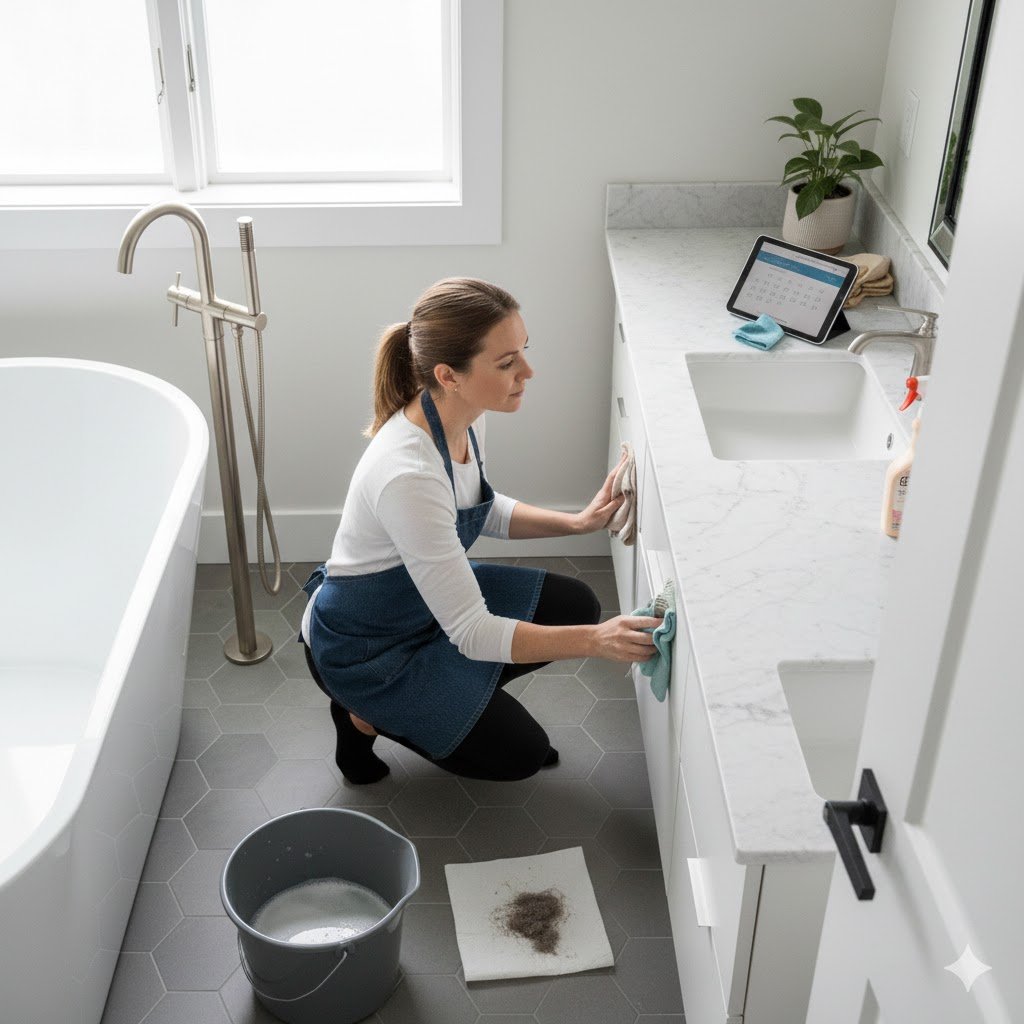
Baseboards in a bathroom are basically magnet strips for hair and moisture. If you haven’t looked at them lately, go ahead and look—I’ll wait. Gross, right? That’s a mix of dust, humidity, and probably a little bit of overspray from your dry shampoo. I’ve found that ignoring baseboards is the fastest way to make a renovated bathroom look “lived-in” (and not in a good way).
Use your vacuum’s brush attachment to get the loose stuff off first. If you go straight in with a wet rag, you’re just making grey mud. Once the loose dust is gone, use a warm, soapy cloth to wipe them down. If you have stubborn scuff marks from your shoes, a magic eraser will take them right off, but be gentle so you don’t buff away the paint’s sheen.
Check the corners where the baseboards meet the floor. This is where “the gunk” likes to hide. Use an old toothpick or a cotton swab to get into those tight crevices. It sounds obsessive, but it’s these tiny details that separate a “Saturday scrub” from a professional-level deep clean.
While you’re down there, check the caulk line between the baseboard and the floor. If it’s peeling or yellowed, it’s a red flag for moisture. I’ve spent more hours than I’d like to admit scraping out old caulk because I ignored a tiny crack that eventually turned into a mold farm. If it’s looking rough, just scrape it out and run a fresh bead of silicone.
One last trick: After they’re clean and dry, rub a dryer sheet over the baseboards. The anti-static properties will actually help repel dust for a few weeks. It’s a “lazy expert” hack that I’ve used in every flip I’ve ever done to keep the place looking staged for longer.
9. Refreshing the Linens and Shower Curtains
You can have a bathroom so clean you could eat off the floor, but if your towels smell like a damp basement, the “aesthetic” is ruined. Over time, towels build up a layer of detergent and fabric softener that actually makes them less absorbent and more likely to trap bacteria. I’ve found that fabric softener is actually the enemy of a fluffy towel—it’s basically just scented oil that coats the fibers.
Strip your towels. Throw them in the wash on the hottest setting with a cup of white vinegar and no detergent. Then, run them again with a half-cup of baking soda. This breaks down the chemical buildup and restores the fluff. They’ll come out smelling like… well, nothing. And that’s exactly what you want.
If your shower curtain liner has even a hint of orange or black at the bottom, toss it in the wash with a few old towels. The towels act like scrubbers in the machine to knock the soap scum off the plastic. If it’s past the point of no return, don’t be a hero. Buy a new one. Life is too short to scrub a $5 piece of plastic.
Check your bath mat. If it’s one of those memory foam ones that takes three days to dry, consider swapping it for a wooden teak mat or a quick-dry diatomaceous earth stone mat. They are very “2026 chic” and don’t harbor nearly as much bacteria as a soggy rug. If you love your rug, wash it on the highest heat the tag allows and dry it thoroughly.
Finally, hang your towels with intention. Don’t just drape them over the bar. Fold them into thirds so the edges are hidden. It’s a small “staged home” trick that makes your bathroom look like a spa instantly. If you have hooks instead of bars, make sure the towels are hung evenly. Symmetry is the friend of the aesthetic.
10. The Hardware and Switch Plate Polish
This is the “jewelry” of your bathroom. We touch light switches and door handles every single day, yet they rarely get more than a passing glance during a clean. I once did a remodel where the homeowner thought they needed new cabinets, but all they actually needed was to clean the ten years of finger oils off the brass knobs.
Take a microfiber cloth with a bit of rubbing alcohol and wipe down every switch plate, door handle, and cabinet pull. You’ll be shocked (and probably a little disgusted) by the brown tint on the cloth. These are high-touch surfaces that harbor the most germs, so this isn’t just about looks—it’s about health.
If you have “living finishes” like unlacquered brass or copper, they’re supposed to patina over time. But if you prefer them shiny, use a specialized polish. Don’t use harsh abrasives on plated hardware (like “brushed nickel” that’s actually just a coating over plastic), or you’ll rub the finish right off. I’ve seen many a “designer” faucet ruined by someone getting too aggressive with a green scrubby pad.
Check the screws on your towel bars and toilet paper holders. If they’re wiggling, give them a quick turn with a screwdriver. There is nothing less “aesthetic” than a crooked, jiggly towel bar. If the hole in the drywall has become too big, don’t just keep tightening it—move it an inch or use a heavy-duty toggle bolt.
Bonus tip: If you have a metal trash can, wipe the outside and the rim. We often ignore the trash can until it’s overflowing, but a shiny, smudge-free bin makes the whole corner of the room look intentional rather than just a place for waste.
11. Venting the Vanity and Sink P-Traps
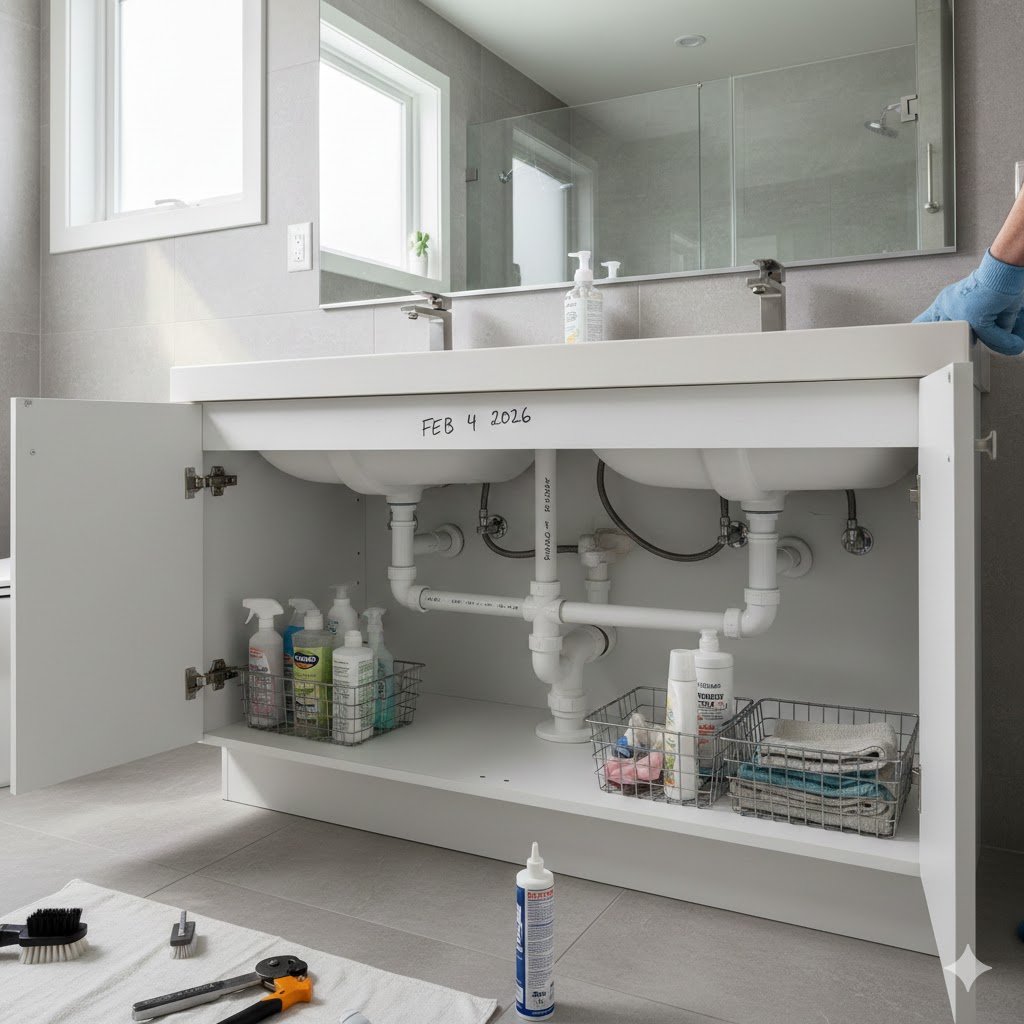
Alright, we’re getting into the “real talk” maintenance here. If your bathroom looks great but has a faint “sewer-lite” aroma, the culprit is probably your P-trap. This is the U-shaped pipe under your sink. It’s designed to hold water to block sewer gases, but it also holds onto hair, sludge, and that ring you dropped three years ago.
You don’t need a plumber for this. Put a bucket under the pipe, unscrew the two slip nuts, and pull the “U” section out. Dump the water into the bucket (prepare your nose, it’s going to be unpleasant). Clean the inside of the pipe with a flexible bottle brush and some dish soap. It’s a five-minute job that fixes 90% of “mysterious bathroom smells.”
While the pipe is off, check the pop-up stopper in your sink. Most of them can be pulled right out or unscrewed from the bottom. They are usually covered in a “bio-film” (a fancy word for bacteria slime). Scrub it clean and put it back. This also helps your sink drain much faster, which prevents those annoying soap rings from forming in the bowl.
If you’re too squeamish for the P-trap, at least do a “bio-clean” flush. Pour a half-cup of baking soda down the drain, followed by a cup of vinegar. Let it fizz for ten minutes, then flush it with a kettle full of boiling water. It’s not as thorough as a manual clean, but it’s better than doing nothing.
Side note: If you have a jetted tub, you need to clean those internal lines. Fill the tub with hot water, add two dishwasher tablets and a cup of bleach, and run the jets for 15 minutes. You will be horrified by what comes out of those “clean” looking holes. Drain, refill with cold water, run for another 10, and then you’re actually ready for a bubble bath.
12. Wall Washing and Scuff Removal
We don’t usually think about washing walls unless there’s a visible splash, but in a bathroom, the walls act like a sponge for steam and aerosolized products. If you have “Satin” or “Semi-gloss” paint, you’re in luck—they’re washable. If you have “Flat” paint in a bathroom, I’m sorry to say, but you’ve been sabotaged. Flat paint and humidity are a match made in hell.
Use a flat mop (like a Swiffer with a damp microfiber cloth attached) to reach the high spots. Use a very diluted mixture of dish soap and water. Don’t use anything with heavy dyes or oils, or you might leave streaks. Focus on the area around the towel bars and behind the toilet, where “splatter” is most likely to occur.
For scuffs from laundry baskets or vacuum cleaners, a magic eraser is your best friend—but again, test it in an inconspicuous spot first. It’s essentially very fine sandpaper, and it can dull the finish of your paint if you’re too heavy-handed. I once “cleaned” a wall so hard I polished a shiny spot right into the middle of a matte finish. Not my best work.
If you see any “drip” marks that look like amber-colored sap, that’s actually “surfactant leaching.” It happens when the ingredients in the paint are pulled to the surface by moisture. It’s common in bathrooms that aren’t vented well. Just wipe it away with a damp cloth; it’s not harmful, just a sign that you need to run your (now clean!) fan a bit longer.
Don’t forget the door itself. Wipe down the panels and especially the area around the handle. If you have a white door, you’ll be amazed at how much brighter the whole room looks once the “grey” film of handprints is gone. It’s the ultimate “secret” to a deep-cleaned feel.
13. Deep Cleaning the Grout on the Floor
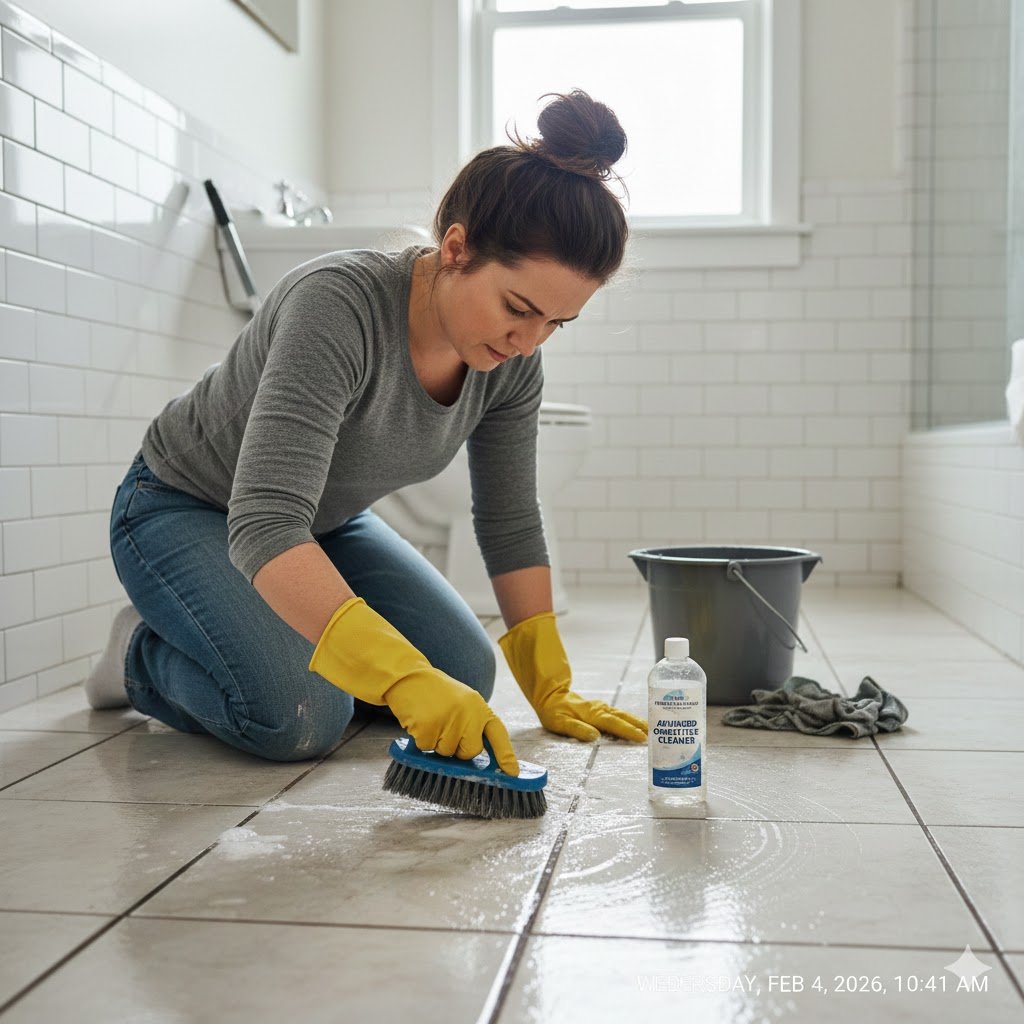
Wait, didn’t we do grout already? That was the shower. The floor grout is a different beast because it deals with foot traffic, pet hair, and the occasional “oops” from the toilet. Floor grout is usually darker because it absorbs dirt from your mop water. I’ve found that traditional mopping often just pushes dirty water into the grout lines.
The best way to deep clean floor grout is to use a steam cleaner if you have one. The high-heat steam lifts the dirt without needing chemicals. If you don’t have a steamer, use a oxygen-based cleaner (like OxiClean) mixed into a paste. Apply it, let it sit for 30 minutes, and then use a stiff brush.
If your floor grout is permanently stained, here is my favorite “pro” hack: Grout Colorant. It’s essentially a specialized paint for grout that seals it at the same time. You can change your grout from “grimy grey” to “crisp white” or “modern charcoal” in an afternoon. It’s tedious work, but it makes an old tile floor look brand new for about $20.
Once the grout is clean and dry, you must seal it. If you don’t seal it, all your hard work will be gone in a month. Use a high-quality penetrating sealer. You just wipe it on, let it sit, and buff off the excess. It’s the difference between a floor that stays clean and a floor that starts absorbing dirt the next day.
One quick side note: Avoid using “mop and shine” products on bathroom floors. They create a layer of wax that eventually peels and traps hair underneath it. Stick to pH-neutral cleaners that don’t leave a residue. Your feet (and your aesthetic) will thank you.
14. Styling for the 2026 Aesthetic
Now that everything is surgically clean, it’s time for the “fun” part. An aesthetic bathroom isn’t just clean; it’s styled. This is where you put back your laundry basket of items, but with an editor’s eye. If it doesn’t serve a purpose or bring you joy, it stays in the basket (or goes to the guest room).
Invest in “decanting.” Transfer your mouthwash into a glass carafe. Put your cotton swabs in a ceramic jar. Get rid of the neon-colored plastic soap bottle and use a weighted glass or stone dispenser. Reducing the number of labels and logos in the room immediately lowers the “visual noise” and makes it feel like a high-end space.
Add something “living.” Even if your bathroom doesn’t have a window, there are plants that can survive on low light and high humidity (like a snake plant or a ZZ plant). If you’re a notorious plant-killer, even a high-quality faux eucalyptus branch in a vase can add that “organic” touch that every 2026 bathroom needs.
Think about “texture.” A wooden tray on the vanity, a waffle-knit hand towel, or a stone soap dish. Mixing materials—metal, wood, stone, and fabric—is what makes a room feel designed rather than just “furnished.” I’ve found that adding one wooden element to a mostly white bathroom instantly makes it feel 50% cozier.
Don’t overdo it. The “maximalist” trend is fun, but in a small space like a bathroom, it often just looks like clutter. Give every item some breathing room. If your counter is covered in “decor,” you won’t have anywhere to put your hairbrush. Function first, fashion second—but make the function look good.
15. The “Final Walk-Through” and Scent Layering
The final step is the most important: the “Scent Layer.” A clean bathroom should smell like… well, fresh air. But an aesthetic bathroom should have a signature scent. Avoid those plug-in oil warmers that smell like “Industrial Cupcake.” They’re overwhelming and often look tacky.
Instead, use a reed diffuser or a high-quality candle. In 2026, the trend is moving toward “earthy” scents—sandalwood, moss, or citrus and basil. If you want to go the extra mile, hang a bunch of fresh eucalyptus from your showerhead. The steam will release the oils and turn your morning rinse into a spa experience.
Do a final walk-through. Stand in the doorway and look at the room from your guests’ perspective. Is the toilet paper folded into a neat square? Is the mirror streak-free? Is there a weird shadow in the corner that’s actually a cobweb you missed? (I once missed a massive one in the corner of a “finished” remodel and didn’t see it until the photos came back. Talk about embarrassing.)
Take a photo. Seriously. Taking a picture of your room helps you see “clutter” that your eyes have become accustomed to. If it looks messy in a photo, it’s messy in real life. Tweak the placement of your bottles and towels until it looks like something you’d double-tap on social media.
Now, take a deep breath. You’ve done it. You’ve tackled the grime, the gunk, and the “hair monsters.” Your bathroom is now a sanctuary. My parting wisdom? Keep a pack of cleaning wipes under the sink. If you spend 30 seconds wiping the faucet and sink every morning, you won’t have to do this “deep dive” (oops, I meant “intensive scrub”) for another six months.
The “Real Talk”: What’s Not Worth Your Time
Let’s get real for a second. Some “deep clean” hacks you see on social media are a total waste of your Saturday. For example:
- Steam cleaning your walls: Unless you have a specific mold issue, you’re just making your bathroom humid and potentially peeling your paint. A damp microfiber mop is faster and safer.
- Mixing “secret” chemical cocktails: Never, ever mix bleach with ammonia or vinegar. I know it sounds like common sense, but every year someone ends up in the ER because they thought more chemicals equaled more clean.
- The “Toilet Paper Stamp”: That trend where people use a wet stamp to put a pattern on the first sheet of toilet paper? It takes five seconds to ruin when someone actually uses the bathroom. It’s the definition of “all show, no go.”
- Expensive “Aesthetic” Cleaning Sprays: You’re paying $18 for a glass bottle and some scent. Buy the glass bottle once, then use concentrates or DIY mixes. Your wallet will thank you.
Parting Wisdom
The secret to an aesthetic bathroom isn’t a one-day cleaning marathon; it’s the five-minute daily reset. Wipe the sink after you brush your teeth, squeegee the glass after you shower, and never let the laundry basket overflow. If you do the “big” deep clean now, these small habits will keep it looking like a magazine cover for months.
I’ve survived load-bearing wall disasters and zucchini invasions—you can survive a Saturday morning with a scrub brush.
So, what’s the one spot in your bathroom that you’ve been avoiding for months? Drop a comment below and let’s figure out how to tackle it together!