A cold garage can make every project harder, whether you use the space for vehicle maintenance, woodworking, storage, or a home gym. The right heater adds dependable warmth without wasting energy or taking up valuable floor space.
We selected 10 garage heaters spanning electric, propane, and natural gas designs, with options for compact areas, larger workshops, ceiling mounting, portability, and app-based control. Use the guide below to match heating output, installation requirements, and operating costs to your space.
Best 10 Garage Heaters Picks for 2026
Best Commercial Ceiling Pick
7,500W Ceiling-Mount Garage Heater

- Heats up to 1,250 sq. ft.
- Heavy-gauge steel construction
- Remote, digital thermostat, and adjustable airflow
Best For: Commercial-style garages and indoor workspaces needing floor-saving ceiling installation
Best Gas Heater for Mid-Size Garages

- Heats up to 1,667 sq. ft.
- Uses propane or natural gas
- Includes ceiling brackets and conversion kit
Best For: Three-car garages and workshops with adequate ceiling height and gas access
Best Plug-In Electric Option

- Covers up to 750 sq. ft.
- Includes 240V NEMA 14-50P plug and cord
- ECO mode, timer, and digital thermostat
Best For: Smaller garages or workshops with a compatible 240V outlet
Best High-Output Gas Heater
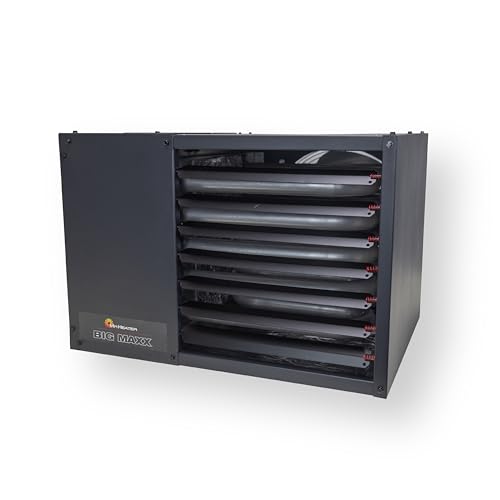
- Heats up to 2,667 sq. ft.
- Ceiling-mounted forced-air design
- Safety shutoffs and fuel conversion kit included
Best For: Large garages, barns, and workshops with suitable gas access and ceiling clearance
Smart High-Output Pick
TEMPWARE 7500W WiFi Garage Heater
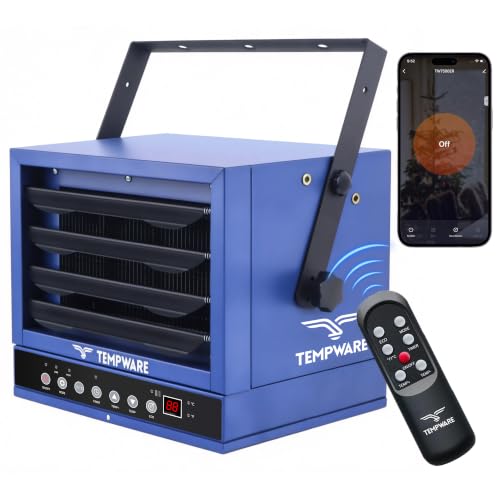
- Up to 25,590 BTU and 1,250 sq. ft. coverage
- WiFi, remote, and touch controls
- 240V hardwired ceiling-mount design
Best For: Large garages and workshops needing powerful, connected heating
Flexible Patio-to-Garage Pick
Dr. Infrared Portable Infrared Heater

- Indoor/outdoor IP55-rated design
- Three settings up to 1,500W
- 120V plug with remote and mounting brackets
Best For: Targeted heating in garages, patios, decks, and other mixed-use spaces
Maximum Output Value

- 10,000W and 34,000 BTU per hour
- Coverage rated up to 1,000 sq. ft.
- Remote, ECO mode, timer, and ETL certification
Best For: Large indoor garages and workshops needing maximum electric heat
Best Radiant Pair
2-Pack Ceiling-Mounted Quartz Heater

- Two 120V units with 750W/1,500W settings
- Direct radiant heat from dual quartz tubes
- Built-in halogen work lights and 90° adjustment
Best For: Garages and workshops needing focused heat and work lighting
Best High-Output Choice
10,000W Commercial Ceiling Heater
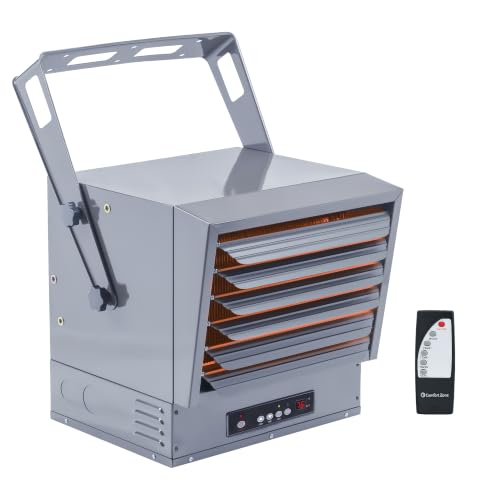
- 10,000W, 34,120-BTU forced-air heating
- Listed coverage up to 1,500 square feet
- Digital thermostat, remote, and 12-hour timer
Best For: Large garages and shops with 240V hardwired service
Best Smart Controls

- 4,000W graphene heating with widened airflow
- Remote, digital display, and 0.5–9-hour timer
- Adjustable mounting angles and louvers
Best For: Workshops needing flexible placement and scheduled heating
Best Commercial Ceiling Pick – 7,500W Ceiling-Mount Garage Heater
For large garages, warehouses, and storage areas, this 7,500W Comfort Zone heater combines ceiling-mounted installation with forced-air circulation. It covers up to 1,250 square feet while keeping the floor clear, making it a practical option among garage heaters for crowded workspaces.
Best For: Commercial-style garages and other indoor spaces up to 1,250 square feet where ceiling mounting and durable construction are priorities.
Pros:
- Ceiling-mount design preserves valuable floor space.
- Heavy-gauge steel body is built for demanding environments.
- Adjustable louvers and mounting angle help direct airflow.
- Digital thermostat, remote control, and overheat shutoff add convenience and safety.
Cons:
- Requires hard-wired installation.
- Intended for indoor use.
Choose this model when you want broad electric heat coverage, flexible airflow direction, and controls that can be adjusted from a distance. Professional installation planning is important because it is designed for ceiling mounting and hard-wired use.
Best Gas Heater for Mid-Size Garages – 50,000 BTU Forced-Air Heater
This Mr. Heater 50,000 BTU unit is designed to turn garages, barns, and workshops into heated workspaces. As gas-powered garage heaters go, it offers coverage for up to 1,667 square feet and supports propane or natural gas operation.
Best For: Approximately three-car garages and workshops with a suitable gas connection, at least a 10-foot ceiling, and the required floor clearance.
Pros:
- 50,000 BTU output covers up to 1,667 square feet.
- Compatible with propane or natural gas.
- Works with standard 24-volt or Wi-Fi-enabled thermostats, sold separately.
- Includes ceiling-mount angle brackets and a natural-gas-to-propane conversion kit.
Cons:
- Requires a minimum 10-foot ceiling and 8 feet of clearance below the heater.
- Thermostat is sold separately.
- Gas-powered installation requires appropriate fuel and ventilation planning.
This is a sensible choice for a mid-size garage where gas heat is preferred and the mounting requirements can be met. Confirm ceiling height, clearance, and fuel compatibility before installation.
Best Plug-In Electric Option – 7,500W NEMA 14-50P Heater
The InoKraft 7,500W heater offers a flexible electric approach to garage heating, with a NEMA 14-50P plug and an 8.2-foot power cord included. It covers up to 750 square feet and adds ECO mode, timed operation, and adjustable airflow for workshops and garages.
Best For: Indoor garages or workshops up to 750 square feet that have a compatible 240V outlet and need wall- or ceiling-mount flexibility.
Pros:
- 7,500W output provides fast forced-air heating.
- Includes a NEMA 14-50P plug and 8.2-foot cord.
- Digital thermostat ranges from 40°F to 99°F and includes a 1–24-hour timer.
- ECO mode, adjustable angles, overheat protection, and automatic shutoff support efficient operation.
Cons:
- Coverage is limited to about 750 square feet.
- Requires a 240V connection and professional electrician installation.
- Reported operating noise is 65 dB.
For buyers who want electric heat without a hard-wired-only design, this model provides a convenient plug connection and useful controls. Verify the outlet, wiring, and installation requirements before use.
Best High-Output Gas Heater – 80,000 BTU Forced-Air Heater
For larger garages and workshops, this Mr. Heater unit delivers 80,000 BTUs and is rated to heat up to 2,667 square feet. Its ceiling-mounted forced-air design keeps the floor open while providing the high output expected from larger gas garage heaters.
Best For: Large garages, barns, and workshops with sufficient ceiling height, clearance, and propane or natural gas access.
Pros:
- 80,000 BTU output covers up to 2,667 square feet.
- Designed for ceiling mounting to preserve floor space.
- Compatible with standard 24-volt and Wi-Fi-enabled thermostats, sold separately.
- Includes safety shutoff features, ceiling brackets, and a fuel conversion kit.
Cons:
- Requires a minimum 10-foot ceiling and 8 feet of clearance below the heater.
- Thermostat is sold separately.
- High-output gas installation requires careful fuel and ventilation planning.
This model is best suited to spacious areas that need substantial heating capacity rather than compact garages. Check the required clearances and fuel setup carefully before selecting it.
Smart High-Output Pick – TEMPWARE 7500W WiFi Garage Heater
For large workshops and garages, this TEMPWARE model is one of the more capable garage heaters in the lineup. Its 5,000W-to-7,500W output, ceiling-mount design, and app control make it suited to spaces where strong, adjustable heat and convenient operation matter.
Best For: Large garages, workshops, and commercial-style indoor spaces where WiFi control and ceiling mounting are useful.
Pros:
- Adjustable 5,000W to 7,500W output with up to 25,590 BTU of heat.
- Remote, WiFi app, and touch controls offer flexible operation.
- Digital thermostat, ECO mode, and 12-hour timer support precise, efficient use.
- Ceiling-mount bracket and steel construction help save floor space and add durability.
Cons:
- Requires 240V hardwired installation, and a power cord is not included.
- Professional electrician installation is recommended.
This is a strong choice when you need broad coverage—up to 1,250 square feet—and want more control than a basic dial-operated heater provides. Just plan for electrical installation before buying.
Flexible Patio-to-Garage Pick – Dr. Infrared Portable Infrared Heater
This Dr. Infrared model is a flexible option among garage heaters because it can be used indoors or outdoors. Its radiant infrared heat, standard 120V plug, remote control, and included mounting hardware make it convenient for garages, patios, decks, and other areas where simple installation is important.
Best For: Smaller indoor or outdoor areas, including garages, patios, decks, restaurants, and backyard spaces.
Pros:
- Indoor/outdoor design with IP55 approval and weatherproof aluminum construction.
- Uses a standard 120V outlet for plug-and-go setup.
- Three power settings—900W, 1,200W, and 1,500W—provide heating flexibility.
- Includes remote control plus wall- and ceiling-mounting brackets.
Cons:
- Does not include a thermostat.
- Its 1,500W maximum output is lower than the high-output 240V garage models.
- Radiant heat may be better suited to targeted comfort than whole-large-garage heating.
Choose this heater if portability, outdoor compatibility, and ordinary 120V operation are more important than maximum coverage. The lack of a thermostat is the main limitation for buyers seeking automatic temperature maintenance.
Maximum Output Value – GASLAND 10,000W Garage Heater
The GASLAND EGH100 is built for buyers who want high-output garage heaters for sizable indoor spaces. It delivers 10,000W, or 34,000 BTU per hour, with fan-forced circulation, remote operation, ECO mode, and coverage rated up to 1,000 square feet.
Best For: Large garages, workshops, basements, and utility rooms requiring powerful 240V heating.
Pros:
- 10,000W output produces up to 34,000 BTU per hour.
- Rated to heat spaces up to 1,000 square feet.
- Remote adjusts the thermostat, high/low modes, and timer from across the room.
- Includes ECO mode, overheat protection, and ETL certification.
Cons:
- Requires 240V hardwired installation with no plug.
- Licensed electrician installation is recommended for safety and code compliance.
- Uses 50 amps, so the electrical setup must support its requirements.
For raw heating capacity, this is the most powerful option in the group. Its hardwired 240V design and 50-amp requirement make it best for buyers prepared for professional installation, but the output and control features suit demanding garage environments.
Best Radiant Pair – 2-Pack Ceiling-Mounted Quartz Heater
For targeted garage heaters, this two-pack uses dual quartz tubes to provide direct radiant warmth for people and objects. Each 120V unit offers 750W or 1,500W operation, a built-in halogen work light, and ceiling mounting that helps preserve floor space.
Best For: Garages and workshops needing focused heat and added work lighting.
Pros:
- Radiant quartz tubes provide immediate, direct heat.
- Five settings combine low or high heat with optional work-light operation.
- 90-degree adjustability helps direct warmth where needed.
- Overheat shutoff, grounded plugs, metal housing, and ETL listing add safety features.
Cons:
- Radiant heat is more localized than fan-forced heating.
- Ceiling mounting requires installation and suitable overhead space.
This is a practical choice when you want two compact heaters for directed warmth rather than whole-room air circulation. The included halogen lights are particularly useful for nighttime work, while the 120V plug-in design avoids hardwiring.
Best High-Output Choice – 10,000W Commercial Ceiling Heater
Among high-capacity garage heaters, this 240V Comfort Zone model is designed for substantial spaces, with a listed coverage area of up to 1,500 square feet and a 34,120-BTU heat output. Its fan-forced system, adjustable vents, thermostat, timer, and remote support more controlled whole-space heating.
Best For: Large garages, shops, and commercial workspaces with a suitable 240V hardwire connection.
Pros:
- 10,000W output and wide fan-forced air distribution support large spaces.
- Digital thermostat, remote control, and 12-hour timer provide convenient control.
- Adjustable airflow vents help direct heat and reduce cold spots.
- Heavy-gauge steel construction, enclosed motor, and overload protection suit demanding environments.
Cons:
- Requires professional-style 240V single-phase hardwiring rather than a standard plug.
- Its high output may be more than needed for a small garage.
This is the most powerful option in the group and the strongest fit for users prioritizing broad, forced-air heating. Plan the electrical installation in advance, since its 240V, 41.67A hardwired requirement is a significant consideration.
Best Smart Controls – 4,000W Graphene Garage Heater
This 240V hardwired heater combines graphene heating elements with adjustable airflow and digital controls. Its remote, 40–95°F temperature range, 0.5–9-hour timer, adjustable louvers, and overheat alert make it one of the more flexible garage heaters for controlled workshop use.
Best For: Users who want adjustable installation, remote operation, and scheduled heating in a garage or tool room.
Pros:
- 4,000W graphene heating elements are designed for fast heat conduction.
- Widened airflow outlet and horizontal blades support more even heat distribution.
- Remote control, digital display, adjustable temperature, and timer improve convenience.
- Multiple mounting angles, two height settings, and adjustable louvers offer installation flexibility.
Cons:
- Requires 240V hardwiring and has no plug.
- The 95°F maximum setting may not suit users seeking higher thermostat settings.
- Its included mounting and adjustment features may require setup time.
This model stands out for control and positioning rather than maximum output. The automatic shutoff and continued fan cooling above 95°C add a useful safety response, while the remote and timer make it convenient for routine garage sessions.
How We Picked These Garage Heaters
We focused on heaters suited to real garage conditions, comparing heating output, fuel type, installation style, control options, portability, and practical operating requirements. The selection includes electric models from 1,500W to 10,000W, as well as forced-air propane or natural gas units rated at 50,000 or 80,000 BTU.
We also considered whether each design can preserve floor space, how much installation it may require, and whether its controls are convenient for regular use. Always verify the manufacturer’s clearance, wiring, ventilation, and mounting requirements before installation.
Quick Comparison
| Type | Best For | Main Advantage | Important Consideration |
|---|---|---|---|
| Electric ceiling-mounted | Insulated garages and workshops | Clean, quiet, space-saving heat | Usually requires a 240V circuit |
| Electric hardwired | Permanent installations | High output and tidy setup | May require professional electrical work |
| Plug-in electric | Flexible installations | Easier setup than hardwired models | Confirm outlet and circuit capacity |
| Propane or natural gas forced-air | Large or poorly insulated spaces | High BTU output and fast heating | Requires fuel, ventilation, and safe exhaust handling |
| Portable infrared | Spot heating and temporary use | Easy to move and direct | Best for people and small zones rather than whole-garage heating |
Key Buying Factors for Garage Heaters
Heating Capacity and Garage Size
Choose output based on square footage, ceiling height, insulation, climate, and how quickly you want the space to warm. High-wattage electric heaters and 50,000- to 80,000-BTU fuel-fired units are better suited to larger or draftier garages, while lower-output heaters work well for small, enclosed areas or spot heating.
Electrical Requirements
A 240V heater generally delivers more power than a standard 120V model, but it may need a dedicated circuit, hardwiring, or a suitable NEMA outlet. Do not use an undersized extension cord or overload an existing circuit. Have a qualified electrician handle new wiring when required.
Fuel, Ventilation, and Safety
Gas and propane heaters can provide strong heat where electrical capacity is limited, but combustion appliances require appropriate ventilation, clearances, and installation. Follow the manual closely and use carbon monoxide protection where applicable. Electric infrared heaters avoid combustion concerns but still need proper clearance from combustible materials.
Mounting and Controls
Ceiling-mounted units save floor space and distribute heat across a work area. Portable heaters offer more flexibility but can be easier to knock over or obstruct. Thermostats, remote controls, timers, and Wi-Fi access are useful if you want to preheat the garage or maintain a consistent temperature.
Who Should Buy Which Garage Heaters?
- For a permanent workshop: Choose a ceiling-mounted 240V electric heater if your electrical service and insulation support it.
- For a large, drafty garage: Consider a high-BTU forced-air propane or natural gas unit, provided ventilation and installation requirements can be met.
- For convenient smart control: Select a Wi-Fi-enabled electric model for scheduling and remote adjustments.
- For occasional projects: A portable infrared heater or plug-in electric unit can provide targeted warmth without a permanent installation.
- For limited floor space: Look for ceiling-mounted designs, including compact multi-unit solutions for distributing heat more evenly.
Before buying, measure the garage, check insulation and electrical capacity, and compare the heater’s required clearances with your available mounting location. The best choice is the model that safely delivers enough heat for your space without exceeding your installation or operating limits.