The best smart home hub should make connected devices easier to manage—not add another layer of troubleshooting. These low-maintenance smart home hubs prioritize straightforward setup, reliable automations, and compatibility with the platforms and protocols you already use.
Our roundup includes compact bridges, voice-first controllers, and advanced multi-protocol hubs. Use the buying guide below to narrow the list by ecosystem, connectivity, local control, and the amount of customization you actually need.
Best 10 Low-Maintenance Smart Home Hubs Picks for 2026
Best for Lutron Lighting
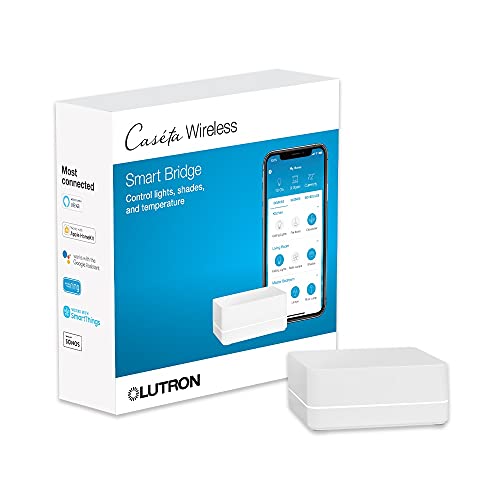
- Supports up to 75 Caseta devices
- Works with Alexa, HomeKit, Google Assistant, Ring, Sonos, and more
- Plugs into an outlet and connects to your router
Best For: Lutron Caseta lighting systems and multi-platform voice control
Best for Tapo Sensors

- Connects up to 64 Tapo devices
- Uses low-power wireless connectivity for compatible devices
- Includes a built-in chime and up to 90 dB siren
Best For: Tapo sensor, switch, and button-based automations
Best for Visual Control

- 8-inch customizable dashboard for devices, cameras, and routines
- Supports Wi-Fi, Bluetooth, Zigbee, Matter, Sidewalk, and Thread
- Works with thousands of Alexa-compatible devices
Best For: Families wanting a centralized touchscreen smart-home panel
Best for Local Integration
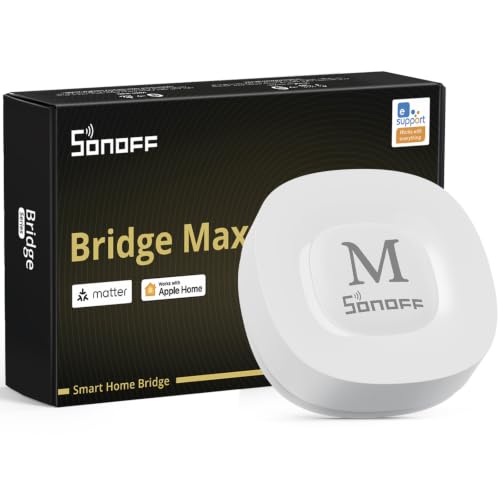
- Bridges Zigbee, BTHome, and eWeLink devices to Matter
- Offers local web-console management without cloud reliance
- Supports Ethernet, Wi-Fi, Zigbee, and Home Assistant MQTT
Best For: Cross-platform Zigbee integration with local control
Best Sensor-Rich Hub

- Monitors temperature, humidity, and light remotely
- Controls IR appliances and SwitchBot devices
- Works with Matter, Alexa, Google Home, and Apple Home
Best For: Simple environmental monitoring and IR appliance control
Best Local-First Hub

- Runs automations locally, even during internet outages
- Supports Matter, Z-Wave, Zigbee, and Bluetooth
- Works with major assistants without a subscription
Best For: Reliable, expandable automations in larger or device-dense homes
Best Long-Range Starter Hub

- Offers a listed range of up to 2,034 feet
- Uses a simple wired, plug-in setup
- Supports smartphone and voice control
Best For: Straightforward long-range connectivity without battery backup
Best All-Around Value
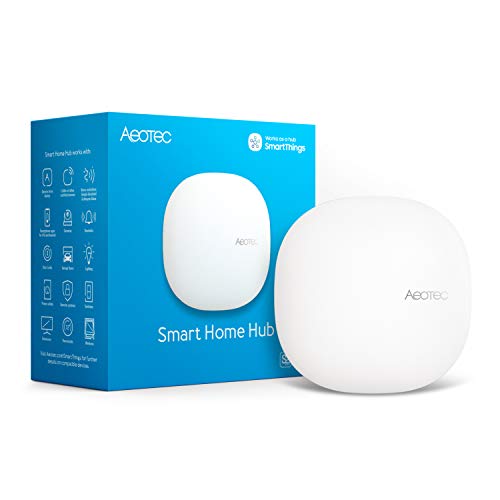
- Supports Matter, Zigbee, and Z-Wave Plus
- Works with Alexa and Google Assistant
- Wi-Fi or Ethernet setup with local automations
Best For: Mixed-brand SmartThings households
Best for Local Privacy

- Local automations with encrypted storage
- Matter bridge with Zigbee and Thread support
- PoE, dual-band Wi-Fi, and IR control
Best For: Privacy-focused Aqara ecosystems
Best for Large Ecosystems

- Seven protocols in one local-first hub
- Supports 50,000+ devices from 1,000+ brands
- Includes energy insights and flexible Flow automations
Best For: Expanding mixed-brand smart homes
Best for Lutron Lighting – Caseta Smart Hub
For households building around Lutron Caseta lighting, this hub is a practical choice among low-maintenance smart home hubs. It plugs into an outlet, connects to your router, and is managed through the Lutron app, while Clear Connect Technology helps keep its device communication separate from Wi-Fi traffic.
Best For: Homes using Lutron Caseta dimmers and switches that want broad compatibility with Alexa, Apple HomeKit, Google Assistant, Ring, Sonos, and Serena shades.
Pros:
- Supports up to 75 Caseta devices.
- Works with several major smart-home platforms and brands.
- Simple router connection and app-based setup.
- Clear Connect communication does not compete with Wi-Fi devices.
Cons:
- Caseta dimmers, switches, and coordinating accessories are sold separately.
- Its strongest fit is a Lutron-centered setup rather than a general-purpose hub.
The Caseta Smart Hub is a straightforward foundation for expanding Lutron lighting at your own pace. Choose it when compatibility with Caseta and major voice platforms matters more than having a built-in display or alarm.
Best for Tapo Sensors – H100 Smart Hub
The Tapo H100 is a compact option for low-maintenance smart home hubs focused on sensors, buttons, and switches. It connects to 2.4GHz Wi-Fi and uses a lower-power wireless protocol for compatible Tapo devices, helping create a simpler battery-conscious setup.
Best For: Tapo users who want sensor-triggered actions, a built-in chime, and centralized control for up to 64 compatible Tapo devices.
Pros:
- Supports up to 64 Tapo devices.
- Offers a stated connection range of up to 30 meters, depending on conditions.
- Low-power connectivity can extend compatible device battery life by up to 10 times compared with Wi-Fi.
- Built-in siren reaches up to 90 dB for alerts.
Cons:
- Requires a 2.4GHz Wi-Fi network.
- Cannot directly connect to Tapo smart plugs or smart lighting.
- Compatibility is centered on Tapo sensors, switches, and buttons.
With its chime, siren, and sensor-focused automation, the H100 keeps routine Tapo tasks consolidated. It is best suited to buyers already using Tapo devices rather than those seeking a broad cross-brand hub.
Best for Visual Control – Echo Hub 8
The 8-inch Echo Hub combines a customizable touchscreen with Alexa control, making it one of the more approachable low-maintenance smart home hubs for shared households. Its dashboard can organize devices, cameras, routines, and security controls in one visible location.
Best For: Families wanting a wall-mounted or tabletop control panel for Alexa-compatible devices, cameras, routines, media, and compatible security systems.
Pros:
- Works with Wi-Fi, Bluetooth, Zigbee, Matter, Sidewalk, and Thread devices.
- Customizable dashboard lets users arrange sections and resize controls.
- Supports camera viewing, routines, security controls, and on-screen media control.
- Compatible with thousands of Alexa-compatible devices.
Cons:
- Wall-mounting, in-wall cable pass-throughs, power-over-Ethernet, and tabletop stands may require separately sold accessories.
- Ring camera event summaries require Alexa+ and a compatible Ring subscription sold separately.
- It requires an outlet at the installation location.
The Echo Hub is a strong fit when glanceable control is more useful than a small, hidden bridge. Its broad protocol support and customizable interface can reduce app switching, especially in homes with many Alexa-compatible devices.
Best for Local Integration – SONOFF Bridge-M
The SONOFF Bridge-M suits technically minded households looking for low-maintenance smart home hubs with local-control options. It bridges Zigbee, BTHome, and eWeLink devices to Matter platforms and offers a local web console, reducing dependence on an app or cloud service for configuration.
Best For: Smart-home users combining Zigbee devices with Alexa, Google Home, Apple Home, or Home Assistant while prioritizing LAN access and local automations.
Pros:
- Bridges compatible Zigbee, BTHome, and eWeLink devices to Matter platforms.
- Provides a local web console with no cloud requirement for management.
- Supports Wi-Fi and Ethernet, plus Zigbee connectivity.
- Includes a built-in 90 dB alarm and supports Home Assistant through MQTT.
Cons:
- It is a Matter Bridge, not a Matter Hub or Controller.
- It cannot add Matter devices directly.
- Its broad integration features may require more setup than a basic single-brand hub.
The Bridge-M is appealing when local access and cross-platform bridging are priorities. Be sure its Bridge-only Matter design matches your setup, particularly if you need a controller for adding Matter devices directly.
Best Sensor-Rich Hub – SwitchBot Hub 2
The SwitchBot Hub 2 is a practical choice among low-maintenance smart home hubs if you want environmental monitoring and infrared appliance control in one compact device. It tracks temperature, humidity, and light, while connecting SwitchBot products to Wi-Fi and major smart-home platforms.
Best For: Homes that want simple climate monitoring, consolidated IR remotes, and SwitchBot automation with Alexa, Google Home, or Apple Home compatibility.
Pros:
- Built-in thermometer, hygrometer, and light sensor support remote monitoring.
- Can consolidate infrared remotes for devices such as TVs and air conditioners.
- Supports Matter for SwitchBot Lock, Curtains, and Blind Tilts, plus Alexa, Google Home, and Apple Home.
- Includes physical buttons and supports scenes, geofencing, and environmental triggers.
Cons:
- Wi-Fi functionality supports 2.4GHz networks.
- Its broader Matter support is currently focused on specified SwitchBot devices.
Choose this hub when built-in sensing and IR control matter more than broad multi-protocol device support. Its monitoring features and physical buttons can reduce the need for separate sensors or phone-based controls.
Best Local-First Hub – Hubitat Elevation C-8 Pro
The Hubitat Elevation C-8 Pro stands out among low-maintenance smart home hubs for local automation and broad protocol support. It processes routines on the hub, helping lights, locks, thermostats, and other automations continue working when the internet is unavailable.
Best For: Larger or device-dense homes that need local processing, multi-protocol compatibility, advanced routines, and no recurring subscription.
Pros:
- Local processing provides fast responses and keeps automations running during internet outages.
- Supports Matter, Z-Wave 800 Series Long Range, Zigbee 3.0, and Bluetooth.
- Works with Alexa, Google Home, and Apple HomeKit, with compatibility across 1,000+ devices and 100+ brands.
- Offers Rule Machine, AI-assisted routine building, continuous updates, and no subscription requirement.
Cons:
- Advanced automation features and community tools may appeal more to DIY users than beginners.
- It requires wired connectivity according to the supplied product details.
The C-8 Pro is the strongest fit when reliability, privacy, and protocol flexibility take priority. Its local-first design reduces cloud dependence, while the rule engine provides room for increasingly sophisticated automations.
Best Long-Range Starter Hub – YoLink Smart Home Hub
The YoLink Smart Home Hub YS1603 is a straightforward option among low-maintenance smart home hubs for connecting compatible YoLink devices through a wired, plug-in hub. Its listed range of up to 2,034 feet makes it especially relevant where coverage distance is a priority.
Best For: Users seeking a simple wired hub with long listed range, smartphone compatibility, and voice-based control.
Pros:
- Lists a maximum range of up to 2,034 feet.
- Plug-in design uses a wired connection and 5-volt power.
- Supports smartphone compatibility and voice control.
- Provides motion alerts according to the supplied specifications.
Cons:
- The supplied details identify this as the regular hub without battery backup.
- The notes provide less information about broader ecosystem or protocol compatibility than the other hubs.
- It may be less suitable if you need a hub with documented Matter, Zigbee, or Z-Wave support.
Consider the YoLink hub when a simple plug-in setup and extended listed range are more important than extensive platform details. If backup power or broad multi-protocol support is essential, verify those requirements before buying.
Best All-Around Value – Aeotec Smart Home Hub
For shoppers comparing low-maintenance smart home hubs, the Aeotec Smart Home Hub offers broad compatibility without requiring a complicated setup. It works with SmartThings, Matter, Z-Wave Plus, Zigbee, Wi-Fi, Alexa, and Google Home, with setup through the SmartThings app over Wi-Fi or Ethernet.
Best For: Households that want a versatile SmartThings-based hub for mixed-brand devices and everyday automations.
Pros:
- Supports Matter, SmartThings, Z-Wave Plus, Zigbee, and Wi-Fi devices.
- Works with Alexa and Google Assistant for voice control.
- Supports wired Ethernet or Wi-Fi setup.
- Many automations can run locally for improved speed and reliability.
Cons:
- Z-Wave Plus compatibility is specified for the V3 model.
- Designed for use in North America.
The Aeotec hub is a practical choice when compatibility and straightforward app-based management matter most. Its combination of local automation, voice-assistant support, and flexible networking makes it a strong general-purpose option.
Best for Local Privacy – Aqara Smart Home Hub M3
The Aqara Smart Home Hub M3 is a good fit for low-maintenance smart home hubs when local control and privacy are priorities. It supports Aqara Zigbee and Thread devices, Matter bridging, dual-band Wi-Fi, PoE, and encrypted local storage, while its Magic Pair feature simplifies initial setup.
Best For: Aqara users who want local automations, Matter integration, and flexible wired or wireless connectivity.
Pros:
- Prioritizes local control and automation through its Edge Hub design.
- Supports Aqara Zigbee, Thread, Matter bridging, Wi-Fi, and PoE.
- Includes an IR blaster with feedback and learning for compatible traditional devices.
- Uses 8GB of end-to-end encrypted local storage and has no microphone or camera.
Cons:
- Supports up to 127 Aqara Zigbee devices, not third-party Zigbee devices.
- A USB-C power adapter is not included.
- Some cloud-based notifications still require an internet connection.
With local processing, encrypted storage, and PoE support, the M3 reduces ongoing maintenance for an Aqara-centered setup. Its strongest value comes from combining automation, Matter bridging, and IR control in one privacy-focused hub.
Best for Large Ecosystems – Homey Pro (2026)
For a growing household, the Homey Pro (2026) is one of the more capable low-maintenance smart home hubs because it combines seven wireless technologies in a local-first platform. It supports Wi-Fi, Zigbee, Z-Wave Plus, infrared, Bluetooth Low Energy, Matter, and Thread, with app-based flows for automation and monitoring.
Best For: Users managing a large, mixed-brand smart home who want extensive protocol support and local processing.
Pros:
- Supports seven technologies, including Matter, Thread, Zigbee, and Z-Wave Plus.
- Compatible with more than 50,000 devices from over 1,000 brands, according to the supplied product notes.
- Processes automations locally with minimal cloud dependency.
- Offers energy tracking, sensor alerts, and standard or advanced Flow automations.
Cons:
- The broad platform may be more capability than a small or simple setup needs.
- Advanced Flows are created in the Homey Web App rather than solely in the phone app.
The Homey Pro (2026) stands out for consolidating many protocols and brands into one local-first system. It is particularly appealing for expanding homes where reducing hub sprawl and keeping automations organized are important.
How We Picked the Best Low-Maintenance Smart Home Hubs
We focused on hubs that can simplify everyday control across multiple smart home devices without demanding constant maintenance. Key considerations included setup requirements, supported wireless standards, ecosystem compatibility, automation capabilities, app quality, and whether core functions can work locally or depend heavily on cloud services.
We also considered different types of households. Some shoppers want an easy bridge for lights or sensors, while others need one controller for Z-Wave, Zigbee, Matter, Thread, infrared, and Wi-Fi devices. The right choice depends as much on your existing products as on the hub itself.
Quick Comparison
| Best for | What to prioritize | Potential trade-off |
|---|---|---|
| Simple lighting control | Reliable brand ecosystem and easy app setup | Limited device flexibility |
| Voice and touchscreen control | Large platform compatibility and visual controls | Greater reliance on cloud services |
| Mixed-protocol homes | Z-Wave, Zigbee, Matter, Thread, and Wi-Fi support | More setup decisions |
| Advanced local automation | Powerful rules engine and local processing | Steeper learning curve |
| Sensors and long-range devices | Dedicated low-power wireless network | May require matching accessories |
Key Buying Factors for Low-Maintenance Smart Home Hubs
Compatibility Comes First
Check whether the hub supports your current devices and the platform you use for voice control. Matter can improve cross-platform compatibility, but it does not guarantee that every feature works equally across ecosystems. For specialized devices, verify native support before buying.
Choose the Right Protocol Mix
Wi-Fi hubs are often easiest for small setups, while Zigbee and Z-Wave can reduce congestion and improve reliability for sensors, switches, and locks. Thread is increasingly important for newer Matter devices. Infrared support is useful when you want to control televisions, air conditioners, or other remote-operated equipment.
Consider Local Control and Updates
Local processing can keep automations responsive during an internet outage and may reduce cloud dependence. However, local-first hubs can require more configuration. Also check update policies, app support, backup options, and whether the manufacturer regularly adds compatibility improvements.
Account for Setup and Expansion
A hub that is simple today should still fit your likely expansion plans. Confirm power and network requirements, placement limitations, subscription costs, and the maximum number of connected devices. A slightly more capable hub may be easier than replacing a basic bridge later.
Who Should Buy Which Low-Maintenance Smart Home Hubs?
Choose a focused bridge such as the Lutron, Tapo, SONOFF, SwitchBot, or YoLink option when you mainly want dependable control within one product family. These are sensible choices for smaller homes and shoppers who value fast setup over extensive customization.
Amazon Echo Hub and Aeotec are better fits for households already invested in Alexa or SmartThings-compatible devices. Aqara is appealing for shoppers building around Aqara accessories and advanced automations, while Hubitat Elevation and Homey Pro suit experienced users who want broad protocol support and deeper rule control.
Before ordering, list your existing devices, identify the protocols they use, and decide whether local operation matters. That short checklist will usually narrow these 10 options more effectively than comparing feature counts alone.