The best budget smart home hubs make it easier to connect sensors, bulbs, switches, and other devices without relying on a separate bridge for every brand. The right choice depends on the wireless protocols you need, the devices you already own, and how much room you want to leave for future expansion.
We selected 10 affordable hubs spanning Tuya, Zigbee, Bluetooth, SmartThings, Matter, and brand-specific ecosystems. Use the guide below to compare compatibility, setup requirements, control options, and long-term value before buying.
Best 10 Budget Smart Home Hubs Picks for 2026
Long-Range Pick

- Maximum stated range of 2,034 feet
- Smartphone and voice control support
- Compact wired plug-in design
Best For: Homes needing extended wireless range
Sensor Starter Pick

- Connects up to 64 Tapo devices
- Built-in chime and up-to-90 dB siren
- Low-power protocol for connected sensors
Best For: Tapo sensor and alert systems
Multi-Protocol Value
GAODUCASH ZigBee Bluetooth Hub

- Supports ZigBee 3.0 and Bluetooth 5.0
- Works with Tuya and Smart Life apps
- Supports up to 128 Tuya devices
Best For: Mixed Tuya ZigBee and Bluetooth setups
Compact Zigbee Pick

- Tuya Smart App device management
- Compact design for tight spaces
- Supports low-power Zigbee mesh connectivity
Best For: Small Tuya Zigbee installations
Best Budget Sengled Hub

- Supports up to 64 Sengled devices
- Alexa and Google Assistant compatible
- Ethernet setup with Sengled Home app
Best For: Sengled lighting and accessory systems
Best Multi-Protocol Budget Hub
TREATLIFE Zigbee & Bluetooth Gateway
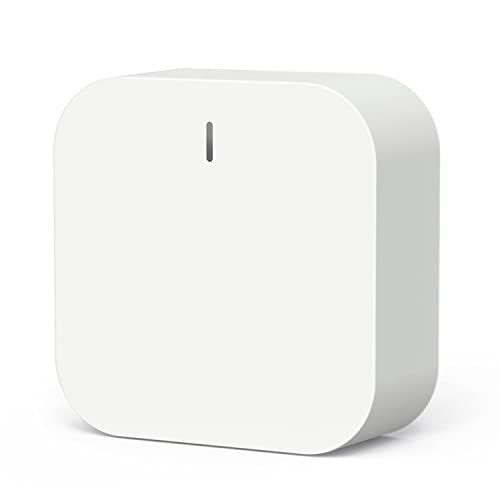
- Combines Zigbee 3.0 and Bluetooth
- Supports up to 128 devices
- Works with Tuya, Smart Life, and TREATLIFE apps
Best For: Mixed Tuya-compatible Zigbee and Bluetooth setups
Best High-Capacity Budget Hub

- Supports up to 180 sub-devices
- Ethernet connection for reliable performance
- Works with Tuya and Smart Life devices
Best For: Large Tuya or Smart Life systems needing wired connectivity
Best Shade-Focused Pick

- Alexa and Google Home voice control
- Tuya app access and scheduling
- Compact hub for compatible motorized shades
Best For: Automating compatible motorized blinds and shades
Best Broad-Compatibility Pick
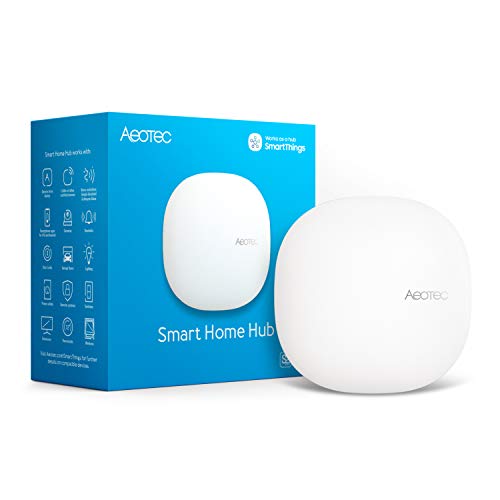
- Matter, Zigbee, Wi-Fi, and SmartThings support
- Z-Wave Plus on the V3 model
- Alexa and Google Home integration
Best For: Multi-brand smart homes using varied protocols
Best Simple Pick
Zigbee and Bluetooth Mesh Gateway
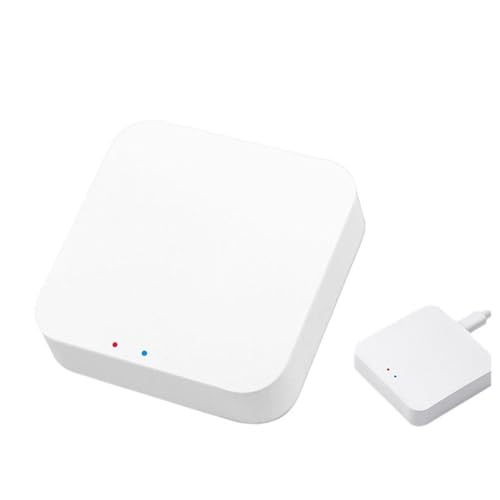
- Zigbee, Bluetooth Mesh, and Wi-Fi control
- Alexa and Google Assistant compatible
- Supports up to 128 devices
Best For: Linking compatible devices across multiple wireless protocols
Long-Range Pick – YoLink Smart Home Hub
For shoppers comparing budget smart home hubs, the YoLink YS1603 stands out for its unusually long stated range and straightforward wired setup. It supports smartphone compatibility and voice-based control, making it a practical hub for compatible YoLink devices.
Best For: Homes that prioritize extended wireless range and simple voice control.
Pros:
- Maximum stated range of up to 2,034 feet.
- Supports smartphone compatibility and voice control.
- Compact, lightweight design with plug-in connectivity.
Cons:
- No battery backup is included.
- The supplied notes do not specify compatibility with other smart-home ecosystems.
The YoLink hub is a focused option rather than an all-purpose platform. Its standout advantage is range, while buyers should confirm device compatibility before purchasing.
Sensor Starter Pick – Tapo Smart Hub H100
The Tapo H100 is one of the more approachable budget smart home hubs for building a Tapo sensor network. It connects to 2.4GHz Wi-Fi, supports up to 64 Tapo devices, and includes a built-in chime and siren functionality for connected home alerts.
Best For: Tapo users building a sensor, button, switch, and alert system.
Pros:
- Supports up to 64 Tapo devices.
- Uses a low-power wireless protocol designed to extend device battery life.
- Built-in chime and siren can provide audible alerts up to 90 dB.
- Supports app and voice control.
Cons:
- Requires a 2.4GHz Wi-Fi network.
- Cannot directly connect to Tapo smart plugs or smart lighting.
- Maximum stated connection distance is 30 meters.
The H100 makes the most sense within the Tapo ecosystem, especially where sensor-triggered actions and audible alerts matter. Its device limits and compatibility boundaries are worth checking before expanding beyond Tapo accessories.
Multi-Protocol Value – GAODUCASH ZigBee Bluetooth Hub
Among budget smart home hubs, this GAODUCASH gateway is designed for households mixing ZigBee, Bluetooth, and compatible Wi-Fi products. It works with the Smart Life/Tuya app, supports Alexa and Google Home voice control, and can connect up to 128 Tuya smart-home devices.
Best For: Tuya users who want one bridge for ZigBee and Bluetooth devices.
Pros:
- Supports Bluetooth 5.0, ZigBee 3.0, and 2.4GHz Wi-Fi.
- Works with Smart Life/Tuya app control and automation.
- Supports Alexa and Google Home voice control.
- Connects up to 128 Tuya smart-home devices.
Cons:
- Does not support 5GHz Wi-Fi.
- Compatibility is centered on Tuya smart products.
- The supplied notes do not provide a maximum wireless range.
This gateway offers the broadest stated protocol support in the group, making it useful for a mixed Tuya setup. Confirm that your devices use supported Tuya, ZigBee, Bluetooth, or 2.4GHz Wi-Fi connections.
Compact Zigbee Pick – Tuya Smart Hub
This compact Tuya hub is a simple choice for shoppers seeking budget smart home hubs focused on Zigbee devices. It provides app-based management, mesh connectivity, voice compatibility once linked, and a small form factor suited to tight spaces.
Best For: Small Tuya setups using Zigbee sensors and actuators.
Pros:
- Manages Zigbee devices through the Tuya Smart App.
- Supports adding, resetting, third-party, and group control.
- Compact design fits discreetly near an outlet or in a corner.
- Designed for low-power mesh communication with signal penetration and anti-interference features.
Cons:
- The supplied notes do not specify the number of supported devices.
- Voice operation requires linking the hub to the relevant API.
- The notes do not identify support for Bluetooth or 5GHz Wi-Fi.
The Tuya hub is best viewed as a compact Zigbee control point rather than a fully detailed multi-protocol gateway. Its small footprint and app features suit modest setups, but buyers should verify ecosystem and device compatibility.
Best Budget Sengled Hub – Sengled Smart Home Hub
For shoppers comparing budget smart home hubs, the Sengled Smart Home Hub is a focused option for Sengled Zigbee lights and accessories. It connects to your router by Ethernet and supports app, scheduling, grouping, and voice control through Alexa or Google Assistant.
Best For: Sengled households building an indoor lighting and accessory system.
Pros:
- Supports up to 64 Sengled smart lights and accessories.
- Works with Alexa and Google Assistant for voice control.
- Ethernet setup and Sengled Home app provide straightforward management.
Cons:
- Designed primarily for Sengled Smart products rather than a broad multi-brand ecosystem.
- Requires a wired connection to the router.
- Indoor use only.
This is a sensible budget pick when your priority is controlling Sengled Zigbee devices in one app. Its 64-device capacity is suitable for a focused lighting setup, though shoppers wanting broader Tuya or Bluetooth compatibility should consider another hub.
Best Multi-Protocol Budget Hub – TREATLIFE Zigbee & Bluetooth Gateway
Among budget smart home hubs, the TREATLIFE gateway stands out for combining Zigbee 3.0 and Bluetooth support. It works with Smart Life, Tuya, and TREATLIFE apps, making it useful for managing compatible devices from multiple categories through one interface.
Best For: Tuya, Smart Life, and TREATLIFE users who need Zigbee and Bluetooth support in one hub.
Pros:
- Supports both Zigbee 3.0 and Bluetooth devices.
- Handles up to 128 connected devices.
- Offers Alexa and Google Assistant voice control.
- Plug-and-play setup through 2.4GHz Wi-Fi and a compatible app.
Cons:
- Does not support 5GHz Wi-Fi.
- Compatibility depends on Tuya, Smart Life, or TREATLIFE device support.
- Requires a corded power connection.
The TREATLIFE gateway is a flexible value choice for households using a mix of Zigbee and Bluetooth products. Its 128-device capacity gives it room to grow, while the 2.4GHz-only requirement is an important setup consideration.
Best High-Capacity Budget Hub – Wired Tuya Zigbee Gateway
This wired Tuya gateway is one of the more expandable budget smart home hubs for Smart Life and Tuya devices. Its Ethernet connection is designed for consistent performance, while the hub can also extend coverage and manage a large collection of compatible sensors and switches.
Best For: Tuya or Smart Life users planning a larger wired smart home system.
Pros:
- Supports up to 180 sub-devices.
- Uses Ethernet for a reliable wired connection.
- Can function as a network repeater to help expand coverage.
- Supports automation, voice commands, remote access, and sensor notifications through Smart Life.
Cons:
- Requires an Ethernet connection to the router.
- Compatibility is centered on Tuya and Smart Life devices.
- Voice-control availability depends on the connected ecosystem and compatible devices.
Choose this model if device capacity and wired reliability matter more than wireless flexibility. It is particularly appealing for expanding Tuya-based lighting, security, climate, and sensor setups, provided your router has an available Ethernet connection.
Best Shade-Focused Pick – Motorized Shade Smart Bridge
This compact bridge is a practical choice among budget smart home hubs if your main goal is controlling motorized blinds or shades. It connects compatible shade devices with the Tuya app and supports Alexa and Google Home voice control.
Best For: Homeowners who want app, voice, and scheduled control for compatible motorized shades.
Pros:
- Works with Alexa and Google Home for voice control.
- Supports remote management through the Tuya app.
- Can coordinate multiple compatible motorized shades and run schedules.
- Compact 4 x 3.5 x 1.5-inch design with included battery.
Cons:
- Designed specifically around compatible motorized shade devices.
- Does not list broad Zigbee, Z-Wave, or Matter support.
Choose this hub when shade automation is the priority rather than whole-home device compatibility. Its focused feature set can keep the setup straightforward, but buyers should verify that their shades work with the bridge.
Best Broad-Compatibility Pick – Aeotec Smart Home Hub
The Aeotec Smart Home Hub is a strong option for shoppers comparing budget smart home hubs with broader protocol support. It works with SmartThings, Matter, Zigbee, Z-Wave Plus on the V3 model, and Wi-Fi devices, while offering Alexa and Google Home integration.
Best For: Users building a multi-brand smart home with varied device types and automation needs.
Pros:
- Supports Matter, Zigbee, SmartThings, Wi-Fi, and Z-Wave Plus on the V3 model.
- Works with Alexa and Google Home voice assistants.
- Supports Wi-Fi or Ethernet setup and connectivity.
- SmartThings automations can run locally for improved speed and reliability.
Cons:
- The 1.1-pound hub is larger and heavier than the compact shade-focused options here.
- Designed for use in North America.
- Z-Wave Plus support is specified for the V3 model.
This is the most versatile choice of the three for a growing, mixed-device system. Its wider compatibility and SmartThings automation support make it more adaptable, provided your devices and region match the listed requirements.
Best Simple Pick – Zigbee and Bluetooth Mesh Gateway
This gateway stands out among budget smart home hubs for combining Zigbee 3.0, Bluetooth Mesh, and Wi-Fi control. It uses the Smart Life app and supports Alexa and Google Assistant, making it useful for linking compatible devices across multiple wireless protocols.
Best For: Budget-conscious users who need a multi-protocol gateway for a larger compatible device setup.
Pros:
- Supports Zigbee, Bluetooth Mesh, and Wi-Fi control.
- Works with Alexa and Google Assistant.
- Supports group control, device linking, and smart scenes.
- Can manage up to 128 connected smart devices according to the supplied specifications.
Cons:
- Compatibility is centered on the Smart Life ecosystem and supported devices.
- The supplied information does not list Matter or Z-Wave support.
Consider this model when protocol flexibility and device capacity matter more than advanced platform features. Its plug-and-play positioning may simplify setup, but confirm that your existing devices use supported Zigbee, Bluetooth Mesh, or Wi-Fi connections.
How We Picked These Budget Smart Home Hubs
We focused on hubs that offer meaningful value for common smart-home projects, including lighting, motion sensors, security devices, thermostats, plugs, and motorized shades. The selection includes compact single-protocol gateways as well as broader controllers that support multiple standards.
Our comparison emphasizes device compatibility, app and voice-assistant support, network requirements, expansion capacity, setup complexity, and ecosystem flexibility. Because budget products can vary substantially in software quality and supported devices, buyers should confirm compatibility with their exact model before ordering.
Quick Comparison
| What to compare | Best fit | What to check |
|---|---|---|
| Tuya or Smart Life support | Affordable mixed-brand automations | Whether your devices use the same regional app and account |
| Zigbee support | Low-power sensors, bulbs, and switches | Supported device brands and Zigbee version |
| Bluetooth Mesh | Nearby Bluetooth accessories | Range, gateway placement, and remote-access support |
| Multi-protocol support | Growing or mixed-standard homes | Whether each protocol works natively or through separate apps |
| Matter or SmartThings support | Longer-term flexibility | Required accounts, firmware support, and platform limitations |
Key Buying Factors for Budget Smart Home Hubs
Protocol Compatibility
Start with the devices you already own. Zigbee, Bluetooth, Z-Wave, Wi-Fi, and Matter are not interchangeable, and a hub supporting one standard may not control products using another. If you are starting from scratch, a multi-protocol hub can reduce future limitations, but it may cost more and require more configuration.
App and Voice Control
Check whether the hub uses Tuya, Smart Life, SmartThings, or a proprietary app. Alexa and Google Home compatibility is useful for voice commands, but advanced automations may still need to be created in the hub’s own software.
Network and Placement Requirements
Many affordable gateways require 2.4GHz Wi-Fi, wired Ethernet, USB power, or a nearby router. Place the hub centrally and away from heavy interference. Zigbee and Bluetooth devices may also benefit from powered devices that extend the mesh network.
Capacity and Reliability
Look beyond the advertised device count. A larger limit does not guarantee smooth performance, and cloud-dependent hubs can be less responsive during internet outages. Favor clear setup instructions, current firmware, and a supported app ecosystem.
Who Should Buy Which Budget Smart Home Hubs?
Choose a Tuya-based gateway if your home already uses Smart Life or Tuya products and you want an inexpensive way to unify compatible devices. A Zigbee-focused hub is a practical choice for shoppers building around sensors, bulbs, and switches that prioritize low power use.
Consider a Bluetooth Mesh model for nearby accessories, but confirm range and remote-control requirements first. If you expect to mix standards or change platforms later, a broader hub with Matter, Zigbee, Z-Wave, or SmartThings support may justify its higher price.
Finally, buy the simplest hub that supports your current devices and planned additions. Paying for unused protocols is rarely worthwhile, while choosing a closed ecosystem can become expensive if your needs change.