The best energy-efficient smart home control panels do more than switch lights. They can centralize automations, display energy data, connect sensors, and reduce the need for multiple always-on devices.
We compare 10 options ranging from compact touchscreen switches and Zigbee hubs to advanced energy monitors and large PoE wall panels, helping you choose the right balance of control, compatibility, installation effort, and power visibility.
Best 10 Energy-Efficient Smart Home Control Panels Picks for 2026
Versatile Zigbee Hub

- Smart Life compatibility across lights, sockets, cameras, and locks
- Built-in Alexa for hands-free device and scene control
- Integrated Zigbee gateway with touchscreen operation
Best For: Smart Life users building a voice-controlled Zigbee home
Large Wall-Mounted Control
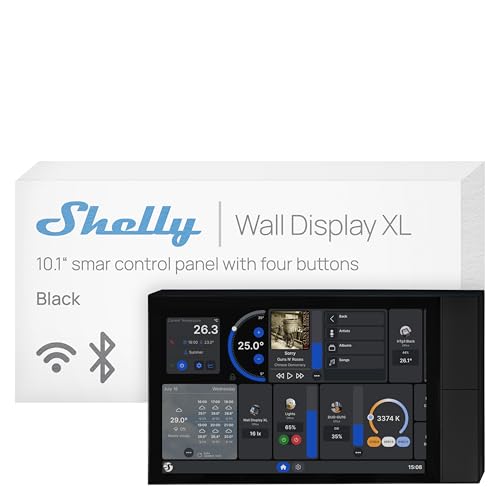
- 10.1-inch touchscreen with relay and four customizable buttons
- Supports Shelly, Home Assistant, Alexa, Google, and HomeKit
- Schedules can control appliances for convenience and energy savings
Best For: Wall-mounted whole-home control with broad platform support
Energy-Aware Touchscreen

- Tracks daily and weekly energy statistics for supported devices
- Controls lighting, thermostats, cameras, and security modes
- Compact 4.7-inch display also supports web content
Best For: Multifunction control with basic energy visibility and security
Circuit-Level Energy Tracking
SEM-Meter Smart Energy Monitor

- Monitors up to 16 circuits with 50A clamp-on sensors
- Tracks real-time usage, costs, history, solar, and net metering
- Supports local MQTT operation with Home Assistant
Best For: Detailed energy analysis and cost allocation across circuits
Best Panel for Tuya Scene Control

- 3.5-inch touchscreen with three physical buttons
- Tuya/Smart Life, Alexa, and Google Assistant support
- Requires neutral wire and 2.4GHz Wi-Fi
Best For: Tuya-based homes needing centralized lighting and scene control
Best for Whole-Home Energy Visibility

- Monitors whole-home and branch-circuit usage
- Supports solar, net metering, and energy automation
- UL Listed with sixteen included 50A sensors
Best For: Detailed energy tracking and savings-oriented automation
Best Touchscreen Thermostat Panel

- Two-channel touchscreen wall switch
- Built-in thermostat with scheduled temperature control
- Works with SONOFF, Alexa, Google Home, and Siri Shortcuts
Best For: SONOFF homes combining scene control with heating or cooling automation
Best for Advanced Integrations
15.6-Inch PoE MQTT Control Panel

- 15.6-inch Full HD touchscreen with Android 14
- PoE, Wi-Fi 6E, Gigabit Ethernet, RS232, and RS485
- Built-in light, temperature, and humidity sensors
Best For: Advanced wired smart-home installations and MQTT control
Best Compact All-in-One
3.5-Inch IR Smart Control Panel

- Controls 200-plus devices and scenes
- Built-in IR with touchscreen, buttons, voice, and app control
- Compact wall-mounted design with BT Mesh gateway features
Best For: Compact multi-device control in homes, offices, and hospitality spaces
Best for Tuya Lighting Scenes

- 4-inch multi-touch scene and device-control display
- Three relay switches for lights and other connected loads
- Zigbee and Tuya ecosystem compatibility with app control
Best For: Tuya-based lighting, curtain, and scene automation
Versatile Zigbee Hub – MOES Smart Home Control Panel
The MOES Smart Home Control Panel is a practical option for building energy-efficient smart home control panels around Smart Life devices. Its integrated Zigbee gateway, touchscreen, and built-in Alexa help consolidate everyday device control in one location.
Best For: Smart Life users who want voice control, Zigbee connectivity, and a compact touchscreen interface.
Pros:
- Works with Smart Life switches, bulbs, sockets, cameras, and door locks.
- Built-in Alexa enables hands-free control of devices, scenes, and voice skills.
- Integrated Zigbee gateway eliminates the need for a separate hub.
- Supports wired or wireless networking and Type-C or circuit power connections.
Cons:
- Compatibility is primarily described around Smart Life devices.
- The supplied dimensions are listed as 1 x 1 x 1 inches, so installation fit should be confirmed independently.
Choose this panel if consolidating Smart Life and Zigbee control matters more than advanced energy-monitoring features. Its energy-saving potential comes from centralized scenes and easier control of connected devices rather than built-in usage measurement.
Large Wall-Mounted Control – Shelly Wall Display XL
The Shelly Wall Display XL combines a large touchscreen, relay, and customizable buttons in a wall-mounted interface for energy-efficient smart home control panels. Scheduling lights, fans, heaters, and other appliances can make routine energy management more convenient.
Best For: Homes, apartments, hotels, and commercial spaces needing a large, permanently installed control point.
Pros:
- Large 10.1-inch touchscreen provides a clear control interface.
- Built-in 5A relay and four customizable buttons support appliance control.
- Works with Shelly Smart Control, Home Assistant, Alexa, Google, and HomeKit.
- Schedules and automations can support convenience and energy savings.
Cons:
- Neutral wire is required for installation.
- Built-in relay is rated at 5A, limiting the loads it can switch directly.
- Wall mounting requires a suitable standard electrical box and installation work.
This is the strongest fit for users who want a prominent, fixed control station with broad platform integration. Its relay and scheduling functions are useful for managing energy-consuming appliances, while the display also handles media control.
Energy-Aware Touchscreen – SONOFF NSPanel Pro 120
The SONOFF NSPanel Pro 120 is a compact touchscreen hub for energy-efficient smart home control panels, with features for monitoring energy use alongside lighting, thermostats, cameras, and security devices. Its 4.7-inch display keeps several household functions accessible from one panel.
Best For: Users who want a small multifunction panel with energy statistics, camera viewing, thermostat access, and security modes.
Pros:
- Displays energy statistics for supported devices across daily and weekly periods.
- Can control lighting and adjust a thermostat from the touchscreen.
- Supports live viewing from four types of cameras.
- Offers customizable security modes with alarms and phone notifications.
Cons:
- Energy tracking depends on devices with compatible energy-statistics functions.
- The 4.7-inch display is smaller than many dedicated wall displays.
- The supplied notes do not specify broad third-party platform compatibility.
The NSPanel Pro 120 is a balanced choice when energy visibility and household monitoring matter as much as device control. It is better suited to multifunction convenience than to detailed circuit-level electricity analysis.
Circuit-Level Energy Tracking – SEM-Meter Smart Energy Monitor
The SEM-Meter takes a measurement-first approach to energy-efficient smart home control panels. With 16 clamp-on 50A sensors, real-time usage data, cost tracking, and Home Assistant MQTT support, it helps identify which circuits and appliances are driving electricity consumption.
Best For: Homeowners, landlords, and property managers needing detailed circuit-level usage and cost allocation.
Pros:
- Includes 16 sensors for monitoring appliances and individual circuits.
- Tracks real-time power, historical usage, and electricity costs through its app.
- Supports solar and net-metering monitoring.
- Can run locally through MQTT without the manufacturer’s cloud or app when used with Home Assistant.
Cons:
- Installation involves access to the electrical panel and may require professional help.
- Supports 2.4GHz Wi-Fi, not other Wi-Fi bands according to the supplied notes.
- It monitors energy rather than serving as a touchscreen device-control panel.
This is the most capable option here for finding measurable savings at the circuit level. It is especially useful for rentals and shared properties because customizable rate templates can allocate usage and costs by room or circuit.
Best Panel for Tuya Scene Control – TONGOU 3-Switch WiFi Panel
The TONGOU DIY WiFi panel is a practical option for shoppers comparing energy-efficient smart home control panels for centralized lighting and device management. Its 3.5-inch touchscreen, three physical buttons, Tuya/Smart Life compatibility, scene controls, and Alexa and Google Assistant support make it suitable for coordinating connected devices from one wall-mounted location.
Best For: Homes using Tuya or Smart Life devices that want three physical switch controls plus touchscreen scene management.
Pros:
- Controls up to three circuits with physical buttons and touchscreen customization.
- Works with compatible switches, bulbs, cameras, locks, alarms, and sensors.
- Supports app, voice, IR remote partition, and Sigmesh sub-device control.
Cons:
- Requires a neutral wire and 2.4GHz Wi-Fi.
- May not fit every switch box, so compatibility should be checked first.
- Load limits vary by lighting type, with a 6A maximum rating.
This panel is most compelling when your home already uses the Tuya ecosystem and you want a compact wall hub. Verify wiring, box dimensions, and load requirements before installation.
Best for Whole-Home Energy Visibility – Emporia Vue 3 Energy Monitor
The Emporia Vue 3 takes a measurement-first approach to energy-efficient smart home control panels. Installed in the circuit panel with clamp-on sensors, it provides real-time electricity data, solar and net-metering visibility, and app-based automation options that can help identify usage and savings opportunities.
Best For: Homeowners who want detailed whole-home and appliance-level energy monitoring for informed automation and cost management.
Pros:
- Includes sixteen 50A branch sensors for monitoring critical circuits.
- Supports real-time usage tracking, solar, net metering, and time-of-use management.
- UL Listed and CE Listed, with sensor accuracy specified at ±2%.
Cons:
- Requires circuit-panel installation and 2.4GHz Wi-Fi with internet access.
- Some three-phase configurations require an additional 200A sensor.
- One-second data is available only in the actively open app and retained for three hours.
Unlike a wall switch panel, the Vue 3 helps make energy-efficient decisions by revealing where power is being used. Professional installation may be appropriate because the device connects inside the electrical panel.
Best Touchscreen Thermostat Panel – SONOFF NSPanel Smart Switch
The SONOFF NSPanel combines a two-channel wall switch, touchscreen interface, and thermostat features in one device. For shoppers seeking energy-efficient smart home control panels, its scheduled temperature automation can trigger heating or cooling equipment while its scenes, app, and voice controls simplify everyday device management.
Best For: SONOFF users who want touchscreen scene control alongside room-temperature scheduling and two-channel switching.
Pros:
- Combines dual-channel switching, touchscreen control, and thermostat functions.
- Can automate heating or cooling based on configured temperature periods.
- Supports eWeLink, Alexa, Google Home, and Siri Shortcuts.
Cons:
- Requires 2.4GHz Wi-Fi for setup and connectivity.
- Its broader central-control features are oriented toward SONOFF devices.
- It is rated at 480 watts, so connected loads must remain within the stated limit.
The NSPanel is a useful fit when temperature control matters as much as lighting and scenes. Its value is strongest in a SONOFF-centered setup, where the integrated interface can reduce the need for separate controls.
Best for Advanced Integrations – 15.6-Inch PoE MQTT Control Panel
For buyers seeking energy-efficient smart home control panels with flexible networking and automation support, this large JEESTON panel offers a capable in-wall command center. Its Android 14 platform, PoE power option, environmental sensors, and broad connectivity make it suited to more advanced installations.
Best For: Larger smart-home interfaces, wired installations, and MQTT or serial-protocol integrations.
Pros:
- Large 15.6-inch 1920×1080 capacitive touchscreen.
- PoE, Wi-Fi 6E, Gigabit Ethernet, Bluetooth 5.3, RS232, and RS485 support.
- Includes light, temperature, and humidity sensors plus four built-in LED light bars.
- Android 14 with 4GB RAM and 64GB storage.
Cons:
- Large in-wall design may be excessive for smaller rooms.
- Advanced interfaces and MQTT support may require more setup knowledge.
- No camera is included.
This is the most connectivity-focused option in the group. Choose it when installation flexibility, display size, and integration hardware matter more than a compact footprint or simple plug-and-play control.
Best Compact All-in-One – 3.5-Inch IR Smart Control Panel
This compact option is designed for shoppers who want energy-efficient smart home control panels that consolidate everyday device management in one wall-mounted interface. It combines touchscreen, physical-button, voice-assistant, app, and infrared control in a small footprint.
Best For: Homes, offices, hotels, and apartments needing compact multi-device and scene control.
Pros:
- Supports more than 200 devices and scenes according to the supplied product notes.
- Built-in IR control covers 12 categories of infrared devices.
- Offers touchscreen, three physical buttons, voice assistant, and app control.
- Includes scene control, BT Mesh gateway functionality, a 3-way relay, and security-alarm features.
Cons:
- The 3.5-inch, 480×320 display is relatively small.
- Its broad feature set may take time to configure.
- The supplied notes do not specify the wireless protocol or power method.
Its main advantage is consolidation: several control methods and automation features fit into a compact panel. It is a practical choice when wall space is limited and infrared device support is important.
Best for Tuya Lighting Scenes – Tuya T3E Zigbee Touch Panel
For buyers prioritizing energy-efficient smart home control panels around lighting and connected scenes, the Tuya T3E combines a 4-inch touchscreen with three relay switches. Its Zigbee connectivity and Tuya ecosystem compatibility support centralized control of lights, curtains, air conditioners, and other compatible devices.
Best For: Tuya-based homes, offices, hotels, and lighting-focused wall control.
Pros:
- 4-inch multi-touch display shows device controls, date, and dynamic clock features.
- Supports Tuya ecosystem devices, including lights, curtains, blinds, and air conditioners.
- Combines a scene panel with three relay switches for lighting control.
- Offers Zigbee connectivity and mobile-app remote control.
Cons:
- Compatibility is centered on the Tuya ecosystem.
- A Zigbee gateway may be needed for some linked scene modes, as indicated in the notes.
- The supplied specifications list a 100V AC operating voltage, so installation compatibility should be checked.
This panel is a focused choice for users already invested in Tuya devices. Its combination of physical relay control, dimming scenes, and app access is especially useful for coordinated lighting routines.
How We Picked the Best Energy-Efficient Smart Home Control Panels
We evaluated these panels by looking at the features that matter most for efficient, convenient home control: connectivity, smart-home compatibility, energy-monitoring capability, display usefulness, installation requirements, and expandability. Models with Zigbee, Wi-Fi, PoE, voice-assistant support, or circuit-level monitoring can serve very different homes, so the best choice depends on whether you prioritize automation, energy insight, or a centralized interface.
We also considered practical ownership details, including neutral-wire requirements, relay capacity, screen size, sensor support, and whether a panel works as a standalone controller or depends heavily on a wider ecosystem.
Quick Comparison
| Best For | Look For | Typical Advantage |
|---|---|---|
| Whole-home automation | Zigbee hub and broad compatibility | Fewer separate bridges |
| Energy tracking | Multi-circuit sensors and real-time data | Better visibility into power use |
| Wall-mounted dashboards | Large display, Android, or PoE | Clearer scenes and device status |
| Simple lighting control | Touch switches and relay control | Fast everyday access |
| Voice-assisted homes | Alexa or built-in voice support | Hands-free operation |
Key Buying Factors for Energy-Efficient Smart Home Control Panels
Compatibility and Connectivity
Check whether the panel supports your existing devices and platform before buying. Zigbee models can reduce dependence on individual Wi-Fi devices, while Wi-Fi panels are often easier to install. If you use Alexa, Google Home, Matter, or a proprietary automation app, verify support for the exact functions you need—not just basic on/off control.
Energy Monitoring and Automation
A touchscreen does not automatically make a system energy efficient. For meaningful savings, choose a panel that can connect to occupancy sensors, schedules, smart thermostats, or energy monitors. Circuit-level monitors are particularly useful when you want to identify appliances or rooms that consume the most electricity and then automate them around usage patterns.
Installation and Electrical Requirements
Confirm box depth, wiring, voltage, relay limits, and whether a neutral wire is required. A panel that replaces a wall switch may need professional installation, especially when adding circuit sensors or working inside a main electrical panel. PoE models also require suitable network cabling and a compatible power source.
Display, Privacy, and Reliability
Choose screen size based on viewing distance and the number of controls you want visible. Consider brightness, proximity sensing, local control during internet outages, microphone privacy, software updates, and app stability. A simpler panel may be more reliable than a feature-rich dashboard that depends on several cloud services.
Who Should Buy Which Energy-Efficient Smart Home Control Panels?
Choose a Zigbee-enabled panel if you want a central controller for lights, sensors, and scenes. Pick a dedicated energy monitor if your main goal is finding high-consumption circuits or tracking solar and electricity costs. A compact touchscreen switch suits bedrooms, hallways, and rental-friendly upgrades, while a larger Android or PoE panel is better for a kitchen, entryway, or whole-home dashboard.
For the easiest voice-centered setup, prioritize Alexa-compatible models. If you are replacing existing switches, focus first on wiring and relay requirements. The right panel should make energy-saving routines easier to use—not add another complicated interface to manage.