Small gaps around a studio door can undermine an otherwise effective soundproofing setup. The right door seal can help limit sound leakage while also reducing drafts, dust, and unwanted light.
This roundup compares adhesive foam, silicone, rubber, flap, and kerf-style options so you can match the seal to your door gap, frame design, and installation needs.
Best 10 Studio Door Seals Picks for 2026
Complete Acoustic Kit

- Combines perimeter seal and door sweep
- Treats one standard-size door
- Designed to reduce sound through gaps
Best For: Studios and apartments needing full standard-door coverage
High-Coverage Silicone
49-Foot Transparent Draft Seal
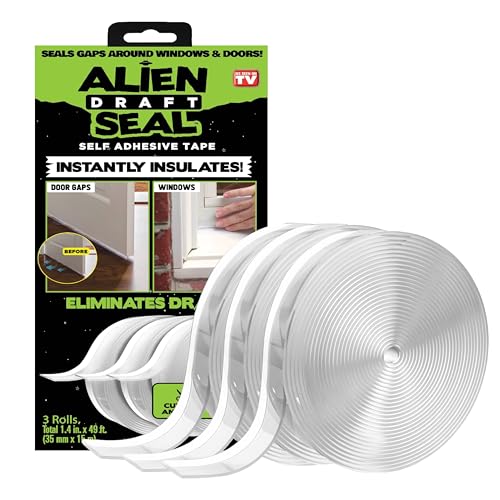
- Includes 49 feet across three rolls
- Flexible, moisture-resistant silicone
- Adheres to many common surfaces
Best For: Multiple gaps requiring discreet adhesive sealing
Kerf-Fit Solution

- Provides 26 feet of black foam strip
- Installs without adhesive
- Fits 0.35- to 0.59-inch slots
Best For: Kerf-style door frames needing clean installation
Large-Gap EPDM
Adhesive Sound-Reducing Door Strip

- Seals 5/16- to 15/32-inch gaps
- Includes 18 feet of EPDM strip
- Multi-hole design targets sound reduction
Best For: Large-gap doors needing adhesive installation
Best Kerf Replacement
40 ft White Exterior Door Seal
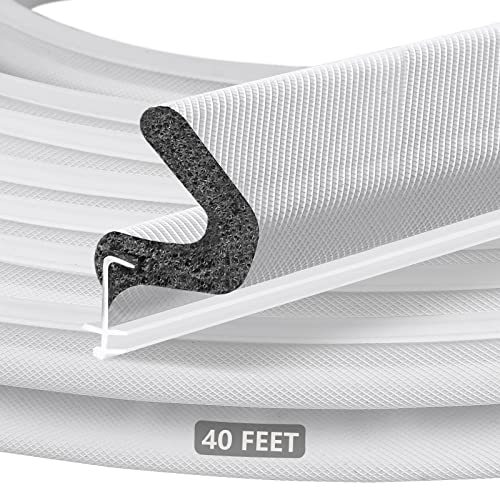
- Press-in fit for 1/8-inch kerf slots
- 40-foot roll for multiple doors
- Helps reduce drafts, light leaks, and noise
Best For: Exterior doors with compatible grooved frames
Best Adhesive Option

- Self-adhesive installation
- Flexible strip for varied gaps
- Supports insulation, sound reduction, and light blocking
Best For: Doors and frames without a compatible kerf groove
Best Large-Gap Kerf Seal

- Covers gaps from about 3/10 to 7/8 inch
- Fits 1/8-inch grooves
- Includes four foam gaskets
Best For: Exterior doors with large gaps and kerf channels
Flexible Silicone Pick
20FT D-Shaped Silicone Door Seal

- Flexible silicone fits 1/8- to 1/4-inch gaps
- Cut-to-fit 20-foot roll
- Helps reduce drafts, dust, moisture, and noise
Best For: Smaller studio door and window gaps
Heavy-Duty Barrier
50FT Self-Adhesive Rubber Door Seal
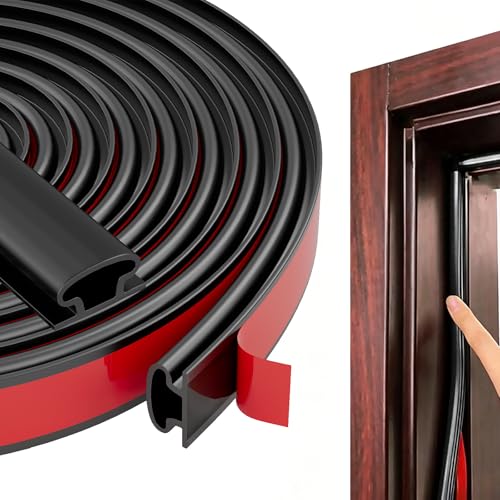
- 50-foot customizable roll
- Helps block drafts, noise, dust, light, and odors
- Fits gaps from about 0.1 to 0.22 inch
Best For: Studio frames needing broad draft and noise protection
Complete Acoustic Kit – Standard Door Sound Seal
Audimute Soundproofing Acoustic Door Seal Kit - Door Sweep and Seal - (Standard Size)
Check Price On AmazonThis two-piece option is a practical starting point for studio door seals when you need to address both the perimeter and the bottom of one standard-size door. The kit combines adhesive polyurethane sealing material with a door sweep to help reduce sound traveling through common gaps.
Best For: Studios, apartments, and standard doors needing both edge and bottom-gap treatment.
Pros:
- Includes a 25-foot door seal and a 4-foot door sweep.
- Designed to treat one standard-size door.
- Easy to install and intended to help block sound through door gaps.
Cons:
- Limited to standard-size door coverage.
- The kit’s polyurethane seal is black, which may not suit every door.
For a studio door that needs coverage around the frame and along the bottom, this bundled kit is more comprehensive than buying a single strip. Confirm your door dimensions before ordering.
High-Coverage Silicone – 49-Foot Transparent Draft Seal
For studio door seals where you need flexible material and plenty of coverage, this transparent silicone set offers three rolls totaling 49 feet. It can be cut to length and applied around doors or windows to help block drafts, moisture, and some sound leakage through gaps.
Best For: Large or multiple door and window gaps where transparent, adhesive-backed silicone is useful.
Pros:
- Provides a combined 49 feet of sealing material.
- Transparent silicone is visually unobtrusive and remains flexible.
- Adhesive backing is designed for simple cut-to-size application.
- Works on surfaces including painted wood, glass, metal, ceramic, fiberglass, and plastic.
Cons:
- Primarily marketed for draft and insulation control rather than dedicated acoustic treatment.
- Requires a clean, suitable surface for the adhesive to hold effectively.
This is a versatile, high-length choice when a studio project also involves windows or several doors. Its 1.4-inch width and flexible flap design make it useful for irregular gaps, but it may not replace a purpose-built acoustic kit for serious sound isolation.
Kerf-Fit Solution – Q-Shaped Foam Door Seal
This push-in option is worth considering for studio door seals when your door frame has compatible kerf slots. The 26-foot Q-shaped polyurethane strip installs without adhesive and is designed to block light, drafts, dust, water, and some noise around the door.
Best For: Doors with existing 0.35- to 0.59-inch grooves or recesses that need a clean, no-adhesive installation.
Pros:
- Offers 26 feet of high-density foam sealing material.
- Fits slots from 0.35 to 0.59 inches.
- Push-in installation leaves no adhesive marks.
- Designed to reduce light penetration, drafts, and noise.
Cons:
- Not suitable for doors without compatible kerf slots.
- Requires checking the slot dimensions before purchase.
If your studio door already has the right recess, this seal provides a tidy and removable alternative to adhesive strips. Its fit-dependent design is the key consideration, so measure the groove before ordering.
Large-Gap EPDM – Adhesive Sound-Reducing Door Strip
This self-adhesive EPDM strip is designed for studio door seals involving larger gaps from 5/16 to 15/32 inch. Its flexible, multi-hole construction is intended to reduce sound propagation and closing pressure while also helping keep out wind, water, and light.
Best For: Interior or exterior doors with large measured gaps and a preference for peel-and-stick installation.
Pros:
- Seals gaps from 5/16 to 15/32 inch.
- Includes 18 feet of cut-to-size material.
- Strong self-adhesive backing requires no tools or experience.
- Multi-hole design is intended to reduce sound transmission and door-closing force.
Cons:
- Provides less total length than the 26- and 49-foot alternatives.
- Adhesive installation is less convenient if you want a removable seal.
- Accurate gap measurement is important for proper compression.
For a door with a clearly measured larger gap, this strip offers a focused combination of weather sealing and sound-reduction features. Its EPDM construction is also intended to remain durable in low temperatures and varied applications.
Best Kerf Replacement – 40 ft White Exterior Door Seal
For studio door seals on a pre-cut kerf frame, this 40-foot press-in weather strip is a practical replacement for worn exterior door seals. Its flexible foam construction is designed to help reduce drafts, light leaks, outside noise, and heating or cooling loss.
Best For: Replacing compressed, cracked, or pet-damaged seals on exterior doors with 1/8-inch kerf slots and 1/4- to 1/2-inch door gaps.
Pros:
- 40-foot roll can be cut for multiple doors.
- PE-covered PU foam compresses and rebounds for a snug fit.
- Press-in installation avoids adhesive application.
- Helps address drafts, light leaks, and outside noise.
Cons:
- Requires a compatible 1/8-inch kerf slot.
- Not self-adhesive.
- Must be measured and cut before installation.
This is a strong studio door seals option when the frame already has the correct groove. Confirm the kerf and gap dimensions first, then remove the old strip and press the replacement into place.
Best Adhesive Option – 33FT EVA Foam Door Seal Tape
This self-adhesive EVA foam tape offers a flexible approach to studio door seals, especially where a press-in kerf channel is not available. The 33-foot strip can be cut to size and is intended for doors, windows, and other household sealing applications.
Best For: Sealing door-frame gaps and adding light blocking, insulation, sound reduction, or cushioning with an adhesive-backed strip.
Pros:
- Self-adhesive design is simple to apply.
- Flexible foam can be cut for varied gap sizes.
- Waterproof and thermal-insulating construction.
- Suitable for doors, windows, vents, cars, RVs, and other surfaces.
Cons:
- Adhesion depends on a clean, suitable mounting surface.
- Its broad multi-use design may be less tailored than a dedicated kerf seal.
- Supplied notes do not specify a particular maximum door-gap size.
Choose this tape when easy adhesive installation and flexible sizing matter more than matching a grooved door frame. It can also be useful for light blocking and sound insulation around a studio door, provided the surface is prepared properly.
Best Large-Gap Kerf Seal – 40FT Black Door Frame Seal
For studio door seals that need to cover a larger opening, this 40-foot kerf weather strip is designed for 1/8-inch grooves and gaps from about 3/10 to 7/8 inch. Its expanded sealing profile is intended to help with wind, dust, water, light, and noise.
Best For: Exterior doors with compatible grooved frames and unusually large gaps that need a broader sealing range.
Pros:
- Designed for larger 3/10- to 7/8-inch door gaps.
- 40-foot length suits doors of different sizes.
- PE grid surface and PU foam core are flexible and durable.
- Includes four foam gaskets for cushioning or installation adjustments.
Cons:
- Requires a 1/8-inch groove and is not a universal adhesive strip.
- Must be measured carefully before purchase.
- Its larger sealing profile may be unnecessary for smaller gaps.
This model stands out when a standard door seal leaves too much uncovered space. Verify the frame groove and gap measurements, then use the supplied gaskets if the door needs additional cushioning or adjustment.
Flexible Silicone Pick – 20FT D-Shaped Silicone Door Seal
If you need studio door seals for smaller gaps, this 20-foot silicone D-shaped strip is a practical cut-to-fit option. It is designed for gaps from 1/8 to 1/4 inch and can also be used around windows, cabinets, and other frames.
Best For: Studios, bedrooms, offices, and entryways needing flexible sealing against drafts, dust, moisture, light gaps, and everyday noise.
Pros:
- Soft silicone strip compresses smoothly into small gaps.
- 20-foot roll can be trimmed for different projects.
- Peel-and-stick installation is straightforward after cleaning and drying the surface.
- Silicone remains flexible through changing temperatures.
Cons:
- The 20-foot length may be limiting for multiple large doors.
- Surface preparation is important for long-term adhesion.
- Best suited to gaps within the recommended 1/8- to 1/4-inch range.
This is a well-rounded studio door seal when you want a flexible silicone material and a manageable roll length. The included adhesive promoter may help strengthen the bond on smooth surfaces.
High-Volume Roll – 50FT Rubber D-Shape Door Seal
For larger studio sealing projects, this 50-foot rubber D-shaped strip provides substantial coverage and includes tailor scissors for cutting. Its stated fit range is approximately 1/10 to 11/50 inch, so measuring the gap first is important.
Best For: Multiple doors, windows, cabinets, and other frames where a long roll and included cutting tool are useful.
Pros:
- 50 feet of material supports multiple sealing projects.
- Includes tailor scissors for cutting to size.
- Flexible rubber is intended to resist freezing and cracking under extreme temperatures.
- Self-adhesive backing is designed to become firm after 24 hours.
Cons:
- Gap compatibility should be checked carefully before purchase.
- The rubber strip is thicker than some narrow-gap options may require.
- The adhesive needs time to set before regular use.
This is a strong coverage-focused choice among studio door seals. Its generous length makes it especially practical for treating several frames, provided the 0.23-inch thickness matches your measured gap.
Heavy-Duty Barrier – 50FT Self-Adhesive Rubber Door Seal
This 50-foot D-shaped strip is a useful studio door seals option when you want a self-adhesive barrier for drafts, light, dust, odors, and outside noise. It fits gaps from about 0.1 to 0.22 inch and can be cut or bent to follow different frame shapes.
Best For: Studio doors and windows where reducing rattles, vibrations, squeaks, cold drafts, and everyday environmental intrusion is a priority.
Pros:
- Long 50-foot roll can cover multiple frames.
- Rubber/TPE material is described as thickened and resistant to deformation.
- Strong adhesive backing is designed to secure after 24 hours.
- Can be cut with scissors and bent for customized installation.
Cons:
- Measure the gap carefully because the fit range is relatively specific.
- Low temperatures can reduce adhesive performance during installation.
- It may require a hair dryer to warm the backing in cold conditions.
This option stands out for its long roll and broad intended use as a seal, gasket, or cushioning strip. For reliable results, clean and dry the surface, confirm the gap size, and follow the temperature guidance before applying it.
How We Picked These Studio Door Seals
We selected these Studio Door Seals based on the problems they are designed to solve, including perimeter gaps, uneven door frames, larger openings, and the gap beneath the door. We also considered installation method, material, stated coverage, flexibility, and compatibility with common interior and exterior doors.
Because product dimensions and adhesive performance vary, treat listed coverage as an estimate. Measure your complete door perimeter and check the seal profile before ordering, especially for kerf-mounted products or unusually wide gaps.
Quick Comparison
| Seal Type | Best For | Installation | Typical Strength |
|---|---|---|---|
| Adhesive foam | Small to moderate gaps | Peel and stick | Simple installation and light sound control |
| Silicone or rubber D-strip | Durable frame sealing | Self-adhesive | Flexible compression and moisture resistance |
| Kerf seal | Doors with a retaining slot | Press into kerf | Secure, cleaner-looking installation |
| Door sweep or flap | Bottom-door gaps | Adhesive or fitted hardware | Blocks airflow, light, and some sound leakage |
Key Buying Factors for Studio Door Seals
Measure the Gap First
Close the door and measure the gap at several points because frames are rarely perfectly uniform. Choose a profile that compresses without preventing the latch from engaging. Oversized seals can make the door difficult to close, while undersized seals leave leakage paths.
Match the Mounting Style
Adhesive strips are convenient for renters and quick upgrades, but the surface must be clean, dry, smooth, and free of loose paint. Kerf seals require a compatible slot in the frame. A door sweep is usually necessary when the main leak is beneath the door.
Consider Material and Durability
Foam is economical and easy to cut, while silicone and rubber generally offer better resilience under repeated compression. For a frequently used recording-room door, prioritize a seal that can recover its shape and tolerate regular opening and closing.
Think Beyond Sound
A door seal cannot replace a solid-core door, acoustic treatment, or proper wall construction, but it can address flanking paths around the frame. It may also help control drafts, dust, insects, and light—useful benefits for studios, rehearsal rooms, offices, and media rooms.
Who Should Buy Which Studio Door Seals?
Choose an adhesive foam strip if you want the simplest low-cost solution for modest gaps. A rubber or silicone D-shaped seal is a better fit for heavier use, larger compression gaps, or areas exposed to temperature changes. Select a kerf weatherstrip only when your door frame has the required retaining channel. For a visible gap beneath the door, pair a perimeter seal with a purpose-built door sweep rather than relying on frame weatherstripping alone.
Before installation, clean the mounting surface, test-fit the material, and avoid stretching adhesive-backed strips as you apply them. After installation, close the door gently and check for consistent contact around the frame without excessive resistance.