Whole-house ventilation can improve indoor air quality without requiring a large mechanical room or bulky equipment. The best compact systems balance fresh-air delivery, energy efficiency, noise, controls, and installation flexibility.
We selected 10 space-saving whole-house ventilation systems spanning ERVs, supply-air fans, wall-mounted units, and high-capacity whole-house fans. Use the guide below to narrow the choices by home size, climate, duct layout, and comfort goals.
Best 10 Space-Saving Whole House Ventilation Systems Picks for 2026
Compact Filtered Air Exchange
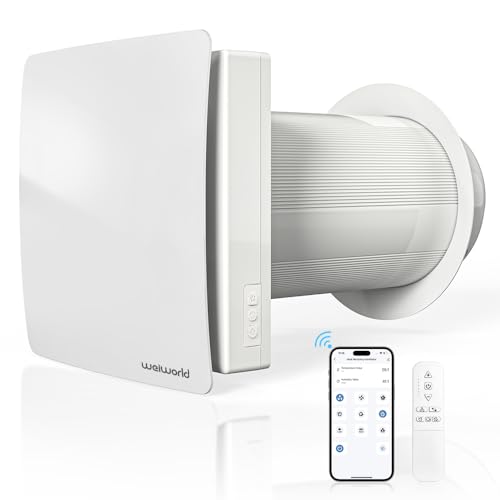
- Three-stage HEPA, carbon, and pre-filtration
- Intake, exhaust, and circulation modes
- Quiet 30 dB EC motor with app control
Best For: Bedrooms, offices, and enclosed spaces without complex ductwork
Balanced Whole-Home Recovery

- Up to 213 CFM airflow
- Polymer energy recovery core
- Washable MERV 6 supply and exhaust filters
Best For: Ducted whole-home installations with ceiling or mechanical-room space
HVAC-Coordinated Ventilation Control
Panasonic SelectCycler 6-Inch Kit

- Coordinates HVAC, dampers, and ventilation fans
- Programmable wall-mounted controller
- Supports supply or balanced ventilation
Best For: Homes with compatible central HVAC and existing ventilation fans
Auto-Balanced ERV Performance

- Up to 210 CFM airflow
- Auto-balancing VIRTUO technology
- Wall, ceiling, or suspended mounting
Best For: New construction and renovations with room for a higher-capacity ERV
Smart Attic Cooling

- WiFi app with scheduling and automation
- Temperature, humidity, and VPD programming
- EC motor with up to 791 CFM airflow
Best For: Automated attic exhaust ventilation
Balanced Air Exchange
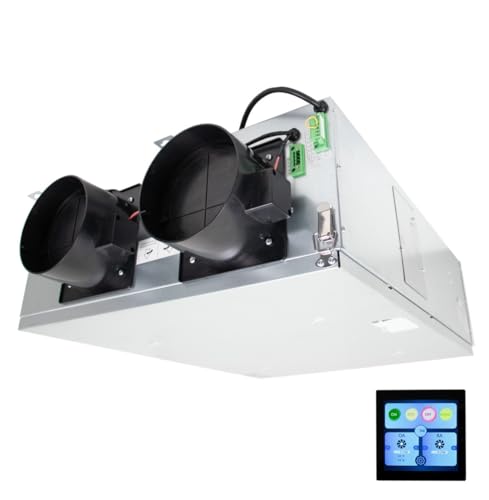
- Balanced fresh-air and stale-air exchange
- Adjustable 40–100 CFM airflow
- Humidity sensor and washable filters
Best For: Controlled ventilation with moisture management
Adjustable Fresh-Air Supply
Panasonic WhisperFresh Supply Fan

- Adjustable 20–130 CFM airflow
- ECM motor with SmartFlow technology
- Filter-ready 6-inch duct design
Best For: Controlled fresh-air supply ventilation
Compact Energy Recovery
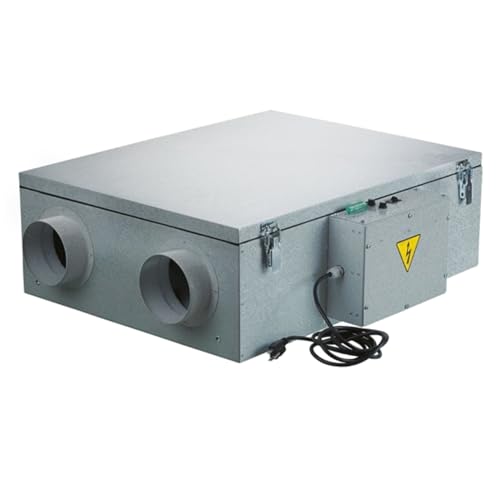
- 9.6-inch-deep casing for tight ceiling spaces
- 180 CFM balanced ventilation with heat and humidity recovery
- Automatic frost protection and washable MERV 6 filters
Best For: Compact, balanced whole-house ventilation
High-Capacity Attic Cooling
Solatube EPS Extreme Whole House Fan

- Moves up to 4,567 CFM for powerful home cooling
- Seven speeds with remote control
- Includes ducting, insulated dampers, grille, and mounting kit
Best For: Large-home attic cooling and ventilation
Low-Power Roof-Mount Cooling

- Designed for small, sealed, or poorly vented attics
- Three speeds deliver up to 1,813 CFM
- Low setting uses as little as 23.2 watts
Best For: Efficient cooling where attic space or venting is limited
Compact Filtered Air Exchange – WiFi HEPA Wall Vent
For targeted space-saving whole house ventilation systems—or cleaner air in a specific room—this through-wall unit combines fresh-air intake, stale-air exhaust, and three-stage filtration in a compact wall-mounted design. WiFi, remote, and button controls make it easy to adjust operation from a bedroom, office, attic, or other enclosed space.
Best For: Bedrooms, home offices, and smaller enclosed areas needing quiet, filtered air exchange without complex ductwork.
Pros:
- Three-stage filtration includes a pre-filter, HEPA filter, and activated carbon layer.
- Offers intake, exhaust, and circulation modes with app and remote control.
- Quiet 30 dB EC-motor operation and a detachable magnetic panel simplify maintenance.
Cons:
- Its 60 cubic meter-per-hour airflow is suited to room-level ventilation rather than high-capacity whole-home ducting.
- Through-wall installation still requires creating an appropriate wall opening.
This is a practical space-saving choice when filtration and flexible controls matter more than centralized coverage. Its compact wall installation and quiet operation are especially useful where ductwork is impractical.
Balanced Whole-Home Recovery – VENTS-US BRIG ERV 200
The BRIG ERV 200 is a dedicated option for space-saving whole house ventilation systems where balanced airflow and energy recovery are priorities. It supplies and exhausts air continuously through 6-inch ducting, while its polymer enthalpic core helps recover energy from outgoing air.
Best For: Homes with dedicated mechanical or ceiling space for a 213 CFM whole-house ERV installation.
Pros:
- Provides up to 213 CFM of whole-home supply and exhaust airflow.
- Energy recovery core and electronic defrost protection support year-round operation.
- Includes washable MERV 6 filters, three-step controls, and support for external boost controls.
Cons:
- Ceiling-mounted installation and 6-inch duct connections require planned ductwork.
- The unit is substantially larger than a room-level wall ventilator.
With balanced exchange, washable filters, and defrost protection, this model is better suited to a planned whole-home ventilation installation than a quick retrofit. Confirm available mechanical-room or ceiling space before buying.
HVAC-Coordinated Ventilation Control – Panasonic SelectCycler 6-Inch Kit
The Panasonic SelectCycler takes a control-focused approach to space-saving whole house ventilation systems by coordinating a central HVAC system, dampers, and compatible ventilation fans. This 6-inch kit includes a programmable wall controller, motorized supply damper, and FanConnect wall switch for supply or balanced ventilation strategies.
Best For: Homes already using compatible 110V ventilation fans and central HVAC equipment that need programmable ventilation coordination.
Pros:
- Coordinates HVAC operation, dampers, and compatible ventilation fans.
- Programmable controller displays system status and calculates run cycles.
- Supports dual supply and balanced ventilation modes through a complete 6-inch kit.
Cons:
- This is a control and damper kit, not a standalone air-exchange fan.
- Compatibility with the home’s HVAC system and ventilation fan must be verified.
Rather than adding a separate large air handler, the SelectCycler can make use of existing equipment, which may help conserve space. Its value depends on having a compatible HVAC and fan setup plus the willingness to complete a more integrated installation.
Auto-Balanced ERV Performance – Broan AI 206 CFM ERV
For a higher-capacity installation, the Broan B210E75RS provides up to 210 CFM of energy-recovery ventilation and can be suspended or mounted on a wall or ceiling. Its VIRTUO technology adds auto-balancing, while the integrated LCD screen provides a more informative control interface for a planned whole-home system.
Best For: Renovation or new-construction projects that can accommodate a wall- or ceiling-mounted 210 CFM ERV.
Pros:
- Delivers up to 210 CFM of ventilation capacity.
- Flexible suspended, wall, or ceiling mounting options suit different installation layouts.
- VIRTUO auto-balancing and an integrated LCD screen support setup and monitoring.
Cons:
- The 21-by-27.13-by-19.5-inch body needs substantial installation clearance.
- The supplied notes identify a MERV 8 filter but provide limited detail about the complete filtration setup.
This Broan is a strong fit when automatic balancing and mounting flexibility are more important than the smallest possible footprint. Measure the intended space carefully, since its capacity comes with a larger cabinet.
Smart Attic Cooling – AC Infinity CLOUDWAY T10
For shoppers comparing space-saving whole house ventilation systems, the AC Infinity CLOUDWAY T10 is a compact attic-mounted option designed to exhaust hot air from indoor areas. Its WiFi controls, programmable settings, and efficient EC motor make it suitable for automated ventilation management.
Best For: Homeowners who want smart, exhaust-focused attic ventilation with remote control.
Pros:
- WiFi app supports scheduling, timers, cycles, climate monitoring, and automation.
- Dynamic temperature, humidity, and VPD programming provides flexible control.
- PWM-controlled EC motor is designed for quieter, more energy-efficient operation.
- Compact 10-inch design delivers up to 791 CFM with an indicated noise level of 48 dBA.
Cons:
- Designed primarily for exhausting hot air rather than balanced fresh-air exchange.
- Ceiling or attic installation may require suitable mounting and duct planning.
The CLOUDWAY T10 stands out when automated attic exhaust and app-based control matter most. Consider a balanced ERV instead if your priority is simultaneous fresh-air intake and stale-air removal.
Balanced Air Exchange – Awoco 6-inch ERV System
The Awoco ERV is a practical choice among space-saving whole house ventilation systems when balanced air exchange is more important than high-volume exhaust. It brings in outside air while removing stale air, helping retain existing heat and manage indoor moisture.
Best For: Smaller homes or spaces needing continuous, balanced ventilation with humidity and temperature-related controls.
Pros:
- Balanced supply and exhaust airflow can help improve indoor air quality while retaining heat.
- Adjustable outside and return airflow from 40 to 100 CFM.
- Built-in humidity sensing, dampers, defrost, recirculation, and timer functions.
- Includes washable filters, mounting brackets, two 6-inch round adapters, and a touchscreen control panel.
Cons:
- Requires multiple 6-inch duct connections, including insulated ducting for outside and exhaust air.
- At 23 by 28.5 by 9 inches and 41 pounds, it may need more installation space than compact exhaust fans.
- Its listed noise level is 50 dB.
With balanced airflow, moisture sensing, and heat-retention features, this Awoco system is a strong fit for controlled whole-home air exchange. Plan carefully for its four duct connections and attic mounting requirements.
Adjustable Fresh-Air Supply – Panasonic WhisperFresh Supply Fan
The Panasonic WhisperFresh is a compact supply-air option for shoppers evaluating space-saving whole house ventilation systems. It provides adjustable fresh-air delivery from 20 to 130 CFM through a 6-inch duct and includes digital controls, airflow alerts, and filter compatibility.
Best For: Homes needing adjustable, code-oriented fresh-air supply with straightforward onboard controls.
Pros:
- Wide 20–130 CFM adjustment range supports different ventilation needs.
- ECM motor with SmartFlow technology is designed to maintain selected airflow.
- Built-in digital controls simplify setup and adjustment.
- Accepts compatible 8 by 8 by 1-inch filters, including MERV 13 options.
Cons:
- It is a supply-air fan, so the supplied notes do not indicate integrated stale-air exhaust.
- Requires a 6-inch duct and compatible filter for installation and filtration.
- The 25-inch depth may require careful wall-mount placement.
The WhisperFresh is a focused solution for delivering controlled fresh air rather than a complete balanced ERV setup. Its broad airflow range and filter-ready design make it useful where dependable supply ventilation is the main goal.
Compact Energy Recovery – Frigate ERV 150
The VENTS-US Frigate ERV 150 is a practical option when space-saving whole house ventilation systems need to fit a tight ceiling installation area. Its 9.6-inch-deep casing provides balanced fresh-air intake and stale-air exhaust while recovering heat and moisture.
Best For: Homes needing compact, balanced ventilation with energy recovery.
Pros:
- Slim, corrosion-resistant steel housing is designed for tight spaces.
- Enthalpy core recovers heat and humidity without requiring a drain.
- Automatic frost protection helps protect the energy core in cold conditions.
- Includes washable MERV 6 supply and exhaust filters plus mounting brackets.
Cons:
- Its 180 CFM capacity is intended for ventilation rather than high-volume whole-house cooling.
- Only one power level is listed.
Choose this model when installation depth and balanced air exchange matter more than maximum airflow. The 1.9-sones rating and energy-recovery core add practical efficiency for permanent ceiling mounting.
High-Capacity Attic Cooling – Solatube EPS Extreme Whole House Fan
The Solatube EPS Extreme is a high-output choice for space-saving whole house ventilation systems when the main goal is moving large amounts of air through an attic-mounted fan. It delivers up to 4,567 CFM and includes the components needed for a DIY installation.
Best For: Larger homes seeking powerful whole-house cooling and adjustable attic ventilation.
Pros:
- High 4,567 CFM airflow is suited to whole-house cooling.
- Seven speeds allow airflow and noise to be adjusted.
- HushMount 2 technology and an EC brushless motor support quieter operation.
- Includes insulated ducting, R6 damper doors, grille, remote, and mounting hardware.
Cons:
- At 30 inches high and 20 inches deep, it requires more installation space than a slim ERV.
- It is an attic-mounted exhaust fan, not a balanced fresh-air recovery system.
- The listed noise level is 50 dB.
This model makes sense when cooling performance and included installation hardware take priority. Its insulated dampers help limit air infiltration when the fan is off, while the remote provides convenient seven-speed control.
Low-Power Roof-Mount Cooling – QuietCool RM WHF-2.0-DB
The QuietCool RM WHF-2.0-DB is designed for homes with small attics, sealed attics, or limited venting options. Among space-saving whole house ventilation systems, it combines roof mounting, a compact included damper assembly, and three-speed airflow up to 1,813 CFM.
Best For: Homes with small or sealed attics that need efficient whole-house cooling.
Pros:
- Roof-mount design is intended for homes with small attics or no venting.
- Three speeds provide up to 1,813 CFM of airflow.
- Low-speed operation uses as little as 23.2 watts.
- Includes duct, damper box, ceiling grille, wireless RF control, and window locks.
Cons:
- Its stated coverage is up to 907 square feet for large-bedroom cooling.
- It is designed for cooling and exhaust ventilation rather than balanced outdoor-air exchange.
- Roof mounting may require a more involved installation than an interior ceiling-mounted unit.
This fan is a strong fit when attic limitations make conventional whole-house fan installation difficult. Its low-power setting is useful for economical operation, while the wireless control and countdown timer simplify everyday use.
How We Picked the Best Space-Saving Whole House Ventilation Systems
We focused on systems that can deliver meaningful whole-home airflow while fitting tighter installation areas, including compact utility spaces, ceilings, walls, attics, and roof assemblies. We compared stated airflow, ventilation type, control options, motor design, filtration, installation requirements, and energy-saving features.
Because these products serve different purposes, the list includes balanced energy-recovery ventilators, dedicated supply-air systems, and whole-house cooling fans. An ERV or supply fan is generally intended for continuous fresh-air exchange; a whole-house fan is primarily designed to move large volumes of air for cooling and ventilation.
Quick Comparison
- Best for balanced fresh-air exchange: VENTS-US BRIG ERV 200, Broan B210E75RS, or VENTS-US Frigate ERV 150.
- Best for compact single-room or targeted installation: the Through Wall HEPA Ventilation Fan, Panasonic WhisperFresh, or Awoco 6-inch ERV.
- Best for smart temperature-based control: AC Infinity CLOUDWAY T10.
- Best for high-volume cooling: Solatube Whole House Fan or QuietCool RM WHF-2.0-DB.
- Best for flexible ducted supply ventilation: Panasonic SACG2K-06 SelectCycler.
Key Buying Factors for Space-Saving Whole House Ventilation Systems
Ventilation Type and Purpose
Choose an ERV when you want simultaneous exhaust and fresh-air supply with reduced energy loss. A supply fan is simpler and may be easier to retrofit, but it needs a suitable path for stale air to leave. Whole-house fans move far more air and can cool a home when outdoor conditions are favorable, but they are not a direct substitute for balanced mechanical ventilation.
Airflow and Home Size
Match the rated CFM to the home’s size, occupancy, airtightness, and local ventilation requirements. Higher CFM is not automatically better: excessive airflow can increase noise, drafts, and heating or cooling loads. Verify whether the published rating applies to the installed duct configuration.
Installation Space and Ductwork
Measure the unit, service clearances, duct diameter, port orientation, wall or ceiling depth, and electrical access before buying. Compact equipment still needs room for filters, controls, condensate management where applicable, and future maintenance.
Noise, Filtration, and Controls
Look for quiet EC motors, multiple speed settings, accessible filters, and controls that suit your routine. Wi-Fi or temperature-based automation can improve convenience, while basic wall controls may be more reliable for simple installations.
Who Should Buy Which Space-Saving Whole House Ventilation Systems?
Apartment owners, retrofitters, and homeowners with limited duct space should prioritize the compact through-wall, Panasonic, or Awoco options. Buyers seeking balanced, whole-home air exchange should consider the VENTS-US or Broan ERV models. Choose the AC Infinity unit if app-based control and temperature response matter most. For homes with suitable attic or roof access and a priority on summer cooling, the Solatube or QuietCool whole-house fans are stronger fits.
Before installation, confirm local code requirements and have a qualified HVAC professional verify sizing, duct routing, electrical connections, and weatherproofing.