Improving whole-home airflow does not always require a premium mechanical ventilation system. The best budget whole-house ventilation systems can reduce stale air, move heat between rooms, exhaust excess moisture, or bring in filtered outdoor air at a manageable cost.
This roundup compares ten practical options, from high-capacity whole-house fans and shutter exhaust fans to energy recovery ventilators and through-wall fresh-air systems. Use the guide below to match airflow, controls, filtration, and installation requirements to your home.
Best 10 Budget Whole House Ventilation Systems Picks for 2026
Best Budget Whole House Fan

- 10-speed wireless controller
- Energy-conscious EC motor
- 1,250 CFM attic exhaust
Best For: Remote-controlled whole-house attic cooling
Best Controlled Ventilation System

- Programmable wall controller
- Supply or balanced modes
- Includes motorized damper
Best For: Coordinated HVAC-based ventilation projects
Best Smart Budget Whole House Fan

- Wi-Fi app and automation
- Temperature and humidity programming
- Up to 1,600 CFM listed airflow
Best For: App-controlled attic ventilation
Best Energy-Saving Pick
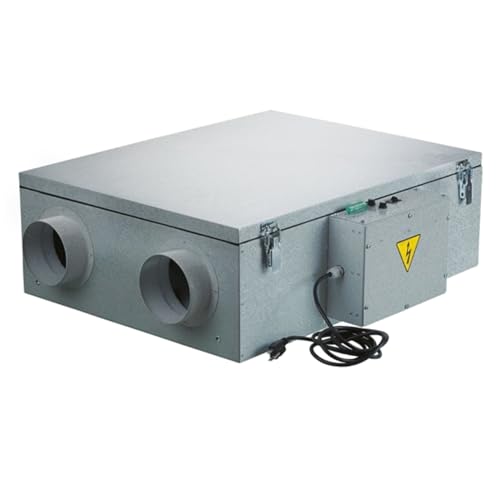
- Balanced ventilation up to 180 CFM
- Recovers heat and moisture
- Slim ceiling-mount casing
Best For: Whole-house ERV ventilation with energy-conscious airflow
Best High-Volume Exhaust Pick

- Moves up to 3,368 CFM
- Three speeds with thermostat control
- Durable wall-mounted construction
Best For: Large garages, workshops, and utility spaces
Best Smart Filtered-Air Pick
Through-Wall HEPA Ventilation Fan
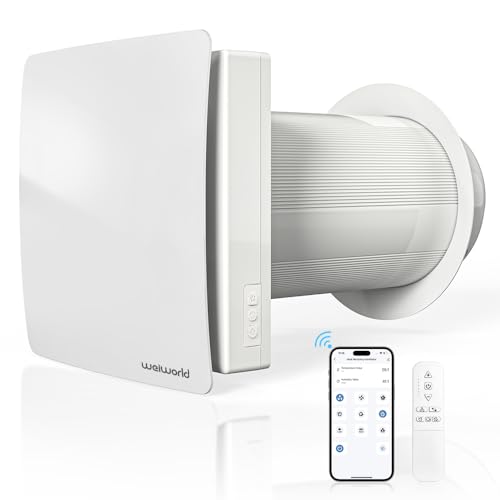
- Three-stage HEPA filtration
- Wi-Fi, remote, and app control
- Quiet 30 dB EC motor
Best For: Bedrooms and home offices needing filtered ventilation
Best Budget Wall Exhaust Fan
iLiving 10-Inch Variable-Speed Shutter Fan

- 820 CFM airflow for spaces up to 1,200 square feet
- Automatic shutters plus thermostat and speed control
- Durable galvanized steel and aluminum construction
Best For: Garages, workshops, sheds, and greenhouses needing direct exhaust
Best Budget ERV System

- Balanced fresh-air supply and stale-air exhaust up to 162 CFM
- Enthalpy core recovers heat and moisture
- Freeze protection and washable MERV 6 filters
Best For: Continuous, balanced home ventilation in varying climates
Best Budget High-Output Fan

- 4,567 CFM airflow for homes up to 3,000 square feet
- Seven speeds with remote-controlled EC brushless motor
- Insulated dampers and HushMount 2 noise-reduction design
Best For: Large-home cooling and high-volume attic ventilation
Best Budget Whole House Fan – AC Infinity CLOUDWAY S12
For shoppers comparing budget whole house ventilation systems, the AC Infinity CLOUDWAY S12 offers a straightforward way to exhaust hot indoor air through the attic. Its 10-speed wireless controller, EC motor, and automatic damper provide flexible airflow control for whole-home cooling and ventilation.
Best For: Homeowners who want remotely adjustable whole-house attic ventilation at a relatively accessible feature level.
Pros:
- 10-speed wireless controller allows precise airflow adjustments.
- PWM-controlled EC motor is designed for quieter, more energy-efficient operation.
- Two-door shutters and damper help block attic air when the fan is off.
- Provides up to 1,250 CFM of airflow through a 12-inch duct.
Cons:
- Listed noise level is 62 dBA, so it may be noticeable during operation.
- Designed for attic mounting and exhausting, rather than balanced fresh-air ventilation.
The CLOUDWAY S12 is a practical choice when your priority is moving hot air out of the home with convenient wireless speed control. Verify the 12-inch duct requirement and attic installation space before buying.
Best Controlled Ventilation System – Panasonic SelectCycler 6-Inch
Among budget whole house ventilation systems, the Panasonic SelectCycler stands out as a control package rather than a standalone high-volume attic fan. It coordinates a central HVAC system, dampers, and compatible ventilation fans, supporting either supply or balanced ventilation strategies through a programmable wall controller.
Best For: Homeowners building a coordinated ventilation setup around a compatible WhisperGreen Select or 110VAC ventilation fan.
Pros:
- Includes a programmable wall-mounted controller that calculates run cycles and displays system status.
- Supports supply and balanced ventilation modes.
- Complete 6-inch kit includes a 24VAC motorized supply damper and Fanconnect wall switch.
- Designed to coordinate with central HVAC equipment and compatible ventilation fans.
Cons:
- It is a ventilation control system, not a complete standalone whole-house fan.
- Requires compatible fans and installation involving HVAC controls and ductwork.
- Only two operating modes are listed.
The SelectCycler makes the most sense for a planned, integrated ventilation installation where scheduling and system coordination matter. Confirm compatibility with your existing fan, HVAC equipment, and 6-inch ductwork before purchase.
Best Smart Budget Whole House Fan – AC Infinity CLOUDWAY T12
The AC Infinity CLOUDWAY T12 is a strong contender among budget whole house ventilation systems for shoppers who want automated control. Its Wi-Fi controller supports temperature, humidity, scheduling, timers, cycles, and minimum-speed settings, while the EC motor helps manage efficiency and operating noise.
Best For: Smart-home users who want app-based ventilation programming and climate monitoring for attic exhaust.
Pros:
- Wi-Fi app enables remote control, climate-data viewing, and automation.
- Supports temperature, humidity, VPD, timer, cycle, and scheduling programs.
- PWM-controlled EC motor is designed for quieter, more energy-efficient operation.
- Provides listed airflow of up to 1,600 CFM with 11 power levels.
Cons:
- Its 12-inch duct size and fixed installation require advance space planning.
- The listed 62 dBA noise level may be noticeable.
- Designed for exhausting attic air, not for balanced fresh-air exchange.
The CLOUDWAY T12 is the better fit when automation is more important than the simplest controls. Check the electrical requirements, duct size, and attic mounting location before committing to the installation.
Best Room-to-Room Option – ALORAIR 300 CFM Transfer Fan
While not a whole-home attic exhaust fan, the ALORAIR RTR300 can complement budget whole house ventilation systems by moving air between adjacent rooms. It offers cooling, heating, and ventilation modes, plus thermostat control and three fan speeds for targeted room-to-room comfort.
Best For: Directing heated, cooled, or circulating air between rooms where a through-wall installation is suitable.
Pros:
- Three selectable modes provide cooling, heating, or basic ventilation.
- Precision thermostat settings range from 23°F to 104°F.
- Dual seven-blade fans deliver 300 CFM with a listed 45 dB noise level.
- Includes remote control and a durable metal housing.
Cons:
- Moves air between rooms rather than ventilating the entire home to the outdoors.
- Limited to 300 CFM and three speeds.
- Requires a compatible wall opening between 3.7 and 7.6 inches thick.
The RTR300 is best viewed as a supplemental comfort and air-transfer solution, not a replacement for a whole-house exhaust or balanced ventilation system. Measure the wall opening carefully and confirm that room-to-room airflow matches your goal.
Best Energy-Saving Pick – VENTS-US Frigate ERV 150
For shoppers comparing budget whole house ventilation systems, the VENTS-US Frigate ERV 150 is a practical choice when balanced airflow and energy-conscious operation matter. Its enthalpy core exchanges stale indoor air for filtered outdoor air while helping recover heat and moisture, and its slim ceiling-mount casing suits tighter installation spaces.
Best For: Whole-house ventilation in homes that need balanced fresh-air exchange, heat and humidity recovery, and ceiling installation.
Pros:
- Provides balanced supply and exhaust ventilation at up to 180 CFM.
- Enthalpy core helps retain warmth and humidity in winter and reduce cooling loss in summer.
- Compact 9.6-inch-deep, corrosion-resistant steel casing includes mounting brackets.
- Includes washable MERV 6 filters and automatic frost protection.
Cons:
- Its single power level offers less adjustment than multi-speed systems.
- At 1.9 sones, it is quiet but not silent.
- Permanent ceiling installation may require more planning than a wall-mounted fan.
Choose this model when you want a dedicated ERV rather than a simple exhaust fan. The combination of heat and moisture recovery, frost protection, and a slim housing gives it a strong feature set for a budget-oriented whole-house installation.
Best High-Volume Exhaust Pick – iLIVING 20-Inch Shutter Fan
If your priority among budget whole house ventilation systems is moving a large volume of air, the iLIVING 20-inch shutter exhaust fan delivers up to 3,368 CFM. It is designed for wall-mounted exhaust in large spaces such as garages, workshops, warehouses, and greenhouses, with variable speed and thermostat controls.
Best For: Large garages, workshops, warehouses, and other spaces that need powerful wall-mounted exhaust ventilation.
Pros:
- Moves up to 3,368 CFM and is rated for coverage up to 5,000 square feet.
- Includes three speeds and a temperature-control range of 32–130°F.
- Galvanized steel frame, aluminum shutters, and aluminum blades are built for demanding spaces.
- UL/cUL listed with a permanently lubricated direct-drive motor.
Cons:
- Its listed noise level is under 69 dB, making it less suitable for quiet living areas.
- This is an exhaust fan, not a balanced supply-and-exhaust ventilation system.
- Wall installation requires a suitable opening and electrical setup.
This iLIVING model makes the most sense when airflow volume matters more than filtration, heat recovery, or bedroom-level quiet. Its thermostat and speed controls add useful flexibility, but it is better suited to utility and work areas than a typical occupied living space.
Best Smart Filtered-Air Pick – Through-Wall HEPA Ventilation Fan
For buyers seeking budget whole house ventilation systems with smart controls and filtration, this through-wall HEPA fan combines fresh-air intake, exhaust, and circulation modes. Its three-stage filter system targets dust, pollen, and odors, while the EC motor and 30 dB noise rating make it suitable for bedrooms and home offices.
Best For: Bedrooms, home offices, and smaller enclosed spaces where filtered fresh air, quiet operation, and app control are priorities.
Pros:
- Uses pre-filter, HEPA, and activated-carbon filtration to help reduce dust, pollen, and odors.
- Supports fresh-air intake, exhaust, and circulation modes.
- Offers Tuya app, remote, and button control with multiple power levels.
- Quiet 30 dB brushless EC motor uses 8.5 watts.
Cons:
- Its 60 cubic meters-per-hour airflow is much lower than a whole-house ERV or high-volume exhaust fan.
- Through-wall installation still requires an appropriate wall opening and duct adjustment.
- The listed 230-volt specification may not suit every household electrical system.
This model is a good fit when localized ventilation and cleaner incoming air are more important than maximum house-wide airflow. Its filtration and smart controls are appealing for personal spaces, but verify electrical compatibility and airflow needs before treating it as a complete whole-house solution.
Best Budget Wall Exhaust Fan – iLiving 10-Inch Variable-Speed Shutter Fan
For shoppers comparing budget whole house ventilation systems, the iLiving 10-inch fan is a practical wall-mounted exhaust option for moving stale air from spaces up to 1,200 square feet. Its 820 CFM airflow, automatic shutters, thermostat control, and variable-speed operation make it especially useful where simple exhaust ventilation is the priority.
Best For: Garages, workshops, sheds, greenhouses, and other spaces needing direct wall exhaust.
Pros:
- Moves up to 820 CFM and is rated for coverage up to 1,200 square feet.
- Includes variable-speed and temperature controls with a 32–130°F range.
- Galvanized steel housing, aluminum shutters, OSHA-compliant guards, and UL/cUL listing support durable use.
Cons:
- At up to 65 dB, it may be too noticeable for quiet living areas.
- It is an exhaust fan rather than a balanced fresh-air recovery system.
- Wall mounting and hardwired installation may require planning or professional help.
This model offers strong airflow and useful controls at a relatively straightforward installation point. Choose it when direct exhaust matters more than heat and humidity recovery or whole-home air balancing.
Best Budget ERV System – VENTS-US Frigate ERV 120s
The VENTS-US Frigate ERV 120s is a strong fit for buyers seeking budget whole house ventilation systems that exchange indoor and outdoor air while helping retain heat and moisture. It provides balanced supply and exhaust airflow, washable MERV 6 filters, and freeze protection for more consistent operation in cold conditions.
Best For: Homes needing continuous, balanced ventilation with heat and humidity recovery.
Pros:
- HVI-certified whole-house air exchange delivers up to 162 CFM.
- Its enthalpy core provides up to 65% apparent sensible effectiveness for energy and humidity recovery.
- Electronic anti-frost protection and washable MERV 6 filters support cold-weather, low-maintenance use.
Cons:
- Maximum airflow is much lower than that of a high-volume whole-house cooling fan.
- Installation requires ductwork with standard 5-inch connections and ceiling mounting brackets.
- The built-in controls offer three settings rather than a broader variable-speed range.
Unlike a basic exhaust fan, this ERV is designed for continuous balanced ventilation and energy recovery. It is the more suitable choice when indoor air quality and steady fresh-air exchange are priorities.
Best Budget High-Output Fan – Solatube Whole House Fan EPS
For buyers comparing budget whole house ventilation systems for rapid home cooling, the Solatube Whole House Fan EPS delivers up to 4,567 CFM and is rated for homes up to 3,000 square feet. Its attic-mount design, seven speeds, insulated damper doors, and remote control provide high-volume airflow with more control than a basic fixed-speed fan.
Best For: Larger homes seeking powerful attic-mounted whole-house cooling and ventilation.
Pros:
- Provides up to 4,567 CFM for homes up to 3,000 square feet.
- Seven adjustable speeds, a remote, and an EC brushless motor enable flexible operation.
- HushMount 2 technology and R6 insulated damper doors address noise and air infiltration.
Cons:
- Its 697-watt power rating is higher than that of the smaller ventilation options here.
- Attic mounting requires a suitable installation location and project planning.
- It is designed for high-volume cooling and ventilation, not balanced heat-recovery exchange.
This is the standout option when airflow capacity is the main purchasing factor. The included mounting components and remote make it appealing for a DIY-oriented installation, provided the attic and home layout are suitable.
How We Picked the Best Budget Whole House Ventilation Systems
We focused on systems that address a common residential ventilation or air-circulation need without assuming a high-end ducted installation. The selection includes whole-house cooling fans, room-to-room transfer fans, exhaust fans, energy recovery ventilators (ERVs), and filtered fresh-air exchange units.
We compared stated airflow, intended coverage, control options, motor design, filtration, temperature or humidity features, installation demands, and suitability for different climates. Capacity figures are manufacturer claims and can vary with duct length, grille resistance, room layout, and installation quality.
Quick Comparison
| System type | Best for | Main advantage | Important limitation |
|---|---|---|---|
| Whole-house fan | Rapid summer cooling | High airflow and low operating cost | Needs suitable outdoor conditions and attic exhaust |
| Shutter exhaust fan | Large-area air removal | Simple, high-volume ventilation | Usually provides little filtration or heat recovery |
| ERV | Balanced fresh-air exchange | Helps retain conditioned energy | More involved ducting and maintenance |
| Through-wall or transfer fan | Targeted rooms and zones | Flexible, relatively simple installation | Limited whole-home coverage without multiple units |
Key Buying Factors for Budget Whole-House Ventilation Systems
Airflow and Coverage
Look beyond the largest CFM number. Compare rated airflow with your home’s square footage, ceiling height, duct resistance, and the number of rooms that need ventilation. Oversized exhaust fans may create drafts or pull air through undesirable openings, while undersized systems may not control heat or moisture effectively.
Ventilation Type
Choose a whole-house fan when the priority is cooling with outdoor air. Select an exhaust fan for bathrooms, workshops, garages, or hot utility areas. An ERV is generally better when you need continuous fresh-air exchange while limiting the loss of heating or cooling energy. Transfer fans move air between rooms but do not replace dedicated outdoor-air ventilation.
Controls, Noise, and Installation
Variable-speed controls, thermostats, timers, Wi-Fi, and remote controls make systems easier to operate. Check sound ratings and whether the fan is intended for a wall, ceiling, attic, or ducted installation. Confirm electrical requirements, opening dimensions, backdraft protection, and whether professional installation is advisable.
Filtration and Climate Performance
If outdoor air quality matters, prioritize a system with replaceable filtration and verify the filter class and replacement cost. ERVs with freeze protection are especially relevant in cold climates. In hot-humid regions, make sure the ventilation strategy will not introduce excessive moisture.
Who Should Buy Which Budget Whole House Ventilation Systems?
Choose a high-airflow whole-house fan such as the AC Infinity CLOUDWAY models or Solatube option for whole-home summer cooling when attic ventilation and suitable outdoor temperatures are available. Consider the iLIVING shutter fans for straightforward, high-volume exhaust in large spaces, while the smaller iLIVING model fits more localized applications.
Choose an ERV, such as the VENTS-US Frigate models, when balanced fresh-air exchange, filtration, and energy conservation matter more than maximum airflow. The Panasonic SelectCycler is a practical choice for targeted ducted ventilation. For individual rooms or difficult layouts, the ALORAIR transfer fan or a through-wall HEPA ventilation unit may provide the simplest upgrade.