Low water pressure can turn everyday tasks into frustrating waits, especially when multiple fixtures run at once. The right booster system can improve shower performance, stabilize flow, and make better use of an inconsistent municipal or well-water supply.
These 10 options span smart constant-pressure pumps, whole-house systems, and compact diaphragm models. Use the guide below to match pump capacity, controls, noise level, and installation requirements to your home.
Best 10 Water Pressure Booster Systems for Home Use Picks for 2026
Best Smart Whole-Home Pick
GWANZI Variable-Speed Booster Pump

- 15–90 PSI adjustable pressure range
- Wireless app control and OTA updates
- Quiet, water-cooled 900W motor
Best For: Whole-house boosting with app monitoring
Best Quiet Premium Option
Grundfos SCALA2 Smart Booster Pump
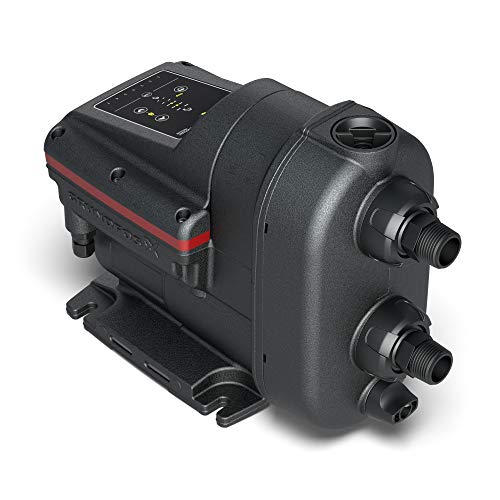
- Automatic pressure control for three floors
- 44 dB(A) operation
- Integrated tank, sensor, and protections
Best For: Quiet multi-floor residential water boosting
Best High-Output Smart System

- Up to 26.5 GPM flow
- 22–92 PSI adjustable constant pressure
- Smart Life app and three-year warranty
Best For: High-demand whole-house and clean-water applications
Best Compact Utility Pump
ECO-WORTHY 5.5 GPM Diaphragm Pump

- 5.5 GPM flow at 70 PSI
- Automatic on-demand pressure switch
- Thermal overload protection
Best For: Irrigation, cleaning, RV, and utility water transfer
Quiet Whole-Home Booster

- Up to 70 PSI, 1,200 GPH, and 148 feet of head
- Quiet 45 dB operation for indoor spaces
- Automatic variable speed with motor protection
Best For: Whole-house boosting where quiet, steady pressure is important
Smart Constant-Pressure System
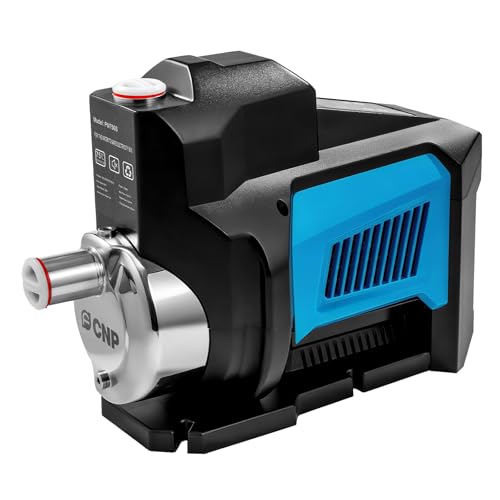
- Up to 80 PSI, 1,532 GPH, and 164 feet of head
- Automatically adjusts output to household demand
- Quiet 25–40 dB operation with stainless-steel construction
Best For: Large or multi-floor homes needing automatic constant pressure
Targeted Home Booster

- Automatic demand-based pressure control
- Up to 7.93 GPM and 75-ft maximum head
- Compact stainless steel indoor design
Best For: Targeted boosting at showers, sinks, and other fixtures
Versatile Diaphragm Booster

- 50 PSI pressure with 3.3 GPM flow
- Dry-run protection and self-diagnosis
- IPX5 design for outdoor-capable use
Best For: Home, RV, irrigation, and outdoor water setups
Quiet Variable-Speed Booster

- Automatic and manual operating modes
- Quiet 40 dB variable-frequency motor
- 304 stainless steel wetted parts
Best For: Showers, kitchens, water heaters, and apartments
Best Smart Whole-Home Pick – GWANZI Variable-Speed Booster Pump
For shoppers comparing water pressure booster systems for home use, the GWANZI offers adjustable constant-pressure performance, app-based controls, and a compact design. Its 900W permanent-magnet motor supports up to 1,500 GPH, with pressure adjustable from 15 to 90 PSI depending on the water source.
Best For: Whole-house systems, kitchens, bathrooms, and installations where wireless monitoring and quiet operation are useful.
Pros:
- Adjustable 15–90 PSI pressure range and up to 1,500 GPH flow.
- Wireless app control supports pressure adjustments, monitoring, and OTA firmware updates.
- 304 stainless-steel pump body, water cooling, and approximately 30 dB operation.
- Built-in protections include dry-run, overheating, leakage, blockage, and sensor-failure safeguards.
Cons:
- Maximum pressure depends on the supply method, with lower stated limits for tank-fed systems.
- App connection distance is approximately 30 feet.
- Installation requires compatible 1-inch NPT plumbing connections.
The GWANZI is a feature-rich option when quiet operation, variable speed, and remote access matter. Verify the available water supply, electrical setup, and pressure requirements before installation.
Best Quiet Premium Option – Grundfos SCALA2 Smart Booster Pump
The Grundfos SCALA2 is a compact all-in-one choice among water pressure booster systems for home use. Its intelligent controls automatically adjust output to demand, supporting consistent pressure across three floors and up to eight taps while operating at a stated 44 dB(A).
Best For: Residential showers, bathrooms, and multi-floor homes that prioritize quiet, automatic pressure control.
Pros:
- Automatically maintains pressure across up to three floors and eight taps.
- All-in-one design integrates the pump, motor, tank, sensor, drive, and check valve.
- Quiet 44 dB(A) operation and claimed energy savings of up to 40% versus standard pumps.
- Seven alerts, dry-run protection, self-priming startup, and UPS compatibility.
Cons:
- Its listed 0.7 hp rating and 3,500-liter-per-hour flow may not suit every high-demand installation.
- The unit is relatively large at 18.5 by 10.24 by 14.57 inches.
- Outdoor installation requires a canopy or shelter.
SCALA2 stands out for homeowners who want an integrated system with low operating noise and smart protection features. Check the installation space and household demand before choosing it.
Best High-Output Smart System – AIDPATH EVO BOOST5
The AIDPATH EVO BOOST5 combines a 1.2 hp permanent-magnet motor with variable-speed constant-pressure control. For water pressure booster systems for home use, it offers up to 26.5 GPM, an adjustable 22–92 PSI range, and support for up to eight faucets across three floors.
Best For: Whole-house pressurization, showers, storage tanks, irrigation, and clean-water transfer where higher flow is important.
Pros:
- Provides up to 26.5 GPM and a stated 197-foot maximum head.
- Variable-speed operation automatically responds to water demand.
- Smart Life app enables monitoring of pressure, energy use, temperature, and pump status.
- Stainless-steel construction, built-in fault protections, FCC certification, and a stated three-year warranty.
Cons:
- At 20.4 pounds and 20.7 inches long, it needs a suitably sized installation area.
- App control requires a compatible wireless setup.
- The product is intended for clean water and has a stated liquid-temperature range of 32°F to 167°F.
With its higher flow rating and broad application list, the EVO BOOST5 is suited to demanding residential setups. Confirm pipe connections, source conditions, and installation requirements before purchase.
Best Compact Utility Pump – ECO-WORTHY 5.5 GPM Diaphragm Pump
The ECO-WORTHY diaphragm pump is a compact, on-demand option for buyers seeking water pressure booster systems for home use in smaller or utility-focused applications. It delivers 5.5 GPM at a 70 PSI pressure-switch setting and starts when a faucet opens, then shuts off when it closes.
Best For: Garden irrigation, hose use, cleaning, RV applications, and smaller residential water-transfer tasks.
Pros:
- 5.5 GPM flow with a 70 PSI pressure-switch setting.
- Self-primes up to 9.8 vertical feet and lifts water up to 131 feet.
- Automatic on-demand operation reduces the need for manual switching.
- Thermal overload protection disconnects the circuit above 158°F.
Cons:
- Its 5.5 GPM flow is substantially lower than the whole-house booster pumps in this roundup.
- The notes describe a pressure-switch setting rather than variable-speed constant-pressure control.
- It is positioned primarily for irrigation, cleaning, RV, and utility uses rather than multi-floor household boosting.
The ECO-WORTHY is a practical, compact choice for targeted pressure and transfer jobs. For a full-home system serving multiple floors or several simultaneous fixtures, compare its modest flow capacity with a dedicated whole-house model.
Quiet Whole-Home Booster – 70 PSI Variable-Speed Pump
For homeowners comparing water pressure booster systems for home use, this 70 PSI model focuses on steady pressure, quiet operation, and automatic speed adjustment. It can deliver up to 1,200 GPH with 148 feet of head and supports municipal water, tanks, and suitable shallow-well applications.
Best For: Whole-house pressure boosting where low noise and variable-speed efficiency matter.
Pros:
- Delivers up to 70 PSI, 1,200 GPH, and 148 feet of head.
- Runs at a rated 45 dB for quieter indoor operation.
- 500W variable-speed motor adjusts to water demand and includes multiple protective features.
- Supports showers, faucets, laundry, water heaters, and garden use.
Cons:
- Maximum suction is limited to 85 feet for shallow-well applications.
- Pressure and flow performance depend on the installation and water source.
This is a practical choice for homes needing more consistent pressure without adding much operating noise. Its automatic controls and built-in dry-run, leak, overload, and overheating protection add convenience, while the above-ground design may require planning around available installation space.
High-Power Utility Booster – 1.5HP Automatic Pump
This 1.5HP pump is a versatile option among water pressure booster systems for home use, combining automatic mechanical control with self-priming operation. It provides up to 1,600 GPH and a listed maximum lift of 120 feet for pressure boosting, irrigation, and water-transfer tasks.
Best For: Homeowners who want one powerful pump for showers, irrigation, drainage, and general water transfer.
Pros:
- Strong 1.5HP motor and up to 1,600 GPH flow.
- Mechanical pressure switch automatically starts and stops the pump.
- Self-priming design helps simplify setup and startup.
- Includes overheat and dry-run protection for safer extended use.
Cons:
- The mechanical switch does not support custom pressure adjustment.
- Its utility-oriented design may be less suited to buyers seeking advanced constant-pressure controls.
Choose this model when versatility and motor power are higher priorities than fine pressure customization. It can cover several demanding tasks, but the fixed mechanical control may be limiting if you need to tune the pressure precisely for a particular household system.
Smart Constant-Pressure System – 80 PSI Whole-House Pump
Designed for demanding whole-house installations, this 80 PSI model is one of the more feature-rich water pressure booster systems for home use. Its smart controller adjusts motor performance to water demand, while the pump supports up to 1,532 GPH, 164 feet of head, and pressure settings from 22 to 80 PSI.
Best For: Larger homes, multi-floor systems, and users seeking automatic constant-pressure control.
Pros:
- Supports stable pressure for up to 10 faucets across three floors, according to the supplied specifications.
- Automatic variable-frequency control adjusts output as water use changes.
- Operates at a stated 25–40 dB and uses an energy-efficient permanent-magnet motor.
- Stainless-steel pump head includes dry-run and power-failure protection and handles hot water up to 167°F.
Cons:
- The integrated unit is relatively large at 16.93 by 9.06 by 13.39 inches.
- Its advanced controls may be more than needed for a small, simple booster installation.
- Shallow-well use is limited to depths not exceeding 26.25 feet.
This model stands out for automatic pressure management across a busy residential system. It offers strong head capability, quiet operation, and robust protection, but its larger integrated design and higher level of control may call for more installation planning than a basic utility pump.
Targeted Home Booster – Stainless Steel 32.5 PSI Pump
This residential pump is a focused option among water pressure booster systems for home use, designed to improve flow at selected fixtures rather than pressurize an entire house. Its automatic control, stainless steel housing, and compact indoor-friendly design suit showers, sinks, and similar outlets.
Best For: Homeowners who need targeted pressure support at specific indoor fixtures.
Pros:
- Automatic pressure control adjusts to real-time water demand and stops when use ends.
- Stainless steel construction, IP67 protection, and compact dimensions support indoor residential installation.
- Provides up to 7.93 GPM flow, 32.5 PSI pressure, and 75 feet of maximum head under different operating conditions.
Cons:
- Designed for targeted fixture boosting, not necessarily whole-home pressurization.
- Maximum flow, pressure, and head ratings are not achieved simultaneously.
- Installation uses 3/4-inch NPT connections with included 1/2-inch adapters, so plumbing compatibility should be checked.
This is a practical pick when a compact, automatic booster is needed for particular household outlets. The stainless steel build and energy-conscious control add useful durability and efficiency for everyday indoor use.
Versatile Diaphragm Booster – 3.3 GPM Self-Priming Pump
For water pressure booster systems for home use that may also serve outdoor or off-grid settings, this 115V diaphragm pump combines 3.3 GPM flow with 50 PSI pressure. Self-priming, dry-run protection, and a built-in pressure switch make it suited to showers, kitchens, irrigation, and similar applications.
Best For: Households, RVs, and outdoor setups needing a self-priming pump with motor protection.
Pros:
- Delivers 3.3 GPM at up to 50 PSI and is described as supporting three to four outlets simultaneously.
- Dry-run protection automatically shuts the pump off when water is depleted.
- Self-diagnosis, thermal power adjustment, and a brushless motor support protected, low-maintenance operation.
- IPX5 waterproofing and included adapters and strainer expand installation flexibility.
Cons:
- Its 10-foot maximum lifting height is lower than the maximum head ratings of some residential booster pumps.
- Plastic construction may be less rugged than a stainless steel pump housing.
- Requires a 115V AC power source despite its suitability for some outdoor applications.
This pump stands out for protection features and installation versatility rather than maximum lift. It is a strong fit where self-priming, quiet operation, and dry-run safety matter as much as pressure improvement.
Quiet Variable-Speed Booster – Smart 32 PSI Pressure Pump
This automatic pump is a compact choice among water pressure booster systems for home use, with variable-frequency control for showers, kitchens, water heaters, and apartment plumbing. It offers automatic and manual modes, quiet 40 dB operation, and stainless steel wetted parts.
Best For: Indoor users wanting quiet, adjustable pressure support with automatic start-stop operation.
Pros:
- Automatic mode monitors flow and adjusts pressure and flow for steadier delivery.
- PM variable-frequency motor is designed to save over 50% energy versus regular pumps.
- 304 stainless steel wetted parts, IP67 waterproofing, and 194°F heat resistance support demanding household use.
- Compact design includes an installation kit, adapters, mounting bracket, and a two-year full warranty.
Cons:
- Rated everyday performance is 17 PSI and 264 GPH, below the maximum 32.7 PSI and 480 GPH figures.
- Manual mode does not provide automatic on/off operation.
- Maximum specifications are laboratory test data and may not reflect typical operating conditions.
Choose this model when quiet operation, adjustable control, and efficient automatic boosting are priorities. Its rated specifications should be considered alongside the higher maximum figures when matching it to a household system.
How We Picked the Best Water Pressure Booster Systems for Home Use
We compared these systems by looking at pressure ratings, flow capacity, motor power, voltage, control type, noise considerations, and intended installation scale. Whole-house models received attention for self-priming operation, automatic pressure control, and the ability to support multiple fixtures. Smaller diaphragm pumps were considered for targeted applications such as a single bathroom, RV-style plumbing, an accessory dwelling, or a low-flow fixture group.
Ratings are not directly interchangeable: maximum pressure and maximum flow are peak specifications, not guaranteed performance at every fixture. Actual results depend on incoming supply, pipe size, elevation, plumbing restrictions, and the pump’s control settings.
Quick Comparison
- Best for smart constant pressure: Grundfos SCALA2.
- Best for high-demand whole-house use: The 1.2HP and 1.5HP booster pumps with higher flow and head ratings.
- Best for quieter operation: The listed 45 dB whole-house model, subject to installation conditions.
- Best for compact on-demand boosting: ECO-WORTHY, Cleartide, and the 100-watt automatic pump.
- Best for basic automatic operation: Models with mechanical or built-in pressure switches.
Key Buying Factors for Water Pressure Booster Systems for Home Use
Pressure and Flow
Choose a pump based on both PSI and gallons per minute. A high PSI figure alone does not guarantee strong showers or simultaneous fixture use. Larger homes and households with multiple bathrooms generally need more flow capacity, while a single fixture may need far less.
Control and Protection
Variable-speed systems can adjust output as demand changes and may provide steadier pressure. Mechanical pressure switches are simpler and often easier to service. Look for dry-run protection, overload protection, self-diagnosis, or automatic shutoff when the water source may run dry.
Installation Compatibility
Verify voltage, inlet and outlet dimensions, pump orientation, plumbing materials, and whether a pressure tank, check valve, filter, or bypass is required. A booster pump should not be used to compensate for a blocked filter, undersized pipe, failing pressure regulator, or municipal-supply restriction without addressing that underlying issue.
Noise, Efficiency, and Durability
Placement on a solid, vibration-resistant surface can reduce noise. Stainless-steel components may suit demanding environments, while permanent-magnet or variable-speed motors can improve efficiency in some applications. Confirm the manufacturer’s temperature, duty-cycle, and indoor or outdoor installation requirements.
Who Should Buy Which Water Pressure Booster Systems for Home Use?
Choose a smart variable-speed system if you want refined pressure control, automatic adjustment, and a premium whole-house solution. Select a higher-powered 1.2HP or 1.5HP pump when several fixtures may run together and your plumbing can support the required flow. A quieter whole-house model is a better fit when the pump will be installed near living areas.
For one bathroom, a remote fixture, or a modest water-demand problem, a compact diaphragm pump may be more practical and economical. These smaller units can be easier to install but are not substitutes for a properly sized whole-house booster. Before purchasing, confirm your incoming water supply, electrical circuit, local plumbing rules, and whether professional installation is recommended.