

That soggy, mildew-prone plastic sheet hanging in your bathroom is doing you no favors. If you’re tired of the “shower curtain cling”—you know, when the curtain gets a mind of its own and sticks to your wet leg—it’s time to upgrade. I’ve spent fifteen years pulling apart bathrooms, and let me tell you, switching to a sliding glass door on a fiberglass tub is the single best way to make a tiny bathroom feel like a high-end hotel.
But here’s the kicker: fiberglass isn’t drywall. It’s finicky, it flexes, and if you treat it like a brick wall, you’re going to end up with a cracked tub and a very expensive puddle on your floor. I learned this the hard way back in 2014 when I over-tightened a wall jamb and heard a “pop” that haunted my dreams for a month. I’m here to make sure you don’t hear that sound.
Installing a bypass shower door on a fiberglass tub surround is a project you can absolutely handle in a weekend. You don’t need a plumbing license, but you do need patience and a very sharp drill bit. Let’s get your bathroom looking like something people actually want to use.
Best Sliding Shower Doors for Fiberglass Tubs
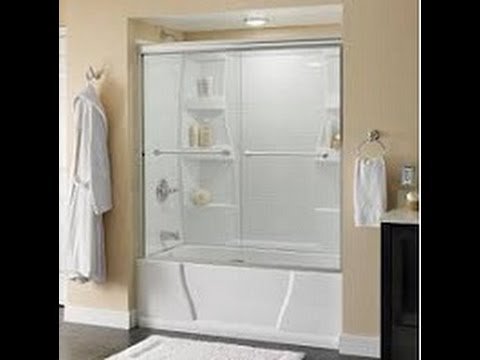
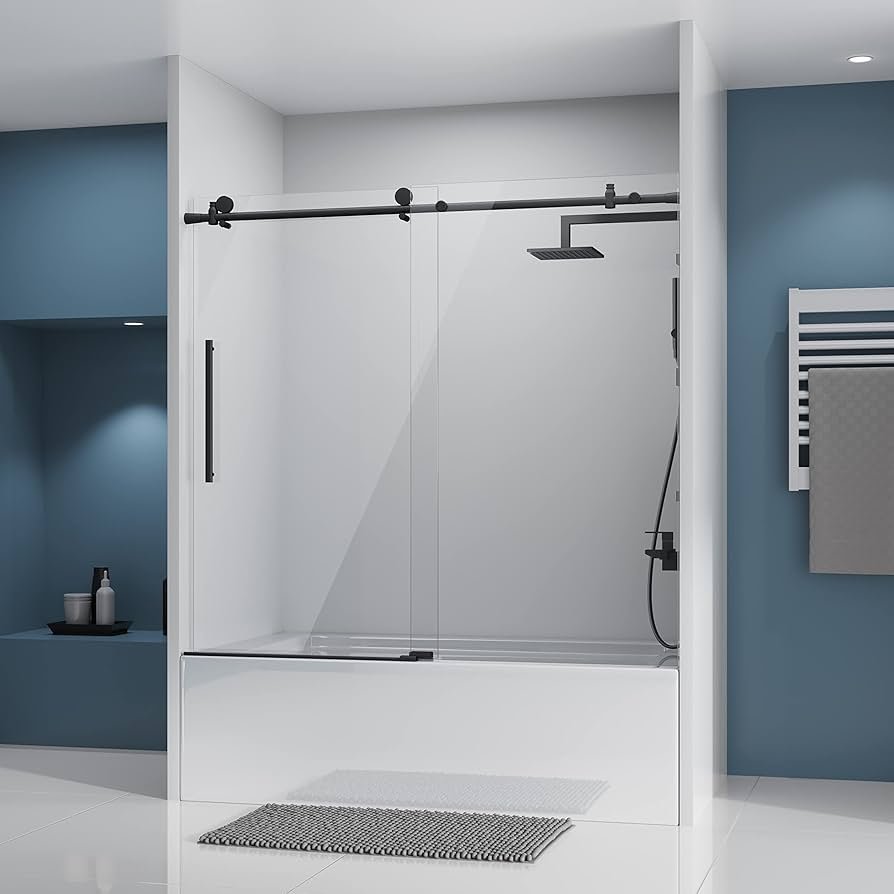
When you start hunting for the best sliding shower doors, you’ll see a million options. My blunt advice? Skip the “frameless” heavy glass doors if you’re mounting directly onto a standard fiberglass unit. Those heavy 3/8-inch glass panels weigh a ton. Fiberglass tubs have a bit of “give,” and hanging forty pounds of glass on a wall that flexes is a recipe for a shattered mess.
I always recommend a semi-frameless sliding door. These kits use a top track to carry the weight, which distributes the load across the entire tub rim rather than just two points on your wall. It’s safer, cheaper, and honestly, way easier to install by yourself. I once tried to solo-install a heavy frameless door on a budget insert, and I ended up pinned against the toilet for twenty minutes waiting for my spouse to come home and rescue me. Save your dignity; go semi-frameless.
Look for kits that feature tempered safety glass and “easy-clean” coatings. Brands like Kohler or Delta make kits specifically designed for the standard 60-inch tub opening. Make sure you check the “walk-through” width. Some doors have massive handles that limit how far the panels slide, leaving you with a tiny gap to squeeze through. If you’ve enjoyed a few too many tacos lately (guilty!), you’ll appreciate that extra two inches of clearance.
Don’t get sucked into the “gold finish” trend unless you plan on scrubbing it every single day. In my experience, brushed nickel or matte black hides hard water spots much better. Chrome looks great for exactly five minutes after you clean it, then it looks like a CSI crime scene of fingerprints and soap scum. Choose a finish that works for your real life, not just your Instagram feed.
Tools You Need for DIY Shower Door Installation
Before you even crack a beer, you need the right tools. If you try to drill into fiberglass with a standard wood bit, you’re going to melt the plastic and leave a jagged, ugly hole. I’ve seen people try to “wing it” with a dull bit and end up with a crack that runs halfway down the tub. Go to the hardware store and buy a brand-new carbide-tipped masonry bit or a specialized glass/tile bit. It’s a five-dollar investment that saves a five-hundred-dollar tub.
You’re also going to need a high-quality level. And no, the app on your phone doesn’t count. You need a real 48-inch box level. Fiberglass tubs are notorious for not being perfectly level, especially if the house has settled. If your top track is even a hair off, your doors will “ghost slide”—meaning they’ll slowly creep open or shut on their own while you’re trying to shave. It’s maddening.
Grab some 100% silicone sealant. Do not buy the “acrylic” or “latex” tub and tile caulk. It won’t hold up to the constant soaking. You want the pure silicone stuff that smells like vinegar and stays flexible forever. I also highly recommend keeping a roll of blue painter’s tape handy. It’s great for marking your drill holes without marking up the tub, and it helps prevent the drill bit from skating across the smooth surface when you start your hole.
Lastly, get a hacksaw with a fine-tooth blade (32 teeth per inch is the sweet spot). Most “universal” door kits are meant to be cut to fit your specific opening. If you use a coarse blade, you’ll chew up the aluminum track and leave burrs that catch the rollers. I once used a wood saw in a pinch—don’t ask why—and the resulting “jagged metal” look was definitely not the aesthetic I was going for.
How to Drill Into Fiberglass Without Cracking It
This is the part that scares everyone, and rightfully so. Drilling into a fiberglass shower surround feels like performing surgery. The key is high speed and low pressure. You want the bit to do the work, not your muscles. If you push too hard, you’ll punch through the other side and potentially hit a stud or, heaven forbid, a water line.
I always start by putting a piece of painter’s tape over the spot I’m drilling. Mark your hole on the tape. This gives the drill bit a little “grip” so it doesn’t slide and scratch your tub. When you start the drill, keep it straight. If you tilt it, you’ll create an oval hole that the wall anchors won’t bite into. Once you’re through the fiberglass, you’ll likely hit a void before you hit the wooden stud.
Here is a pro tip: check for studs before you drill. Use a stud finder or just knock on the wall. If you’re lucky enough to hit a stud, you don’t need those plastic wall anchors; you can screw directly into the wood. If you’re hitting empty air, you must use the anchors provided in the kit. But be careful—don’t hammer the anchors in like you’re building a deck. Tap them gently with a rubber mallet.
If you do happen to create a small spider crack, don’t panic. A little bit of the silicone sealant you bought can be smoothed over it before you mount the wall jamb. Once the jamb is screwed down, the crack is hidden and sealed. It’s the “sweeping it under the rug” of the DIY world, and as long as it’s watertight, it’s our little secret.
Measuring and Cutting the Shower Door Track
“Measure twice, cut once” is a cliché because it’s true. In my early days, I once cut a top track exactly 1/2-inch too short because I forgot to account for the thickness of the wall jambs. That was an expensive mistake that involved me buying a whole second kit just for the metal bar. Don’t be like 2010-me.
When you measure the width of your tub opening, measure it at the bottom (on the tub rim) and at the height where the top track will sit. Most walls are bowed. If your top measurement is $59$ inches and your bottom is $59.5$ inches, you have to cut the track for the narrowest point. Most kits tell you to subtract a specific amount (usually $1/32$ or $1/16$ of an inch) from your total width to allow for the jambs. Read the manual. Twice.
When it’s time to cut the aluminum shower track, use a miter box if you have one. It keeps the cut perfectly square. If you’re free-handing it with a hacksaw, go slow. Once the cut is made, take a metal file or some sandpaper and smooth down the edges. Those tiny metal shards are like needles, and they will absolutely slice your fingers open during the rest of the installation.
After cutting, dry-fit everything. Put the bottom track on the tub, slide the wall jambs into place, and set the top track on top. It should look like a perfect frame. If it’s tight, that’s fine. If it’s rattling around, you might have cut too much. If everything looks good, mark your screw holes through the jambs onto the walls. This is your “point of no return,” so make sure that level is telling you the truth.
Real Talk: What the Instructions Don’t Tell You
Look, the manual makes this seem like a 30-minute job. It’s not. It’s a three-hour job if you’re focused, and a six-hour job if you have kids or a dog “helping” you. The biggest lie in the instructions is that the bottom track stays in place with just “a bead of silicone.” While that’s technically true for some kits, I’ve found that the bottom track is the first thing to leak if it isn’t perfectly sealed.
Another thing: the rollers. These little wheels are the soul of your shower door. If they aren’t adjusted correctly, your doors will wobble or, worse, jump off the track. Most rollers have an “offset” screw that lets you raise or lower the glass panel. If your tub isn’t level, you can use these rollers to “tilt” the glass so it sits flush against the wall jamb. It’s a magic trick that fixes a lot of bad carpentry.
Also, let’s talk about the “splash guards.” Those little plastic fins that go on the edges of the glass are a nightmare to install. They’re tight, they’re stiff, and they’ll make your thumbs sore. Pro tip: soak them in a bucket of hot water for five minutes before you try to slide them onto the glass. They’ll soften up and glide right on. I wish someone had told me that before I spent an hour swearing at a piece of vinyl in my first apartment.
One final piece of real talk: The “Leaking Corner” Syndrome. Most people seal the outside of the shower frame but forget to seal the inside corners where the wall jamb meets the tub. If you don’t seal that 90-degree angle on the inside, water will get into the track, travel sideways, and rot out your drywall behind the tub. Seal the inside, seal the outside, and then seal it again.
Bonus: The “Oops” Section (Because Mistakes Happen)
I once accidentally dropped a screw down the drain while the cover was off. I spent two hours with a magnet on a string like I was fishing for my sanity. Cover your drain with a rag before you start. It’s the simplest step, and yet everyone forgets it.
Also, don’t over-tighten the screws into the fiberglass. Fiberglass is basically glass-reinforced plastic; it doesn’t “stretch” like wood. If you crank that screw down with an impact driver, you’re going to shatter the area around the hole. Hand-tighten the last few turns. You want it snug, not “strangled.”
Parting Wisdom for a Leak-Free Bathroom
Your new sliding door is going to look incredible, but only if you give the silicone time to cure. The tube says “ready in 3 hours,” but the tube is a liar. Give it a full 24 hours before you turn on the water. If you use the shower too soon, the steam will prevent the silicone from bonding, and you’ll be re-caulking the whole thing in a month.
Once it’s done, keep those tracks clean! A quick wipe-down once a week prevents hair and soap from gumming up the rollers. A little bit of maintenance goes a long way in making a $300 kit look like a $2,000 custom job.
What’s the biggest “DIY disaster” you’ve ever had to fix in your bathroom? Tell me your horror stories in the comments—I promise I’ve probably done worse!