
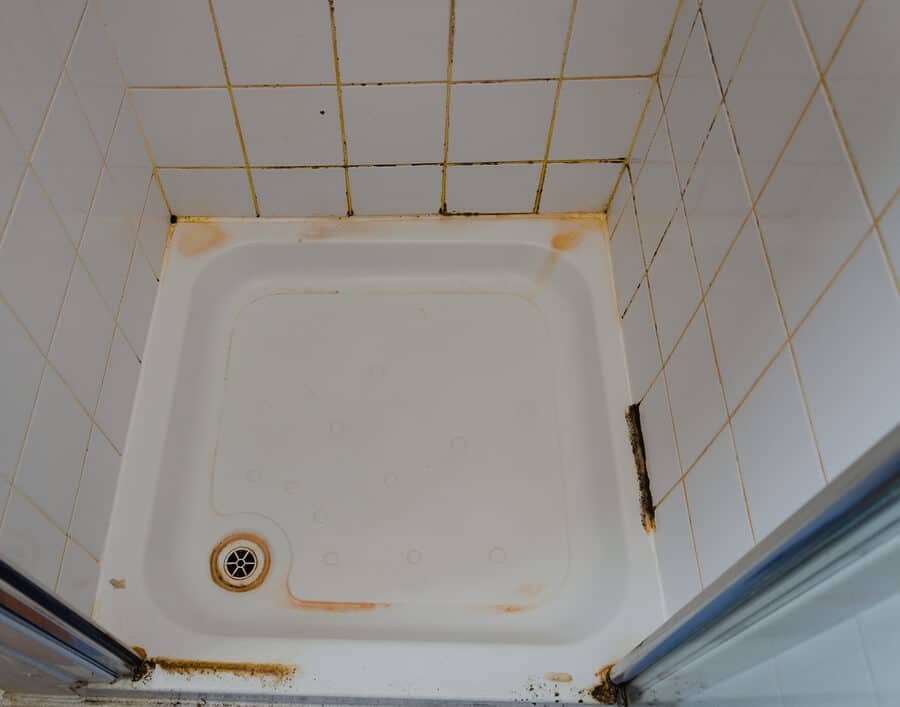
Your shower used to be a sanctuary, but now it looks like a strawberry milkshake exploded in the corners. It’s slimy, it’s persistent, and frankly, it’s a bit insulting. I’ve spent more hours than I’d like to admit staring at those fuzzy salmon-colored streaks, wondering if my bathroom was staging a fuzzy coup.
Actually, that “pink mold” isn’t even mold. It’s a bacterium called Serratia marcescens. It feeds on the fatty acids in your soap and shampoo, which is why it loves your shower more than you do. I once ignored a patch for a month during a kitchen remodel, and by the time I looked back, it had claimed my favorite loofah as its sovereign territory. It was a dark day for hygiene.
If you’re tired of the chemical smell of bleach burning your nostrils, you’re in luck. I’ve tried every “hack” on the internet, and most of them are garbage. But a few natural methods actually work without making you wear a hazmat suit. Let’s get that tile back to its former glory.
Best Natural Pink Mold Remover Ingredients
You don’t need a PhD in chemistry to fight this stuff, but you do need to stop reaching for the bleach first. Bleach is great for white T-shirts, but it’s actually terrible for porous grout. It whitens the surface but leaves the “roots” of the bacteria alive underneath. I learned this the hard way when I bleached my master bath, only for the pink slime to return three days later with a vengeance.
My go-to weapon of choice is a simple paste of baking soda and hydrogen peroxide. Baking soda provides the abrasive “oomph” needed to break through the biofilm—that slimy shield the bacteria builds around itself—while the peroxide acts as a natural disinfectant. It’s cheap, it’s effective, and it won’t ruin your lungs while you’re trapped in a 3×3 shower stall.
Another heavy hitter is distilled white vinegar. Now, I know the smell is… evocative. My husband once asked if I was making pickles in the shower. But vinegar’s acidity is a nightmare for Serratia marcescens. It dissolves the mineral deposits that the bacteria use as anchors. If you can’t stand the smell, drop in some tea tree oil; it smells like a spa and adds an extra layer of antifungal power.
Lastly, never underestimate the power of a stiff nylon brush. I used to use an old toothbrush, but that’s like trying to mow a lawn with nail scissors. Get a dedicated grout brush with an ergonomic handle. Your knuckles will thank you. I once used a wire brush on a whim and ended up scratching the finish off my expensive ceramic tiles—don’t be like me. Stick to stiff nylon.
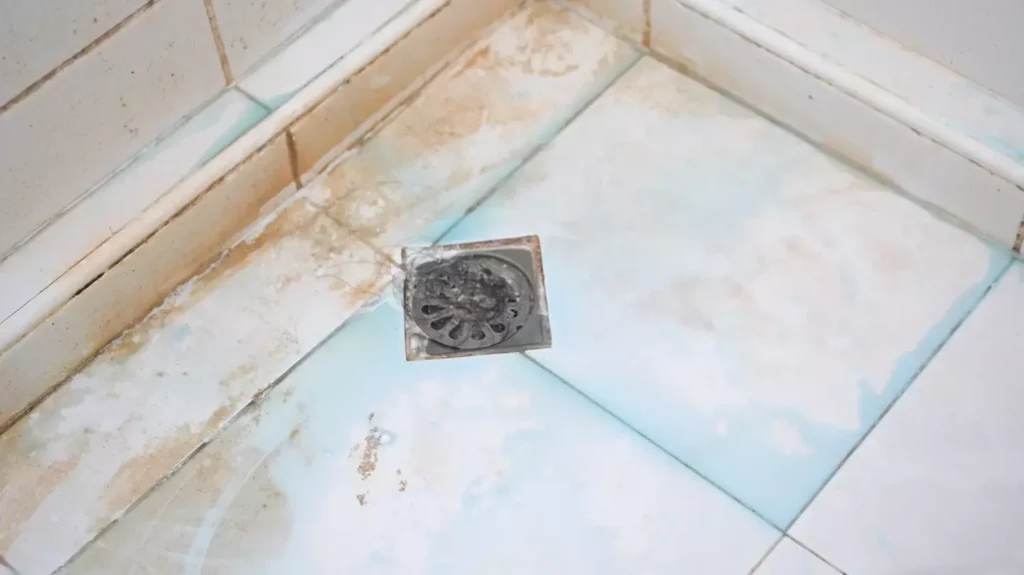
Step-by-Step Guide to Cleaning Pink Mold From Grout
First, you need to prep the area. Give the shower a quick rinse with hot water to loosen up the surface gunk. Then, grab a bowl and mix your baking soda and hydrogen peroxide until it’s the consistency of toothpaste. Slather that goop onto every pink spot you see. Don’t be shy; thick layers are your friend here.
Now, here is the secret ingredient most people miss: patience. You have to let that paste sit for at least 20 minutes. This is usually when I go find a snack or rethink my life choices. The bubbling action you see is the peroxide doing the heavy lifting, breaking down the cell walls of the bacteria so you don’t have to scrub as hard later.
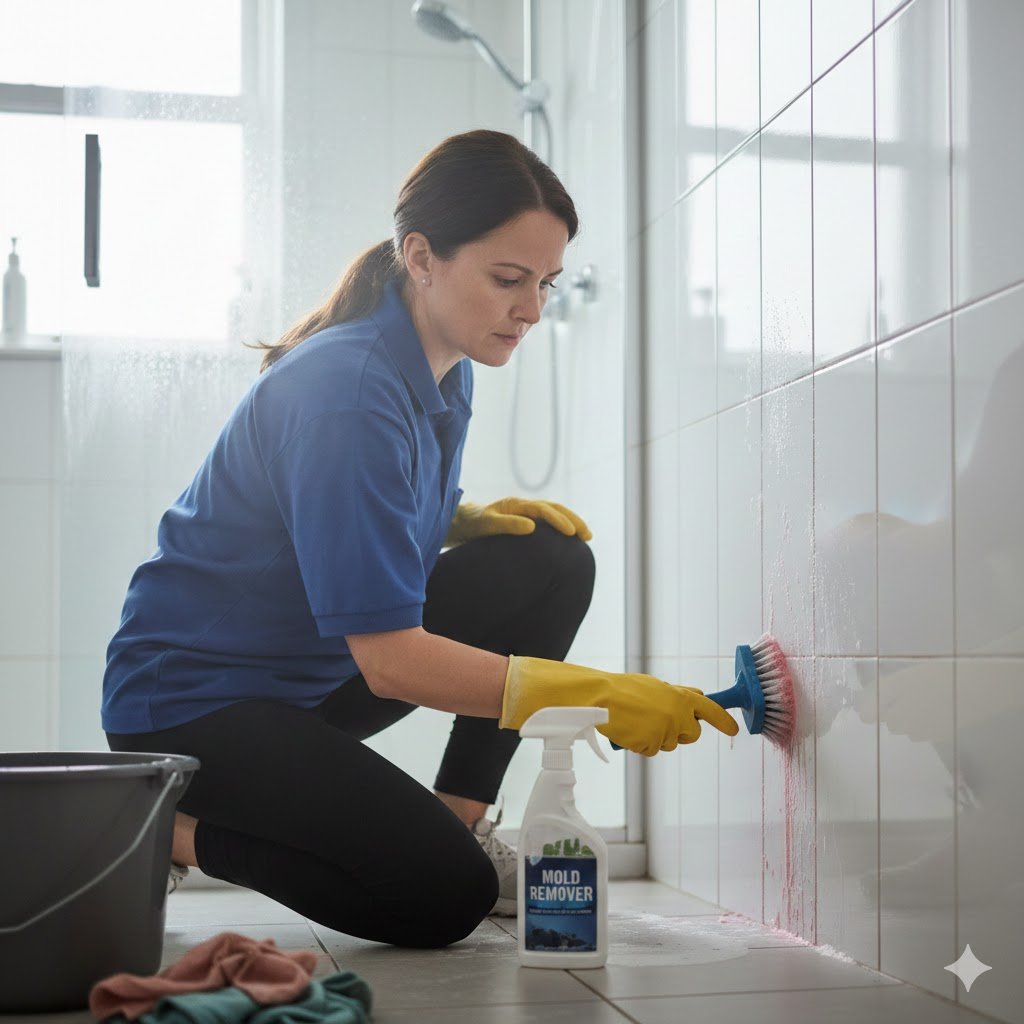
Once the time is up, grab your nylon brush and get to work. Use circular motions. You’ll see the paste turn a sickly shade of orange-pink as it lifts the bacteria out of the grout pores. It’s gross, but strangely satisfying. If you hit a stubborn spot, don’t just scrub harder—add a little more peroxide and let it sit for another ten minutes.
Finally, rinse everything down with the hottest water your heater can manage. Squeegee the walls immediately afterward. If you leave the water sitting there, you’re just inviting the pink guest back for dinner. I keep a small squeegee hanging from the showerhead now; it’s saved me hours of deep-cleaning over the last five years.
How to Prevent Pink Mold in Bathroom Forever
Preventing this stuff is 90% about moisture control and 10% about your choice of soap. Since this bacterium thrives on fats and oils, your fancy artisanal goat-milk soap might be the culprit. I’m not saying you have to switch to boring bar soap, but recognize that the more “natural oils” your soap has, the more of a buffet you’re providing for the pink slime.
The most important tool in your arsenal is your exhaust fan. Most people turn it on when they hop in and off the second they step out. That’s a mistake. You need to leave that fan running for at least 30 minutes after you shower. I actually installed a timer switch on mine because I’m forgetful. Before I did that, my bathroom stayed so humid that mushrooms probably could have started a colony in the corner.
After every shower, give the walls a quick spray with a DIY daily mist. Mix one part water, one part vinegar, and about ten drops of peppermint oil. It keeps the pH of the tile surface too acidic for the bacteria to settle down and start a family. Plus, it makes the bathroom smell like a candy cane factory instead of a damp basement.
Lastly, wash your shower curtain liner frequently. If you have a plastic liner, toss it in the washing machine with a couple of old towels on a cold cycle. The towels act as scrubbers. I used to just throw the liners away when they got gross, which was a huge waste of money and terrible for the planet. A quick wash once a month keeps the pink film from migrating from the curtain to your tile.
Removing Pink Mold from Shower Curtains and Liners
Shower curtains are the “Ground Zero” for pink mold outbreaks. Because they have so many folds and stay wet longer than the walls, the bacteria settle in and have a party. If you see a pink tinge at the bottom of your curtain, you need to act fast before it spreads to your grout. If it’s a fabric curtain, it’s an easy fix; if it’s plastic, it requires a bit more care.
For fabric curtains, toss them into the wash with your regular detergent and a half-cup of baking soda. Instead of fabric softener—which is basically just liquid fat that the bacteria love—use a half-cup of white vinegar in the rinse cycle. I once forgot a wet curtain in the washer for two days, and it came out smelling like a swamp. Don’t do that. Hang it back up in the shower immediately to air dry.
If you have a heavy-duty plastic or vinyl liner, you can still save it. Put it in the machine with those towels I mentioned earlier, but add a cup of vinegar to the drum. The agitation of the towels will knock the slime loose. If it’s really bad, you might need to pre-treat the hem with your baking soda paste and a quick scrub before it goes into the machine.
A quick side note: if your liner is thin, cheap plastic and it’s completely covered in pink, just let it go. Sometimes the time and water spent trying to save a $3 liner aren’t worth the effort. Buy a weighted fabric liner next time; they dry faster and are much easier to keep clean in the long run. I switched to fabric liners years ago and haven’t looked back.
Real Talk: When Natural Isn’t Enough (and What to Avoid)
I love natural cleaning, but I’m also a realist. If you’ve moved into a “fixer-upper” where the previous tenants haven’t cleaned the shower since the late 90s, vinegar might not cut it. If the grout is crumbling and the pink stain has actually penetrated deep into the substrate, you might be looking at a re-grouting job rather than a cleaning job. I once spent six hours scrubbing a shower in a rental only to realize the “pink” was actually a stain in the thinset underneath a missing tile.
Also, stay away from those “miracle” cleaners you see on late-night infomercials. Most of them are just overpriced bleach or diluted acids that can etch your natural stone. If you have marble or travertine, do not use vinegar or lemon juice. The acid will eat the stone and leave dull white spots called etching. For stone, you need a pH-neutral cleaner specifically designed for marble. I ruined a beautiful Carrara marble threshold by being over-zealous with vinegar—it was a $200 mistake I don’t want you to repeat.
Another thing that’s a total waste of money? Those “automatic” shower cleaners that spray a mist every time you leave. They usually leave a sticky residue that actually attracts more dirt and hair over time. It’s a classic case of the cure being worse than the disease. Stick to the squeegee and the fan; they are low-tech but high-result.
Finally, if you find that the pink mold keeps coming back despite your best efforts, check your water heater. If the temperature is set too low (below 120°F or 49°C), you might actually be breeding bacteria inside your pipes. It’s rare, but it happens. A quick bump in temperature can sometimes solve a recurring “mold” problem that nothing else seems to touch.
Parting Wisdom for a Sparkling Shower
At the end of the day, a little pink slime isn’t the end of the world, but it is a sign that your bathroom needs to breathe. Think of it as your shower’s way of crying for help. Keep it dry, keep the air moving, and stop feeding the bacteria with heavy, oily soaps. It takes about 30 seconds to squeegee the glass and another 5 seconds to flick on the fan. Those 35 seconds will save you three hours of scrubbing on a Saturday morning.
I’ve learned that the best DIY strategy isn’t about working harder; it’s about being more annoying than the bacteria. If you make the environment hostile for them, they’ll find somewhere else to live (hopefully not at your neighbor’s house, though that would be a funny story for the next block party).
What’s the weirdest thing you’ve ever found growing in your bathroom? Have you tried the vinegar trick before, or do you have a secret family recipe for grout cleaning? Drop a comment below—I’d love to hear your horror stories or your wins!