
Nothing ruins a morning routine like standing in two inches of soapy, grey water while you’re trying to brush your teeth. It’s gross, it’s annoying, and it usually happens right when you’re already running late. I’ve been there—more times than I’d like to admit. One time, I got so fed up with my guest bath drain that I tried to “power wash” it with a garden hose brought in through the window. Spoiler alert: I ended up replacing the drywall in the hallway.
The knee-jerk reaction for most folks is to run to the big-box store and grab a bottle of that thick, blue liquid that promises to melt anything in its path. Don’t do it. I’ve seen those chemicals eat through old brass pipes and turn a simple clog into a $2,000 “replace the whole stack” nightmare. Plus, if the chemicals don’t work (and they often don’t), you’re left with a sink full of toxic soup that makes it dangerous for you to actually fix the problem by hand.
We’re going to get that water flowing again using nothing but basic tools and a bit of elbow grease. This isn’t just about saving money; it’s about not destroying your plumbing. My goal is to get you back to a clear-draining sink without you having to call a plumber who’s going to charge you $150 just to show up and tell you that you have too much hair in your pipes.
If your sink is gurgling at you or taking ten minutes to empty, it’s time to stop ignoring it. Grab some old towels and a bucket. We’re going in.
Clean the Bathroom Sink Pop-Up Stopper First
The absolute number one reason for a slow bathroom sink isn’t a “clog” deep in the walls; it’s the gunk clinging to the bottom of your pop-up stopper. Think about what goes down that drain: toothpaste, shaving cream, hand soap, and hair. These ingredients combine to create a sticky, biological “glue” that catches everything.
To get this out, you usually don’t even need tools. Most stoppers can be twisted counter-clockwise and pulled straight out. If yours is the type that’s hooked to a rod under the sink, you’ll have to crawl under there and unscrew the nut holding the horizontal pivot rod. I remember the first time I did this, I didn’t realize the rod was held in by a tiny clip. I pulled too hard, the clip flew into the dark abyss behind the vanity, and I spent three hours looking for it with a flashlight. Lesson learned: keep your parts in a magnetic tray or a Tupperware lid.
Once that stopper is out, prepare yourself. It’s going to be disgusting. It’ll look like a wet, hairy Muppet is living in your pipes. I use an old toothbrush and some dish soap to scrub the stopper clean. If you leave that slime on there, the clog will just reform in a week. It’s the “organic” buildup that acts like a magnet for more hair.
After the stopper is shiny again, take a look down the actual drain hole. Sometimes there’s a wad of hair sitting right on the crosshairs of the drain body. I use a pair of needle-nose pliers or even a bent paperclip to fish that out. It’s deeply satisfying and deeply revolting all at once. Once it’s clear, drop the stopper back in, hook the rod back up, and test the flow. You’d be surprised how often this 5-minute fix solves the “broken” sink.
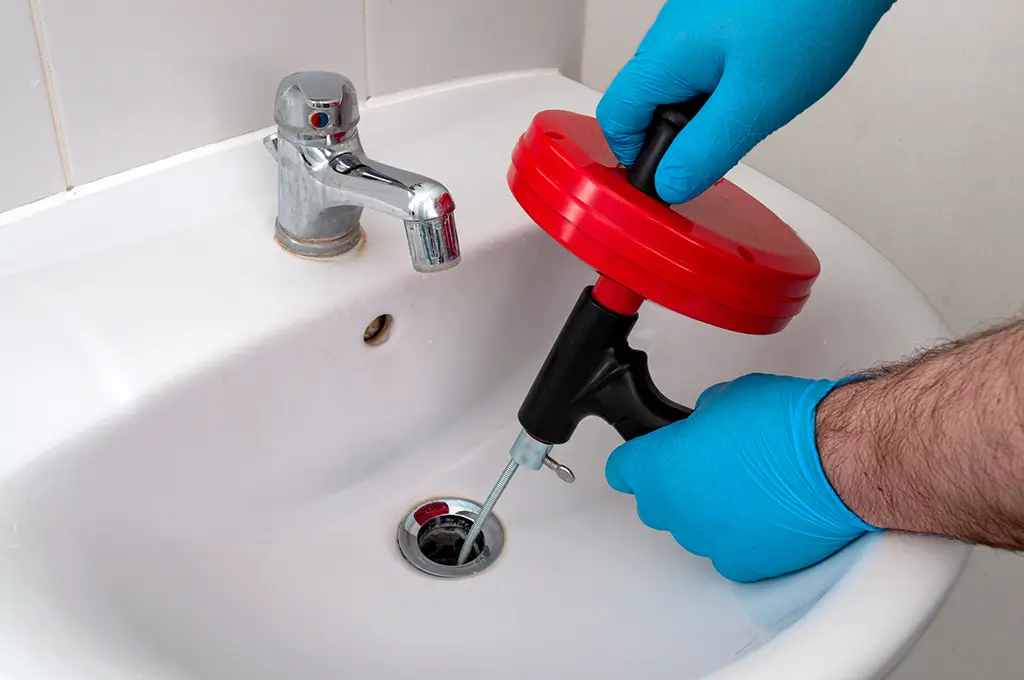
Use a Zip-It Drain Cleaning Tool for Hair Clogs
If cleaning the stopper didn’t do the trick, the problem is likely just a few inches further down. This is where the Zip-It tool—or any generic plastic drain snake—becomes your best friend. These things cost about five bucks and are essentially long, flexible strips of plastic with wicked little barbs pointing upward.
I keep a stash of these in my garage because they are the ultimate “no-mess” solution. You don’t have to take the pipes apart. You just feed the plastic strip down into the drain, past the stopper (if you can) or into the overflow hole. Give it a little wiggle, and then pull it back up. The barbs are designed to grab onto hair fibers and pull the whole “hair snake” out in one go.
The trick here is to be gentle. I’ve seen people jam these things in so hard they get the plastic barbs stuck on the internal hardware of the drain. If it feels stuck, don’t yank. Rotate it slightly and pull slowly. My neighbor once snapped a cheap version of one of these off inside his drain, and we spent the afternoon with a pair of long-reach forceps trying to perform “surgery” to get it out.
I’ve found that the plastic drain snakes are way more effective than those fancy pressurized air canisters. Those “air burst” products can actually blow the seals on your P-trap if the pipes are old. The Zip-It tool is mechanical, simple, and it physically removes the blockage instead of just pushing it further down the line where it can cause a bigger headache later.
How to Clean a P-Trap Under the Sink
When the Zip-It comes up clean but the water is still backing up, it’s time to go under the sink. We’re looking for the P-trap, which is that U-shaped pipe under the basin. Its job is to hold a little bit of water to block sewer gases from coming into your house, but it’s also a “trap” for heavy objects—like the diamond earring my wife “lost” three years ago that I eventually found during a routine cleaning.
Before you touch the pipe, put a bucket directly under the U-bend. There is always water in there, and it’s usually smelly. Most modern P-traps are PVC and have large plastic “slip nuts” you can unscrew by hand. If they are stuck, use a pair of tongue-and-groove pliers (like Channellocks), but wrap a rag around the nut first so you don’t chew up the plastic.
Once you unscrew both ends, the U-section will drop. Take it to a different sink (one that actually works!) and flush it out. I’ve found everything from wedding rings to solidified globs of facial clay in these. If your P-trap is metal (chrome-plated brass), be careful. Old metal traps can become “paper thin” over time due to corrosion. I once tried to unscrew a metal trap and the whole thing just crumbled in my hand like a stale cracker. If that happens, just head to the store and buy a plastic replacement kit; they fit almost any sink and are much easier to maintain.
While the trap is off, take a look at the “tailpiece”—the pipe coming down from the sink—and the “waste arm” that goes into the wall. Sometimes the clog is hanging out right where the trap meets the wall pipe. Stick a finger (wear gloves, trust me) or a small brush in there to make sure it’s clear. Reassembling is easy: just make sure the rubber washers are seated flat and don’t over-tighten the nuts. Hand-tight plus a quarter turn with pliers is usually plenty.
Try the Baking Soda and Vinegar Drain Hack
I know I said no chemicals, but I’m talking about “harmless kitchen staples,” not the caustic stuff that requires a hazmat suit. The baking soda and vinegar method isn’t a miracle cure for a solid hairball, but it is fantastic for breaking up the “biofilm” and soap scum that slows things down. It’s like a spa treatment for your plumbing.
Start by pouring a pot of boiling water down the drain to soften up any grease or soap. Then, dump about a half-cup of baking soda down there. Follow that with a cup of white vinegar. It’s going to fizz and bubble like a middle-school science project. This reaction helps agitate the debris clinging to the pipe walls. Cover the drain with a stopper or a rag to keep the pressure of the bubbles focused downward.
Let it sit for at least 15 minutes. During this time, the acetic acid in the vinegar is working on the alkaline soap scum. I usually use this time to wipe down the vanity or organize the “cabinet of chaos” under the sink. After the time is up, flush the whole thing with another gallon of boiling water.
Opinionated side note: I see people on Pinterest saying this works for every clog. It doesn’t. If your kid dropped a LEGO down the drain, vinegar isn’t going to do a thing. This method is strictly for maintenance and light buildup. I do this once a month in my master bath just to keep things smelling fresh and moving fast. It’s cheap, safe for my septic tank, and won’t burn my skin off.
Snake the Drain with a Hand Auger
If you’ve cleaned the stopper, the P-trap, and tried the fizzing bubbles, and the sink still won’t drain, the clog is deeper in the wall. This is where you bring out the “big guns”: the hand auger (often called a plumber’s snake). This is a flexible steel cable coiled inside a plastic drum with a crank handle.
To use this, you need the P-trap off so you can go directly into the “sanitary tee” (the hole in the wall). Feed the cable into the wall pipe by hand until you hit resistance. That’s either a turn in the pipe or the clog itself. Tighten the lock screw and start cranking the handle clockwise while pushing forward.
I’ve found that most DIYers give up too soon. You might have to pull the cable back an inch and push again several times to “chew” through a tough clog. I once spent 40 minutes snaking a line only to pull back a massive wad of “flushable” wipes that the previous homeowner had apparently been shoving down the sink for years. (Pro tip: “Flushable” is a lie told by marketing departments).
Once you feel the cable break through the resistance, keep going for another foot or two to make sure you’ve cleared the whole mess. Then, crank it back in while wiping the cable with a rag—that cable will be covered in black, stinky sludge, and you don’t want that on your bathroom rug. Reattach your P-trap, run the hot water, and enjoy the beautiful sound of a whirlpool forming in your sink.
Real Talk: When DIY Isn’t Enough
Let’s be honest for a second. Sometimes, you can do everything right and the water still stays put. If you’ve snaked 15 feet into the wall and found nothing, the problem might be a blocked vent stack on your roof or a main line clog further down the house. If you start seeing water back up into the bathtub when you run the sink, that’s a “call a pro” moment.
Also, if you have old galvanized steel pipes (common in houses built before the 1960s), stop while you’re ahead. Those pipes close up from the inside out with rust. Snaking them can actually poke a hole through the side of a rusted-thin pipe, leading to a massive leak inside your walls. I tried to “save” a galvanized line in my first fixer-upper and ended up having to repipe the entire bathroom because I knocked a chunk of rust loose that blocked the main toilet drain.
Another thing: avoid those “high pressure” water bladder tools unless you know exactly what you’re doing. They can put a lot of stress on old joints. If your plumbing is PVC, you’re usually safe to be a bit more aggressive, but with old metal, a gentle touch is key. Know your limits. There’s no shame in calling a plumber once you’ve exhausted the “under the sink” basics.
Parting Wisdom for a Flowing Future
The best way to fix a slow drain is to never let it get slow in the first place. I’ve found that installing a simple $2 mesh strainer over the drain—even if it looks a bit “utility”—saves me hours of work every year. Also, stop washing heavy oils or thick clay masks down the bathroom sink. That stuff acts like mortar once it hits the cold water in your P-trap.
Cleaning your drains doesn’t have to be a nightmare, and you definitely don’t need a degree in fluid dynamics to master it. Just take it one step at a time, keep your bucket handy, and don’t be afraid to get a little dirty.
What’s the weirdest thing you’ve ever found inside a drain trap? Let me know in the comments below—I’m betting someone can beat my “plastic dinosaur” story!
One time my plumber found a mophead and 3 feet of fabric with cotton batting attached to it down my tenant’s toilet. When he showed it to the tenant, she said, “What, that? That ain’t gonna hurt nothing!”