

I once spent three weeks trying to organize a “linen closet” that was basically just a graveyard for mismatched pillowcases and a vacuum cleaner from 1994. It hit me while I was tripping over a box of old tax returns: I don’t need more storage for junk; I need a place where my guests can pee without walking through my messy master bedroom.
Converting a small closet into a powder room is the ultimate “work smarter, not harder” home renovation. You aren’t adding square footage to your house, which is a permit nightmare, but you are adding massive resale value. I’ve swung the hammer on at least a dozen of these conversions, and I’m telling you right now, most people overthink it. You don’t need a ballroom; you need about 15 square feet and a bit of plumbing grit.
Before you start tearing out drywall, we need to talk about the reality of the “closet-to-bathroom” pipeline. It’s messy, it’s cramped, and if you don’t plan the floor plan correctly, you’ll end up with a toilet that hits your knees every time you sit down. I learned that the hard way in my first fixer-upper when I installed a standard-size toilet in a 30-inch deep closet. I had to leave the door open just to use the thing. Don’t be like 2012 me.
Minimum Closet Size for Half Bath Layouts
If your closet is smaller than 30 inches wide and 5 feet deep, stop reading and go buy a nicer shoe rack. You physically cannot fit a code-compliant toilet and sink into anything smaller. Building codes usually require at least 15 inches of clearance from the center of the toilet to any side wall. That means your “room” needs to be at least 30 inches wide just to pass inspection, let alone feel comfortable.
I’ve found that the “sweet spot” for a tiny powder room is 3 feet by 5 feet. This allows for a standard swinging door and enough floor space so you don’t feel like you’re trapped in a coffin. When I worked on a Victorian-era cottage last summer, we squeezed a half bath into a 3×4 space by using a pocket door. It was tight, but it beat making guests trek upstairs.
The depth of the closet is where most DIYers get tripped up. You have to account for the “swing” of the door. If the door swings inward, it’s going to hit the toilet. If it swings outward, you’re going to whack someone walking down the hallway. My personal preference? Pocket doors or barn doors. They save about 9 square feet of usable space, which is a life-saver when you’re working with a footprint the size of a postage stamp.
When you’re measuring, don’t just measure the floor. Check for “headroom” if you’re under a staircase. I once helped a neighbor who forgot that the ceiling sloped down. We installed the toilet perfectly, but anyone over 5’5″ had to do a limbo move just to stand back up. Measure twice, or you’ll be ducking for the rest of your life.

Plumbing a Half Bath in a Closet
This is the part that scares everyone, and honestly, it should. Plumbing is the most expensive and frustrating part of a closet conversion. If your closet is back-to-back with an existing bathroom or kitchen, you just hit the jackpot. Tapping into existing vent stacks and drain lines will save you thousands of dollars and about four weekend-long headaches.
I remember trying to run a drain line through a slab foundation for a closet in the middle of a house with no nearby plumbing. By the time I finished jackhammering the concrete, I looked like a coal miner and my wife wasn’t speaking to me because of the dust. If you have a crawlspace or a basement below the closet, you’re in luck. If you’re on a slab, you might want to look into “upflush” toilets (macerating toilets). They sit right on top of the floor and pump the waste up and out, meaning you don’t have to bust up your floors.
Ventilation is another “non-negotiable” that people try to skip. You cannot just have a bathroom with no window and no fan. Well, you can, but it will smell like a locker room and your drywall will peel off the walls from the moisture within six months. Since most closets are interior rooms without windows, you’ll need to install a centrifugal fan and duct it to the outside. Do not—I repeat, do not—vent it into your attic. You’ll just grow a mold farm up there, and that’s a whole different expensive problem.
Let’s talk about the “wet wall.” This is the wall where all your pipes live. In a small closet, you want the toilet and the sink on the same wall if possible. This keeps your plumbing “run” short and simple. I always try to use PEX piping for the supply lines because it’s flexible and way more forgiving than copper. If you mess up a measurement with PEX, you just trim it. If you mess up copper, you’re back to the soldering torch and questioning your life choices.
Choosing the Best Tiny Sinks for Powder Rooms
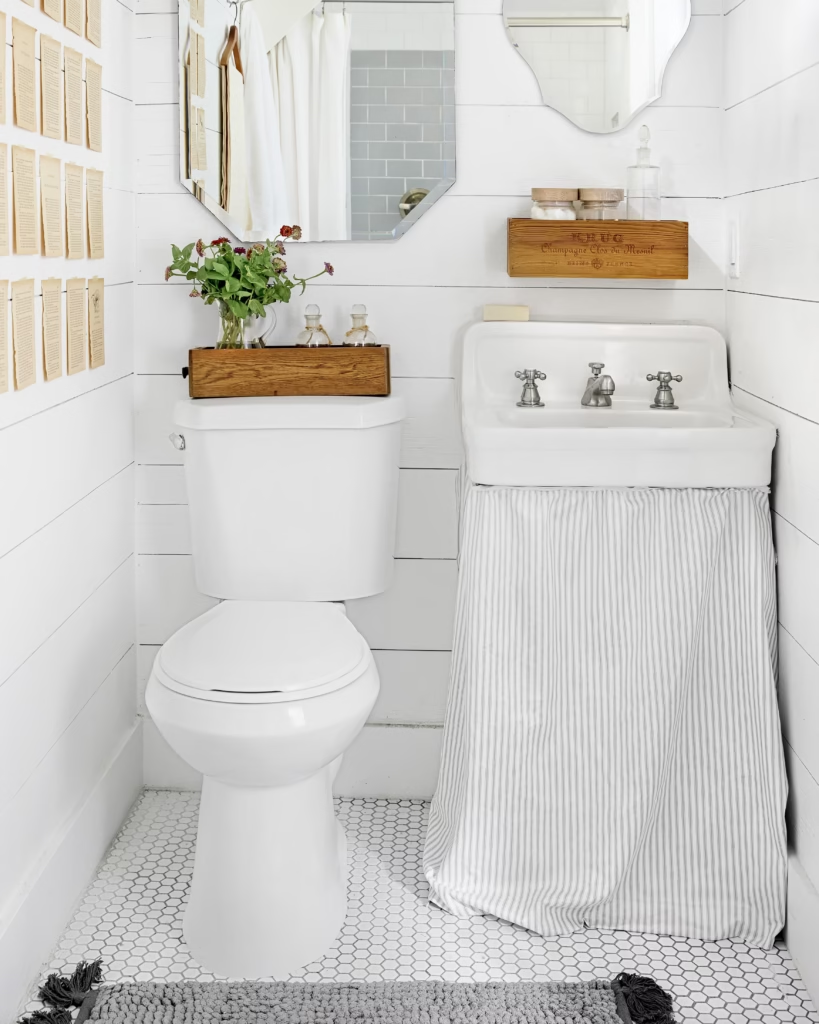
You do not have room for a vanity cabinet. I know, you saw a cute one at the big-box store with a marble top, but in a closet-turned-bathroom, that cabinet is just a giant wooden box that eats your legroom. I am a huge advocate for wall-mounted sinks or “pedestal” sinks in these tiny spaces. They keep the floor visible, which actually makes the room feel larger than it is.
One of my favorite tricks is using a corner sink. I used one in a tiny 28-inch wide closet once, and it changed the entire flow of the room. It tucked into the corner right next to the door, leaving the entire center area open for… well, standing. Just make sure you check the reach of the faucet. I once bought a gorgeous, tiny vessel sink, but the faucet I chose was so long that the water shot right over the bowl and onto my shoes.
If you absolutely must have storage, go for a “floating” vanity. It’s a cabinet that bolts to the wall studs and doesn’t touch the floor. It gives you a spot for three rolls of TP and some soap, but because you can see the floor underneath it, the room doesn’t feel like a closet anymore. Plus, it makes cleaning the floor a breeze. No more scrubbing around the base of a grimy cabinet.
A quick side note: check your local codes for “clear floor space” in front of the sink. Most places want 21 to 24 inches of open space. If you put in a sink that sticks out 18 inches into a 36-inch wide closet, you’re technically breaking the rules and practically making it impossible to wash your hands without hitting the wall. Look for “hand rinse” sinks—they’re specifically designed for these tiny layouts.
Small Bathroom Lighting and Electrical Requirements
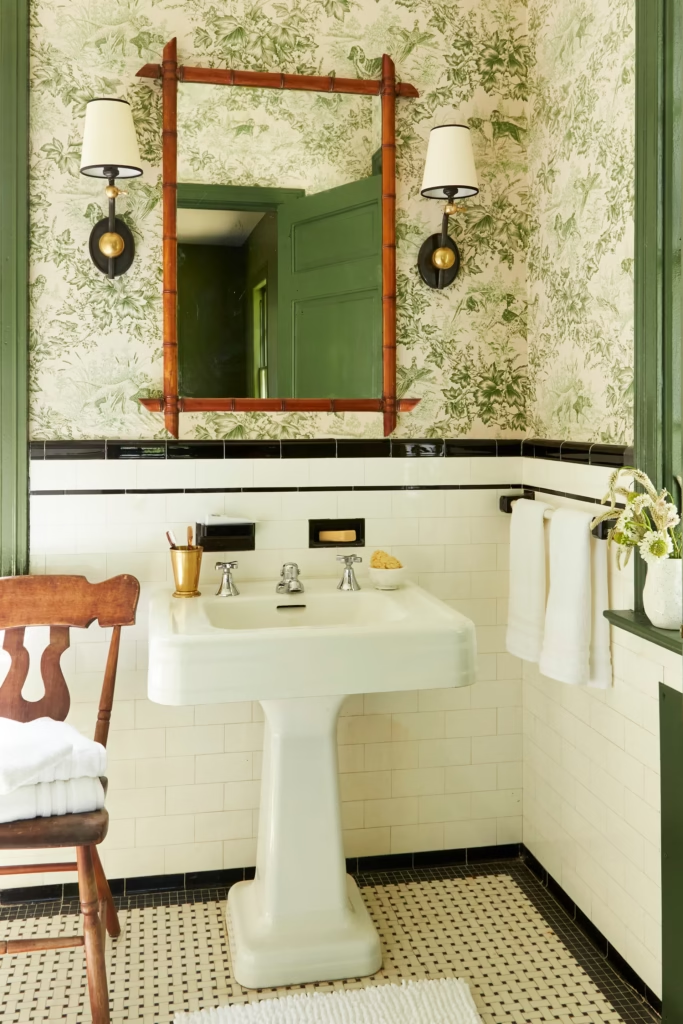
Lighting can make a tiny closet feel like a jewelry box or a dungeon. Most closets have a single, sad lightbulb hanging from a string. You’re going to want to rip that out immediately. For a half bath, I always recommend recessed “can” lights in the ceiling and a pair of sconces on either side of the mirror. Side lighting is way more flattering; overhead lighting alone creates shadows that make you look like you haven’t slept since the 90s.
You also need a GFCI (Ground Fault Circuit Interrupter) outlet. This is non-negotiable by code because you have water and electricity in the same zip code. I usually put mine right next to the sink. And here’s a pro tip: put your fan and your light on separate switches. There is nothing more annoying than wanting to quickly check your hair in the mirror and having a loud exhaust fan roar at you like a jet engine.
I’ve made the mistake of not thinking about the “swing” of the electrical wires inside the wall. When you’re cutting holes for your new outlet, be careful. I once sliced right through an existing bedroom circuit because I assumed the wires were pinned to the studs. They weren’t. I spent the rest of the afternoon in the dark, literally and figuratively. Use a stud finder with a voltage detector—it’s worth the twenty bucks.
Don’t forget about the “ambience.” Since there’s usually no natural light, I love using an LED-backlit mirror. It provides a soft glow and doubles as a nightlight for guests. It’s one of those “Pinterest-y” things that is actually worth the money because it saves space by combining the mirror and the light fixture into one unit.
The Real Talk: What Nobody Tells You About Closet Conversions
Let’s get real for a second. This project is going to be a pain in the neck. You are working in a space roughly the size of a refrigerator. You will hit your head. You will drop a screw and spend twenty minutes trying to find it in a corner you can’t reach. It is the “yoga” of home remodeling, and not the relaxing kind.
The biggest mistake I see? People underestimate the cost. They think “Oh, it’s just a tiny room, it’ll be cheap.” Wrong. You still have to pay for a plumber, an electrician, a tiler, and a dry-waller (or do it yourself and pay in sweat equity). Per square foot, a half bath is the most expensive room in your house. The toilet alone is the same price whether it’s in a 500-square-foot spa or a 15-square-foot closet.
Another thing: soundproofing. You are putting a bathroom in the middle of your living space. If you use standard thin drywall and no insulation, everyone in the living room is going to hear… everything. I always “over-insulate” the walls of a closet conversion with rockwool or sound-dampening batts. I even used double-layered drywall once for a client who was particularly self-conscious. Trust me, your guests will thank you.
Lastly, don’t skimp on the flooring. Since the square footage is so low, this is your chance to buy that ridiculously expensive marble tile you love. You only need about 15 square feet! This is not the place for cheap linoleum. If you’re going to go through the hell of plumbing a closet, make it look like a million bucks when you open the door.
Parting Wisdom
A closet-to-bathroom conversion is the ultimate “small space, big impact” project. It stops the “where is your bathroom?” awkwardness and adds a solid 5-10% to your home’s value in some markets. Just remember: measure for your knees, insulate for your ears, and for the love of all things holy, don’t forget the exhaust fan.
I’ve shared my horror stories and my best shortcuts—now it’s your turn. Are you staring at a closet right now wondering if it’s wide enough? Drop your measurements or your biggest DIY fears in the comments below and let’s figure it out together!


