
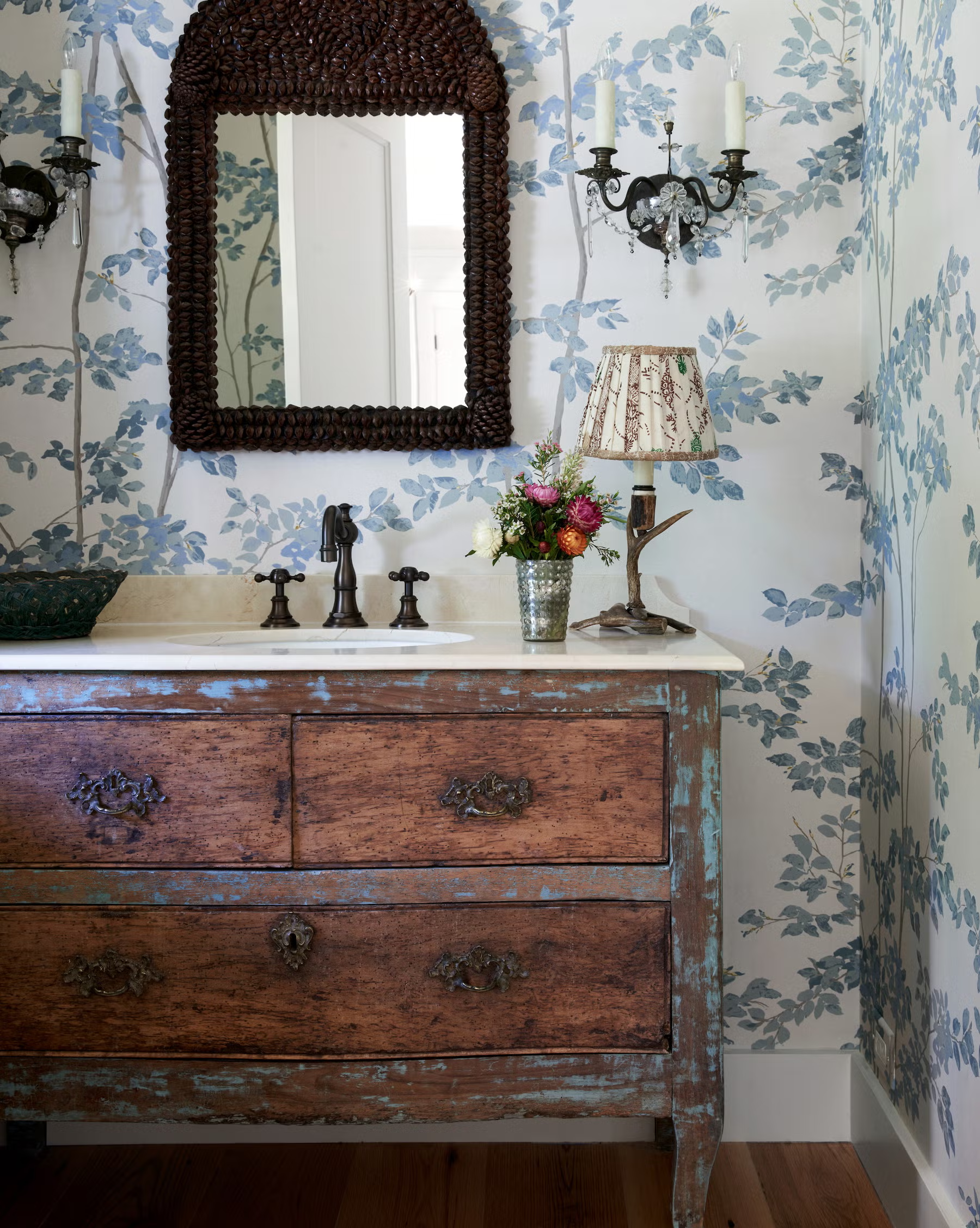
If you’ve ever walked into your guest bathroom and realized it feels more like a cramped broom closet than a spa, you aren’t alone. I’ve spent many Saturday mornings staring at my own tiny powder room, wondering how on earth I was supposed to make a 15-square-foot box look intentional and not just like a place where we store the extra plunger.
Small bathrooms are notorious for being the “junk drawer” of home décor. We try to cram in the same stuff we use in the master bath, only to realize that a standard-sized towel bar suddenly makes the whole room feel like a claustrophobic nightmare. I’ve made every mistake—from picking a paint color that made the room look like a literal cave to installing a vanity so big I had to shimmy past the toilet just to wash my hands.
The good news is that because the space is small, you can take big risks without breaking the bank. You can afford that high-end wallpaper or the fancy marble tile because you only need about three square feet of it. Let’s get into how to actually fix your half bath without losing your mind or your entire savings account.
1. Go Bold with Moody Powder Room Wallpaper
I used to be terrified of dark patterns in small spaces. I thought it would make the room feel like a coffin. Then, I ignored the “rules” and slapped a deep navy botanical print on all four walls of my main floor half bath. The result? It didn’t make the room look smaller; it made the walls disappear into a lush, sophisticated backdrop.
When you’re shopping for half bathroom wallpaper, skip the tiny, dinky patterns. Go for large-scale prints. A massive floral or a bold geometric design creates an optical illusion that there’s more going on than there actually is. Small patterns can look busy and cluttered in a tight space, whereas big patterns feel like a deliberate design choice.
I’ve found that peel-and-stick wallpaper is a total lifesaver if you’re a commitment-phobe like me. I once spent six hours scraping traditional paste off a wall after a “modern farmhouse” phase I’d rather forget, and I promised myself never again. The high-quality vinyl options today look just as good as the permanent stuff but come off in minutes when you decide you’re over the trend.
The trick to making wallpaper work in a half bath is the lighting. If you go dark and moody, you need a light fixture that actually does its job. Don’t rely on one wimpy bulb. Combine that bold paper with a brass or matte black sconce, and suddenly your guests will be asking for your decorator’s number.
2. Install a Floating Vanity to Reclaim Floor Space
Nothing kills the vibe of a small bathroom faster than a chunky, floor-mounted cabinet that takes up 40% of the walkable area. It’s a massive visual block. The first time I swapped a standard vanity for a floating model, I felt like I had suddenly added five square feet to the room. Being able to see the floor go all the way to the wall tricks your brain into thinking the room is wider.
Floating vanities are also a dream for cleaning. Remember that time I dropped a bottle of neon-green mouthwash and it seeped under the kickplate of my old vanity? I had to live with that sticky mess for three years until we remodeled. With a wall-hung unit, you can actually get a mop under there. No more hidden dust bunnies or mystery spills.
Now, a lot of people worry about losing storage. I get it. But let’s be real: how much “stuff” do you really need in a half bath? It’s for guests. They need toilet paper, a hand towel, and maybe some soap. You don’t need a three-drawer chest for your collection of half-used hairsprays in the powder room. Keep the storage minimal and the floor visible.
When you install one of these, make sure you’re hitting the studs. I once tried to wing it with heavy-duty anchors and woke up at 2:00 AM to the sound of my sink ripping a hole in the drywall. Use a stud finder, double-check your measurements, and save yourself the heart-attack-inducing crash in the middle of the night.
3. Use Large Format Floor Tiles for Fewer Grout Lines
People always think small rooms need small tiles. That is a total myth. Using tiny 1-inch hex tiles in a small bathroom means you have a million grout lines, which creates a “grid” effect that makes the floor look busy and cramped. I’ve found that using 12×24 inch tiles (or even larger) actually makes the space feel expansive and high-end.
The less grout you see, the smoother the floor looks. This creates a continuous surface that draws the eye across the room rather than stopping at every tiny intersection. Plus, fewer grout lines mean less scrubbing. I don’t know about you, but I’d rather do literally anything else than spend my Saturday on my hands and knees with a toothbrush cleaning bathroom grout.
If you’re worried about it looking too “sterile,” look for tiles with some texture or a subtle marble vein. I once did a slate-look porcelain tile in a tiny bathroom and it looked like a million bucks. It was durable, easy to clean, and looked way more expensive than the $2.00 per square foot I actually paid for it at the big-box store.
One quick tip: if you go with large tiles, make sure your subfloor is perfectly level. Large tiles are less “forgiving” than small ones. If there’s a hump in your floor, a big tile will “lippage” (stick up at the edge), and you’ll be tripping over it every time you go to wash your hands. Take the extra hour to level the floor first; your toes will thank you.
4. Swap the Boring Mirror for a Statement Piece
The mirror that comes standard in most homes is usually a frameless, clip-on rectangle that has all the personality of a wet cardboard box. It’s the first thing people see when they walk in, so why settle for “fine”? I always tell people to treat the mirror like the jewelry of the room. It’s the easiest DIY upgrade you can do in under twenty minutes.
I’m a huge fan of oversized round mirrors. The curves break up all the hard, straight lines of the toilet, vanity, and walls. I once found a massive brass-framed circular mirror at a flea market for twenty bucks, and it completely transformed my guest bath. It reflected so much light that I didn’t even need to keep the overhead light on during the day.
If you want a more modern look, try a long, arched mirror. It adds height to the room, making those standard 8-foot ceilings feel a lot loftier. It’s a cheap trick, but it works every single time. Just make sure the scale is right; a tiny mirror on a big wall looks like a postage stamp, and a mirror that’s wider than the vanity just looks awkward.
Don’t be afraid to go vintage here, either. An old, ornate wooden frame can add so much character to a modern bathroom. Just be sure to seal the wood if the bathroom has a shower (though in a half bath, the lack of steam means you can get away with almost any material). A mirror is your chance to show off your style without doing any actual construction.
5. Upgrade to a High-End Faucet in a Unique Finish
If you’re still using the chrome faucet that came with the house in 1998, it’s time for an intervention. Swapping a faucet is the “gateway drug” of DIY plumbing. It looks intimidating, but it’s actually just a few nuts and some supply lines. I’ve found that a matte black or champagne bronze faucet can make even a cheap, basic sink look like it belongs in a boutique hotel.
Standard chrome is fine, but it shows every single water spot and fingerprint. If you have kids or guests who aren’t obsessed with wiping down the sink every five minutes, chrome will always look dirty. Brushed finishes are much more forgiving. I switched to a brushed gold faucet last year, and I swear I only have to wipe it down once a week.
When you’re picking a faucet, think about the “reach.” I once bought a beautiful, tall vessel faucet, only to realize it sprayed water all over the wall because the angle was too aggressive. Check the specs to make sure the water is going to land in the center of the sink, not on your shirt.
This is one area where I say spend the extra $50 for a reputable brand. I once bought a “no-name” designer faucet online because it looked cool, and three months later, the internal ceramic valve cracked and flooded my cabinet. Stick with names you know so that if a part breaks, you can actually find a replacement at the hardware store instead of having to buy a whole new fixture.
6. Add “Vertical Interest” with Open Shelving
In a small bathroom, you can’t afford to waste wall space. But instead of a bulky cabinet that juts out and hits you in the shoulder, go for thin, open shelves. It’s the perfect place for those decorative items that make a room feel “styled”—a small candle, a succulent that you’ll hopefully remember to water, or a jar of fancy cotton balls.
I like to use natural wood for shelving to add some warmth to all the cold surfaces like tile and porcelain. The summer my zucchini took over the entire ZIP code, I actually used some old cedar planks from a garden project to make shelves for my bathroom. The smell was amazing, and the rustic look balanced out the modern white subway tile perfectly.
The key to open shelving is not to over-clutter it. If you stack fifteen rolls of toilet paper and all your cleaning supplies up there, it’s going to look messy. Use baskets to hide the “ugly” stuff. A nice wicker or wire basket can hold extra rolls of TP while keeping the shelf looking clean and organized.
Make sure you mount them high enough. There is nothing worse than leaning over the toilet and bonking your head on a shelf when you stand up. I’ve done it, and trust me, it’s a mistake you only make once. Aim for at least 18-24 inches of clearance above the tank.
7. Layer the Lighting with Sconces
The “boob light” (you know the one—that flush-mount frosted glass dome in the center of the ceiling) is the enemy of good design. It casts harsh shadows that make everyone look like they haven’t slept in a week. In a half bath, you want “flattering” light. You want your guests to look in the mirror and think, “Wow, I look great today,” not “Why do I have huge bags under my eyes?”
The best way to achieve this is with eye-level lighting. Wall sconces on either side of the mirror are the gold standard. They fill in the shadows and provide a warm, even glow. If your space is too narrow for two sconces, a single long fixture above the mirror works too, just make sure it’s wide enough to cast light across your whole face.
I’m a huge advocate for putting every light in the bathroom on a dimmer switch. Sometimes you want the room bright and functional, but in the evening, a dimmed powder room feels much more luxurious. It’s a $15 part and a 10-minute install that makes a massive difference in the “vibe” of the home.
If you don’t want to hire an electrician to run new wires for sconces, there are some great battery-operated or “puck light” hacks out there. You can buy a hardwired fixture, snip the wires, and stick a battery-powered LED light inside. I did this in my rental, and no one was the wiser.
8. Swap the Standard Door for a Pocket or Barn Door
In a tiny half bath, the “door swing” is a major space-waster. I’ve lived in houses where you practically had to climb over the toilet just to close the door behind you. It’s awkward for guests and makes the room feel half its actual size. If you have the budget and the wall space, a pocket door is the ultimate solution.
If a pocket door is too much construction (it involves ripping out the wall framing), a sliding barn door is a great DIY alternative. It stays on the outside of the room, so you don’t lose an inch of interior space. I put one on my basement half bath, and it turned a cramped corner into a functional, stylish area.
Just a warning: barn doors aren’t great for privacy or soundproofing. There’s usually a gap between the door and the wall. If the bathroom is right off the dining room, your guests might feel a little “exposed.” I’ve found that using a thicker door slab and installing a privacy latch helps, but it’s something to keep in mind.
One more thing—check your clearances. I once installed a beautiful barn door only to realize it blocked the light switch on the outside wall when it was open. I had to move the switch, which turned a “quick” project into a whole weekend of drywall patching and painting. Measure twice, slide once.
9. Create a Faux-Wainscoting with Paint
You don’t need to be a master carpenter to get the look of expensive paneling. I’m a big fan of the “two-tone” wall. By painting the bottom third of the wall a darker color and the top a lighter color, you create a visual anchor that makes the room feel grounded. It gives the illusion of wainscoting without the cost of wood and trim.
I usually use a “rail” (a thin piece of molding) to separate the two colors. It covers the messy line where the colors meet and adds a bit of architectural detail. I did this in my entryway bath using a deep forest green on the bottom and a creamy white on top. It cost me $40 in paint and $10 in molding, and people ask me who did the “woodwork” all the time.
This is also a great way to “test” a bold color. If you’re scared of a dark red or a black, putting it only on the bottom half of the wall keeps it from being overwhelming. It adds drama without making the room feel like a dungeon.
Just make sure you use a durable paint finish. Half bathrooms don’t get the steam of a shower, but they still get high traffic. I recommend a satin or eggshell finish so you can wipe away any scuffs or splashes. Flat paint in a bathroom is a recipe for regret.
10. Bring in Life with Low-Light Plants
A bathroom without a plant feels a bit sterile and “commercial.” Even if you don’t have a window, you can still go green. I’ve found that Snake Plants and ZZ Plants are basically indestructible. I once forgot about a Snake Plant in my windowless powder room for two months, and the thing actually grew a new leaf. I think it lives on spite and occasional humidity.
If you have zero natural light, don’t be afraid to go “faux.” High-quality artificial plants have come a long way. Gone are the days of the dusty, plastic-looking silk ferns. You can find “real-touch” greenery that looks amazing and requires zero effort. I have a fake eucalyptus sprig in a bud vase that has fooled many a guest.
Plants add a much-needed organic shape to a room full of hard surfaces. The soft leaves break up the “boxiness” of the bathroom. If you’re short on counter space, hang a small macrame planter from the corner or put a trailing Pothos on your high shelf.
Just don’t go overboard. You want a “touch of nature,” not a “Jumanji” situation. One or two well-placed plants are plenty. Any more than that and your guests will be fighting off vines just to reach the hand soap.
11. Invest in “Boutique” Accessories
Since you aren’t buying a lot of stuff for a half bath, make the stuff you do buy count. Skip the plastic soap dispenser from the grocery store. Buy a glass or ceramic pump. Instead of a cheap bath mat, get a small, vintage-style Turkish rug. These small touches tell your guests that you actually care about the space.
I’m obsessed with high-quality hand towels. Not the scratchy ones that come in a pack of ten, but the thick, waffle-weave or linen ones. They feel so much better and they dry faster. I like to keep a stack of them in a basket so everyone gets a fresh, dry towel.
Don’t forget the scent. A small reed diffuser or a high-quality candle can make a half bath feel like a high-end spa. I’ve found that citrus or “clean linen” scents work best in small spaces. Stay away from heavy florals or anything too “perfumy”—it can become suffocating in a small room.
Bonus tip: Hide your extra toilet paper in something pretty. A tall wicker floor basket or a dedicated wooden cabinet looks way better than leaving the plastic-wrapped 12-pack sitting on the floor. It’s all about hiding the “utility” of the room and highlighting the “style.”
12. Use Metallic Accents to Reflect Light
If your half bath feels dark and dingy, use metals to brighten it up. Chrome, brass, and nickel all act like tiny mirrors, bouncing light around the room. I like to coordinate my finishes—if the faucet is brass, the towel ring, toilet paper holder, and even the flush handle should be brass too.
Mixing metals is a trend right now, but it’s hard to pull off in a tiny space without it looking messy. I recommend sticking to one “hero” metal and maybe one “accent” metal. For example, all your hardware could be matte black, but you could have a brass-framed mirror. It looks intentional rather than like you just bought whatever was on sale.
Don’t forget the tiny details. That time I accidentally knocked out a load-bearing stud (okay, it wasn’t load-bearing, but it was a very important 2×4), I learned that the details are what save a project. Swapping out a standard silver toilet lever for a matching matte black one takes two minutes and costs $15, but it makes the whole toilet look custom.
Metals also add a sense of “weight” and quality. A heavy metal towel bar feels much more expensive than a flimsy plastic one. When your guest pulls on that towel, you want them to feel like the house is solid and well-built.
13. A Quick Side Note: The “Forgotten” Ceiling
Most people paint their bathroom ceiling “ceiling white” and call it a day. But in a half bath, the ceiling is a huge opportunity. I’ve found that painting the ceiling the same color as the walls—or even a shade darker—can create a “cozy” effect that feels very high-end. It makes the room feel like a little jewel box.
If you’re feeling really brave, you can even wallpaper the ceiling. It’s a literal pain in the neck to install (I highly recommend having a friend hold the other end while you swear at the paste), but the payoff is incredible. It’s an unexpected “wow” factor that guests will be talking about for weeks.
At the very least, make sure your ceiling is clean. Bathrooms tend to collect dust in the corners and around the vent fan. A quick wipe-down before you start decorating will make the whole room feel fresher.
Real Talk: What’s NOT Worth the Effort
Listen, I’ve tried every “hack” in the book, and some of them are just plain bad. I’m going to be honest with you: avoid “carpeted” bath mats in a half bath. They just get soggy and gross, and they’re a trip hazard in a small space. Stick to a low-pile rug or a wooden slat mat.
Also, don’t bother with “over-the-toilet” storage racks. Those wire shelving units that straddle the tank? They always look cheap and cluttered. They make the room feel top-heavy and cramped. If you need storage, go with the floating shelves I mentioned earlier. They look a thousand times better and don’t take up any floor space.
Finally, don’t over-decorate. I’ve seen half baths that have so many knick-knacks on the counter that there’s nowhere to put down your phone or a drink. Keep the surfaces clear. One soap dispenser and maybe a small tray for a candle is all you need. In a small room, less is almost always more.
Parting Wisdom
The most important thing to remember is that a half bathroom is the perfect place to experiment. If you hate the paint color, it only takes an hour to change it. If you’re bored with the mirror, swap it out. It’s a low-stakes room with high-impact potential. Don’t be afraid to be a little “extra” with your choices.
What’s the biggest struggle you’re having with your small bathroom right now? Is it the layout, the lighting, or just that you can’t find a place for the extra toilet paper? Drop a comment below and let’s brainstorm a solution together!


