
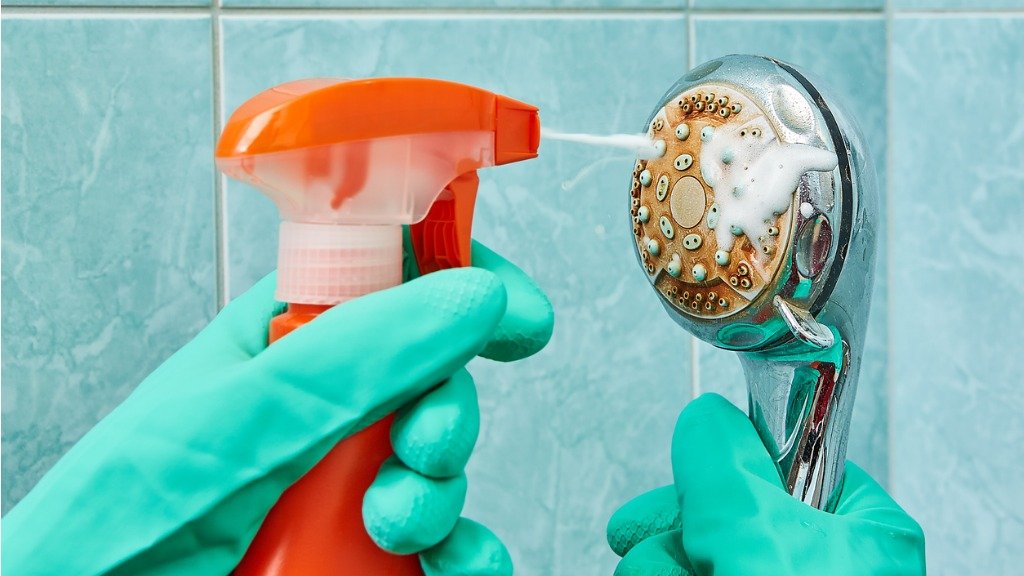
We’ve all been there. You jump in the shower, expecting a spa-like deluge to wash away the sins of yesterday’s DIY drywall project, and instead, you get three sad, high-pressure needles of water stabbing you in the eye. Meanwhile, the other half of the shower head is just… silent. Clogged. Done.
I spent years thinking I just had “bad water pressure” until I actually looked up at the nozzle. It looked like it had been salvaged from a shipwreck. Limescale—that chalky, white, crusty mineral buildup—is the silent killer of bathroom joy. One time, I got so frustrated with a clogged guest shower that I tried to “clear” the holes with a toothpick. Two hours later, I had a broken toothpick stuck in the nozzle and a shower head that whistled like a haunted teakettle every time I turned it on. Trust me, there’s a better way to handle hard water buildup without losing your mind or your security deposit.
Best Natural Limescale Remover: The Vinegar Soak Method
If you’re searching for the best way to clean a shower head, forget those overpriced “industrial strength” foaming sprays that smell like a chemical plant. Those bottles usually cost ten bucks and half the product ends up on your shower floor anyway. In my twelve years of wrestling with plumbing, I’ve found that plain old white distilled vinegar is the undisputed heavyweight champion. It’s cheap, it’s non-toxic, and it actually eats through calcium deposits while you sleep.
Here is the “lazy expert” way to do it. Grab a sturdy gallon-sized freezer bag (don’t use the cheap ones, or you’ll wake up to a vinegar-soaked rug) and a few heavy-duty rubber bands. Fill the bag halfway with vinegar. Slip it over the shower head until the nozzles are completely submerged, and cinch that rubber band around the neck like you’re securing a bag of goldfish from the fair.
Now, here is the secret sauce: leave it alone. I’ve seen “pro” blogs say 30 minutes is enough. Those people clearly don’t have the kind of liquid rock coming out of their pipes that I do. For real results, let it sit for at least six hours. When you pull the bag off, you’ll see chunks of grey and white grit floating in the liquid. It’s gross, it’s satisfying, and it works better than any scrub brush ever could. Just remember to run the hot water for a minute before you hop in, unless you want to smell like a salt-and-vinegar potato chip all day.
Why vinegar works for mineral deposits
The science is simple, even if my high school chemistry teacher would be shocked I remember it. Limescale is essentially calcium carbonate. Vinegar is acetic acid. When the acid meets the base, it breaks the bond holding that crust to your expensive chrome fixture. It’s a slow-motion chemical war where the vinegar always wins.
How to Clean a Fixed Shower Head Without Removing It
Not everyone has the luxury of a detachable wand. If your shower head is bolted to the wall and looks like it hasn’t moved since the Nixon administration, do not—I repeat, do not—try to wrench it off with a pair of pliers unless you are prepared to replace the entire pipe behind the wall. I once tried to force a stuck fixture in my first fixer-upper, and I ended up snapping the threaded nipple right off inside the wall. That turned a 10-minute cleaning job into a $400 emergency plumber call on a Sunday.
For a fixed head, the “baggie method” mentioned above is your best friend. But sometimes, you have a rain shower head that’s the size of a dinner plate. A sandwich bag isn’t going to cut it. In these cases, I use the “towel wrap” technique. Take an old rag, soak it in boiling hot vinegar (be careful, the fumes will clear your sinuses better than a neti pot), and wrap it tightly around the fixture. Secure it with some plastic wrap to keep the heat and moisture in.
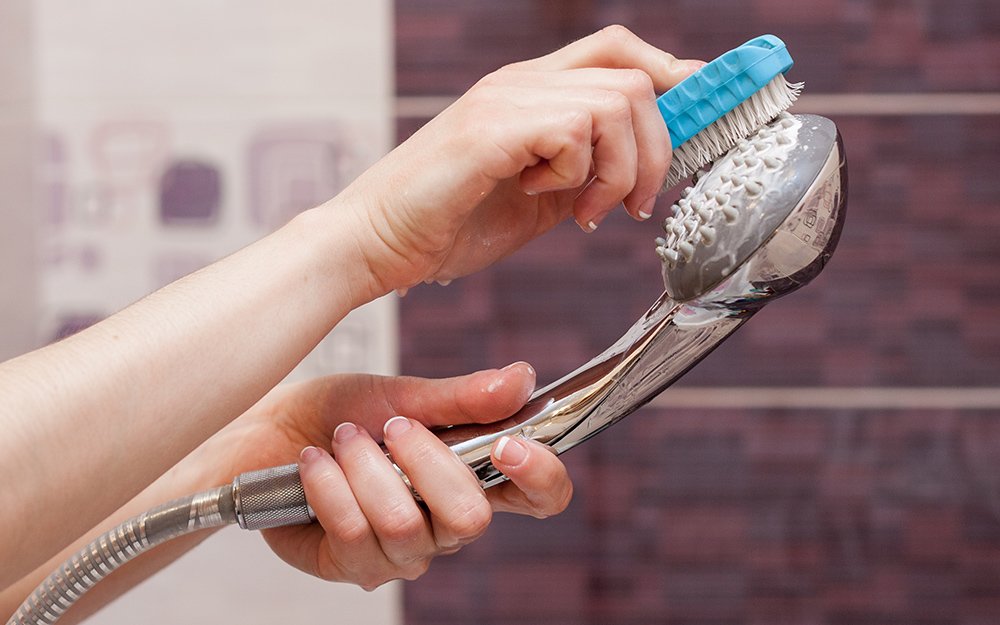
This setup isn’t quite as effective as a full dunk, so you might need to repeat it twice. After the soak, take an old toothbrush—preferably not your spouse’s—and give the rubber nozzles a firm scrub. Most modern shower heads have “rub-clean” silicone nibs. If you massage them while they’re softened by the vinegar, the limescale will just crumble right out. It’s incredibly therapeutic, honestly.
The toothbrush trick for stubborn clogs
If you still have one or two stubborn holes that won’t spray, don’t reach for the drill bit. Use a safety pin or a small paperclip. Gently poke it into the individual silicone holes. You aren’t trying to ream it out; you’re just breaking the internal seal of the scale so the water pressure can blow it out from the inside.
Removing Limescale with Baking Soda and Lemon
Maybe you hate the smell of vinegar. I get it; it lingers. If you want a natural shower cleaner that smells like a summer breeze instead of a pickling jar, grab some lemons. Lemons contain citric acid, which is a bit weaker than the acetic acid in vinegar but still packs a punch against light to medium buildup. Plus, it leaves your bathroom smelling like you actually enjoy cleaning, which is a nice lie to tell ourselves.
Cut a lemon in half and rub the cut side directly onto the metal. For the actual nozzles, make a thick paste using lemon juice and baking soda. Slather it on there like you’re icing a cake. The fizzing reaction you see is the carbon dioxide escaping, which helps physically loosen the surface crust. Let that paste sit until it dries into a crusty shell, then wipe it away with a damp microfiber cloth.
I used this method when I was staging a house for sale last year. I didn’t want the potential buyers thinking the house smelled like a salad dressing factory, but I needed those fixtures to shine. The lemon juice also acts as a natural polisher for chrome. It cuts through that hazy “fog” that hard water leaves on the metal, giving you that “just out of the box” sparkle without the need for toxic metal polishes.
A quick side note on gold and brass
If you have those trendy unlacquered brass or gold fixtures, be careful. Acidic cleaners (even natural ones) can change the patina or strip the finish if left on too long. For fancy finishes, stick to a 10-minute soak and rinse immediately. Don’t go pulling a “me” and leaving a brass head in vinegar overnight, unless you want it to come out a weird shade of pinkish-brown.
Deep Cleaning a Detachable Shower Wand
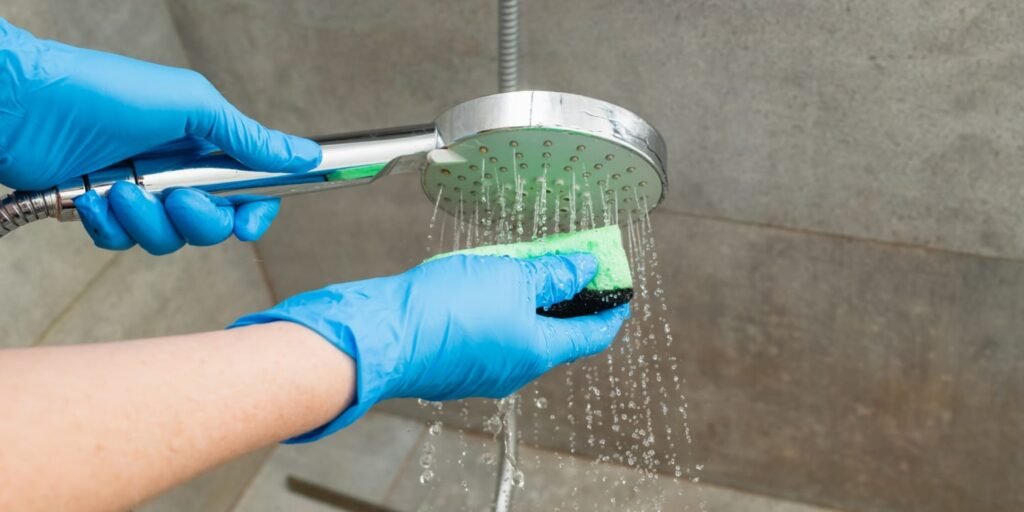
If you have a handheld wand, you’ve hit the jackpot. These are the easiest to clean because you can actually bring the mountain to Muhammad. Unscrew the hose from the wand—usually, you can do this by hand, but if it’s stuck, use a rag-covered wrench to avoid scratching the finish. Once it’s off, you can submerge the whole thing in a bucket or a deep sink.
I like to use a mixture of 50% vinegar and 50% very hot water. Drop the wand in and let it drown. While it’s soaking, take a look at the hose. People always forget the hose! Limescale can build up inside the flexible metal coils, making the wand stiff and difficult to move. I usually pour a little vinegar down the hose itself and let it sit in the tub.
After an hour, take the wand out and use a toothpick to flick out any debris that’s gathered in the “inlet” screen. Most wands have a tiny mesh filter where the handle meets the hose. If that screen is clogged with sand or pipe scale, it doesn’t matter how clean your nozzles are; your pressure will still suck. Rinse everything thoroughly, screw it back together, and prepare for a shower that feels like it’s actually cleaning you.
Real Talk: When to Stop Scrubbing and Start Shopping
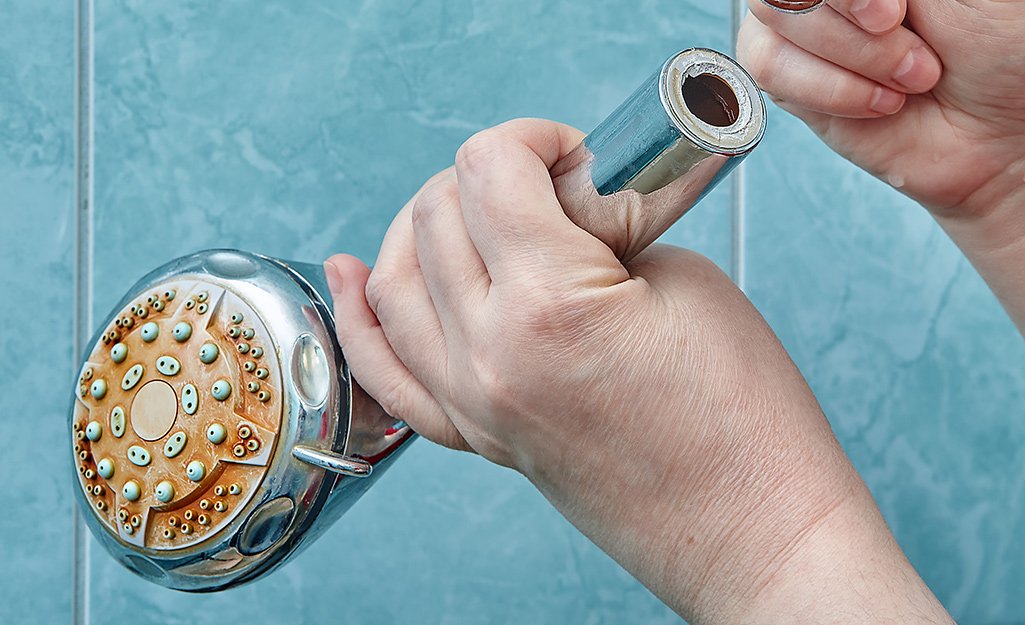
I’m all for DIY. I’ve repaired things that probably should have been thrown in a wood chipper. But I’ve also learned that there is a point of diminishing returns. If your shower head is made of cheap plastic and the “chrome” finish is starting to peel off in sharp, metallic flakes, stop. Just stop.
Once the plating starts to fail, the limescale actually gets under the finish. No amount of vinegar is going to fix that; in fact, the acid will probably just make the peeling worse. You’ll end up with a shower head that works but looks like it has a skin condition. Also, if the internal gaskets are dry-rotted and the head is leaking from the sides or the swivel joint, you’re fighting a losing battle.
A decent, high-efficiency shower head costs about $20 to $50. If you’ve spent three days soaking and poking a ten-year-old fixture and it’s still acting up, do yourself a favor: go to the hardware store, buy a new one, and start fresh. Then—and this is the important part—clean the new one once a month so you never have to deal with a “crust-pocalypse” again.
Parting Wisdom from the Trenches
The best way to deal with limescale is to never let it get a foothold. After you finish your shower, just take half a second to rub your hand over the nozzles while the water is turning off. That simple friction breaks up the minerals before they have a chance to harden into “bathroom concrete.” It’s the difference between a 5-second habit and a 5-hour cleaning project.
What’s the absolute worst “hard water horror story” you’ve dealt with in your house? Did you ever have a fixture so stuck you considered just moving to a new house? Drop your stories or your favorite cleaning hacks in the comments below!