
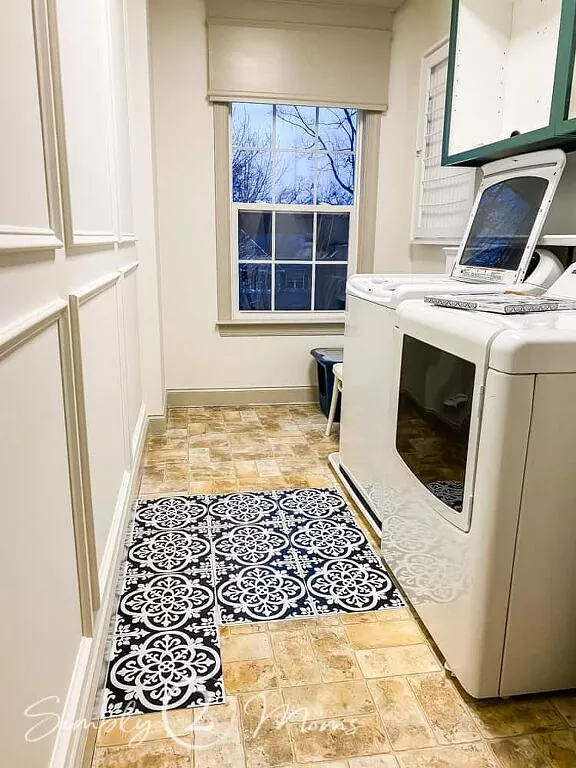
Does your bathroom floor look like a relic from a 1970s fever dream? I know the feeling. My guest bath used to have this yellowing, sheet linoleum that was peeling at the corners and featured a pattern I’m pretty sure was designed to hide dirt—which just made the whole room look permanently filthy. You want a fresh look, but the idea of swinging a sledgehammer and hauling bags of thin-set makes your back ache just thinking about it.
I’ve been there. In fact, I once tried to “save money” by painting my linoleum. Big mistake. Within a month, it was peeling off in sheets like a bad sunburn. That’s when I discovered DIY peel and stick tile over linoleum. It’s the ultimate weekend warrior hack, but if you don’t do it right, you’ll end up with sticky gaps and tiles that shift every time you step out of the shower.
I’ve spent a decade making every floor-related mistake imaginable so you don’t have to. We are going to transform that floor without a single professional contractor or a massive budget. Grab a coffee, put on some old clothes, and let’s get into the nitty-gritty of making your bathroom look like a million bucks for about a hundred.
Best Peel and Stick Tile for Bathroom Floors
When you start browsing for waterproof vinyl floor tiles, don’t just grab the cheapest box at the big-box store. I made that mistake during my “Great Kitchen Refresh” of 2018. I bought the flimsy, paper-thin tiles because they were $0.50 a square foot. By the time the humid summer hit, the edges were curling up like dried pepperoni. It looked awful and felt even worse underfoot.
For a bathroom, you need heavy-duty luxury vinyl tiles (LVT). Look for tiles that are at least 2mm thick. These have enough “heft” to hide the minor imperfections in your old linoleum. If you go too thin, every single bump or dip in the floor below will telegraph through the tile. It’s like wearing leggings over a pair of lumpy socks—not a good look.
I’m also a huge advocate for tiles with a “textured” finish. High-gloss tiles might look sleek in the store, but the second a drop of water hits them in a bathroom, they become a skating rink. Plus, matte or textured finishes are way better at hiding the dog hair and dust that inevitably settle on the floor five minutes after you finish cleaning.
Trust me on this: buy an extra box. Between weird cuts around the toilet and that one tile you’ll inevitably drop sticky-side-down onto a pile of sawdust, you’re going to need the spares. Having a few left over is also a lifesaver if a pipe leaks three years from now and you need to replace a few water-damaged sections.
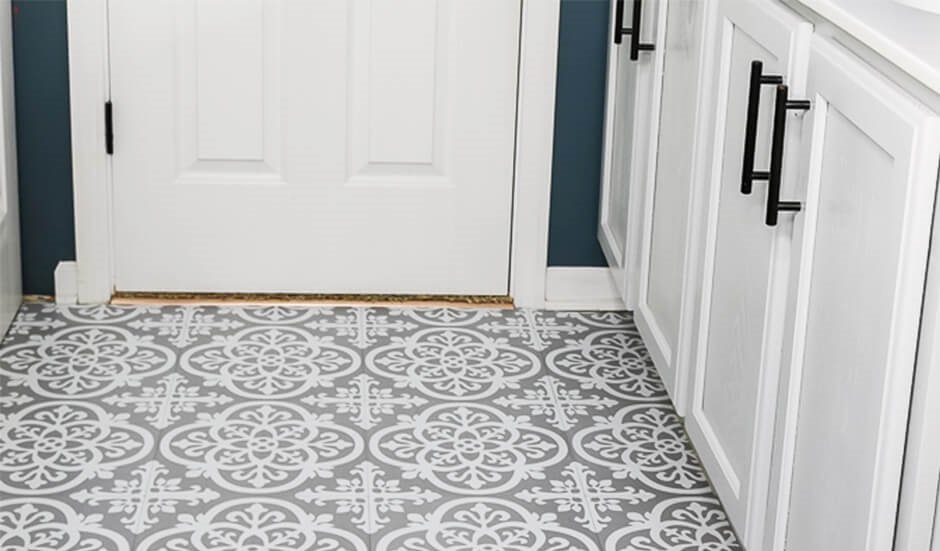
How to Prep Linoleum for Peel and Stick Tile
If you think you can just peel the backing and slap these tiles down on your current floor, I have bad news for you. Your floor is covered in a decade of hairspray, soap scum, and floor wax. If you don’t get that junk off, your new tiles will have the staying power of a sticky note on a breeze-block wall. Prep is 90% of the job, and it’s the part everyone skips because it’s boring.
I start by scrubbing the floor with a heavy-duty degreaser or a mix of TSP (trisodium phosphate) and hot water. Wear gloves, because TSP will dry your hands out faster than a desert wind. You need to strip away every bit of shine. If your linoleum is particularly glossy, I actually recommend hitting it lightly with some 120-grit sandpaper. You aren’t trying to sand it off; you’re just “scuffing” it so the adhesive has something to bite into.
After scrubbing, let it dry. Then let it dry again. I once rushed this step and trapped moisture under a tile. A week later, the bathroom smelled like a swamp, and I had to rip the whole thing up to find the mold growing underneath. Use a fan and wait at least four hours after your final rinse before you even think about opening a box of tile.
One quick pro tip: check for “cushioned” linoleum. If your current floor feels squishy when you walk on it, peel and stick might struggle. The constant flexing can cause the seams of the new tiles to pop. If that’s your situation, you might need to screw down a thin layer of 1/4-inch plywood underlayment first. It’s an extra step, but it beats having your floor come apart in six months.
Tools Needed for Installing Vinyl Floor Tiles
You don’t need a garage full of power tools for this, which is the beauty of the project. However, using a dull utility knife is the fastest way to ruin a tile and potentially slice a finger. I always keep a fresh pack of blades nearby. You’ll be surprised how quickly the vinyl dulls the edge. I change my blade every 10 to 15 cuts to keep things crisp.
You’re also going to need a metal straight-edge or a framing square. Don’t try to freehand your cuts. Using a metal edge allows you to “score” the top of the vinyl and then snap it cleanly. It’s incredibly satisfying—kind of like breaking a chocolate bar. For the weird U-shaped cuts around the toilet base, a pair of heavy-duty kitchen shears or tin snips works wonders.
A chalk line is your best friend for keeping things straight. Most bathrooms aren’t actually square. If you start against one wall and that wall is slightly crooked, by the time you reach the other side of the room, your tile pattern will look like a literal staircase. Snap a center line and work from the middle out.
Lastly, get a floor roller. You can rent a big 100-pound one from the hardware store, but for a small bathroom, a small hand roller (the kind used for wallpaper or laminate) and your own body weight will usually do. The goal is to “activate” the pressure-sensitive adhesive. I’ve been known to put on a pair of thick socks and do a little “shuffle dance” across every single tile just to make sure they’re locked down.
Cutting Vinyl Tile Around Bathroom Fixtures
This is the part where people usually lose their minds and start cursing. Trying to cut a perfect circle around a toilet flange is a nightmare if you don’t have a plan. My secret weapon? Cardboard templates. I use the boxes the tiles came in to cut out a “practice” tile that fits perfectly around the base of the toilet or the pedestal sink.
Once the cardboard template fits like a glove, I trace it onto the back of the actual tile. Remember to flip your template if you’re tracing on the back, otherwise, you’ll cut a mirror image and waste a tile. I’ve done that more times than I care to admit. It’s a specialized kind of heartbreak to finish a perfect cut only to realize it’s backwards.
For tight corners or radiator pipes, I use a “contour gauge.” It’s a little tool with plastic pins that take the shape of whatever you press it against. You can get one for ten bucks, and it makes those weird cuts look professional. If you don’t want to buy another tool, a compass (the kind from geometry class) works great for scribing the curve of a wall onto a tile.
Whatever you do, don’t leave huge gaps around the fixtures. You want to get as close as possible, then fill the remaining tiny gap with a bead of silicone caulk. This prevents water from splashing off the tub and seeping under your new tiles. Without caulk, that adhesive will eventually turn into a gooey mess, and your tiles will start sliding around like air hockey pucks.
Using Extra Adhesive for Peel and Stick Floors
Here is my most controversial opinion: the “stick” on peel and stick tile is rarely enough on its own, especially in a high-moisture environment like a bathroom. I know the box says “No extra glue needed,” but the box is lying to you. I’ve seen too many DIY floors fail because the factory glue just couldn’t handle the humidity of a hot shower.
I always use a pressure-sensitive flooring adhesive or at least a spray-on bond enhancer. You apply a very thin layer to the prepped linoleum, let it get “tacky” (it should feel like the back of a Post-it note), and then lay your tiles. This creates a bond that is ten times stronger than the tile’s built-in glue alone.
If you don’t want to glue the whole floor, at least use a little extra adhesive around the perimeter of the room and around the toilet. These are the areas most likely to lift. I once skipped the extra glue in a small powder room, and within six months, the tile right in front of the sink—where people stand and pivot—started to shift, revealing a sticky black gap of old linoleum underneath.
Is it more work? Yes. Is it messier? Absolutely. But do you want to do this project once, or do you want to be fixing “pop-ups” every Saturday for the next year? Spend the $15 on a small tub of additional adhesive. Your future self will thank me when your floor is still rock-solid five years from now.
Real Talk: When Peel and Stick is a Bad Idea
I love a good DIY hack, but let’s be honest: peel and stick isn’t a magical fix for every floor. If your current linoleum is curling, bubbling, or has huge gouges out of it, putting tile over the top is just going to highlight those problems. You can’t hide a mountain with a rug. If the base layer is failing, the new layer will fail too.
Also, if you have a major moisture problem—like a subfloor that stays damp or a basement bathroom that “sweats”—peel and stick is a waste of your Saturday. The moisture will eventually kill the adhesive, and you’ll find yourself standing on a floating island of vinyl. In those cases, you’re better off ripping it out and doing a “loose lay” sheet vinyl or a click-lock waterproof plank.
And let’s talk about “Groutable” peel and stick. Some brands tell you that you can space them out and use actual grout. Personally? I hate it. The vinyl tiles expand and contract with temperature changes much more than ceramic does. Usually, that grout eventually cracks and falls out, leaving you with a gritty mess in your bathroom. If you want the look of grout, buy tiles that have a printed grout line or just go with a traditional ceramic tile install.
One more thing: don’t expect this to last 30 years. This is a 5-to-10-year solution. It’s perfect for a starter home, a rental (if your landlord is cool with it), or a quick refresh while you save up for a full renovation. It’s a “now” fix, not a “forever” fix. Knowing that going in will save you from being disappointed when it starts showing its age down the road.
Parting Wisdom
The biggest hurdle is usually just getting started. We spend so much time over-analyzing the “what-ifs” that we end up living with that hideous 70s floor for another three years. Just remember: it’s only vinyl. If you mess up a tile, you peel it up and try again. It’s the most forgiving DIY project you can tackle.
Take your time with the cleaning, buy the thick tiles, and don’t be afraid to use a little extra glue. You’ll be amazed at how much a fresh floor changes the “vibe” of your bathroom. It goes from a room you want to spend as little time in as possible to a space that actually feels clean and modern.
What’s the biggest “decor disaster” currently hiding in your bathroom? Drop a comment below and let’s figure out how to fix it without breaking the bank!