
I’ve spent several years covered in drywall dust, sawdust, and—more often than I’d like to admit—mysterious bathroom puddles. If there is one thing I’ve discovered, it’s that your house has a personality, and sometimes that personality is just plain cranky. There is nothing quite like the panic of a guest emerging from your powder room with “that look” on their face, whispering that the toilet handle just spins like a cheap carnival game.
I once spent an entire Thanksgiving explaining to my Great Aunt Martha that she had to “hold it down for exactly four seconds, then wiggle it left” just to get the guest bath to clear. It was humiliating. I’ve knocked out walls and tiled entire kitchens, but a loose toilet handle is the kind of tiny, nagging failure that makes you feel like you’ve lost control of your own castle.
The good news? You don’t need a $150-an-hour plumber to fix this. You just need about ten minutes, a pair of pliers, and the willingness to look inside the “porcelain box of mystery” (the tank). Let’s get your throne back in working order so you can stop living the “jiggle life.”
Why Your Toilet Handle Feels Loose or Limp
When you search for how to fix a loose toilet handle, you’re usually dealing with one of three culprits. Most people think they need a whole new toilet, but usually, it’s just a mechanical disconnect. Inside that tank, there’s a lever, a chain, and a flapper. If any of those get out of sync, your flush goes to mush.
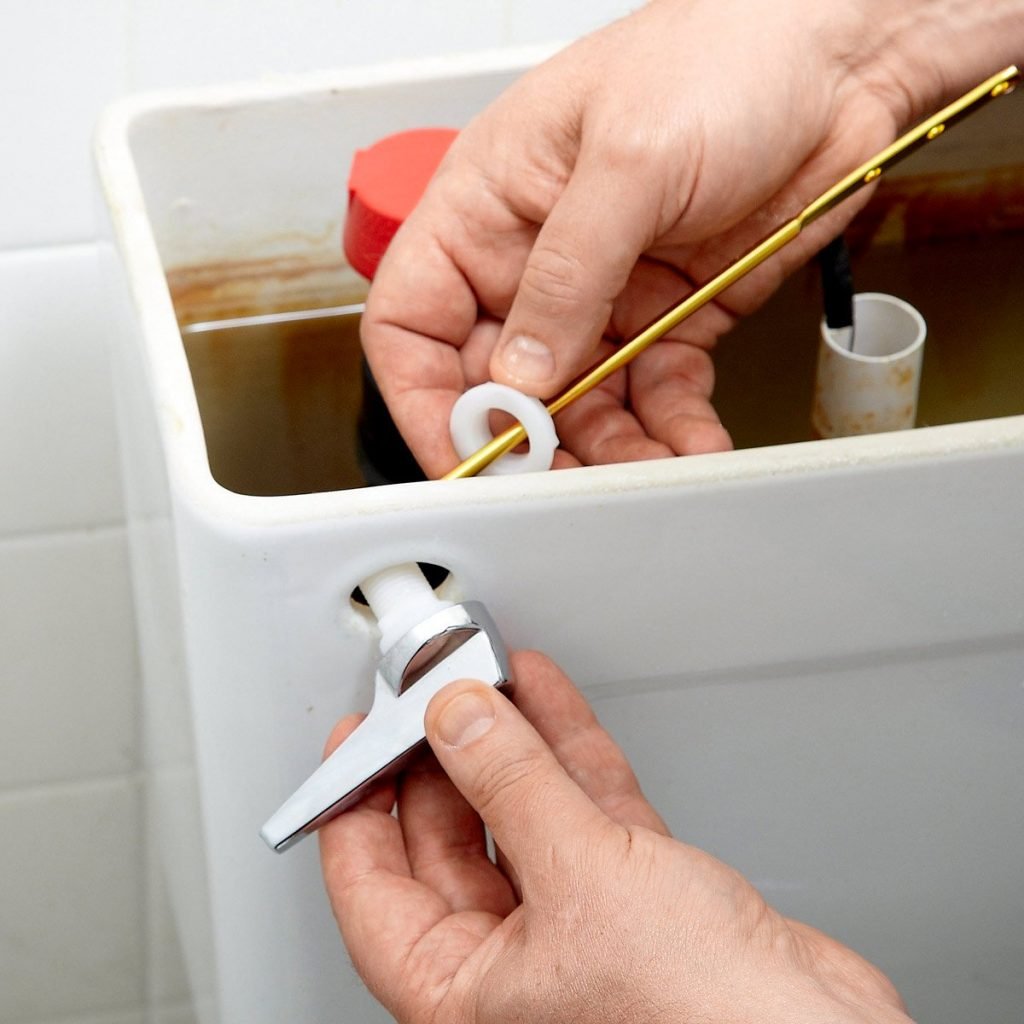
I’ve found that the most common issue is simply a loose mounting nut. This is the nut located directly behind the handle on the inside of the tank. Because we use the handle every single day, the constant vibration eventually backs that nut off. Before you run to the hardware store, grab the handle and see if the whole assembly is wiggling against the porcelain. If it is, you’ve found your ghost.
Another hidden culprit is the “gunk factor.” Over time, minerals in your water build up around the handle’s rotation point. I once pulled a handle out of a 1970s avocado-green toilet that was so encrusted with lime it looked like a shipwrecked artifact. That buildup creates friction, making the handle feel “stuck” or preventing it from returning to its original position after you flush.
DIY Toilet Handle Repair Tools You Actually Need
Don’t let those “Top 10 Tools Every Homeowner Needs” lists fool you. You don’t need a specialized wrench set or a blowtorch for this. In fact, if you bring a blowtorch near your toilet, please stop reading and call a professional immediately. I once tried to “speed dry” some sealant with a heat gun and ended up cracking a perfectly good tank. It was an expensive, soggy lesson in patience.
For this job, you really only need:
- A pair of channel-lock pliers or an adjustable wrench.
- An old rag (to wipe up the inevitable condensation drips).
- A small bottle of white vinegar (if things are crusty).
Keep it simple. The more tools you bring into a small bathroom, the more things you have to trip over when you inevitably realize you left the water turned on. I keep my “toilet kit” in a small plastic bin because, let’s be honest, nobody wants to put their “clean” tools back in the main chest after they’ve been hovering over a flush valve.
How to Tighten a Loose Toilet Trip Lever Nut
This is the “big secret” of the plumbing world: Toilet handle nuts are reverse-threaded. If you try to tighten it the way you tighten a normal bolt (righty-tighty), you are going to snap the plastic and have a very bad Tuesday. I have personally snapped at least three of these because my brain refuses to accept that “lefty” can be “tighty.”
To fix this, take the lid off the tank and set it somewhere safe—like a rug or a towel. Do not put it on the tile floor; those things are surprisingly fragile and will shatter if you sneeze on them. Locate the nut directly behind the handle. While holding the handle steady with one hand on the outside, use your pliers to turn the nut counter-clockwise to tighten it.
If the nut is plastic, go easy on it. You want it snug, not “Hulk-smashed.” If you overtighten, you’ll crack the nut or even the porcelain tank itself. I’ve found that finger-tight plus a quarter turn with pliers is the sweet spot. If it still feels loose after that, the nut might be stripped, which means it’s time for a $10 trip to the hardware store for a replacement kit.
Adjusting the Toilet Flapper Chain for a Better Flush
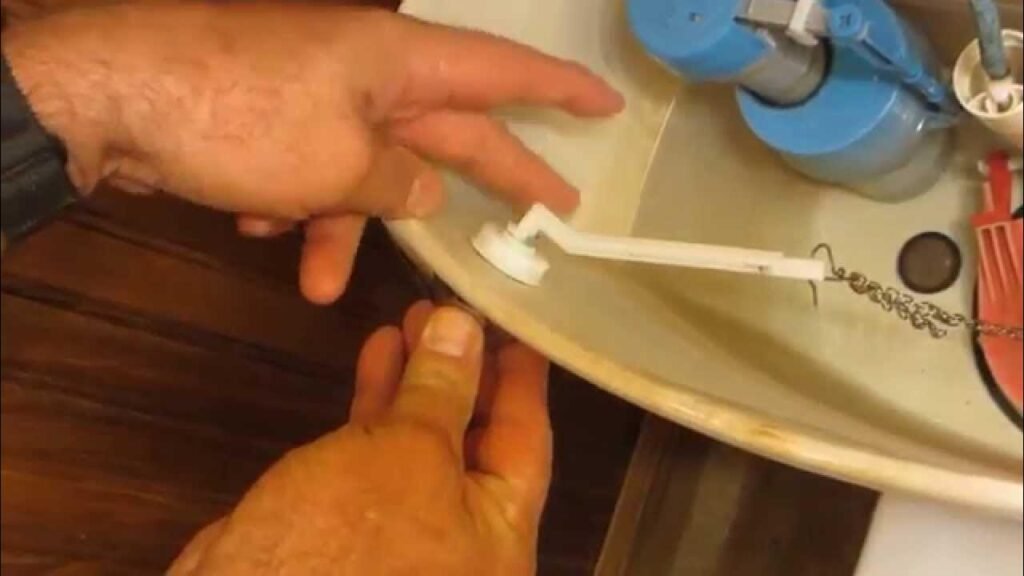
If the handle moves fine but the toilet doesn’t actually flush unless you hold the lever down like you’re launching a rocket, your toilet chain adjustment is wrong. This is the little metal chain that connects the handle arm to the rubber flapper at the bottom of the tank. If there is too much slack, the handle moves, but the flapper barely lifts.
I like to aim for about half an inch of slack. If the chain is too tight, the flapper won’t seal properly, and you’ll hear that ghostly “hissing” sound of a running toilet all night. I once spent three days thinking my house was haunted before I realized I’d clipped the chain one link too high. Talk about a blow to my “expert” ego.
To fix this, just unhook the “S” clip from the handle arm and move it up or down a few links. Test the flush. If the flapper lifts fully and then drops back down once the tank is empty, you’ve nailed it. If the chain is way too long and gets tangled under the flapper, it’ll keep the toilet running constantly—which is a great way to double your water bill for no reason.
Replacing a Broken Toilet Handle and Arm
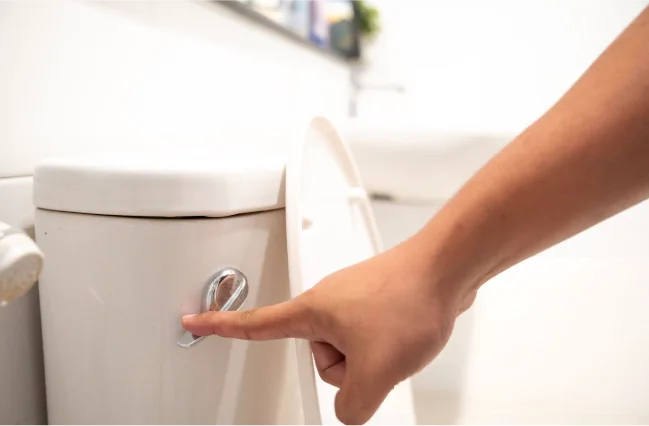
Sometimes, the metal or plastic arm attached to the handle just gives up the ghost. Corrosion is real, folks. If you press the handle and hear a “snap,” or if the arm is hanging limp like a broken wing, you need a toilet handle replacement kit. These are universal most of the time, but check if your handle is on the front, the side, or the angle of the tank before you buy.
I’m a big fan of the all-metal replacement arms. The plastic ones are cheap, sure, but they flex. A solid brass or stainless steel arm gives you that satisfying, “heavy” flush feeling that makes you feel like a pro. To install it, just unscrew the old nut (remember: clockwise to loosen!), slide the old handle out, and slide the new one in.
Pro-tip from my 12 years of trial and error: Before you hook the chain back up to the new arm, make sure the arm isn’t hitting the tank lid or the fill valve. I once installed a “universal” handle that was about two inches too long. Every time I flushed, it whacked the side of the tank and got stuck. I had to use a pair of heavy-duty snips to trim the brass arm down to size. Measure twice, flush once.
Real Talk: When to Give Up and Call a Pro
I love a good DIY project, but I also love my sanity. There are times when a loose handle is a symptom of a much larger, more annoying problem. If you open your tank and see that the porcelain around the handle hole is cracked, stop. No amount of tightening is going to fix that, and you’re looking at a potential flood if that crack spreads.
Also, if you’ve replaced the handle, the chain, and the flapper, and the toilet still won’t flush right, you might have a clogged siphon jet or a venting issue. I spent an entire weekend once rebuilding the “guts” of a toilet only to realize a toddler had flushed a plastic dinosaur three weeks prior. No amount of handle-tightening fixes a T-Rex in the pipes.
Finally, if your toilet is more than 20 years old, sometimes it’s just better to buy a new one. Modern toilets use less water and have much better flush mechanics. I’ve found that “polishing a turd” (pun intended) by constantly repairing an ancient toilet is a total waste of money. Spend the $150 on a new high-efficiency model and save yourself the headache of monthly repairs.
Parting Wisdom
A loose toilet handle isn’t just a nuisance; it’s a tiny drain on your home’s “vibe.” Taking ten minutes to tighten a nut or adjust a chain is the kind of “Easy Win” that builds your confidence for bigger projects—like that kitchen backsplash you’ve been putting off. Just remember: Left is tight when it comes to that tank nut!
Does your toilet have a specific “trick” to make it work, or have you finally mastered the art of the 5-minute fix? Drop a comment below and tell me about your weirdest plumbing mishap—I promise I’ve done worse!