
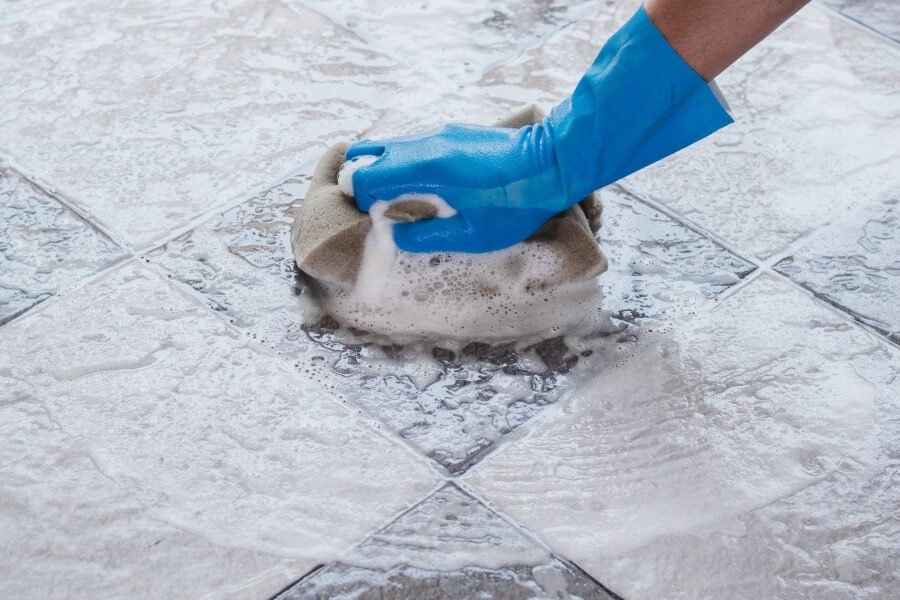
Stop staring at those orange-tinted lines between your floor tiles and wondering if you accidentally moved into a petri dish. We’ve all been there. I remember back in ‘14 when I tried to “embrace the rustic look” of my stained bathroom floor, only to realize my mother-in-law was actually just judging my hygiene. I eventually spent three days on my knees with a toothbrush and a gallon of toxic chemicals that left me lightheaded and didn’t even finish the job.
Trust me, your lungs and your grout deserve better. You don’t need a professional crew or a hazmat suit to get your bathroom back to its former glory. You just need some kitchen staples and a little bit of elbow grease. Here is how you actually clean bathroom grout with baking soda and dish soap without losing your mind—or your weekend.
Why Baking Soda and Dish Soap is the Best DIY Grout Cleaner
I’ve spent a small fortune on “miracle” cleaners that promised to melt away years of soap scum in seconds. Most of them are just overpriced bleach in a fancy bottle. I finally wised up and realized that the best grout cleaning solution was sitting right under my kitchen sink. It’s cheap, it’s non-toxic, and it actually works because it tackles two different types of filth at once.
The dish soap—and please, use the blue stuff, you know the one—is a degreaser. It breaks down the body oils, shampoo residue, and general “human slime” that accumulates in a shower. Meanwhile, the baking soda acts as a mild abrasive. Grout is porous, meaning it has tiny little holes that trap dirt deep down. The grit in the baking soda gets into those pores and physically knocks the dirt loose without scratching your expensive ceramic or porcelain tiles.
I’m telling you right now: skip the vinegar for this specific mix. I see people online telling you to mix baking soda and vinegar all the time. Sure, it fizzes and looks like a middle school science project, but the chemical reaction actually neutralizes both ingredients, leaving you with salty water. It’s a total waste of time. Stick to the soap and soda paste; it stays where you put it and does the heavy lifting while you listen to a podcast.
The Ultimate Recipe for Homemade Grout Cleaner Paste
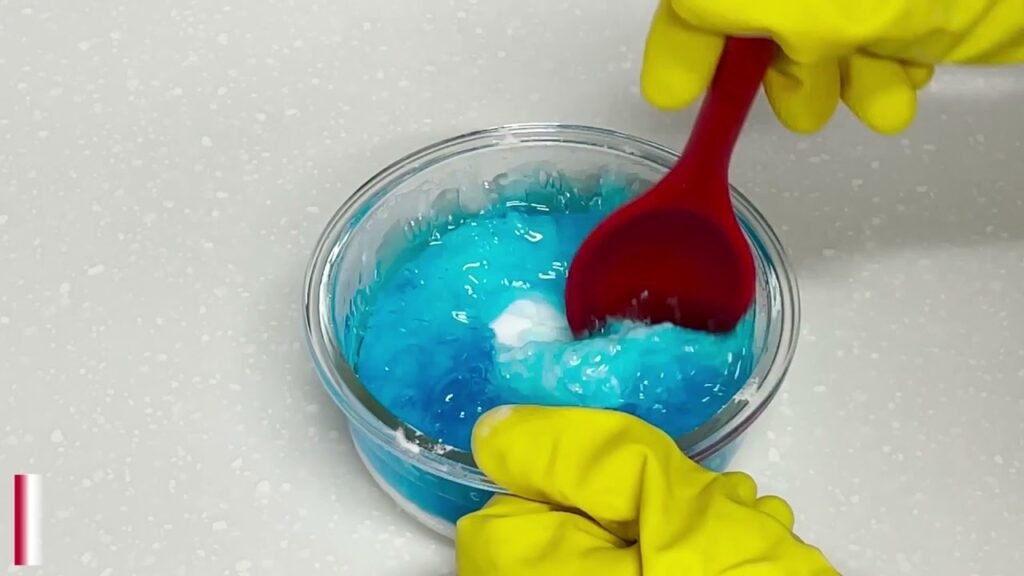
If you want to know how to mix the perfect grout cleaning paste, don’t overcomplicate it. I usually go for a 3-to-1 ratio: three parts baking soda to one part dish soap. You want the consistency of thick toothpaste. If it’s too runny, it’ll just slide down your shower walls and end up in the drain before it can do any cleaning. If it’s too thick, you’ll be fighting to spread it.
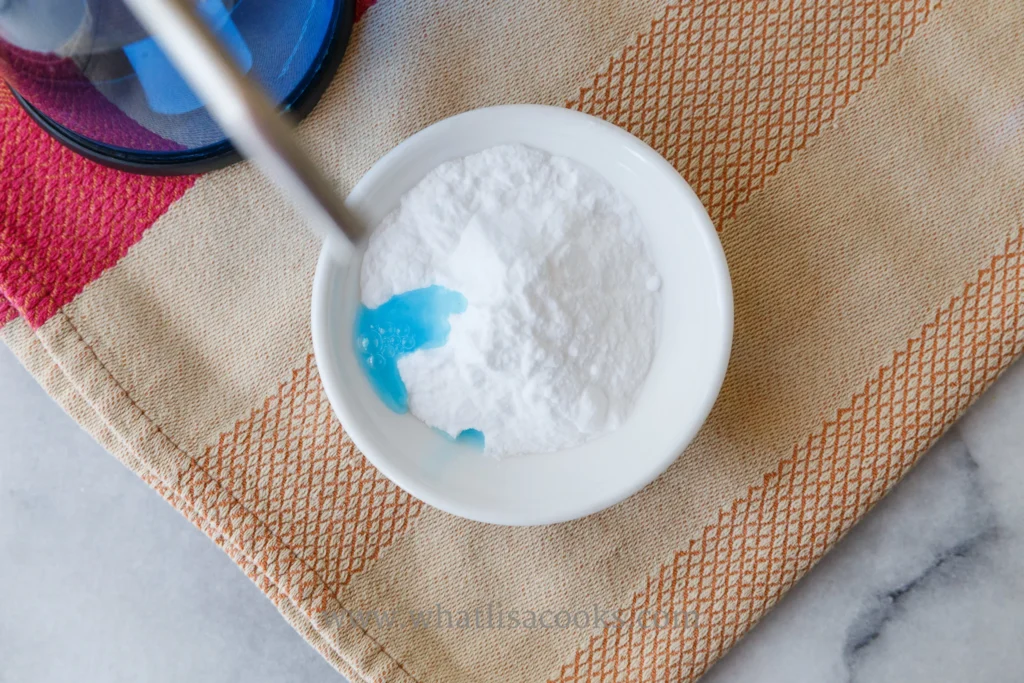
I usually mix this up in a small plastic container—one of those old sour cream tubs I swore I’d use for leftovers but never did. Start with about half a cup of baking soda and slowly stir in the dish soap. You’ll see it turn into a beautiful, slightly foamy paste. If you’re feeling fancy or your bathroom smells like a locker room, you can add five drops of lemon essential oil. It won’t make it clean better, but it’ll make you feel like a domestic deity.
One quick side note: if your grout is colored (like dark gray or brown), test this on a tiny, hidden spot first. While baking soda is gentle, you don’t want to find out the hard way that your “charcoal” grout turns “dusty pigeon” because of a weird chemical reaction. Better safe than sorry, especially if you’re a perfectionist like my neighbor who once tried to “brighten” his black grout with bleach and ended up with polka dots.
Step-by-Step Instructions for Cleaning Grout Lines
First, give your tiles a quick rinse with warm water. You want the surface to be slightly damp but not soaking wet. I once tried to apply the paste to a bone-dry floor, and it just rolled around like little marbles of blue goop. Not my finest hour. Grab an old toothbrush or, better yet, a stiff-bristled grout brush from the hardware store. Those cheap plastic ones with the narrow bristles are worth the three bucks, I promise.
Apply the paste generously to the grout lines. Don’t be stingy here. You want to see a thick white line covering every inch of that grime. Once it’s on, go grab a coffee or fold some laundry. You need to let it sit for at least 15 to 20 minutes. This “dwell time” is where the magic happens. The soap is literally eating through the oils while you’re relaxing. If you try to scrub it immediately, you’re just doing double the work for half the result.
After the wait, it’s time to scrub. Use circular motions. Don’t just go back and forth; circles help the bristles get into those porous nooks and crannies I mentioned earlier. You’ll see the white paste turn a disgusting shade of gray or brown. That’s the “victory color”—it means it’s working. Once you’ve scrubbed a section, wipe it down with a damp microfiber cloth. Rinse the cloth frequently, or you’ll just be spreading the dirt back around like a muddy squeegee.
Essential Tools for Deep Cleaning Bathroom Tiles
You don’t need a power tool for this, though I’ll admit I once attached a scrub brush to my cordless drill because I was feeling particularly lazy (and it worked, but I splashed blue soap on my ceiling). For most normal humans, a handheld grout brush is your best friend. Look for one with an ergonomic handle. Your hand will cramp up if you try to use a flat brush for an entire bathroom.
Microfiber cloths are non-negotiable. Don’t use paper towels; they’ll shred against the grout and leave you with a million little white paper bits that are a nightmare to clean up. A good microfiber cloth grabs the lifted dirt and holds onto it. I keep a stack of “cleaning only” rags that are stained and ugly but get the job done.
Lastly, get yourself a pair of knee pads or a gardening kneeling mat. I’m not as young as I used to be, and ten minutes on a hard tile floor feels like a lifetime. My knees still haven’t forgiven me for the “Great Kitchen Remodel of 2018.” Save your joints and spend the five dollars on a foam mat. You’ll thank me when you can actually walk the next morning.
Real Talk: When DIY Cleaning Isn’t Enough
Let’s be honest for a second. There are some things baking soda can’t fix. If your grout is literally crumbling and falling out in chunks, no amount of scrubbing is going to save it. You’re looking at a re-grouting job, my friend. I’ve seen people try to “clean” grout that was actually just moldy sand held together by prayers. If it’s falling out, stop scrubbing and start looking up “how to use a grout saw.”
Also, if you have deep, black mold that has worked its way under the clear caulk in the corners of your tub, this paste won’t reach it. You can scrub until your arm falls off, but that mold is living its best life behind a silicone barrier. In that case, you have to cut out the old caulk, kill the mold with a dedicated fungicide, and re-caulk it. It’s a pain, but putting soap on top of it is like putting a band-aid on a broken leg.
One more thing: don’t expect 30-year-old grout to look brand new. Grout stains over time. If you’ve cleaned it and it’s still a bit dingy, it might just be permanent pigmentation. You can buy grout pens to “paint” the lines, but that’s a temporary fix that usually looks a bit like a toddler went wild with a Sharpie. Sometimes, “clean and sanitized” is the best you’re going to get, and that’s okay.
Maintenance Tips to Keep Grout Clean Longer
Once you’ve put in the work, the last thing you want is to be back on your knees in three months. The secret to long-lasting clean grout is a good sealer. After your grout is completely dry—wait 24 hours after cleaning—apply a penetrating grout sealer. It’s a clear liquid thataks into the pores and acts like a raincoat for your floor. It prevents the dirt from getting deep down in the first place.
I also highly recommend getting a squeegee for your shower. I know, it’s an extra 30 seconds after every shower, but it’s the single most effective way to prevent soap scum buildup. If you move the water off the walls and into the drain, the grout stays dry and the mold stays away. My kids hate doing it, but I told them the “Shower Monster” grows in the dampness, and that seemed to do the trick.
A quick side note: try to avoid using oil-based body washes if you can. They smell great, but they leave a film on the tile that acts like a magnet for dust and hair. If you love your body oils, just be prepared to use the baking soda paste a little more often.
Parting Wisdom
Cleaning grout isn’t glamorous. It’s tedious, it’s messy, and it’s definitely not what you want to do on a Saturday. But using baking soda and dish soap is the most effective, safest, and cheapest way to get it done. It’s one of those jobs that gives you an immediate “win”—there is nothing quite as satisfying as seeing a bright white line emerge from under a layer of brown grime.
Just remember: let the paste do the work. If you find yourself sweating and swearing, you probably didn’t let it sit long enough. Take your time, protect your knees, and don’t forget to rinse thoroughly.
What’s the absolute worst “cleaning hack” you’ve ever tried that totally backfired? I once tried to clean a window with a newspaper and ended up with black ink all over my white curtains. Drop your horror stories (or your grout-cleaning wins) in the comment box below! I’d love to hear them.