A cramped bathroom does not have to mean sacrificing a comfortable shower entrance. The right space-saving shower door system can reduce door swing, improve clearance, and make better use of a compact layout.
This roundup compares folding, sliding, pivot, and tri-fold designs in several widths and finishes, so you can match the enclosure to your shower opening, style, and installation plans.
Best 10 Space-Saving Shower Door Systems Picks for 2026
Compact Flex

- Bi-fold or swing opening options
- 6mm clear tempered glass
- Reversible, adjustable 24.8–26-inch fit
Best For: Compact bathrooms with tight entry clearance
Wide Glide

- Fits 56–60 inches wide
- Reversible doors with trimmable rails
- 6mm coated tempered glass
Best For: Wide walk-in showers needing a bypass door
Corner Fold
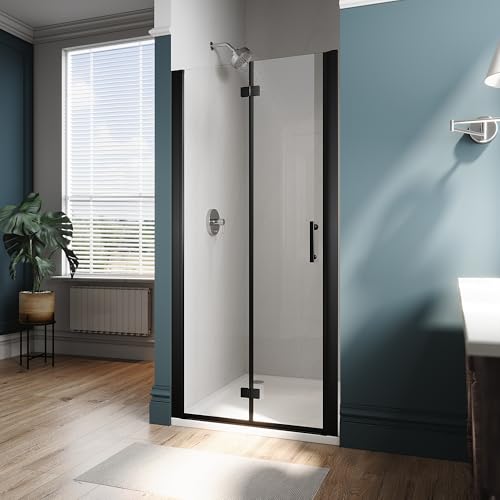
- Folds inward to save bathroom space
- Adjusts from 33.5–35 inches wide
- 28-inch walk-in opening
Best For: Small corner bathrooms with limited swing clearance
Silent Slide

- Space-saving single-door sliding design
- 23.6-inch walk-in opening
- Removable bottom rollers for cleaning
Best For: Narrow showers needing sliding access
Compact Pivot Pick
Royal Guard Frameless Shower Door

- Adjustable 24–25.4-inch width
- Reversible 180-degree pivot
- 6mm certified tempered glass
Best For: Small shower bases with tight clearances
Wide-Entry Folding Pick
Frameless Tri-Fold Shower Door

- Up to 40.5-inch walk-through
- 90- and 180-degree folding options
- Up to 1.75-inch width adjustment
Best For: Wide openings needing a broad, space-efficient entry
Small-Bathroom Bifold

- 30–31.2-inch adjustable width
- 26.5-inch walk-in opening
- Inward or outward 180-degree folding
Best For: Compact bathrooms needing a chrome bifold door
Quiet Glide Pick
Adjustable Semi-Frameless Slider

- 56–60-inch adjustable width
- Quiet tested roller system
- Nano-coated 6mm tempered glass
Best For: Medium-width walk-in showers needing a reversible, low-maintenance slider
Small-Bathroom Winner

- Folds inward or outward
- Fits 34–35 1/2-inch openings
- 180-degree reversible swing
Best For: Compact bathrooms where door clearance is limited
Wide Opening Choice

- Adjusts from 57 to 60 inches
- Reversible double-slider design
- Nano-coated 1/4-inch tempered glass
Best For: Wide, straight-wall showers needing a space-efficient bypass door
Compact Flex – Bi-Fold Pivot Shower Door
For compact bathrooms, this space-saving shower door system combines a bi-fold panel arrangement with a traditional swing option. Its 24.8–26-inch adjustable width, reversible installation, and water-sealing components make it practical where clearance and wall fit are concerns.
Best For: Compact shower spaces needing flexible opening and installation options.
Pros:
- Bi-fold and swing opening modes help maximize usable bathroom space.
- 6mm clear tempered glass provides visibility and a more open visual effect.
- Reversible mounting and bilateral width adjustment accommodate different layouts and uneven walls.
- Magnetic strips and a bottom water deflector help limit splashes and leaks.
Cons:
- The narrow 24.8–26-inch fit is intended for specific openings.
- The full frame may look more substantial than a frameless design.
This is a versatile pick when a small opening needs more than one access configuration. Confirm your finished wall-to-wall measurement before buying.
Wide Glide – Double Sliding Shower Door
This double-sliding space-saving shower door system keeps the panels within the shower footprint while covering a 56–60-inch opening. Its reversible doors, trimmable rails, certified 6mm glass, and water-repellent coating suit a broad range of walk-in shower layouts.
Best For: Wider walk-in showers where sliding doors preserve floor and entry space.
Pros:
- Double sliding doors avoid the outward swing of a hinged enclosure.
- Rails can be trimmed for narrower spaces, and the doors are reversible.
- 6mm SGCC and ANSI-certified tempered glass has a water-repellent coating.
- A no-leak threshold helps protect flooring from escaping water.
Cons:
- Professional installation is required for safety and best results.
- At 108 pounds, the unit is relatively heavy to handle during installation.
Choose this model when your shower is wide enough for a bypass configuration and you want a classic brushed-nickel finish. Verify the opening and plan for professional installation.
Corner Fold – Frameless Bifold Shower Door
This frameless space-saving shower door system folds into itself rather than swinging broadly into the bathroom. Designed for a 33.5–35-inch opening, it offers a 28-inch walk-in entry, reversible installation, and a corner-friendly 180-degree folding action.
Best For: Small corner bathrooms seeking a wide walk-through without a large door swing.
Pros:
- Bi-fold panels save space and fold to one side for entry.
- Adjustable width accommodates openings from 33.5 to 35 inches.
- 6mm ANSI Z97.1-certified tempered glass supports everyday safety.
- Full-length clear seals help prevent shower-water leakage.
Cons:
- The 28-inch walk-in opening is narrower than the overall door width.
- Professional installation is recommended if you do not want to handle setup yourself.
Its frameless appearance and folding action make it particularly useful in corners where a conventional pivot door would interfere with the room. Measure both the opening and available folding clearance.
Silent Slide – Single Sliding Shower Door
This single-panel space-saving shower door system slides within its 36-inch width, avoiding the clearance required by a swinging door. The frame adjusts 0.5 inch on each side, while the 23.6-inch entry, reinforced seal, and removable bottom rollers add practical everyday convenience.
Best For: Narrow shower openings where a quiet sliding door and easy cleaning are priorities.
Pros:
- Sliding operation saves space and is designed for quiet gliding.
- A 23.6-inch walk-in opening provides comfortable access for this size.
- Adjustable framing helps compensate for uneven walls.
- One-touch bottom-roller release simplifies removal for cleaning.
Cons:
- The wall-side frame does not contain glass because it houses the sliding track.
- The 36-inch door width provides a smaller overall opening than wider systems.
This model is a focused choice for a narrow, modern shower enclosure, especially if cleaning access matters. Measure after tile and wall installation, as the instructions recommend.
Compact Pivot Pick – Royal Guard Frameless Shower Door
For narrow shower layouts, the Royal Guard is a practical space-saving shower door system with a frameless look and reversible pivot operation. Its 24- to 25.4-inch adjustable width and 72-inch height suit compact openings, while the 180-degree hinge movement lets you tailor the swing to your bathroom.
Best For: Small shower bases and bathrooms needing a reversible, compact pivot door.
Pros:
- Adjustable 24- to 25.4-inch width helps accommodate varying wall gaps.
- Reversible installation supports left- or right-hand openings.
- 6mm SGCC-certified tempered glass includes transparent safety film.
- Magnetic, bottom, side, and middle seals help contain water.
Cons:
- The 19 19/32-inch walk-in opening is relatively narrow.
- Accurate post-finish measurements are required before installation.
- The matte-black finish may not coordinate with every bathroom fixture set.
This is a good fit when a small shower base and flexible swing direction matter more than a wide entry. The adjustable frame and sealing package add installation and everyday-use practicality.
Wide-Entry Folding Pick – Frameless Tri-Fold Shower Door
This frameless tri-fold is a versatile space-saving shower door system for a wider opening that still needs an unobstructed entry. The panels fold to one side for up to a 40.5-inch walk-through, and the open-top design keeps the enclosure visually light.
Best For: Wider modern shower openings where maximum walk-through space and folding operation are priorities.
Pros:
- Folding panels provide up to a 40.5-inch walk-in width.
- 90- and 180-degree opening options support flexible access.
- Up to 1.75 inches of width adjustment helps fit uneven walls.
- Lift-assist hinges, magnetic strips, and bottom barriers support smoother operation and water control.
Cons:
- Its 46.25- to 48-inch opening requires substantially more wall width than compact pivot models.
- Tri-fold hardware and multiple panels may make installation more involved.
- The supplied notes do not specify a complete installation time or included hardware list.
Choose this model when entry width is the main concern but a traditional outward-swinging door would interfere with the room. Its adjustable wall profile and folding configuration make it especially adaptable for modern shower spaces.
Small-Bathroom Bifold – Chrome Foldable Shower Door
The 30-inch Chrome Bifold is a straightforward space-saving shower door system for compact bathrooms. Its 180-degree pivot and inward-or-outward folding action reduce the clearance needed around the shower, while the adjustable width helps fine-tune the fit.
Best For: Small bathrooms that need a 30-inch foldable door with a relatively generous 26.5-inch walk-in opening.
Pros:
- Folds inward or outward to conserve bathroom floor space.
- 30- to 31.2-inch adjustable width accommodates fit variations.
- 26.5-inch walk-in opening offers practical access for its compact size.
- Chrome hardware, magnetic strips, and multiple seals support durability and water containment.
Cons:
- Chrome finish may be less suitable for bathrooms using matte or brushed hardware.
- The 30-inch format provides less overall enclosure width than the tri-fold model.
- Installation still requires careful left- or right-side positioning and wall measurements.
This model balances a compact footprint with a useful entry width, making it a sensible option when a standard swinging door would crowd the bathroom. The included hardware, instructions, and one-year manufacturer warranty add practical reassurance.
Quiet Glide Pick – Adjustable Semi-Frameless Slider
For bathrooms that need a dependable fit without sacrificing a clean modern look, this semi-frameless slider is a practical option among space-saving shower door systems. Its 56–60-inch adjustment range, reversible opening, and smooth roller system support flexible installation and everyday comfort.
Best For: Homeowners or renters seeking a quiet, adjustable sliding door for a medium-width walk-in shower.
Pros:
- Adjusts from 56 to 60 inches and supports left- or right-side opening.
- 6mm ANSI-certified tempered glass includes explosion-proof film.
- High-grade rollers are tested for 500,000 cycles and designed for quiet operation.
- Nano coating helps repel water spots, soap scum, and mineral buildup.
Cons:
- At 116 pounds, it may require extra help during installation.
- Its 56-inch minimum width may not suit narrower shower openings.
This is a strong fit when quiet movement, easy cleaning, and width flexibility matter most. The 95-degree diversion design and included seal strip also add practical water-management features, though careful measurement and installation remain important.
Small-Bathroom Winner – Frameless Bifold Shower Door
This frameless bifold door is purpose-built for tight layouts, making it one of the most space-saving shower door systems in this roundup. The panels fold inward or outward and rotate up to 180 degrees, leaving more usable room around the shower entrance.
Best For: Small bathrooms and compact shower openings where a conventional swinging door would take up too much space.
Pros:
- Bi-fold design reduces the clearance needed when opening the door.
- Fits 34–35 1/2-inch openings and is reversible for left- or right-pivot installation.
- Lift-assist pivot hinge supports smoother opening and closing while improving seal contact.
- 6mm SGCC-certified tempered glass, aluminum framing, and a 304 stainless steel handle provide durable components.
Cons:
- The walk-in opening is approximately 29 7/8 inches, which may feel narrower than larger doors.
- Its fit range is limited to relatively narrow shower openings.
The compact folding action is this door’s main advantage, especially where every inch counts. Bottom and side seals help contain water, while the adjustable and reversible installation options make it easier to adapt to different bathroom layouts.
Wide Opening Choice – Double Sliding Bypass Door
For a wider shower opening where a folding door is not ideal, this semi-frameless bypass model offers a streamlined alternative among space-saving shower door systems. Its double-sliding panels bypass one another, and the guide rail can be adjusted from 57 to 60 inches for a more customizable fit.
Best For: Wide, straight-wall walk-in showers that need a reversible sliding enclosure without a swinging door.
Pros:
- 57–60-inch adjustable width accommodates several finished-opening measurements.
- Double sliding design is suitable for limited spaces and supports left- or right-wall installation.
- ANSI-certified 1/4-inch tempered glass has protective nano coating on both surfaces.
- Reinforced curved top track and anti-collision corners support smoother, quieter operation.
Cons:
- Designed for straight shower walls only.
- Adjusting the width requires cutting the guide rail.
- Professional installation is recommended, and the unit weighs about 100 pounds.
This model makes sense when you want a broad entry area while preserving floor space normally needed for a swinging door. Measure only after the walls are finished, and plan for professional installation if cutting the rail or handling the heavy glass is outside your comfort level.
How We Picked These Space-Saving Shower Door Systems
We focused on configurations that help preserve usable bathroom floor space, including bifold, tri-fold, sliding, and compact pivot designs. The selection also covers common opening widths, from narrow shower entrances to larger 60-inch bypass installations. We considered tempered-glass construction, framed and frameless profiles, finish options, adjustment ranges, and the practical trade-offs each style creates during installation and daily use.
Before choosing, verify the product’s actual adjustment range, required threshold conditions, door-opening direction, and whether the package includes all necessary hardware. Manufacturer specifications should take priority over nominal dimensions.
Quick Comparison
| System Type | Best For | Main Advantage | Potential Trade-Off |
|---|---|---|---|
| Bifold | Narrow bathrooms | Folds inward or outward to reduce swing clearance | More hinges and moving parts |
| Sliding or bypass | Wider openings | No door-swing footprint | Requires wall length and track maintenance |
| Pivot | Compact, straightforward entrances | Simple access and clean operation | Needs clearance for the swing path |
| Tri-fold | Wide openings with limited clearance | Large access area with a compact folded profile | More complex alignment |
| Frameless | Open, modern bathrooms | Minimal visual obstruction | Usually demands precise measuring and installation |
Key Buying Factors for Space-Saving Shower Door Systems
Measure the Opening Carefully
Measure the finished opening at the top, middle, and bottom, then use the smallest usable measurement when checking fit. Account for tile, wall irregularities, the threshold, and any required overlap. A door listed as adjustable may still need a specific minimum and maximum width.
Choose the Right Operating Style
Sliding doors are often the safest choice where there is no room for a swing, but they need adequate side-wall space and a level track. Bifold and tri-fold doors conserve floor clearance while offering a wider entrance. Pivot doors can be easy to operate, but confirm that the arc will not strike a vanity, toilet, or towel bar.
Check Glass, Frame, and Hardware Details
Look for tempered safety glass and confirm its thickness, especially when comparing framed, semi-frameless, and frameless models. Frameless systems create a lighter appearance but place greater importance on accurate wall conditions and secure mounting. Also compare handle styles, rollers, hinges, seals, finishes, and corrosion resistance.
Plan Installation and Maintenance
Confirm whether installation requires drilling into tile, whether a suitable threshold is included, and how much adjustment the wall profile provides. Sliding tracks and folding hinges benefit from regular cleaning to prevent buildup. Ensure the enclosure is properly sealed and aligned so water stays inside the shower.
Who Should Buy Which Space-Saving Shower Door Systems?
Choose a bifold system if your bathroom has limited clearance but you still want a convenient entry. Choose a sliding or bypass model for a wider opening where a swing door would interfere with nearby fixtures. A pivot design suits a compact, uncomplicated enclosure when the swing path is clear. A tri-fold door is worth considering when you want broad access without a large permanent swing area. For a minimalist remodel, a frameless model offers the cleanest look, provided your walls and installer can support precise alignment.