The right shower door can make a bathroom feel larger, brighter, and easier to maintain. This roundup compares 10 shower door systems for home use across common openings, including sliding, pivot, frameless, semi-frameless, and bathtub configurations.
Before choosing, confirm your finished opening measurements, wall conditions, clearance, and preferred hardware style. The buying guide below highlights the differences that matter most for a secure, watertight, attractive installation.
Best 10 Shower Door Systems for Home Use Picks for 2026
Flexible Fit Pick
GETPRO Semi-Frameless Sliding Door

- 57–60-inch adjustable width
- Reversible bypass design
- Nano-coated tempered glass
Best For: Straight-wall showers needing a flexible matte black sliding door
No-Cut Installation Pick
Botwinkle Telescopic Shower Door

- 56–60-inch no-cut adjustment
- Reusable within its size range
- Double-lip waterproof seal
Best For: Homeowners seeking quick, adaptable matte black installation
Premium Safety Pick
Woodbridge Frameless Soft-Close Door

- 3/8-inch tempered glass
- Soft-close damper system
- Adjusts from 57.5–60 inches
Best For: Modern, properly aligned bathrooms with a deep enough threshold
Brushed Nickel Value Pick

- 56–60-inch adjustable width
- Reversible frameless design
- Rust-resistant stainless steel track
Best For: Modern walk-in shower renovations using brushed nickel hardware
Best Tub Upgrade
ENSO SENKA Sliding Bathtub Door

- Fits 56–60-inch bathtubs
- Certified 1/4-inch tempered glass
- Reversible sliding installation
Best For: Modern bathtub surrounds with limited space
Best Compact Pivot
ACE DECOR Frameless Pivot Door

- Adjusts from 34–35 3/8 inches
- Reversible left- or right-side swing
- Magnetic seal improves water resistance
Best For: Narrow walk-in shower openings
Best Wide Sliding Option
Matte Black 56–60-Inch Shower Door

- Fits 56–60-inch openings
- Reversible double-sliding design
- Trimmable rails and sloped bottom track
Best For: Wide walk-in showers and bathroom remodels
Best with Extra Features
Frameless Matte Black Pivot Door
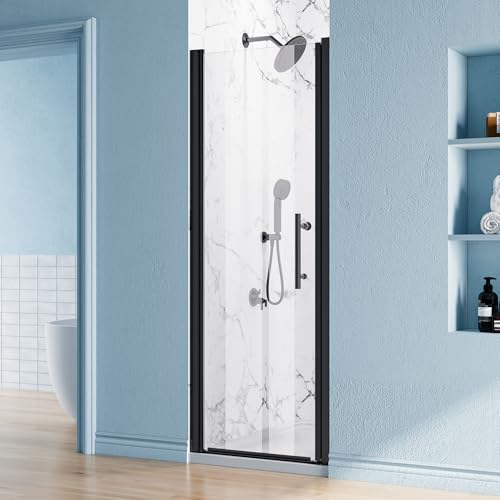
- Fits 26–27.5-inch openings
- Reversible swing with pivot adjustment
- 6mm certified tempered glass
Best For: Small bathrooms and narrow shower openings
Wide Frameless Upgrade
Matte Black Sliding Glass Door

- Fits 56–60-inch openings
- 72-inch frameless sliding design
- 304 stainless steel hardware
Best For: Large showers and modern bathroom renovations
Flexible Bypass Value

- Fits 44–48-inch openings
- Both panels slide with reversible mounting
- Nano-coated tempered glass and splash seals
Best For: Mid-size showers needing flexible entry
Flexible Fit Pick – GETPRO Semi-Frameless Sliding Door
For homeowners comparing shower door systems for home use, the GETPRO double-sliding door offers a flexible 57- to 60-inch fit, reversible installation, and a modern matte black finish. Its 1/4-inch ANSI-certified tempered glass and nano coating balance everyday safety with easier upkeep.
Best For: Bathrooms needing a reversible bypass door for a limited or straight-wall shower opening.
Pros:
- Adjusts from 57 to 60 inches by cutting the guide rail.
- Reversible for left- or right-wall installation.
- Nano-coated tempered glass helps resist water stains and buildup.
- Buffer anti-collision corners support quieter, safer closing.
Cons:
- Installation is intended for straight shower walls only.
- Professional installation is recommended.
- Its 100-pound package may require assistance during installation.
The GETPRO is a practical choice when adjustable sizing, reversible layout flexibility, and low-maintenance glass matter more than a fully frameless appearance.
No-Cut Installation Pick – Botwinkle Telescopic Shower Door
The Botwinkle is a useful option among shower door systems for home use when you want to avoid cutting a guide rail. Its telescoping frame adjusts from 56 to 60 inches, while the matte black grid pattern, tempered glass, and bottom sealing system suit practical bathroom renovations.
Best For: DIY-minded homeowners who value no-cut adjustment or may want to relocate the door within its size range.
Pros:
- Adjusts from 56 to 60 inches without cutting or tools.
- Can be resized and reused for relocations within that range.
- 6mm SGCC-certified tempered low-iron glass provides clear visibility.
- Double-lip silicone seal and drainage channel help direct water inward.
Cons:
- The telescoping system is limited to a 56- to 60-inch opening.
- The grid-pattern finish may not suit minimalist bathroom designs.
- At 105 pounds, installation may be easier with two people.
Choose this model if avoiding rail cutting is a priority. Its reusable adjustment range adds flexibility for renovations or future moves, while the waterproof bottom design addresses common splash concerns.
Premium Safety Pick – Woodbridge Frameless Soft-Close Door
For shoppers seeking shower door systems for home use with a more substantial feel, the Woodbridge combines a frameless look with 3/8-inch tempered glass, a soft-close damper, and stainless steel hardware. It adjusts from 57.5 to 60 inches and stands 76 inches high.
Best For: Modern bathrooms with a suitable threshold and homeowners prioritizing thicker glass and soft, controlled closing.
Pros:
- Thick 3/8-inch ANSI Z97.1-certified tempered glass.
- Soft-close system helps reduce impact during operation.
- Solid stainless steel rollers provide smooth, quiet sliding.
- Transparent safety film helps retain fragments if glass breaks.
Cons:
- Requires a minimum threshold depth of 2 3/4 inches.
- Does not allow adjustment for out-of-plumb walls.
- Shower base and wall kit are not included.
This Woodbridge model is best suited to a carefully prepared opening. Its thicker glass and soft-close system add a premium touch, but accurate finished-wall measurements and threshold compatibility are essential.
Brushed Nickel Value Pick – Frameless Sliding Glass Door
This brushed nickel model is a streamlined choice among shower door systems for home use, pairing a frameless design with 56- to 60-inch width adjustment. Its stainless steel track, quiet rollers, sealing strips, and treated tempered glass cover the main priorities for a clean, functional walk-in shower enclosure.
Best For: Bathroom renovations calling for a modern brushed nickel finish and reversible sliding installation.
Pros:
- Adjusts from 56 to 60 inches by trimming the track.
- Reversible for left- or right-side installation.
- 304 stainless steel track and rollers resist rust and corrosion.
- SGCC- and ANSI-certified 1/4-inch tempered glass resists stains and grime.
Cons:
- Track adjustment requires cutting rather than a no-cut mechanism.
- The 1/4-inch glass is thinner than the Woodbridge model’s 3/8-inch glass.
- Installation requires following the supplied instructions or video carefully.
With its neutral brushed nickel finish and frameless profile, this door offers a balanced update for many walk-in showers. It is especially appealing when quiet sliding and flexible reversible placement are priorities.
Best Tub Upgrade – ENSO SENKA Sliding Bathtub Door
For homeowners comparing shower door systems for home use, the ENSO SENKA is designed specifically for 56–60-inch bathtubs. Its sliding layout, reversible installation, and semi-frameless styling suit modern bathroom updates where space is limited.
Best For: 56–60-inch bathtub surrounds and bathrooms needing a reversible sliding door.
Pros:
- Fits 56–60-inch bathtubs and provides a 28-inch walk-in clearance.
- Uses 1/4-inch clear tempered glass certified to ANSI Z97.1 and SGCC standards.
- Water-repellent glass coating, anti-leak threshold, and corrosion-resistant matte black hardware help simplify maintenance.
Cons:
- Designed for bathtub installation rather than a walk-in shower.
- Professional installation is required for safety and best results.
- At 88 pounds, the unit may require careful handling during installation.
This is a practical choice when you want a modern matte black bathtub enclosure with sliding access and added splash control. Confirm the tub opening and plan for professional installation before ordering.
Best Compact Pivot – ACE DECOR Frameless Pivot Door
Among shower door systems for home use, this ACE DECOR pivot model is a strong fit for narrower shower openings. Its adjustable 34–35 3/8-inch width, reversible swing, and magnetic seal make it suitable for compact bathroom layouts.
Best For: Narrow walk-in showers requiring an adjustable frameless pivot door.
Pros:
- Adjusts from 34 to 35 3/8 inches wide and measures 72 inches high.
- Reversible pivot installation supports left- or right-side opening.
- Magnetic sealing helps improve water resistance and provides a smoother, quieter close.
Cons:
- The listed walk-in opening is approximately 29 19/32 inches.
- Measurements must be taken after wall finishes, including tile and backer boards, are complete.
- Professional installation is recommended for optimal results.
This door combines a compact footprint with adjustable sizing and a clean matte black finish. It is worth considering when your finished opening falls within the specified range and you prefer a pivot door over a slider.
Best Wide Sliding Option – Matte Black 56–60-Inch Shower Door
This wide sliding model is one of the more adaptable shower door systems for home use, fitting 56–60-inch openings with a reversible double-sliding design. Its quiet rollers, trimmable rails, and sloped bottom track are practical features for a bathroom remodel.
Best For: 56–60-inch walk-in showers needing flexible sliding access and splash control.
Pros:
- Reversible double-sliding design supports left- or right-side opening.
- Trimmable aluminum rails can be cut by up to 4 inches for fit adjustment.
- Certified 1/4-inch tempered glass, quiet rollers, bumpers, and a sloped bottom track support safer, smoother operation and water diversion.
Cons:
- At 102 pounds, installation and handling may require additional assistance.
- The rail-cutting feature still requires accurate measurements and installation work.
- The supplied details describe a 72-inch-high door, which may not suit every enclosure.
This is a useful option for wider shower openings where a sliding door can save floor space. Its adjustable rails and reversible layout add installation flexibility, while the angled bottom track is designed to direct water back into the shower area.
Best with Extra Features – Frameless Matte Black Pivot Door
For homeowners comparing shower door systems for home use, this frameless pivot model offers a space-conscious design for openings 26 to 27.5 inches wide. Its reversible swing, adjustable pivots, and matte black finish make it practical for compact bathroom layouts.
Best For: Small or narrow shower openings that need a modern, reversible door.
Pros:
- Adjusts 3/4 inch at each pivot end to accommodate uneven or non-vertical walls.
- Includes 1/4-inch SGCC- and ANSI-certified clear tempered glass.
- Reversible installation allows left- or right-hand opening.
- Aluminum construction, stainless steel handle, and bottom waterproof seal strip support durability and splash control.
Cons:
- Its 26- to 27.5-inch width range is limited to smaller openings.
- At 68 inches high, it is shorter than the 72-inch options in this roundup.
This is a straightforward choice when wall irregularities and limited floor space matter more than a wide entry. Confirm the opening dimensions and preferred swing direction before installation.
Wide Frameless Upgrade – Matte Black Sliding Glass Door
This wide sliding option is designed for 56- to 60-inch openings and brings a frameless look to shower door systems for home use. Its 72-inch height, 304 stainless steel hardware, dual-track rollers, and included installation guidance suit larger bathroom renovations.
Best For: Wide shower openings where a frameless appearance and sliding entry are priorities.
Pros:
- 4-inch width adjustment helps accommodate openings within the stated range.
- 1/4-inch clear tempered glass includes anti-shatter film.
- 304 stainless steel hardware is designed to resist rust in humid conditions.
- Dual tracks and heavy-duty rollers are intended for smooth, quiet operation.
Cons:
- At 90 pounds, it may require extra care during handling and installation.
- The wide 56- to 60-inch sizing is not suitable for compact openings.
Choose this model when you have sufficient wall width and want a clean, spa-inspired look without a swinging door. The included template, video tutorial, and support can make installation more manageable, but careful measurement remains essential.
Flexible Bypass Value – Semi-Frameless Double Slider
For shower door systems for home use in mid-size openings, this semi-frameless double slider fits 44 to 48 inches and lets both panels move for entry from either side. Its trimmable top rail, reversible mounting, water-repelling coating, and splash-control features add installation and maintenance flexibility.
Best For: Mid-size showers needing a reversible, dual-entry sliding door with easy-clean glass.
Pros:
- Designed for 44- to 48-inch openings with a trimmable top rail.
- Both panels slide, while reversible installation supports either wall-mounting direction.
- SGCC- and ANSI-certified 1/4-inch tempered glass has a nano coating for easier cleaning.
- Bottom guide rail and full-length side seals help direct water inward and reduce splashes.
Cons:
- At 101 pounds, installation and positioning may be demanding.
- Its semi-frameless aluminum construction offers a different look from a fully frameless door.
This model balances flexible access with practical water management for a common mid-size shower opening. Verify the finished opening and allow for the heavier installation workload before ordering.
How We Picked These Shower Door Systems for Home Use
We selected options that cover the most common residential bathroom layouts and opening sizes, from compact pivot doors to 56–60-inch sliding enclosures and tub-height doors. The comparison considers door type, stated dimensions, glass construction, frame design, hardware finish, adjustability, and features such as soft-close operation or no-cut installation.
Because installation conditions vary, product dimensions should be treated as starting points rather than a substitute for measuring the finished opening. Verify the manufacturer’s specifications, required wall structure, installation direction, and included hardware before ordering.
Quick Comparison
- Best for standard wide openings: Sliding and bypass doors in the 56–60-inch range.
- Best for a more open appearance: Frameless doors with thicker tempered glass.
- Best for easier adjustment: Telescopic or semi-frameless sliding systems.
- Best for bathtub installations: A tub-height sliding door designed for a 56–60-inch opening.
- Best for narrow bathrooms: Pivot doors, provided the swing has adequate clearance.
- Best for a smaller shower alcove: Compact 44–48-inch bypass or 26–27.5-inch pivot configurations.
Key Buying Factors for Shower Door Systems for Home Use
Measure the Opening Carefully
Measure the width at the top, middle, and bottom, plus the height from the finished shower base or tub threshold. Use the smallest width when selecting an adjustable system. Check whether walls are plumb; significant variation may require shims, fillers, or professional correction.
Choose the Right Door Style
Sliding doors work well where a swinging panel would conflict with a vanity, toilet, or walkway. Pivot doors generally provide a wider entry but need clear floor space. Frameless designs offer a clean look, while framed and semi-frameless systems can provide additional structure and easier alignment.
Evaluate Glass and Hardware
Tempered safety glass is essential. Thicker glass can feel more substantial and may reduce the need for extensive framing, but it also increases weight and installation demands. Compare finishes with existing faucets and accessories, and look for smooth rollers, reliable seals, and corrosion-resistant hardware.
Plan for Installation and Maintenance
Confirm that the walls can support the door and that drilling into tile or surrounding materials is practical. Sliding tracks need careful leveling, while pivot doors require secure hinge mounting. After installation, use a squeegee, keep seals clean, and follow the manufacturer’s care instructions to reduce water spots and buildup.
Who Should Buy Which Shower Door Systems for Home Use?
Choose a sliding or bypass system for a typical 56–60-inch alcove or whenever bathroom clearance is limited. Select a frameless sliding door when appearance and visual openness are priorities. A semi-frameless model is a sensible compromise between a lighter look, adjustability, and structural support.
For bathtub showers, use a dedicated tub-height sliding door. Choose a pivot door for narrow openings or when a broad entry is more important than preserving swing space. Smaller bypass models suit compact shower stalls, while taller or thicker-glass options may better fit upgraded primary-bath renovations—provided the opening and wall construction support them.